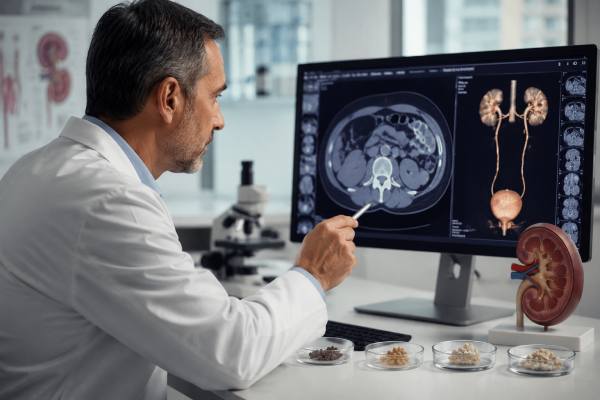
Kidney stones are not all the same. Two stones that cause the same sharp flank pain can form for completely different reasons, need different prevention plans, and respond to different treatments. A calcium oxalate stone often points toward urine concentration, sodium intake, oxalate handling, calcium timing, or low citrate. A uric acid stone usually points toward acidic urine. A struvite stone points toward infection. A cystine stone points toward a rare inherited condition that makes stone prevention a lifelong project.
Knowing the type matters because generic advice only goes so far. “Drink more water” helps almost every stone former, but it does not tell you whether you need urine alkalinization, infection control, lower sodium, oxalate changes, potassium citrate, or genetic follow-up. The most useful prevention plan starts with the stone’s composition, then uses urine testing, blood work, imaging, diet, and medication choices to lower the specific risk that created it.
Table of Contents
- Why Stone Type Matters
- Quick Comparison of Kidney Stone Types
- Calcium Oxalate Stones
- Uric Acid Stones
- Struvite Stones
- Cystine Stones
- How Doctors Confirm Stone Type
- Prevention Plan by Stone Type
Why Stone Type Matters
The stone type tells you what problem the urine environment created. Stones form when minerals or chemicals in urine become too concentrated and crystallize. The reason for that concentration differs. Some stones form because urine volume is too low. Others form because urine is too acidic, too alkaline, infected, high in oxalate, high in calcium, low in citrate, or overloaded with cystine.
Stone composition also changes the treatment conversation. Uric acid stones are the major type that often dissolves with the right urine pH. Struvite stones usually need complete removal because infected fragments left behind keep acting like a seed for regrowth. Cystine stones recur often and need more aggressive fluid and medication planning than typical calcium stones. Calcium oxalate stones rarely dissolve once formed, so the goal is passing or removing the current stone and preventing the next one.
A stone report is more useful than a guess based on pain. Pain location, nausea, blood in urine, and urinary urgency do not reliably identify composition. A small calcium oxalate stone and a small uric acid stone can feel identical while moving through the ureter. Imaging sometimes gives clues, but laboratory stone analysis is the cleanest answer.
The practical takeaway is simple: save any passed stone. Strain the urine during an attack if a clinician tells you to do so. A small gritty fragment that looks unimportant can give the exact composition and change the prevention plan. After a first stone, especially a severe one, ask whether stone analysis and a 24-hour urine test make sense.
Quick Comparison of Kidney Stone Types
Most kidney stones fall into four main groups: calcium stones, uric acid stones, struvite stones, and cystine stones. Calcium oxalate is the best-known and most common calcium stone. Calcium phosphate is another calcium type and often appears mixed with calcium oxalate, but its risk pattern differs because it favors more alkaline urine.
| Stone type | Main driver | Common clues | Prevention focus |
|---|---|---|---|
| Calcium oxalate | High urine calcium or oxalate, low citrate, concentrated urine | Most common type; often linked with high sodium, low fluid intake, oxalate-heavy meals, or low dietary calcium | Higher urine volume, lower sodium, normal calcium with meals, oxalate strategy, citrate when needed |
| Uric acid | Acidic urine, often with metabolic syndrome, gout, diabetes, or high purine intake | Often not visible on standard X-ray; urine pH is usually low | Raise urine pH, improve fluid intake, moderate purine-heavy animal protein, treat gout when present |
| Struvite | Urinary infection with urease-producing bacteria | Can grow quickly and form large branching “staghorn” stones | Remove all stone material, treat infection, correct urinary stasis when possible |
| Cystine | Inherited cystinuria causing excess cystine in urine | Often starts younger and recurs repeatedly | Very high urine volume, urine alkalinization, sodium reduction, cystine-lowering medication when needed |
Mixed stones are common. A report might say “calcium oxalate monohydrate 80% and calcium phosphate 20%,” or “struvite with carbonate apatite.” The dominant ingredient matters, but the smaller ingredients also tell a story. Calcium phosphate mixed into a stone raises questions about urine pH, certain medications, kidney tubular problems, or over-alkalinization. Struvite mixed with other minerals raises concern that infection played at least part of the role.
Calcium Oxalate Stones
Calcium oxalate stones are the most common kidney stones. They form when calcium and oxalate meet in urine and crystallize. Oxalate is a natural substance found in some foods and also made by the body. Calcium is not the villain by itself. In fact, too little calcium with meals can raise stone risk because more oxalate stays free for absorption and later reaches the urine.
A calcium oxalate stone prevention plan usually starts with urine dilution. Concentrated urine lets calcium and oxalate collide more easily. A person who drinks most fluids at dinner but stays dry through the workday can still produce long stretches of concentrated urine. The goal is steady fluid intake, not one large bottle at night.
Sodium is another major lever. High salt intake increases calcium loss into urine. That means frequent restaurant meals, deli meats, canned soups, salty snacks, frozen meals, and large portions of sauces can push urine calcium upward even when dietary calcium looks normal. For calcium stone formers, cutting sodium often does more than cutting calcium.
Oxalate needs a targeted approach rather than a blanket ban on healthy foods. Spinach, rhubarb, almonds, cashews, beets, wheat bran, and some soy foods are high-oxalate choices. A daily spinach smoothie, large handfuls of almonds, and dark chocolate every night create a very different oxalate load than an occasional small serving. People with calcium oxalate stones often benefit from learning which foods are truly high oxalate and which are only rumored to be. A structured low-oxalate diet is most useful when urine testing shows high urine oxalate or the diet contains obvious high-oxalate habits.
The timing of calcium matters. Calcium from food works best when eaten with meals that contain oxalate. Yogurt with lunch, milk with a meal, calcium-fortified foods, or other suitable calcium sources bind some oxalate in the gut before it reaches the bloodstream. Taking large calcium supplements away from food is a different situation and needs clinician guidance, especially for recurrent stone formers. The practical strategy is not “avoid calcium.” It is pair calcium with oxalate-containing meals in the right amount.
Low urine citrate is another common issue. Citrate helps keep calcium from forming crystals. Low citrate appears with chronic diarrhea, high animal-protein intake, metabolic acidosis, some kidney conditions, and naturally low fruit and vegetable intake. Citrus drinks help some people, but prescription potassium citrate is stronger and more predictable when a urine test shows hypocitraturia.
Common calcium oxalate prevention mistakes
The biggest mistake is cutting calcium too much. This can weaken bone health and leave more oxalate available for absorption. Another mistake is focusing only on spinach while ignoring sodium. A low-oxalate diet paired with salty processed food still leaves urine calcium high.
Vitamin C supplements deserve special attention. High-dose vitamin C can increase oxalate production in the body. Food sources of vitamin C are not the usual concern; large supplemental doses are the issue. Recurrent calcium oxalate stone formers should review vitamin C, collagen powders, protein powders, and other supplements with a clinician, especially if a 24-hour urine test shows high oxalate.
For a deeper article focused only on this stone type, see calcium oxalate stone prevention.
Uric Acid Stones
Uric acid stones usually form because urine is too acidic. This is the key difference from calcium oxalate stones. A person can have a normal uric acid level in the blood and still make uric acid stones if the urine pH stays low. Acidic urine keeps uric acid poorly dissolved, so crystals form.
These stones are more common in people with gout, type 2 diabetes, obesity, insulin resistance, metabolic syndrome, chronic diarrhea, or high intake of purine-rich foods. Purines are substances that break down into uric acid. They are concentrated in organ meats, some red meats, certain seafood, meat-heavy eating patterns, and alcohol-heavy patterns, especially beer.
Uric acid stones have one important advantage: they often respond to urine alkalinization. Raising urine pH makes uric acid more soluble. Clinicians often use potassium citrate or another alkalinizing plan to keep urine pH in a target range. The target matters. Too low fails to dissolve or prevent uric acid crystals. Too high increases the risk of calcium phosphate stones in susceptible people. This is why home urine pH tracking and follow-up testing are more useful than guessing.
Diet still matters, but it is not only about avoiding “high uric acid foods.” The prevention plan usually includes steady fluids, fewer large meat-heavy meals, weight management when relevant, and treatment of gout if present. Crash diets and very low-carb ketogenic diets deserve caution in uric acid stone formers because they can make urine more acidic and reduce citrate. Anyone following keto with a stone history should discuss urine pH and citrate monitoring rather than assuming hydration alone offsets the risk.
Uric acid stones are often radiolucent, meaning they do not show well on a plain abdominal X-ray. CT imaging usually detects them, and dual-energy CT in some centers helps suggest composition. A stone analysis or urine profile still gives the clearest prevention direction. A low urine pH on repeated testing is a major clue. To understand this measurement better, see urine pH and what it means.
When medication is part of prevention
Potassium citrate is commonly used when urine pH is persistently low or uric acid stones need dissolution. Allopurinol is used in selected people with high uric acid production, gout, or high urine uric acid, but it does not replace pH correction. If the urine stays very acidic, lowering uric acid production alone often misses the main problem.
People with chronic kidney disease, high potassium, or medications that raise potassium need careful monitoring before using potassium citrate. The medication is effective for the right person, but it is not a casual supplement. A clinician should choose the dose and follow blood potassium, kidney function, and urine pH. More detail is available in this guide to potassium citrate for kidney stones.
For a focused explanation of this type, see uric acid stones and urine pH.
Struvite Stones
Struvite stones are infection stones. They form when certain bacteria produce urease, an enzyme that changes urine chemistry. Urease raises ammonia and makes urine alkaline. That environment favors magnesium ammonium phosphate crystals, known as struvite, often mixed with carbonate apatite.
These stones are different from diet-driven stones. Drinking more water, reducing oxalate, or eating less salt will not solve a struvite stone if infected material remains in the kidney. The core problem is bacteria living in or around the stone. Antibiotics treat the infection, but antibiotics often do not penetrate the stone well enough to sterilize it completely. This is why complete stone removal is usually central to treatment.
Struvite stones can grow fast. Some form staghorn stones, which branch through the kidney’s collecting system. A staghorn stone does not always cause dramatic pain at first because it can sit in the kidney rather than move through the ureter. Instead, clues can include recurrent UTIs, fever, cloudy or foul-smelling urine, blood in urine, flank discomfort, fatigue, or kidney function decline. Any stone with fever, chills, vomiting, or signs of infection needs urgent medical attention because an infected obstructed kidney is dangerous.
Risk rises when urine does not drain normally or bacteria persist. Examples include urinary tract abnormalities, kidney obstruction, neurogenic bladder, long-term catheters, urinary diversion surgery, recurrent UTIs, and stones that were not fully cleared after earlier treatment. Proteus is the classic urease-producing organism, but Klebsiella, some Staphylococcus species, Pseudomonas, Morganella, Providencia, and Serratia are also possible.
Treatment often involves a urologist, urine cultures, imaging, antibiotics, and a procedure to remove the stone. Large or branching stones often require percutaneous nephrolithotomy, a procedure that removes stone material through a small access tract in the back. Smaller stones in certain locations might be treated with ureteroscopy or other approaches. The best procedure depends on stone size, location, anatomy, infection status, and kidney function.
Why “wait and watch” is different with infection stones
Observation is sometimes reasonable for small, non-obstructing calcium stones. Struvite stones are different because the stone and bacteria reinforce each other. Leaving fragments behind increases recurrence risk. After treatment, follow-up imaging is important because a small infected fragment can grow again.
Prevention focuses on clearing infection, removing stone material, fixing drainage problems when possible, and monitoring for recurrent bacteria. Long-term antibiotics are not a stand-alone cure for most struvite stones, but they are sometimes used as part of a specialist plan. For more detail, see struvite infection stones.
Cystine Stones
Cystine stones come from cystinuria, a rare inherited condition. In cystinuria, the kidneys do not reabsorb certain amino acids normally, including cystine. Cystine does not dissolve well in urine, especially when urine is concentrated or acidic. The result is recurrent cystine crystals and stones.
This type often starts earlier in life than common calcium stones. A teenager or young adult with repeated stones, a family history of stones, or unusually hard recurrent stones should raise suspicion. Some people are diagnosed in childhood; others are not recognized until adulthood after several stone episodes.
Cystine stones require a more intensive prevention plan because the underlying transport problem does not go away. The first goal is high urine volume. Many cystine stone formers need enough fluid to produce at least 3 liters of urine per day, sometimes more depending on cystine levels and specialist targets. That usually means drinking throughout the day and also planning evening fluids so urine does not become highly concentrated overnight.
Urine alkalinization is another major part of care. Cystine dissolves better at a higher urine pH. Potassium citrate is commonly used, though the exact target and dose need monitoring. As with uric acid stones, too much alkalinization creates other risks, so the goal is a controlled target, not simply “as alkaline as possible.”
Sodium reduction matters because high sodium intake increases cystine excretion. This makes label reading practical, not optional. Restaurant meals, cured meats, salty snacks, instant noodles, canned soups, and many packaged sauces quickly push sodium above a useful target. Lower sodium also supports blood pressure and kidney health, which matters for people with repeated stone procedures.
Animal protein moderation helps by reducing acid load and cystine-related amino acid burden. This does not mean a zero-protein diet. It means avoiding very large meat portions, protein-loading, and high-salt processed meats. A dietitian familiar with kidney stones can help keep protein adequate without pushing stone risk upward.
When cystine stones need stronger medication
If fluids, sodium reduction, and alkalinization do not control cystine levels or recurrence, specialists use cystine-binding thiol drugs such as tiopronin or D-penicillamine. These medicines bind cystine into a more soluble form. They require monitoring because side effects include rash, stomach upset, blood count changes, liver issues, and kidney-related protein leakage in some patients.
Cystine stones are also challenging surgically because recurrence is common and stones can be hard. The goal is to minimize repeated procedures by making daily prevention realistic. That often means using measured urine targets, reminders for fluids, periodic 24-hour urine testing, and a clear plan for what to do when symptoms begin. For a focused guide, see cystine stone treatment and prevention.
How Doctors Confirm Stone Type
The most direct test is stone analysis. A passed or surgically removed stone is sent to a laboratory, where the composition is measured. The result usually lists percentages. This is more useful than a simple label because mixed stones are common. A report that says “100% uric acid” points strongly toward pH-based prevention. A report showing calcium oxalate plus calcium phosphate suggests a broader urine chemistry review.
Urinalysis gives clues during and after an attack. Blood in urine is common with stones but does not identify the type. Urine pH is more informative. Persistently low pH points toward uric acid risk. Very alkaline urine with infection raises concern for struvite. Microscopy sometimes shows crystal shapes, such as hexagonal cystine crystals or coffin-lid struvite crystals, but crystal findings are not always present.
Imaging also helps. CT scans detect most stones and show size, location, obstruction, and density. Uric acid stones are often not visible on plain X-ray, while calcium stones are usually radiopaque. Struvite stones can become large and branching. Imaging clues are useful, but they do not replace stone analysis when prevention decisions are important.
Blood tests look for contributing conditions. Calcium, uric acid, creatinine, bicarbonate, electrolytes, and sometimes parathyroid hormone help identify metabolic problems. High blood calcium, for example, raises concern for hyperparathyroidism. Reduced kidney function changes which prevention medicines are safe.
A 24-hour urine test turns prevention into a measurable plan. It checks urine volume, calcium, oxalate, citrate, uric acid, sodium, pH, cystine in selected cases, and other values. The results show whether the main problem is low volume, high sodium intake, high calcium, high oxalate, low citrate, acidic urine, or another factor. That is why two people with “calcium oxalate stones” might receive different advice.
What to ask after a stone episode
Useful questions include:
- Was the stone analyzed, and what were the percentages?
- Do I need a 24-hour urine test?
- What was my urine pH?
- Did imaging show more stones still in the kidney?
- Do I need follow-up with a urologist, nephrologist, or dietitian?
- Are any of my supplements or medications raising stone risk?
Follow-up is especially important after recurrent stones, stones in both kidneys, childhood stones, cystine stones, struvite stones, uric acid stones, a solitary kidney, kidney disease, bowel disease, bariatric surgery, or a family history of severe stone disease.
Prevention Plan by Stone Type
Every stone prevention plan starts with urine volume. The usual goal is enough fluid to keep urine pale and produce a high daily urine output. People who sweat heavily, work outdoors, exercise hard, or live in hot climates need more. Spreading fluid across the day works better than catching up at bedtime. Overnight concentration also matters, especially for cystine stones and frequent stone formers.
After hydration, the plan should match the stone type.
For calcium oxalate stones, focus on sodium reduction, normal dietary calcium with meals, targeted oxalate changes, adequate fruits and vegetables when safe, and citrate therapy when urine citrate is low. Do not cut calcium sharply unless a clinician gives a specific reason. Review high-dose vitamin C and other supplements.
For uric acid stones, the central target is urine pH. Potassium citrate or another alkalinizing plan often does more than diet alone. Moderate purine-heavy animal foods, treat gout when present, avoid crash diets, and monitor urine pH so the range is high enough to dissolve uric acid but not unnecessarily high.
For struvite stones, prevention means infection control and stone clearance. Ask whether the stone was fully removed, whether follow-up imaging is scheduled, what bacteria grew on culture, and whether any drainage problem needs correction. Diet changes do not replace urologic treatment for infection stones.
For cystine stones, prevention is daily and measurable: very high urine volume, sodium reduction, urine alkalinization, periodic cystine monitoring, and thiol medication when first-line steps are not enough. A realistic routine matters because the plan is long-term. Large goals need practical tools, such as scheduled bottles, travel planning, nighttime strategy, and lab follow-up.
A broader plan also includes avoiding common triggers that cut across stone types. Very high sodium, low fluid intake, heavy sugar-sweetened drinks, large meat-heavy meals, and unreviewed supplements create problems for many stone formers. A complete kidney stone prevention plan uses stone analysis and urine testing rather than relying on one-size-fits-all rules.
Seek urgent care for fever with stone symptoms, chills, severe uncontrolled pain, persistent vomiting, inability to urinate, pregnancy with suspected stone pain, a known single kidney, or signs of confusion or serious illness. Stones are common, but an infected or obstructed kidney is not something to manage at home.
References
- EAU Guidelines on Urolithiasis – GUIDELINES 2025 (Guideline)
- Kidney Stone Pathophysiology, Evaluation and Management: Core Curriculum 2023 2023 (Review)
- Medical treatment of uric acid kidney stones 2024 (Review)
- Current Dietary and Medical Prevention of Renal Calcium Oxalate Stones 2024 (Review)
- Struvite and Triple Phosphate Renal Calculi 2023 (Review)
- Pharmacological interventions for the management of cystinuria: a systematic review 2024 (Systematic Review)
Disclaimer
This article is for education about kidney stone types and prevention patterns. It does not diagnose your stone type or replace care from a urologist, nephrologist, dietitian, or other qualified clinician. Kidney stone treatment depends on stone size, location, infection risk, kidney function, pregnancy status, medications, and lab results. Seek urgent medical care for stone symptoms with fever, chills, uncontrolled pain, vomiting, inability to urinate, or known kidney obstruction.