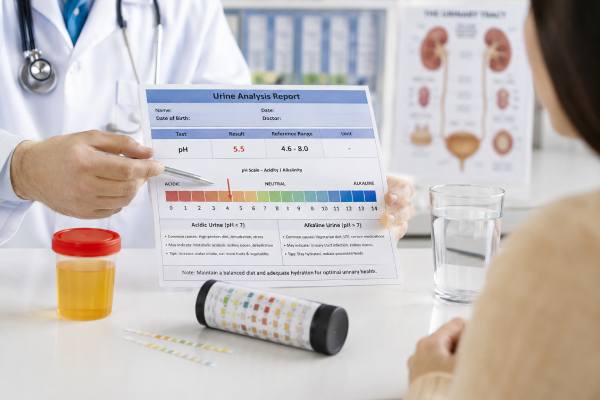
Urine pH shows how acidic or alkaline your urine is at the moment it is tested. It is one small part of a urinalysis, but it gives useful clues about hydration, diet, infection risk, kidney stone type, and how well certain treatments are working.
A single urine pH result rarely gives a diagnosis by itself. A pH of 5.0 after a high-protein meal is different from a pH of 5.0 in someone with repeated uric acid stones. A pH of 8.5 in a fresh sample with burning and urgency means something different from a pH of 8.5 in urine that sat on a counter too long. The value matters most when it is read with symptoms, timing, other urine test results, and sometimes blood tests or a 24-hour urine collection.
This guide explains what urine pH means in plain language, what acidic or alkaline urine suggests, when it matters, and what to do with an abnormal result.
Table of Contents
- What Urine pH Measures
- Normal Urine pH Range
- What Acidic Urine Can Mean
- What Alkaline Urine Can Mean
- Urine pH and Kidney Stones
- Urine pH and UTIs
- How Urine pH Is Tested
- What to Do With Your Result
What Urine pH Measures
Urine pH measures acidity on a scale from 0 to 14. A pH below 7 is acidic. A pH of 7 is neutral. A pH above 7 is alkaline, also called basic.
Your kidneys help keep your blood pH in a narrow, safe range. They do this partly by removing extra acid or base into urine. That means urine pH changes more than blood pH does. Urine is supposed to shift during the day. It changes after meals, with hydration, with medication, during illness, and with certain bacteria.
A urine pH result tells you about the urine sample, not the whole body. This is a common mistake. Acidic urine does not mean your blood is “too acidic.” Alkaline urine does not mean your body is “alkaline.” Blood pH is tightly controlled, and serious blood acid-base problems require blood testing, not a urine strip alone.
Urine pH is most useful when it answers a specific question:
- Is the sample fresh and reliable?
- Does the pattern fit a possible UTI?
- Does the pH point toward a certain kidney stone type?
- Is stone-prevention treatment reaching the target range?
- Does the result fit with other abnormal findings, such as blood, protein, ketones, crystals, nitrites, or white blood cells?
That is why urine pH is usually interpreted as part of a complete urine test. If you are trying to understand a full urine report, a broader guide to urinalysis results helps put pH beside the other values that often matter more.
Normal Urine pH Range
A typical urine pH range is about 4.5 to 8.0. Many healthy samples fall around 5.5 to 6.5, which is mildly acidic. Some labs list slightly different reference ranges because testing methods and reporting formats vary.
| Urine pH | Plain-language meaning | Common context |
|---|---|---|
| 4.5–5.5 | More acidic | High animal-protein intake, fasting, dehydration, diarrhea, ketones, uric acid stone risk |
| 5.5–6.5 | Mildly acidic | Common healthy range, especially in fresh morning urine |
| 6.5–7.5 | Less acidic to mildly alkaline | Often influenced by meals, plant-heavy diets, some medicines, or stone-prevention therapy |
| 8.0 or higher | Alkaline | Possible stale sample, urease-producing bacteria, certain stones, vomiting, kidney tubular problems, or alkalinizing medicines |
The timing of the sample matters. First-morning urine is often more concentrated and more acidic because you have gone several hours without drinking. Urine after a large meal often shifts upward for a short time. A single cup reading from midday tells less than a pattern measured at consistent times.
Freshness also matters. Urine left standing at room temperature becomes less reliable. Bacteria can multiply in the container and split urea into ammonia, which raises pH. This makes old urine look more alkaline than it was in the body. A very high pH from a delayed sample should be repeated with a fresh specimen before drawing conclusions.
A normal pH does not rule out a problem. You can have a UTI, kidney stone, blood in the urine, or kidney disease with a pH inside the reference range. Likewise, an out-of-range pH without symptoms or other abnormal findings often turns out to be temporary.
What Acidic Urine Can Mean
Acidic urine means the pH is below 7, but the practical question is how low it is, whether it persists, and what else is happening. A pH of 6.0 is common. A repeated pH near 5.0 matters more, especially in someone with stones, gout, diabetes, dehydration, or ketones.
Diet is one of the most common reasons urine becomes more acidic. Meals high in meat, poultry, fish, eggs, and cheese create a higher acid load than most fruit-and-vegetable-heavy meals. This does not make those foods “bad,” but it changes urine chemistry. Someone eating a large steak dinner and little produce might see a lower urine pH the next morning.
Dehydration also concentrates urine and often lowers pH. Dark yellow urine, strong odor, dry mouth, headache, and low urine volume point toward fluid loss. In that situation, pH is less important than the bigger pattern: the urine is concentrated, and crystals form more easily when there is not enough fluid to dilute minerals and waste.
Fasting, very low-carbohydrate eating, and uncontrolled diabetes can produce ketones. Ketones are acidic compounds that show up on urine strips. If acidic urine appears with moderate or large ketones, nausea, vomiting, deep breathing, confusion, or very high blood sugar, that needs urgent medical evaluation.
Diarrhea can also push urine more acidic because the body loses bicarbonate through the gut. Bicarbonate is a base that helps buffer acid. After a short stomach bug, the change is usually temporary. Ongoing diarrhea, weight loss, weakness, or dehydration deserves proper assessment.
Some medications and supplements influence urine acidity. Vitamin C, ammonium chloride, and certain older urinary antiseptic strategies can lower urine pH. People sometimes try to acidify urine on purpose, but doing this without a clear reason creates problems, especially for people with kidney disease, stones, high blood pressure, or medication interactions.
Acidic urine is especially important for uric acid stones. Uric acid stays dissolved better when urine is less acidic. When pH stays too low, uric acid crystals form more easily. People with gout, metabolic syndrome, diabetes, obesity, or repeated radiolucent stones are often checked for this pattern. A focused guide to uric acid stones explains why pH is central to prevention.
What Alkaline Urine Can Mean
Alkaline urine means the pH is above 7. A value around 7.0 to 7.5 after a meal is often not alarming. A fresh urine pH of 8.0 or 8.5, especially with symptoms, crystals, or repeated results, deserves closer attention.
The simplest explanation is often the sample itself. Urine that sits too long before testing becomes alkaline as bacteria break down urea. This is why a surprising high pH should be repeated with a fresh sample collected in a clean container and tested promptly.
Food pattern is another common reason. Diets rich in fruits and vegetables often raise urine pH because they produce more alkali after metabolism. This shift is not automatically good or bad. It reduces risk for some stones and raises risk for others. The goal is not to make urine as alkaline as possible. The goal is the right pH for the person’s situation.
Certain bacteria make urine strongly alkaline. These organisms produce urease, an enzyme that breaks urea into ammonia. Proteus is the classic example, but other organisms can do this too. In a person with urinary symptoms, fever, flank pain, catheter use, or recurrent infections, a high pH can point toward a more specific type of infection and stone risk.
Vomiting can also raise urine pH because the body loses stomach acid. This is usually seen in the larger context of dehydration, weakness, low chloride, and abnormal blood electrolytes when vomiting is severe or prolonged.
Medicines and treatments can raise urine pH. Potassium citrate, sodium bicarbonate, some UTI symptom sachets, and acetazolamide are examples. Sometimes this is the point of treatment, especially in uric acid stone prevention. Other times it is an unwanted effect. Someone taking methenamine for recurrent UTI prevention, for example, should not combine it with alkalinizing UTI sachets unless a clinician specifically advises it, because methenamine works best in acidic urine. The interaction is covered more fully in this guide to methenamine and urine acidification.
A persistently alkaline pH can also appear with renal tubular acidosis, a kidney tubule problem where the kidneys do not acidify urine normally. This is not diagnosed by urine pH alone. Doctors look at blood bicarbonate, potassium, chloride, kidney function, symptoms, and sometimes stone history. It becomes more suspicious when urine stays above about 5.5 despite blood chemistry showing metabolic acidosis.
Urine pH and Kidney Stones
Urine pH matters because different stones form under different chemical conditions. It does not identify every stone with certainty, but it helps guide the next step.
Uric acid stones are strongly linked to low urine pH. Even if the total amount of uric acid in the urine is not extremely high, acidic urine makes uric acid less soluble. That is why treatment often focuses on raising urine pH, usually with potassium citrate when appropriate.
Calcium phosphate stones form more easily in alkaline urine. This is one reason “more alkaline” is not always better. Pushing urine pH too high while trying to prevent uric acid stones can increase calcium phosphate risk in some people.
Struvite stones are tied to infection with urease-producing bacteria. These stones grow in alkaline urine and can become large. They often require medical treatment beyond diet changes because the underlying infection and stone material reinforce each other. A separate article on struvite stones explains why these are handled differently from typical calcium stones.
Calcium oxalate stones are less controlled by pH than uric acid or calcium phosphate stones. Hydration, urine calcium, oxalate, citrate, sodium, and urine volume often matter more. Still, pH helps complete the picture during a 24-hour urine test.
Cystine stones often require urine alkalinization, high fluid intake, and specialist care. The target pH is individualized because cystine dissolves better in more alkaline urine, but overly high pH still carries tradeoffs.
Why 24-hour urine testing gives a clearer picture
A dipstick pH from one sample is a snapshot. A 24-hour urine test shows the average and the full chemistry behind stone risk: volume, calcium, oxalate, citrate, uric acid, sodium, creatinine, and pH. This is much more useful for people with repeated stones, high-risk stones, stones at a young age, a single kidney, bowel disease, or complicated medical histories.
The result also shows whether treatment is doing what it should. For example, a person taking potassium citrate for uric acid stones needs enough alkalinization to reduce uric acid crystallization, but not so much that calcium phosphate risk rises. This is why potassium citrate should be monitored rather than treated like a casual supplement. The practical details are covered in this guide to potassium citrate for kidney stones.
Why alkaline water is not the same as medical alkalinization
Alkaline water sounds like an easy way to change urine pH, but the effect is usually modest and unpredictable compared with prescribed alkalinizing therapy. The mineral content, total fluid intake, diet, kidney function, and stone type all matter. For a person with uric acid stones, the target is not “drink alkaline things.” The target is a measured urine pH range that reduces stone risk safely. For a person prone to calcium phosphate stones, unnecessary alkalinization can work against them. If this is your main question, read more about alkaline water and kidney stones.
Urine pH and UTIs
Urine pH does not diagnose a UTI by itself. Symptoms and other test markers matter more: burning, urgency, frequent urination, lower belly pain, fever, flank pain, nitrites, leukocyte esterase, white blood cells, bacteria, and urine culture results.
Still, pH adds useful context. A very alkaline fresh sample with UTI symptoms raises suspicion for urease-producing bacteria. These infections can be associated with struvite stones, especially when infections recur or involve catheters, urinary retention, or structural urinary tract problems.
A normal or acidic pH does not rule out infection. Many common UTI bacteria do not make urine strongly alkaline. E. coli, the most common cause of uncomplicated bladder infection, often appears with pH in the normal range. That is why treating or ignoring symptoms based only on pH leads to mistakes.
At-home UTI strips often include pH, nitrites, and leukocyte esterase. The pH pad is not the main infection marker. Nitrites are more specific when positive, but they miss some infections. Leukocyte esterase suggests white blood cells, which can come from infection or inflammation. If you test at home, use the strip as a screening clue, not a final answer. This article on at-home UTI test strips explains the limits and common errors.
Urine culture is the more useful test when symptoms are severe, recurrent, unusual, or not improving. A culture identifies the bacteria and checks which antibiotics are likely to work. It is especially important for men, pregnant people, children, kidney infection symptoms, recurrent UTIs, recent antibiotic use, resistant infections, and catheter-associated symptoms. A practical guide to urine culture results helps explain colony counts, contamination, and sensitivity reports.
How Urine pH Is Tested
Urine pH is usually tested with a dipstick during urinalysis. The strip has a chemical pad that changes color, and the color is matched to a chart or read by a machine. Results are usually reported in half-step or whole-step values, such as 5.0, 5.5, 6.0, 6.5, 7.0, or 8.0.
Collection quality affects the result. Use a clean container. For a routine sample, a midstream clean-catch method reduces contamination. That means you start urinating, collect urine in the container midstream, then finish in the toilet. The sample should be tested quickly or stored as directed by the lab.
For at-home pH monitoring, timing needs to be consistent. Random checks throughout the day can look confusing because pH naturally shifts after food and fluid intake. People monitoring stone therapy are often told to test at set times and record the result. Follow the specific schedule from the clinician who ordered the monitoring.
Common testing mistakes
The most common mistake is testing old urine. A delayed sample can read falsely alkaline.
Another mistake is reading a dipstick too early or too late. Dipsticks are designed for specific reading times. Waiting several extra minutes can change the color and create a misleading result.
Contamination also matters. Cleaning products, toilet water, vaginal discharge, menstrual blood, stool contamination, and non-sterile containers can interfere with interpretation.
A final mistake is reacting to one value without context. Changing diet, supplements, or medication because of one pH reading is rarely a good idea. Repeating the test correctly is often the smarter first step.
What to Do With Your Result
Start by looking at the whole picture. A pH result becomes useful when you connect it to symptoms, sample timing, and other test findings.
If your urine pH is slightly acidic and you feel well, it is usually just normal variation. Drink normally, avoid overcorrecting, and look at the rest of the urinalysis. A pH of 5.5 with no blood, no protein, no ketones, no leukocytes, and no symptoms is usually not a standalone problem.
If your urine is repeatedly very acidic, especially around 5.0 or lower, think about context. Do you have kidney stones, gout, diabetes, low-carb dieting, dehydration, diarrhea, or ketones? If stones are part of the story, ask whether a 24-hour urine test is appropriate. If diabetes and ketones are involved, follow your sick-day plan or seek urgent care based on your blood sugar, symptoms, and ketone level.
If your urine is alkaline once, repeat it with a fresh sample. If it stays high, especially 8.0 or above, check for symptoms. Burning, urgency, fever, flank pain, chills, nausea, or confusion should not be managed by pH tracking. Those symptoms need medical advice and often testing for infection.
If you are taking potassium citrate, sodium bicarbonate, acetazolamide, methenamine, or UTI symptom sachets, ask whether urine pH is relevant to that medicine. Some treatments aim to raise pH. Others work worse when urine is too alkaline.
If you are changing your diet for stones, do not chase a perfect pH without knowing your stone type. Calcium oxalate, uric acid, calcium phosphate, cystine, and struvite stones have different prevention plans. A broad kidney stone types guide can help you understand why one person is told to alkalinize urine while another is told to avoid pushing pH too high.
When to contact a clinician
Contact a clinician promptly if an abnormal pH comes with pain, fever, blood in urine, vomiting, pregnancy, kidney disease, diabetes with ketones, recurrent stones, recurrent UTIs, or symptoms that do not improve.
Seek urgent care for fever with flank pain, shaking chills, inability to keep fluids down, confusion, very low urine output, severe one-sided back pain, or symptoms of diabetic ketoacidosis such as high blood sugar, ketones, vomiting, abdominal pain, deep breathing, or drowsiness.
For non-urgent results, bring the full urinalysis report, medication list, supplements, recent diet changes, and timing of the sample. Those details often explain the result faster than the pH number alone.
References
- Urinalysis 2023 (Review)
- Office-Based Urinalysis: A Comprehensive Review 2022 (Review)
- 24-Hour Urine Collection and Analysis 2024 (Review)
- Urolithiasis 2026 (Guideline)
- Uncomplicated Urinary Tract Infections 2025 (Review)
- Urinary tract infection (recurrent): antimicrobial prescribing 2024 (Guideline)
Disclaimer
This article is for education and does not diagnose the cause of an abnormal urine pH. Urine pH should be interpreted with symptoms, sample quality, medication use, other urinalysis findings, and sometimes blood tests or 24-hour urine testing. Contact a qualified healthcare professional before changing stone-prevention treatment, UTI medication, alkalinizing products, or supplements based on urine pH.