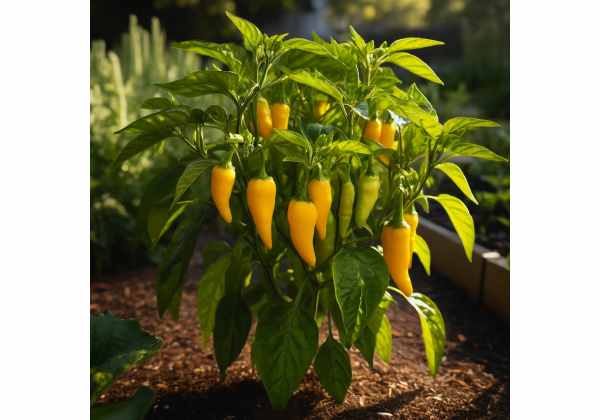
Lemon Drop Chili, a bright yellow variety of Capsicum baccatum often called ají limón, combines a lively citrus aroma with a clear, medium-to-hot burn. It is usually treated as a culinary pepper, yet its chemistry gives it wider health interest. Like other baccatum chilies, it delivers capsaicinoids, carotenoids, vitamin C, and phenolic compounds that may support antioxidant defenses, metabolic balance, and inflammatory control when used as part of food. Its appeal is not just heat. The fruit’s sharp flavor makes it easy to use in small amounts, which matters because the same compounds that create benefits can also irritate the mouth, stomach, and skin if overused.
The most useful way to understand Lemon Drop Chili is as a bioactive food rather than a standardized herbal medicine. Research on Capsicum baccatum is promising, especially for antioxidant, anti-inflammatory, and cardiometabolic effects in laboratory and animal models, but human evidence and dose standards remain limited. That makes practical use, moderation, and safety more important than hype.
Key Takeaways
- Lemon Drop Chili may support antioxidant defenses and metabolic health when used regularly as food.
- Its main bioactive compounds include capsaicin, dihydrocapsaicin, carotenoids, vitamin C, and flavonoids.
- A practical food-level serving is about 2 to 10 g fresh chili or 0.25 to 1 g dried flakes per meal, depending on heat tolerance.
- People with reflux, active stomach irritation, mouth ulcers, or poor tolerance for spicy foods should avoid high intake.
Table of Contents
- What is Lemon Drop Chili
- Key ingredients and what they do
- What benefits are realistic
- How to use Lemon Drop Chili
- How much per day
- Safety and who should avoid it
- What the evidence actually says
What is Lemon Drop Chili
Lemon Drop Chili is a pungent yellow pepper cultivar within the species Capsicum baccatum. It is most strongly associated with Peru and other parts of western South America, where baccatum peppers have deep culinary and agricultural roots. The fruit is long, narrow, bright yellow at maturity, and known for a sharp citrus-like aroma that makes it stand apart from many red chilies. That lemon note comes from aroma and volatile compounds, not from actual lemon juice or citrus fruit content.
In practical terms, Lemon Drop Chili sits in an unusual middle space. It is hot enough to be used carefully, but aromatic enough to be valued for flavor rather than heat alone. That makes it different from peppers chosen mainly for extreme pungency. It also makes it easier to use in sauces, marinades, seafood dishes, salsas, and fermented condiments where a smaller amount can still shape the whole dish.
From a health standpoint, the first thing to know is that Lemon Drop Chili is not a classic medicinal herb with a long standardized clinical history. It belongs more naturally in the category of functional foods. The fruit contains bioactive compounds that may influence inflammation, oxidative stress, circulation, metabolism, and sensory signaling, but the evidence usually comes from broader Capsicum research or from studies on Capsicum baccatum extracts rather than on the Lemon Drop cultivar itself.
That distinction matters. A great deal of pepper science focuses on capsaicin, purified extracts, or other Capsicum species. Those findings are useful, but they do not automatically mean that a spoonful of Lemon Drop salsa will produce the same effect seen in a concentrated laboratory extract. In daily life, Lemon Drop Chili is still a food first.
It is also worth keeping expectations grounded around the word “medicinal.” A food can absolutely have medicinally relevant properties without being a treatment. Lemon Drop Chili may support healthy eating patterns, offer a useful dose of pungent phytochemicals, and add diversity to the diet, but it is not a substitute for evidence-based treatment of chronic pain, obesity, diabetes, or inflammatory disease.
The most accurate starting point is simple: Lemon Drop Chili is a flavorful Capsicum baccatum pepper with meaningful phytochemistry, culinary versatility, and promising but still limited species-specific research. The more it is treated like a smart ingredient rather than a miracle remedy, the more useful it becomes.
Key ingredients and what they do
Lemon Drop Chili gets most of its health relevance from the same core chemical families that make other hot peppers interesting: capsaicinoids, carotenoids, vitamin C, and phenolic compounds. What changes from one pepper to another is the balance. In Capsicum baccatum, that balance tends to produce a pepper that is aromatic, moderately to strongly pungent, and chemically diverse enough to be nutritionally meaningful even in small servings.
The best-known compounds are the capsaicinoids, especially capsaicin and dihydrocapsaicin. These are the molecules responsible for the burning sensation and the reason chilies interact with the TRPV1 receptor, the same sensory pathway involved in heat and pain signaling. That interaction helps explain why peppers can stimulate sweating, create a feeling of warmth, sharpen salivation, and, in pharmaceutical form, contribute to pain-relief strategies through repeated nerve desensitization.
Lemon Drop Chili also provides carotenoids, the pigment compounds that support its color and antioxidant profile. In the broader pepper family, carotenoids are valued not only for color but also for their role as lipophilic antioxidants. They help explain why peppers are often discussed in the context of eye health, oxidative balance, and colorful whole-food eating patterns.
A third important group is phenolic compounds and flavonoids, including molecules such as quercetin, luteolin, apigenin, chlorogenic acid, caffeic acid, and ferulic acid across the Capsicum genus. These compounds are relevant because they contribute antioxidant activity that is not solely dependent on heat. In other words, the fruit is doing more than just delivering capsaicin.
Peppers are also notable for vitamin C, and Capsicum fruits can be surprisingly rich sources of it. That does not mean every Lemon Drop chili serving acts like a vitamin supplement, but it does reinforce the point that spicy peppers are nutritionally denser than many people assume.
A useful way to think about the chemistry is in terms of what each group tends to do:
- capsaicinoids shape heat, circulation, sensory stimulation, and some metabolic effects
- carotenoids support antioxidant value and pigment-related nutrition
- phenolics broaden antioxidant and anti-inflammatory potential
- vitamin C adds classic nutrient support and helps reinforce overall redox balance
One important nuance is that pungency and health value do not map perfectly. A hotter pepper may carry more capsaicinoids, but that does not automatically make it healthier in every context. Tolerability matters. A moderate amount of a pepper you can actually eat is often more useful than a much hotter one you avoid.
For readers comparing pungent peppers with milder red pepper products, paprika and its carotenoid-rich profile offers a useful contrast. Paprika leans more heavily toward color and carotenoids, while Lemon Drop Chili adds a much stronger capsaicinoid effect.
What benefits are realistic
The realistic benefits of Lemon Drop Chili are best understood in layers. At the food level, it may support a healthier diet through flavor intensity, nutrient density, and bioactive diversity. At the compound level, its capsaicinoids and phenolics may contribute to antioxidant, anti-inflammatory, metabolic, and circulatory effects. What it does not offer is strong proof that this specific chili cures disease.
The most defensible benefit is antioxidant support. Peppers contain vitamin C, carotenoids, and phenolic compounds that can help buffer oxidative stress. That does not mean one spicy meal “detoxes” the body, but regular inclusion of phytochemical-rich foods can be part of a more resilient diet. This matters especially when the food is easy to use often in small, repeatable amounts.
The next realistic benefit is metabolic support. Capsaicin and related pepper compounds have been studied for thermogenesis, appetite effects, glucose handling, and lipid metabolism. Species-specific animal work in Capsicum baccatum is promising here, with data suggesting benefits on cholesterol balance, adiposity, and glucose homeostasis in a diet-stressed model. Still, these are preclinical findings. A food ingredient can support good habits, but it is not the same as a diabetes therapy.
There is also a case for anti-inflammatory potential. Extract studies in Capsicum baccatum have shown reduced inflammatory markers and meaningful activity in animal models. This is one reason peppers keep appearing in the research literature beyond simple nutrition. Even so, the step from extract science to everyday Lemon Drop use remains large.
A more everyday benefit is digestive and sensory stimulation. In moderate amounts, spicy peppers can stimulate saliva, make food feel more vivid, and sometimes improve meal satisfaction. Some people find that a small amount of chili helps appetite and digestion feel more active. Others experience the opposite. This is one of the clearest examples of why personal tolerance matters as much as chemistry.
Pain relief is another area people ask about, but here the distinction between food and medicine becomes critical. Pharmaceutical capsaicin preparations can help with certain pain conditions. That does not mean rubbing crushed Lemon Drop chili on sore skin is a good idea. The evidence belongs to formulated capsaicin products, not to home chili experiments.
If you want a broader food-based comparison for antioxidant support rather than pungency, green tea as a daily antioxidant habit is a useful benchmark. Lemon Drop Chili can complement that kind of pattern, but it should not be framed as a stronger substitute.
So the benefits that make sense are these: modest antioxidant support, possible help with metabolic resilience, food-level anti-inflammatory potential, and strong culinary leverage that can improve diet quality. That is a good list. It just is not a miracle list.
How to use Lemon Drop Chili
Lemon Drop Chili is easiest to use well when it is treated as a concentrated ingredient rather than a bulk vegetable. Its flavor is bright, sharp, and persistent, so a little usually goes further than people expect. This makes it practical for health-conscious cooking because small amounts can add character without forcing very large servings.
Fresh fruit is the most versatile form. Thin slices work well in salsas, ceviche-style dishes, seafood sauces, vinaigrettes, and marinades where the pepper’s lemon-like aroma can stay intact. Because the skin is not especially thick, the fruit also works well in fermented sauces and pickled preparations. Fermentation can soften the raw edge while preserving complexity.
Dried Lemon Drop Chili is useful when you want a more controllable heat source. The flakes or powder can be added to soups, eggs, roasted vegetables, lentils, grilled meat, and simple dressings. Drying changes the aroma somewhat, but it also improves shelf life and makes portioning easier. For many people, dried form is the safest starting point because it allows smaller, more measured use.
A few practical uses stand out:
- mixed into salsa or relish where acidity balances heat
- blended into olive oil based dressings in very small amounts
- added to beans or stews near the end of cooking
- paired with mango, pineapple, or tomato for sweet-hot contrast
- used sparingly in fermented chili sauces
What does not make much sense is treating Lemon Drop Chili like a medicinal tincture, capsule, or topical remedy at home. This pepper is not standardized for those uses, and crude high-dose experiments usually create irritation before they create any meaningful benefit. The cleanest health value comes from incorporating it into food consistently rather than taking it in an extreme format.
A helpful rule is to think about purpose before amount. If the goal is aroma, use a tiny amount late in cooking. If the goal is heat for a sauce, use a measured amount and taste repeatedly. If the goal is general wellness, focus on repeatable small servings as part of meals rather than on “shots” of raw chili.
Cooking method also matters. Raw use preserves more brightness. Gentle cooking mellows the heat slightly and blends the flavor more evenly. Long cooking can flatten some of the citrus-like notes, which is why Lemon Drop Chili often shines in sauces added late or in quick-cooked dishes.
For readers who like strong flavor ingredients with digestive and culinary crossover, ginger as a kitchen-based wellness ingredient offers a good model of how food can be used regularly without forcing medicinal-style dosing.
How much per day
There is no established medicinal dose for Lemon Drop Chili. That is the central point. Unlike some herbal products or standardized capsaicin preparations, this pepper is not backed by a clinical dosing framework that tells you exactly how many milligrams to take for a specific outcome. The most practical way to think about intake is at the food level.
For fresh Lemon Drop Chili, a reasonable serving range is about 2 to 10 g per meal, depending on heat tolerance and whether the pepper is used whole, minced, or as part of a mixed dish. At the low end, this may be just a few thin slices. At the higher end, it may be a whole pepper distributed through a shared sauce or meal.
For dried flakes or powder, a useful range is about 0.25 to 1 g per meal. That looks small on paper, but concentrated dried chili can feel much stronger than the fresh form. Many people do better starting closer to 0.25 g and increasing only if the flavor and stomach response remain comfortable.
For fermented sauces or condiments, the label and recipe matter more than weight alone. These products vary in pepper concentration, added salt, acidity, and dilution. In practice, a few drops to 1 teaspoon is often enough to judge tolerance.
A few factors change the right amount:
- your experience with hot foods
- whether the chili is fresh, dried, or fermented
- whether you eat it on an empty stomach
- current digestive sensitivity
- how much total spicy food is already in the meal
Timing also matters more than people expect. Hot chili is often better tolerated with meals than on an empty stomach. Protein, starch, or fat in the meal can soften the sensory hit. Dairy or yogurt can also reduce oral burn more effectively than water if the pepper turns out to be stronger than expected.
One subtle point is that “beneficial” does not always mean “higher.” Many people assume that if chili has metabolic or circulatory benefits, the best strategy is to eat as much as possible. In reality, the useful range is often the range you can tolerate consistently. If a pepper leaves you with burning discomfort, reflux, or bowel irritation, the theoretical benefit stops mattering.
There is also no reliable reason to chase a pure capsaicin target through food unless you are in a research setting. Whole chili works through a matrix of nutrients, acids, pigments, and aroma compounds, and it should be approached as food, not a self-made pharmacology project.
The best dosage advice is therefore practical: start low, use it with meals, observe tolerance, and let consistency matter more than intensity.
Safety and who should avoid it
Lemon Drop Chili is generally safe as a food, but “safe as a food” is not the same as “safe in any amount.” The same compounds that make the pepper interesting can also make it irritating. Most side effects are not mysterious. They are exactly what you would expect from a pungent chili: burning, reflux, stomach upset, sweating, flushing, loose stool, and irritation of the mouth or skin.
The people most likely to struggle with it are those who already have sensitive digestive or mucosal tissue. That includes people with:
- gastroesophageal reflux
- gastritis or peptic irritation
- active mouth ulcers
- hemorrhoids or anal irritation
- irritable bowel patterns triggered by spicy food
For these people, even a normal culinary amount can feel excessive. In that context, “healthy chili” messaging can become misleading. A food that is metabolically interesting in theory may still be the wrong choice for a specific digestive system.
Skin and eye exposure is another major safety issue. Fresh Lemon Drop Chili can irritate the hands, lips, nose, and eyes. Gloves are wise if you are handling several peppers at once, and handwashing should be thorough. Touching the face after chopping hot peppers is one of the fastest ways to turn a cooking project into an avoidable injury.
A second category of caution involves concentrated products and combinations. Large amounts of capsaicin-containing foods or supplements may interact poorly with sensitive stomachs, aggressive weight-loss regimens, or other irritating products. People using a lot of spicy foods alongside alcohol, very acidic meals, or strong analgesic herbs can create a stack of irritation that feels worse than any one item alone.
There is also a difference between food use and medical use. Topical capsaicin has real evidence behind it in standardized creams and patches, but food chili is not a substitute for that. Lemon Drop Chili should not be applied directly to painful skin, mucous membranes, or damaged tissue.
People who should be especially cautious include:
- those with active reflux or stomach irritation
- people with inflammatory bowel flare patterns triggered by spice
- anyone with nightshade sensitivity
- children who are not used to hot foods
- pregnant people considering high-dose chili extracts rather than normal food use
If the main goal is pain relief, it is better to compare with established options such as white willow in pain-support discussions than to assume a hot pepper in food works like a pain medicine.
The safest approach is simple. Use Lemon Drop Chili as a flavor-rich food in tolerable amounts, not as a self-prescribed high-dose remedy. Stop or reduce use when the pepper is clearly causing more irritation than value.
What the evidence actually says
The evidence for Lemon Drop Chili specifically is limited. That sentence should shape the entire way the pepper is discussed. Most of the scientifically meaningful data come from three overlapping buckets: research on the broader Capsicum genus, research on capsaicin itself, and research on Capsicum baccatum fruit extracts. Those buckets are informative, but they are not identical.
The strongest species-specific findings for Capsicum baccatum point to antioxidant and anti-inflammatory potential. Extract studies have shown meaningful activity in oxidative assays and inflammation models, with phenolic and flavonoid content correlating to observed effects. That gives a real scientific basis for discussing the species as more than just a spicy food.
There is also preclinical evidence for cardiometabolic relevance. In a rat model using an ultra-processed diet, Capsicum baccatum extract reduced visceral fat accumulation, improved cholesterol markers, and supported glucose control. These are impressive findings at the animal level. They are not proof that Lemon Drop Chili in ordinary meals will produce the same effect in humans, but they do justify continued research.
Older fruit work also supports antioxidant and weak antimicrobial activity, especially across different fruit parts and maturity stages. This is helpful because it reminds us that the whole fruit has measurable biological properties beyond capsaicin alone. At the same time, the antimicrobial effects were not strong enough to justify “natural antibiotic” claims.
The broader Capsicum literature adds one more layer. Reviews of pepper polyphenols, capsaicinoids, and capsaicin pharmacology support a credible case for anti-inflammatory, antioxidant, analgesic, and metabolic effects. But much of that evidence comes from purified compounds, formulated products, or studies involving other pepper species. This is exactly why the article should stay careful. It is valid to say Lemon Drop Chili belongs to a scientifically interesting plant family. It is not valid to act as though every capsaicin finding lands directly on this specific pepper in ordinary kitchen use.
What is still missing is just as important as what exists:
- no strong human clinical trials on Lemon Drop Chili itself
- no standardized medicinal preparation of the cultivar
- no agreed therapeutic dose
- limited long-term human safety data beyond normal food use
So the honest conclusion is this: Lemon Drop Chili is a compelling bioactive food with promising science behind its species and chemistry, but the evidence still supports measured enthusiasm, not broad therapeutic claims. Used as food, it makes sense. Used as a miracle remedy, it quickly outruns the research.
References
- Capsaicinoid Profiles, Phenolic Content, and Antioxidant Properties of Chili Peppers Grown in Urban Settings 2025 (Preclinical Study). ([PMC][1])
- A comprehensive review of capsaicin: Biosynthesis, industrial productions, processing to applications, and clinical uses 2024 (Review). ([PMC][2])
- Capsicum baccatum Red Pepper Prevents Cardiometabolic Risk in Rats Fed with an Ultra-Processed Diet 2023 (Animal Study). ([PMC][3])
- Antioxidant and anti-inflammatory properties of Capsicum baccatum: from traditional use to scientific approach 2012 (Preclinical Study). ([PubMed][4])
- Phenolic content and antioxidant and antimicrobial properties of fruits of Capsicum baccatum L. var. pendulum at different maturity stages 2008 (Preclinical Study). ([PubMed][5])
Disclaimer
This article is for educational purposes only and does not replace medical advice, diagnosis, or treatment. Lemon Drop Chili is best understood as a spicy functional food, not a proven therapy for obesity, diabetes, chronic pain, infection, or inflammatory disease. Research on Capsicum baccatum is still mostly preclinical, and no standardized medicinal dose has been established for this cultivar. If you have reflux, stomach irritation, bowel sensitivity, or unusual reactions to spicy foods, talk with a qualified clinician before increasing intake for health reasons.
If this article helped you, please share it on Facebook, X, or your preferred platform so others can find a careful, evidence-aware guide.