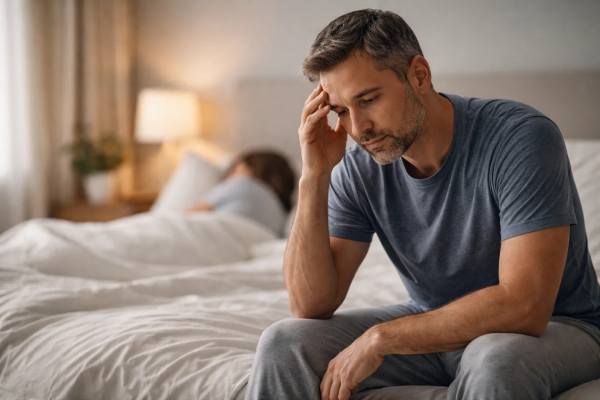
Low libido in men is often described in blunt terms, but the lived experience is usually more subtle. A man may notice less spontaneous desire, fewer sexual thoughts, less interest in initiating sex, or a growing sense that intimacy feels mentally distant even when a relationship is strong. That change can be unsettling, especially because desire is shaped by more than hormones alone. Testosterone matters, but so do sleep quality, stress, depression, medications, chronic illness, body weight, alcohol use, and the emotional climate of a relationship.
This is why low libido deserves a careful, whole-person approach rather than a one-answer explanation. A low testosterone ad may make the issue seem simple, yet many men with low desire do not have true hypogonadism, and many with borderline lab results have other reversible drivers that matter just as much. The most helpful starting point is not guessing. It is understanding what low libido really means, what commonly causes it, and which clues suggest it is time for a proper medical evaluation.
Core Points
- Low libido in men is common and often has more than one cause, including sleep loss, stress, depression, obesity, medications, and hormone issues.
- Testosterone can play an important role in sexual desire, but low desire does not automatically mean testosterone deficiency.
- Treating sleep apnea, improving weight and metabolic health, and addressing mood symptoms can improve sexual function even without testosterone therapy.
- Starting testosterone without confirming the diagnosis can create side effects and may reduce fertility.
- A practical first step is to track symptoms, review medications, and get morning labs if low desire is persistent or distressing.
Table of Contents
- What Low Libido Actually Means
- How Testosterone Fits In
- Why Sleep Matters More Than People Think
- Other Health and Medication Causes
- How Low Libido Is Evaluated
- What Helps and When to Seek Care
What Low Libido Actually Means
Low libido means a persistent drop in sexual desire that feels noticeable, bothersome, or out of step with a person’s usual pattern. It is not the same thing as erectile dysfunction, although the two often overlap. A man can have normal erections and still feel little desire. He can also have strong desire but struggle with erections. That distinction matters because the causes and treatment approach are not always the same.
Desire is shaped by biology, psychology, and context. It is influenced by hormones, brain signaling, sleep, mood, relationship quality, body image, stress load, and overall health. That means libido is not a fixed personality trait. It can rise or fall across seasons of life. New parenthood, grief, work burnout, chronic pain, depression, conflict with a partner, or untreated sleep apnea can all reduce desire without meaning something is permanently wrong.
It also helps to define what counts as “low.” There is no single frequency of sexual thoughts or sexual activity that separates normal from abnormal. The better question is whether desire has changed and whether that change creates distress. A man who has always had a lower baseline sex drive may not have a medical problem. A man whose interest drops sharply over six months, or who feels emotionally flat and physically disengaged, deserves a closer look.
Common ways men describe low libido include:
- Fewer sexual thoughts or fantasies
- Less interest in initiating intimacy
- Reduced motivation for sex even in a supportive relationship
- Feeling mentally “disconnected” from desire
- Less pleasure in erotic cues that used to matter
- A loss of morning or spontaneous sexual interest
One reason low libido gets overlooked is embarrassment. Some men wait until the problem affects a relationship or starts to trigger anxiety about masculinity, aging, or fertility. Others assume it is just stress and keep pushing through it. But desire can be an early clue to broader health issues, especially sleep disorders, mood symptoms, endocrine problems, or cardiometabolic strain.
Another important point is that libido is not purely physical. Performance pressure, resentment, unresolved conflict, low self-esteem, and depression can all lower desire even when hormone levels are normal. That does not make the problem “just psychological.” It means sexual desire depends on the brain and body at the same time.
If low desire comes with persistent exhaustion, brain fog, or a more general sense that your system feels off, it can be worth looking at common hormone-related causes of ongoing fatigue. Libido changes often make more sense when they are placed in the larger picture of energy, stress, and overall health.
How Testosterone Fits In
Testosterone does matter for male sexual desire, and among all hormones, it has the clearest direct role. Low testosterone can reduce libido, blunt sexual thoughts, and contribute to lower sexual satisfaction. But this is the point where many conversations go off course: testosterone is important, yet it is not the whole story, and low desire does not automatically mean a man has pathological testosterone deficiency.
A true diagnosis of hypogonadism depends on both symptoms and consistently low testosterone levels. That means a man should not be labeled based on one borderline test, a saliva kit, or a symptom quiz alone. Testosterone levels also vary by time of day, illness, body weight, sleep, and lab method. Morning testing is usually the starting point because levels are highest earlier in the day and easiest to interpret there.
Even when testosterone is lower than expected, context matters. Obesity, insulin resistance, depression, chronic illness, and poor sleep can all lower testosterone levels without necessarily indicating permanent damage to the testes or pituitary system. In some men, this is better understood as a reversible or functional suppression rather than classical endocrine failure. That distinction matters because treatment may focus first on weight, sleep, diabetes risk, alcohol use, or medication review rather than immediate testosterone therapy.
A few clues make testosterone deficiency more likely to be relevant:
- Low libido is paired with reduced morning erections.
- There is fatigue, reduced muscle mass, or low energy that feels systemic.
- Infertility, pituitary disease, prior chemotherapy, testicular injury, or opioid use is part of the history.
- Two properly timed tests confirm low levels.
- Other causes such as depression, poor sleep, and medication effects do not fully explain the change.
It is also important to be honest about what testosterone therapy can and cannot do. In men with confirmed hypogonadism, treatment can improve libido. But in men with borderline values driven by obesity, sleep loss, or multiple comorbidities, the benefit may be more modest, and the wrong prescription can create new issues. Testosterone can suppress sperm production, raise hematocrit, and require ongoing monitoring. It is not a harmless energy booster.
This is why low libido should not be treated as a lab number problem alone. Testosterone sits inside a network that includes sleep, mood, waist circumference, metabolic health, and relationship stress. For some men, a testosterone result explains a lot. For others, it is just one piece of a bigger puzzle.
When lab interpretation feels confusing, a more structured explanation of what hormone testing can and cannot tell you can help set realistic expectations before assuming low desire is purely hormonal.
Why Sleep Matters More Than People Think
Sleep is one of the most underestimated drivers of male sexual desire. Men often think of libido as a testosterone issue first, but sleep quality influences sexual function through several pathways at once: hormone regulation, mood, energy, vascular health, stress signaling, and attention. When sleep erodes, desire often follows.
This is not only about getting fewer hours in bed. Fragmented sleep, insomnia, irregular schedules, and obstructive sleep apnea can all weaken sexual function even when a man thinks he is “used to” sleeping badly. One problem is that the effects build gradually. A man may not notice a clear dividing line. He may simply feel less interested, less present, more irritable, and less physically responsive over time.
Obstructive sleep apnea deserves special attention. It is especially common in men with snoring, daytime sleepiness, central weight gain, high blood pressure, or waking headaches. Sleep apnea disrupts oxygen levels and normal sleep architecture. Over time, that can affect vascular function, inflammation, mood, and, in some men, testosterone patterns. The result may show up as lower libido, poorer erections, reduced stamina, or all three together.
Signs that sleep may be a major contributor include:
- Loud snoring or witnessed pauses in breathing
- Waking unrefreshed despite enough time in bed
- Daytime sleepiness, brain fog, or irritability
- Falling asleep in passive situations
- Sexual symptoms that worsen during periods of poor sleep
- Central weight gain or worsening blood pressure
Sleep loss also magnifies other causes of low libido. A man with mild depression may feel much worse when sleep collapses. A man with borderline testosterone may feel more symptomatic when his sleep is poor. A man in a stressed relationship may find that exhaustion leaves almost no room for desire. In that sense, sleep is not just another factor on the list. It often acts like an amplifier.
Another practical issue is that many men look for testosterone treatment before they consider a sleep study. That can be the wrong order, especially if severe snoring or daytime sleepiness is already present. Untreated sleep apnea should not be ignored while chasing hormone solutions. In some cases, better sleep treatment and weight reduction can improve sexual function substantially without the need for testosterone therapy.
If sleep is poor, the most useful question is not “Am I tired enough to count?” It is “Has my body stopped recovering overnight?” That shift in perspective matters because libido depends on recovery, not just conscious desire.
When sleep disruption is a broader pattern, it helps to review how endocrine issues and sleep problems can interact. Low desire often makes more sense when it is seen alongside insomnia, fatigue, and recovery problems rather than as an isolated complaint.
Other Health and Medication Causes
Low libido in men often has ordinary medical causes hiding in plain sight. Testosterone may get the attention, but metabolic health, mood disorders, chronic illness, and medication side effects are often just as important. In many men, low desire is not caused by one dramatic diagnosis. It is the combined effect of several smaller pressures on the nervous system, circulation, hormones, and emotional bandwidth.
Obesity is one of the most common examples. Higher body fat, especially around the abdomen, is linked with lower total testosterone, lower energy, worse sleep, more inflammation, and more sexual difficulty. But the relationship is more nuanced than “fat lowers testosterone.” Obesity can change sex hormone-binding globulin and shift measured testosterone levels without always representing irreversible gland failure. It can also reduce desire through body image concerns, reduced stamina, insulin resistance, and the burden of sleep apnea.
Other health conditions that commonly affect libido include:
- Type 2 diabetes and insulin resistance
- Cardiovascular disease
- Depression and anxiety
- Chronic pain
- Thyroid disease
- High prolactin
- Alcohol overuse
- Chronic stress and burnout
Medication effects are another major reason low libido appears unexpectedly. Antidepressants, especially some SSRIs and SNRIs, can lower desire and change arousal or orgasm. Certain blood pressure medicines, opioids, some antiandrogen therapies, and sedating drugs can also contribute. The problem is not always that a medication is inappropriate. Sometimes it is essential. But sexual side effects should still be discussed openly instead of treated as an unavoidable tradeoff that no one is allowed to mention.
Relationship strain also belongs in the health discussion. Low libido can develop when sex becomes associated with pressure, resentment, repeated conflict, fertility stress, caregiving strain, or a mismatch in desire that has gone unspoken for too long. That does not mean the issue is “in the relationship” instead of “in the body.” It means the sexual system is relational by nature, and the context around desire affects the body’s response.
Red flags that push the evaluation beyond simple stress include rapid change, multiple system symptoms, erectile changes plus low desire, infertility concerns, galactorrhea, severe fatigue, headaches with vision changes, and unexplained weight or mood shifts. Those patterns suggest a wider medical workup may be worthwhile.
Because low libido often overlaps with weight, blood sugar, and vascular health, it can be helpful to understand how metabolic syndrome quietly affects hormone and sexual health. Sometimes the best libido treatment begins with the health risks that seem unrelated at first glance.
How Low Libido Is Evaluated
A good evaluation for low libido in men is usually broader than a testosterone test. The best clinicians begin with the timeline: when desire changed, how severe the shift feels, whether erections changed too, whether the issue is situational or constant, and what else was happening at the same time. Sleep patterns, mood symptoms, medications, alcohol use, fertility goals, chronic disease, and relationship stress all belong in the first conversation.
The physical exam may look for clues such as central obesity, high blood pressure, reduced body hair, gynecomastia, small testicular size, thyroid enlargement, or signs of systemic illness. The goal is not to confirm a stereotype. It is to gather evidence about whether the issue is primarily endocrine, metabolic, medication-related, psychological, relational, or mixed.
Laboratory testing often starts with morning total testosterone, ideally repeated if low or borderline. Depending on the history, a clinician may also check:
- Free testosterone or sex hormone-binding globulin in selected cases
- Luteinizing hormone and follicle-stimulating hormone
- Prolactin
- Thyroid studies
- A1C or glucose measures
- Iron studies
- Kidney and liver function
- Sometimes estradiol, depending on the context
One of the most common mistakes is overinterpreting a single low-normal testosterone value without the rest of the picture. Another is skipping sleep and medication questions entirely. A third is treating a distressing sexual complaint as minor because the man looks otherwise healthy. Low libido is a legitimate clinical issue, especially when it affects quality of life or a relationship.
Evaluation should also separate desire from erectile function, orgasm, and pain. Men often use one phrase to describe several problems at once. “My sex drive is low” may actually mean, “I am worried about erections,” “I feel exhausted,” or “I avoid intimacy because I feel disconnected.” That is why careful questioning matters more than assumptions.
Sleep screening can be especially useful if there is snoring, daytime sleepiness, or obesity. Mental health screening may be just as important if there is low mood, anxiety, burnout, or loss of interest beyond sex. For some men, the deepest clue is that libido is not the only pleasure signal that has faded.
If symptoms suggest a broader endocrine picture, it may help to review how male hormone imbalance is typically assessed. Low desire is often easier to evaluate when it is placed alongside energy, body composition, fertility, and mood rather than treated as a stand-alone complaint.
What Helps and When to Seek Care
What helps low libido depends on the cause, which is exactly why generic “male vitality” solutions so often disappoint. If the real driver is sleep apnea, testosterone gels may not solve it. If the real problem is severe relationship stress, a supplement stack will not create lasting desire. If the issue is confirmed hypogonadism, lifestyle changes alone may not fully correct it. The goal is not to find a universal fix. It is to match treatment to the biology and context.
For many men, the most effective first-line steps are surprisingly practical:
- Improve sleep regularity and screen for sleep apnea if symptoms fit.
- Review current medications and ask directly about sexual side effects.
- Reduce alcohol excess and address cannabis or opioid effects if relevant.
- Improve central weight gain, fitness, and insulin resistance gradually.
- Treat depression, anxiety, or chronic stress rather than trying to out-supplement them.
- Discuss relationship tension openly instead of assuming desire should recover on its own.
Testosterone therapy can help when hypogonadism is clearly present, symptoms are meaningful, and fertility plans have been discussed. But it should not be used casually. Men trying to conceive need special caution because exogenous testosterone can suppress sperm production. Men on therapy also need follow-up for hematocrit, symptom response, and other safety considerations. The best use of testosterone is targeted, monitored, and based on evidence rather than marketing.
It is also important to give improvements enough time. Sleep treatment, weight loss, antidepressant adjustments, therapy, and endocrine treatment rarely transform desire overnight. Libido often returns gradually as energy, mood, confidence, sleep depth, and physical comfort improve. That makes patience part of treatment, not a sign the plan is failing.
A man should consider medical evaluation sooner rather than later when low libido is persistent, distressing, linked with erectile changes, paired with infertility concerns, or accompanied by symptoms such as marked fatigue, headaches, breast changes, hot flashes, snoring, or major mood changes. Those patterns deserve proper workup rather than guesswork.
For men who suspect the problem may be bigger than one symptom, knowing when specialist care is worth pursuing can make the next step clearer. Low libido is common, but it is not trivial. It can be the body’s quiet way of signaling that sleep, hormones, metabolic health, or emotional wellbeing need attention.
References
- The hormonal regulation of men’s sexual desire, arousal, and penile erection: recommendations from the fifth international consultation on sexual medicine (ICSM 2024) 2025 (Review and Recommendations)
- Society for Endocrinology guidelines for testosterone replacement therapy in male hypogonadism 2022 (Guideline)
- Testosterone Treatment and Sexual Function in Men: Secondary Analysis of the T4DM (Testosterone for Diabetes) Trial 2025 (Clinical Trial Analysis)
- Approach to the Patient: Low Testosterone Concentrations in Men With Obesity 2025 (Review)
- Exploring the link between comorbid insomnia and sleep apnea (COMISA) and erectile dysfunction: implications for male sexual health 2025 (Review)
Disclaimer
This article is for educational purposes only and does not replace medical advice, diagnosis, or treatment. Low libido in men can reflect hormonal issues, sleep disorders, medication effects, mental health concerns, relationship stress, or broader medical conditions, and the right evaluation depends on your symptoms, age, fertility goals, and health history. Do not start testosterone, stop prescribed medication, or self-treat persistent sexual symptoms without appropriate medical guidance.
If this article was helpful, consider sharing it on Facebook, X, or another platform you use.