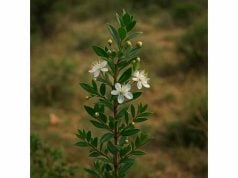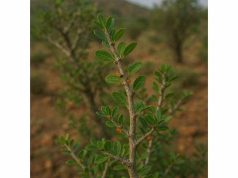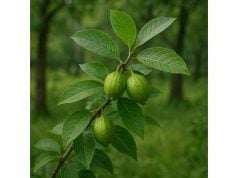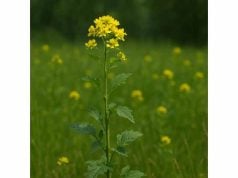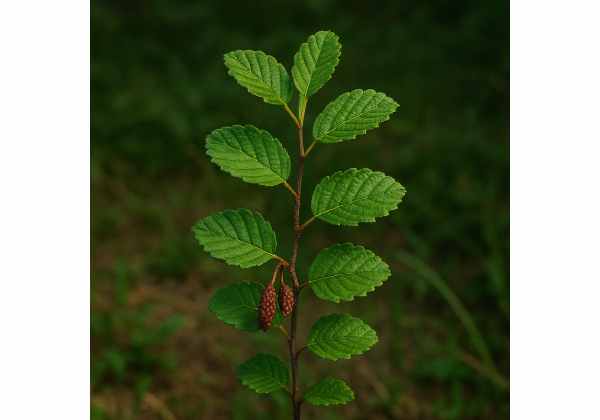
Mountain alder, usually identified as Alnus viridis and often called green alder in botanical writing, is a hardy shrub or small tree found in cool mountain and northern landscapes. It is better known to ecologists than to mainstream herbal users, yet parts of the plant, especially bark, leaves, and sometimes cones, appear in regional folk medicine and ethnobotanical records. Traditional uses have included astringent washes, decoctions, digestive remedies, and topical applications for irritated skin or minor wounds. Modern laboratory research adds another layer of interest, showing that extracts from Alnus viridis contain phenolic compounds, flavonoids, tannins, and diarylheptanoids with antioxidant, antimicrobial, and anti-inflammatory potential.
Still, mountain alder is not a well-established clinical herb. There are no widely accepted human dosing standards, no major modern treatment guidelines built around it, and very little evidence to support broad internal use. That makes it a fascinating but cautious topic. The most responsible way to approach mountain alder is as a traditional and research-interest plant with promising chemistry, limited clinical proof, and a stronger case for careful external use than for casual self-prescribed oral use.
Key Facts
- Mountain alder shows notable astringent and antioxidant activity in laboratory research, especially in bark and leaf extracts.
- Traditional use points most clearly toward topical washes, compresses, and mild digestive or folk-medicine applications rather than modern standardized oral therapy.
- A cautious traditional preparation range is about 2 to 4 g dried bark or leaf per 250 mL water for a short decoction, mainly for external use.
- People who are pregnant, breastfeeding, taking multiple medicines, or managing liver, kidney, or unexplained digestive symptoms should avoid self-prescribing mountain alder internally.
Table of Contents
- What Mountain Alder Is and How It Has Been Used
- Traditional Uses and Where the Reputation Comes From
- Key Ingredients and Medicinal Properties of Mountain Alder
- What the Research Actually Shows
- Practical Uses, Preparations, and When Topical Use Makes More Sense
- Dosage, Timing, and a Cautious Approach to Use
- Safety, Side Effects, and Who Should Avoid It
What Mountain Alder Is and How It Has Been Used
Mountain alder belongs to the birch family, Betulaceae, and is part of a broader alder group that includes several shrubs and trees with overlapping chemistry and traditional roles. In practical herbal discussion, Alnus viridis is often grouped with green alder forms and regional subspecies, which can make the literature confusing. Depending on the botanical source, you may also encounter updated naming conventions or references to closely related green alder taxa. For readers trying to understand the plant as a medicinal subject, the useful point is simpler: mountain alder is an alder shrub whose bark, leaves, and sometimes cones have drawn interest in folk medicine and phytochemical research.
Unlike famous medicinal herbs with standardized extracts and large clinical programs, mountain alder sits in a more traditional and exploratory category. It has local history, intriguing chemistry, and encouraging laboratory findings, but not the kind of modern clinical documentation that supports confident disease-treatment claims. That is why a grounded article on this plant has to balance curiosity with restraint.
Historically, alder species have often been associated with astringency. That makes sense botanically, because tannin-rich bark and leaves tend to feel tightening and drying. Across traditional plant use, that kind of profile often leads to applications such as:
- External washes for minor skin irritation
- Poultices or compresses for sore or inflamed tissue
- Folk decoctions for digestive upset
- Mouth or throat rinses in local traditions
- General wound-cleaning or cleansing uses
Mountain alder also belongs to a plant group valued for more than medicine. Alders have been used for dyes, tanning, woodworking, erosion control, and ecological restoration. This matters because many folk medicinal plants were never “medicine only.” They were practical landscape plants that communities learned to use in several ways. A shrub with dye-rich bark, tannin-rich tissues, and a strong ecological presence naturally earned a place in local home care traditions.
One useful comparison is with other astringent botanicals that people know better today, such as witch hazel for topical astringent support. The comparison is not exact, but it helps explain why mountain alder has been used more for tissue-tightening, drying, and cleansing roles than for broad tonic effects.
In modern herbal terms, mountain alder is best understood as a niche traditional plant. It is not a mainstream first-line remedy, and it is not a herb with a settled evidence profile. That does not make it uninteresting. In fact, it makes careful interpretation even more important. The right question is not “What miracle benefits does it have?” but “What traditional uses and research signals are credible enough to describe responsibly?”
That approach keeps the discussion honest and much more useful for readers who want practical, reality-based herbal information.
Traditional Uses and Where the Reputation Comes From
Mountain alder’s medicinal reputation comes more from ethnobotany and regional folk practice than from modern clinical medicine. That distinction matters. When a plant has a long traditional record, it tells us the herb was considered useful by real communities over time. It does not automatically tell us how strong the effect is, what the safest dose might be, or whether the same use holds up under modern clinical testing.
Ethnobotanical records for Alnus viridis and closely related green alder forms point to a modest but meaningful pattern of use. In some regions, fruit or plant decoctions were used for digestive purposes. Elsewhere, bark preparations appear in veterinary folk medicine, and in broader alder traditions the bark and leaves were used externally as astringent or cleansing preparations. North American ethnobotanical records for related green alder forms also describe bark-based preparations used in traditional care. The details vary by region, culture, and subspecies, which is one reason the herb resists simple standardization.
From a modern reader’s point of view, the most believable traditional themes are these:
- Astringent support for skin or mucosal tissues
- Folk digestive use in decoction form
- Minor wound or irritation care
- Local anti-inflammatory or soothing use
- Occasional use in broader household or veterinary traditions
What stands out is that mountain alder was not traditionally framed as an everyday “wellness supplement.” It was more often a practical plant used when needed. That is common in cold-climate folk medicine, where shrubs and trees served as accessible, local material for washes, decoctions, and compresses.
It is also worth noticing what the tradition does not clearly support. There is little reason to market mountain alder as a modern detox herb, immune booster, hormone aid, brain herb, or metabolic supplement. Those kinds of labels are examples of modern herbal marketing drifting away from the actual pattern of use. The real historical footprint is narrower, more grounded, and more astringent.
Readers may find mountain alder easiest to understand by comparing it to tannin-rich plants such as oak bark in traditional astringent herbal practice. Both plants are linked to drying, tightening, and protective actions, especially in topical or short-term preparations. That does not mean they are identical, but it places mountain alder in a more realistic herbal category.
Traditional use also helps explain why mountain alder deserves caution. Plants used in strong decoctions or concentrated bark preparations can be physiologically active in ways that are not always gentle, especially when tannins and phenolic compounds are prominent. Folk traditions usually handled that through short-term use, low-cost local preparation, and clear situational purpose. Modern consumers often lose that context and try to turn every traditional herb into a daily capsule. With mountain alder, that is not a smart assumption.
So where does its reputation come from? Mostly from practical, place-based herbal knowledge. Communities noticed that the plant could tighten tissues, support cleansing, and serve in simple local remedies. Modern research has given that reputation some biochemical plausibility, but it has not transformed mountain alder into a clinically established herb.
Key Ingredients and Medicinal Properties of Mountain Alder
Mountain alder attracts scientific interest because it contains several classes of compounds associated with biologic activity. The most relevant groups are phenolic compounds, flavonoids, tannins, and diarylheptanoids. Together, these compounds help explain why extracts from bark, leaves, and cones show antioxidant, antimicrobial, and sometimes anti-inflammatory effects in laboratory settings.
Tannins are probably the easiest place to start because they match the plant’s traditional reputation. Tannins are polyphenolic compounds known for their astringent character. In practical terms, that means they can create a tightening, drying effect on tissues. This supports the traditional logic behind alder bark washes, compresses, and short-term folk preparations for irritated surfaces. Astringency is not glamorous, but it is one of the most consistent herbal actions across many bark-based remedies.
Flavonoids and related phenolics contribute additional antioxidant potential. In test systems, mountain alder extracts have shown meaningful radical-scavenging activity, and some analyses report especially high phenolic content in bark. Laboratory antioxidant activity does not prove a clinical benefit by itself, but it does give the plant a plausible mechanistic profile, especially for protective and tissue-supporting roles.
Diarylheptanoids are a more specialized part of the story. These compounds are widely discussed in alder chemistry and are one reason researchers keep returning to the genus. Some isolated diarylheptanoids from Alnus viridis have shown interesting biologic actions in cell and experimental systems, including antimicrobial, cytoprotective, and anti-inflammatory potential. That does not mean the whole plant is ready for therapeutic use, but it does explain why mountain alder is more than just “a tannic shrub.”
Taken together, the medicinal properties most reasonably associated with mountain alder are:
- Astringent
- Antioxidant
- Mild antimicrobial in laboratory models
- Potentially anti-inflammatory in experimental settings
- Tissue-protective in topical or localized traditional use
The key caution is that these are mostly inferred from chemistry and preclinical work, not from robust human trials. This is where many herb articles go wrong. They turn “contains active compounds” into “clinically proven for many diseases.” That leap is not justified here.
Another helpful way to think about mountain alder is as a plant whose chemistry supports limited traditional uses more convincingly than broad modern claims. For example, a bark-rich, tannin-rich plant being useful in a short-term topical wash is a coherent idea. The same plant being sold as a daily internal anti-aging supplement would require a much stronger evidence base.
Readers familiar with soothing skin herbs may also think of calendula for skin comfort and minor irritation. Calendula and mountain alder are very different plants, but the comparison is useful because both are often discussed in terms of local tissue support rather than deep systemic medicine. Mountain alder, however, is rougher, more astringent, and less clinically developed.
So the active profile of mountain alder is real enough to merit interest. The herb contains compounds with meaningful laboratory activity. The responsible conclusion, though, is not that its benefits are fully proven. It is that its chemistry supports cautious traditional use and justifies further study, especially in external and anti-inflammatory contexts.
What the Research Actually Shows
The most honest summary of mountain alder research is that it is promising, but still preclinical. There is no substantial body of modern human trials showing that Alnus viridis reliably treats specific conditions. What exists instead is a set of phytochemical, antimicrobial, antioxidant, cytotoxic, and anti-inflammatory studies that make the plant scientifically interesting while still leaving many practical questions unanswered.
Several studies on Alnus viridis extracts have reported strong phenolic content and measurable antioxidant activity. In simple terms, the plant is chemically rich enough to neutralize free radicals in test systems, and bark extracts in particular often perform well. This supports the long-standing idea that alder tissues are biologically active rather than inert plant matter.
Researchers have also reported antimicrobial effects against selected bacteria and fungi. These findings help explain traditional cleansing or wound-oriented uses, but they need careful interpretation. Activity in a disc diffusion assay or a cell model does not automatically translate into a safe and effective home remedy. Laboratory systems simplify reality. Human skin, wounds, digestion, and dosing are much more complicated.
Another research thread involves diarylheptanoids isolated from green alder bark. These compounds have shown noteworthy biologic effects in experimental models, including modulation of cell behavior and other protective or pharmacologically interesting actions. Some work has even explored anti-proliferative properties in cancer-related laboratory models. That kind of finding often attracts attention, but it is precisely where readers need the most caution. Cell-line activity is not a cancer treatment recommendation. It is an early-stage research signal, nothing more.
Anti-inflammatory research is also relevant. Older ethnopharmacology screening and newer work on traditional northern medicinal plants suggest that alder-related species can show moderate anti-inflammatory activity in vitro. These results are enough to justify further study, especially for topical and barrier-support contexts, but still not enough to establish a modern clinical use claim for mountain alder itself.
A practical summary of the evidence looks like this:
- Good support for interesting phytochemistry
- Repeated preclinical support for antioxidant effects
- Some support for antimicrobial actions in extracts
- Limited but notable support for anti-inflammatory potential
- Little to no high-quality human evidence for established medicinal dosing or outcomes
This means mountain alder is best described as a research-interest medicinal plant, not a validated clinical herb. That distinction protects readers from two common mistakes. The first is dismissing the plant entirely because it lacks large trials. The second is exaggerating it into a proven remedy because lab studies sound exciting.
In many ways, mountain alder resembles other lesser-known bark and shrub medicines that live in the space between ethnobotany and pharmacology. It may eventually prove useful in more defined ways, but that future would require standardized extracts, toxicology work, human tolerability data, and condition-specific studies.
For now, the research supports cautious curiosity. It tells us the plant contains meaningful compounds and that traditional uses were not arbitrary. It does not tell us that mountain alder should be widely consumed, self-prescribed for chronic disease, or used as a replacement for better-studied herbs or conventional care.
Practical Uses, Preparations, and When Topical Use Makes More Sense
Because mountain alder lacks standardized medicinal products and solid human dosing data, practical use should remain conservative. In real-world herbalism, that means leaning toward external applications and short-term traditional-style preparations rather than frequent internal use.
The most defensible use category is topical. Astringent, tannin-rich plants are often better suited to the outside of the body than to unsupervised daily ingestion. If someone is exploring mountain alder at all, the more reasonable uses are likely to be:
- A cooled wash for intact irritated skin
- A compress for minor, non-serious localized inflammation
- A short-term rinse for superficial cleansing
- A traditional external preparation for tissues that benefit from a drying or tightening effect
This kind of use aligns with the plant’s chemistry. Tannins can be useful externally, especially where there is minor weeping, surface irritation, or a need for temporary tightening. Internally, the same astringency can be harder to predict and may irritate some people, especially if the preparation is too strong or used too long.
If an herbalist were choosing between mountain alder and better-known options, the safer first choices are often plants with more established topical profiles. Someone seeking gentle skin support might reasonably start with calendula, while a person looking for stronger astringent action might compare it with witch hazel or oak bark. Mountain alder makes more sense as a niche or local-tradition herb than as a first-time self-care experiment.
Preparation form matters a great deal. Bark decoctions are usually stronger and more tannic than leaf infusions. Leaves may produce a somewhat milder preparation, though they are still not automatically gentle. Cones and fruits appear in some studies and regional uses, but these are even less standardized for home use.
A careful, old-fashioned preparation logic would look like this:
- Use a clearly identified plant part from a reliable source.
- Favor diluted preparations over concentrated ones.
- Test a small amount first, especially on the skin.
- Keep use short term.
- Stop if irritation or any unusual reaction develops.
Mountain alder should also be seen as a situational herb, not a daily ritual beverage. This is not like mint tea, chamomile, or a culinary spice. It is better approached as a specialized astringent plant, closer in spirit to traditional bark-based remedies such as white willow bark, though with very different chemistry and much less clinical clarity.
Another practical point is sourcing. Wildcrafted bark and leaves can be easily confused, contaminated, or harvested unsustainably. Since mountain alder is not a common commercial herbal product with strong quality control, source quality becomes a bigger issue than with mainstream herbs.
So when does topical use make more sense? Nearly always. External, short-term, diluted use is much easier to justify than casual oral use. That does not make it risk-free, but it aligns better with the current evidence, the traditional pattern, and the chemistry of the plant itself.
Dosage, Timing, and a Cautious Approach to Use
The most important dosage fact about mountain alder is that there is no widely accepted clinical dosing standard for Alnus viridis in modern herbal medicine. No major monograph sets out a well-established oral regimen the way it does for better-studied herbs. That means any dose discussion should be framed as traditional, approximate, and conservative rather than evidence-based in a clinical sense.
If mountain alder is used at all in home herbal practice, the least risky route is usually a mild decoction intended for external use. A cautious traditional range is about 2 to 4 g of dried bark or leaf per 250 mL of water, simmered briefly and then cooled before use as a wash or compress. Some herbalists would keep the first preparation even lighter, especially with bark, because tannin-rich plants can quickly become harsh.
For external use, the practical approach is:
- Start with the weaker end of the range
- Simmer for roughly 10 to 15 minutes
- Cool fully
- Strain well
- Use once or twice daily for a short period on intact skin only
For internal use, caution should be much stronger. Because there is no established therapeutic oral dose and very little human safety data, mountain alder is not a good candidate for open-ended self-treatment. If someone still chooses to use it orally based on regional tradition, the preparation should remain weak, the duration short, and the purpose narrow. Even then, internal use is better thought of as a historical note than a modern recommendation.
Timing is not complicated because the herb has no established circadian or food-based dosing protocol. External preparations are usually used when symptoms are present. If taken internally in a traditional context, it would generally be used short term rather than continuously.
Duration matters more than timing. Tannin-rich bark preparations are not ideal for long daily use. Extended use may increase the chance of digestive upset, mucosal irritation, or interference with the absorption of certain nutrients or medicines. This is another reason mountain alder does not fit the modern supplement model.
A good self-check before using mountain alder is to ask:
- Am I choosing this because it truly fits the problem, or because it sounds unusual and “natural”?
- Is the issue minor and appropriate for simple external self-care?
- Do I know the plant source and part used?
- Am I prepared to stop quickly if irritation occurs?
- Would a better-studied herb be a safer first option?
That kind of thinking prevents the most common misuse, which is treating a poorly standardized folk plant like a well-characterized supplement.
So the best dosage advice is not a hard number. It is a framework: keep the preparation mild, favor topical use, use it for short periods only, and avoid improvising strong oral regimens. When an herb lacks established dosing science, restraint is part of safe dosing.
Safety, Side Effects, and Who Should Avoid It
Mountain alder may look like a modest folk shrub, but safety still matters. In fact, herbs with limited clinical use data deserve more caution, not less. The main safety issue with Alnus viridis is uncertainty. We know the plant contains active compounds. We know extracts can produce meaningful biologic effects in laboratory models. What we do not know well is how standardized internal use performs in diverse human populations over time.
The most likely side effects, based on the plant’s chemistry and the behavior of similar tannin-rich preparations, include:
- Stomach upset
- Nausea
- Mouth or throat irritation from strong decoctions
- Constipating or drying effects in some users
- Skin irritation or rash with topical application
- Unpleasant bitterness leading to poor tolerance
Topical use is usually the safer route, but even that requires care. Strong bark decoctions can irritate broken, highly inflamed, or very sensitive skin. A patch test is sensible before broader application, especially in people with reactive skin or multiple plant sensitivities.
The groups who should avoid internal self-treatment with mountain alder include:
- Pregnant or breastfeeding people
- Children
- Anyone with liver or kidney disease
- Anyone with chronic gastrointestinal disease
- People taking multiple medicines, especially those sensitive to tannins or reduced absorption
- Anyone with unexplained abdominal pain, persistent diarrhea, rectal bleeding, or weight loss
This last group is important. Folk digestive use does not justify self-treating serious digestive symptoms. A tannin-rich decoction can mask or complicate symptoms that need medical evaluation.
Allergy is another consideration. Alder pollen is a recognized allergen, and while pollen allergy does not automatically predict reaction to bark or leaf preparations, people with strong birch-family sensitivities should still proceed carefully.
Mountain alder should also be avoided as a substitute for professional care in infections, severe wounds, chronic inflammatory diseases, or suspected cancer. Laboratory antimicrobial or cytotoxic findings are not a license for home treatment of serious illness. That is exactly the kind of leap that turns interesting herbal research into unsafe advice.
A sensible stop rule is simple: if a preparation causes burning, worsening redness, stomach distress, unusual bleeding, or any symptom that feels clearly wrong, discontinue it. If the original problem is not improving within a short period, reassess the choice rather than increasing the strength.
The safest overall conclusion is that mountain alder is best handled as a limited-use traditional plant, not a routine supplement. External, short-term, dilute preparations are the most defensible approach. Internal use is much less certain and should not be casual. When evidence is thin, caution is not a drawback. It is the responsible way to respect both the plant and the person using it.
References
- The Genus Alnus, A Comprehensive Outline of Its Chemical Constituents and Biological Activities 2017 (Review)
- Total phenolic and flavonoid contents, antioxidant and antimicrobial activities of Alnus glutinosa (L.) Gaertn., Alnus incana (L.) Moench and Alnus viridis (Chaix) DC. extracts 2014 (Preclinical Study)
- Antioxidant, cytotoxic, and antimicrobial activity of Alnus incana (L.) ssp. incana Moench and A. viridis (Chaix) DC ssp. viridis extracts 2010 (Preclinical Study)
- Ethnopharmacological in vitro studies on Austria’s folk medicine—An unexplored lore in vitro anti-inflammatory activities of 71 Austrian traditional herbal drugs 2013 (Ethnopharmacology Study)
- In vitro anti-inflammatory properties of twelve Norwegian medicinal plants 2025 (Preclinical Study)
Disclaimer
This article is for educational purposes only and is not medical advice, a diagnosis, or a treatment plan. Mountain alder is a traditionally used and experimentally studied plant, but it is not a clinically established herbal medicine with standardized dosing for common health conditions. Because human safety and effectiveness data are limited, internal use should be approached with great caution. Seek professional medical guidance before using mountain alder if you are pregnant, breastfeeding, taking medicines, managing a chronic condition, or considering it for anything beyond minor short-term external use.
If you found this article useful, please share it on Facebook, X, or another platform that fits your audience.