Excessive daytime sleepiness is more than feeling tired after a poor night’s sleep. It means the brain has trouble staying awake when wakefulness should be expected, sometimes leading to unplanned naps, sleep attacks, poor concentration, memory lapses, or safety risks while driving or working.
The Multiple Sleep Latency Test, usually called the MSLT, is a specialized daytime sleep test used when a clinician needs objective information about sleepiness. It is most often used after an overnight sleep study to help evaluate narcolepsy, idiopathic hypersomnia, and other causes of persistent daytime sleepiness. The test does not diagnose every sleep problem on its own, but it can provide important evidence when symptoms, sleep history, overnight testing, and medication review all point toward a central disorder of hypersomnolence.
Table of Contents
- What the MSLT Measures
- When Doctors Order an MSLT
- How the MSLT Is Done
- How to Prepare for an MSLT
- What MSLT Results Mean
- Limits, False Results, and Repeat Testing
- Next Steps After MSLT Results
- When Sleepiness Needs Prompt Care
What the MSLT Measures
The MSLT measures how quickly you fall asleep during several scheduled nap opportunities in a quiet sleep lab. It also records whether rapid eye movement sleep appears unusually soon after sleep begins.
The main number from the test is mean sleep latency. Sleep latency means the amount of time it takes to fall asleep. During the MSLT, the sleep lab averages your sleep latency across several naps. A shorter average sleep latency suggests a stronger biological tendency to fall asleep during the day.
The second key finding is whether you have sleep-onset REM periods, often shortened to SOREMPs. REM sleep is the sleep stage most associated with vivid dreaming. In typical sleep, REM usually appears later in the sleep cycle. When REM appears very soon after falling asleep during daytime naps, that can be a clue toward narcolepsy, especially when it appears repeatedly and fits the clinical picture.
The MSLT is different from a questionnaire. A sleepiness scale, such as the Epworth Sleepiness Scale, asks how likely you are to doze in everyday situations. The MSLT tries to measure sleepiness physiologically, under controlled conditions. Both can be useful, but they answer different questions.
The test is also different from an overnight sleep study. Overnight polysomnography records sleep stages, breathing, oxygen levels, heart rhythm, limb movements, and other signals while you sleep at night. The MSLT is performed during the day and focuses on the brain’s tendency to fall asleep when given repeated chances to nap.
That distinction matters because “sleepy,” “tired,” and “fatigued” are not identical. Sleepiness means a tendency to fall asleep. Fatigue can feel like low energy, heaviness, low stamina, or mental exhaustion without actually dozing. Brain fog may involve attention and processing speed. The MSLT is most useful when the main problem is unwanted sleep or a strong drive to sleep, not when the main problem is nonspecific fatigue alone.
When Doctors Order an MSLT
Doctors usually order an MSLT when excessive daytime sleepiness is persistent, functionally significant, and not fully explained by routine sleep loss or another obvious cause. It is most commonly used when narcolepsy or idiopathic hypersomnia is being considered.
Narcolepsy can cause overwhelming sleepiness, sleep attacks, vivid dreamlike experiences around sleep, sleep paralysis, disrupted nighttime sleep, and sometimes cataplexy. Cataplexy is a sudden brief loss of muscle tone, often triggered by emotions such as laughter or surprise. When symptoms suggest narcolepsy, an MSLT can help show whether the brain is entering sleep quickly and whether REM sleep is appearing unusually early. For a broader symptom context, narcolepsy symptoms often overlap with problems people first describe as brain fog or poor concentration.
Idiopathic hypersomnia is another central disorder of hypersomnolence. People with this condition may sleep for long periods, feel unrefreshed after naps, struggle severely with waking up, and remain sleepy despite what appears to be enough sleep time. The MSLT may support the diagnosis, although idiopathic hypersomnia often requires a careful broader workup because MSLT findings can be variable.
An MSLT may also be considered when sleepiness remains after other problems have been treated or ruled out. These may include obstructive sleep apnea, insufficient sleep, circadian rhythm sleep-wake disorders, medication effects, substance use, depression, neurological illness, or other medical conditions. Sleep apnea is especially important because it can cause daytime sleepiness, poor focus, irritability, and low mood; in some people, sleep apnea can mimic ADHD, depression, and brain fog.
The test is not usually the first step for every tired person. A clinician will typically start with a sleep history, medical history, medication review, and sometimes screening tools or basic lab work. If snoring, witnessed pauses in breathing, morning headaches, or high-risk features for sleep apnea are present, evaluation for sleep-disordered breathing may come first. If the main concern is chronic insomnia, an insomnia evaluation may be more relevant than an MSLT.
The MSLT is most helpful when the question is specific: does this person have objective daytime sleepiness, and does the pattern suggest narcolepsy or another central hypersomnolence disorder?
How the MSLT Is Done
The MSLT is performed in a sleep center during the day, usually immediately after an overnight sleep study. The overnight study helps confirm that the person had enough sleep time before the daytime test and checks for other sleep disorders that could explain the sleepiness.
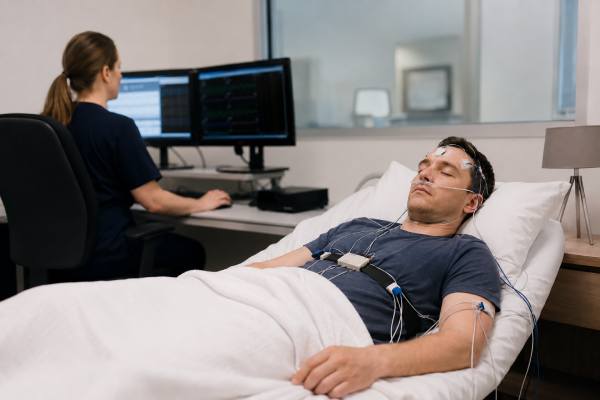
A typical MSLT includes five nap opportunities spaced about two hours apart. During each nap trial, you lie in a dark, quiet room and are asked to try to fall asleep. Sensors record brain waves, eye movements, muscle tone, and other signals that allow the sleep technologist and sleep physician to identify whether you fall asleep and which sleep stage appears.
If you do not fall asleep during a nap opportunity, that trial usually ends after about 20 minutes. If you do fall asleep, recording continues long enough to see whether REM sleep appears soon after sleep onset. Between naps, you generally stay awake in the sleep center. You may be asked to avoid caffeine, strenuous exercise, bright light exposure, or unscheduled naps during the testing day.
A simplified version of the day often looks like this:
- The overnight sleep study ends in the morning.
- Sensors are adjusted or replaced for daytime testing.
- You complete the first nap trial after a wake period.
- Additional nap trials occur about every two hours.
- The sleep center records whether you sleep, how quickly you sleep, and whether early REM sleep occurs.
- A sleep specialist interprets the full pattern together with your history and overnight sleep study.
The test is not painful, but it can feel boring or artificial. That is intentional. The controlled setting reduces distractions and gives the sleep team a standardized way to compare results. Still, the sleep lab is not normal life, which is one reason the MSLT must be interpreted with context.
A home sleep apnea test is not the same thing as an MSLT. Home testing may help detect some forms of obstructive sleep apnea, but it does not measure daytime nap sleep latency or sleep-onset REM periods in the same way. If a clinician is considering narcolepsy or idiopathic hypersomnia, an in-lab overnight study followed by the daytime MSLT is usually the more relevant testing pathway.
How to Prepare for an MSLT
Good preparation is essential because sleep deprivation, irregular sleep timing, caffeine, medications, and untreated sleep disorders can all distort MSLT results. A technically well-run test can still be misleading if the days before testing are not handled carefully.
Many sleep centers ask for a sleep diary for one to two weeks before the test. Some also use actigraphy, a wrist-worn movement monitor that helps estimate sleep-wake patterns. These records help show whether the person had enough sleep before the study and whether a delayed or irregular sleep schedule might affect the result.
Preparation often includes these steps:
- Keep a consistent sleep schedule before testing, as directed by the sleep clinic.
- Allow enough time in bed for your usual sleep need.
- Avoid intentional sleep restriction before the study.
- Tell the sleep specialist about all prescription drugs, over-the-counter medications, supplements, nicotine, cannabis, alcohol, and caffeine use.
- Ask specifically which medications should be continued, paused, or adjusted.
- Do not stop antidepressants, stimulants, sedatives, anxiety medications, or other prescribed drugs without medical direction.
- Follow instructions about caffeine, alcohol, and naps before and during the testing period.
- Bring items that help you stay comfortable between naps, while still following sleep lab rules.
Medication review is especially important. Some medicines suppress REM sleep and could reduce sleep-onset REM periods. Others increase sleepiness and could shorten sleep latency. Stimulants, wake-promoting medicines, sedatives, some antidepressants, antihistamines, certain pain medications, and substances such as cannabis can all matter. The safest plan depends on the individual, because stopping a medication can also be risky or can cause rebound symptoms.
Sleep schedule also matters. Someone with chronic short sleep may fall asleep quickly during the MSLT because they are sleep deprived, not because they have narcolepsy. Someone with delayed sleep phase may perform poorly if testing occurs at the wrong biological time. This is one reason clinicians often consider sleep timing carefully when evaluating sleepiness, attention problems, and conditions such as sleep deprivation versus ADHD.
Preparation is not about “passing” the test. It is about making the test reflect your usual biology as accurately as possible.
What MSLT Results Mean
MSLT results are interpreted by looking at the average time to fall asleep, the number of sleep-onset REM periods, the overnight sleep study, and the clinical history. A single number rarely tells the whole story.
A common diagnostic threshold is a mean sleep latency of 8 minutes or less. This suggests objective daytime sleepiness. For narcolepsy, the pattern usually involves short mean sleep latency plus two or more sleep-onset REM periods, depending on the full diagnostic framework and whether a sleep-onset REM period occurred on the overnight study. For idiopathic hypersomnia, the MSLT may show short mean sleep latency without the same repeated early REM pattern, although some people with idiopathic hypersomnia need other forms of sleep time assessment.
| Finding | What it may suggest | Important caution |
|---|---|---|
| Mean sleep latency over 10 minutes | Less objective sleepiness during the test day | Does not rule out all sleep or medical problems |
| Mean sleep latency 8 minutes or less | Objective daytime sleepiness | Can occur with sleep deprivation, circadian misalignment, medication effects, or untreated sleep disorders |
| Two or more sleep-onset REM periods | Can support narcolepsy when symptoms fit | Must be interpreted with the overnight study and preparation history |
| Short sleep latency with fewer than two sleep-onset REM periods | May support idiopathic hypersomnia or another cause of sleepiness | Additional evaluation may be needed, especially if long sleep time is suspected |
The MSLT can also be normal even when a person feels impaired. This can happen if the primary problem is fatigue rather than sleepiness, if symptoms fluctuate, if medications affect the result, or if the test day does not capture the person’s usual pattern. It can also happen in some people with suspected central hypersomnolence disorders, which is why the result should not be read in isolation.
Children and adolescents require extra care in interpretation. Sleep needs, school schedules, delayed sleep timing, and developmental factors can all influence daytime sleepiness. Pediatric MSLT protocols exist, but results still need a clinician who understands pediatric sleep medicine.
For adults, the MSLT result is most meaningful when it answers a clear clinical question and when the testing conditions were reliable: adequate sleep beforehand, appropriate overnight study, careful medication planning, and no untreated sleep disorder that fully explains the daytime sleepiness.
Limits, False Results, and Repeat Testing
The MSLT is useful, but it is not a perfect test. False positives, false negatives, and borderline results can happen, especially when sleep habits, medications, circadian rhythm, or another sleep disorder interfere with the measurement.
A false positive means the test appears to support a central sleepiness disorder when another factor may explain the result. Common reasons include insufficient sleep, shift work, jet lag, delayed sleep phase, untreated sleep apnea, medication withdrawal, sedating medication, or substance effects. A person who has been chronically undersleeping may fall asleep very quickly in the lab even without narcolepsy.
A false negative means the test does not show the expected pattern even though the person may still have a clinically important hypersomnolence disorder. This can happen if a REM-suppressing medication is still active, if wake-promoting medication was not fully cleared under medical guidance, if symptoms fluctuate, or if the test simply does not capture the person’s usual daytime sleepiness.
The test is generally more stable for narcolepsy type 1, especially when cataplexy or low orexin levels support the diagnosis. It can be less stable for narcolepsy type 2 and idiopathic hypersomnia. In those situations, clinicians may place more weight on the complete clinical picture, sleep logs, actigraphy, extended sleep recording, response to treating other sleep disorders, and sometimes repeat testing.
The MSLT also does not measure every consequence of poor sleep. It does not directly measure driving performance, work safety, mood, motivation, or executive function. It can help explain why someone is falling asleep, but it does not replace a broader assessment when symptoms include depression, anxiety, cognitive changes, neurological symptoms, or major changes in daily functioning.
A repeat MSLT may be considered if the first test was affected by inadequate sleep, medication issues, circadian timing, untreated sleep apnea, or unclear findings. Repeat testing is not needed for everyone. It is most useful when the result would change diagnosis, treatment, school or work accommodations, driving advice, or medication decisions.
Next Steps After MSLT Results
After the MSLT, the sleep specialist should explain what the result does and does not show. The most useful follow-up connects the test findings to symptoms, safety, diagnosis, and a practical treatment plan.
If the results support narcolepsy, the next steps may include discussion of narcolepsy type, cataplexy, nighttime sleep quality, scheduled naps, driving safety, school or workplace accommodations, and medication options. Treatment may involve wake-promoting medicines, stimulants, medications that improve cataplexy or REM-related symptoms, and sleep schedule planning.
If the results support idiopathic hypersomnia, the plan may focus on wake-promoting treatment, sleep inertia strategies, schedule protection, documentation for accommodations, and ruling out other contributors. Some people need additional assessment of total sleep time, especially when they report very long sleep duration or severe difficulty waking.
If the MSLT does not support narcolepsy or idiopathic hypersomnia, that does not mean symptoms are imaginary. It means the test did not show the specific objective pattern being evaluated. The clinician may then revisit other causes, such as sleep apnea, chronic insufficient sleep, circadian rhythm disorders, insomnia, restless legs syndrome, depression, medication effects, endocrine problems, anemia, or neurological conditions. A targeted sleep study for brain fog, fatigue, and poor concentration may be part of that broader workup when sleep remains a likely contributor.
It can help to ask the sleep specialist direct questions after the report is available:
- Did I get enough sleep on the overnight study for the MSLT to be valid?
- Was there evidence of sleep apnea, periodic limb movements, or another sleep disorder?
- What was my mean sleep latency?
- How many sleep-onset REM periods occurred?
- Could any medication or substance have affected the result?
- Does this result support narcolepsy, idiopathic hypersomnia, or neither?
- Should any part of the test be repeated?
- What should I do about driving, work, or school while symptoms are being treated?
The report should not be reduced to “normal” or “abnormal” without explanation. For many people, the value of the MSLT is that it narrows the next decision: treat a central hypersomnolence disorder, correct a different sleep problem, adjust medications, or continue the medical and mental health evaluation.
When Sleepiness Needs Prompt Care
Daytime sleepiness deserves prompt medical attention when it creates safety risks, appears suddenly, or comes with neurological or mental health warning signs. The MSLT is useful for planned diagnosis, but it is not a substitute for urgent evaluation when symptoms suggest immediate danger.
Contact a healthcare professional promptly if you are falling asleep while driving, operating machinery, caring for children in unsafe situations, cooking, or performing safety-sensitive work. Until the cause is clarified and symptoms are controlled, it may be necessary to avoid driving or other high-risk activities.
Seek urgent care or emergency help if sleepiness occurs with sudden weakness, facial drooping, trouble speaking, new confusion, severe headache, fainting, chest pain, breathing difficulty, seizure-like activity, or a sudden major change in alertness. Those symptoms may point to conditions that need immediate evaluation rather than routine sleep testing.
Mental health symptoms also matter. Severe depression, suicidal thoughts, psychosis, intoxication, medication overdose, or inability to stay safe should be treated as urgent. Sleepiness and mental health symptoms often interact, but dangerous changes in thinking, behavior, or consciousness should not be attributed to a sleep disorder without assessment.
For less urgent but persistent symptoms, the right next step is usually a structured evaluation. Keep a record of sleep and wake times, naps, caffeine use, medications, episodes of dozing, snoring or witnessed breathing pauses, unusual dreamlike experiences, sleep paralysis, cataplexy-like events, and how symptoms affect school, work, relationships, or driving. This information helps the clinician decide whether an MSLT, another sleep test, lab work, neurological evaluation, or mental health assessment is most appropriate.
The MSLT is most powerful when it is used for the right question: not “Why am I tired?” in the broadest sense, but “Is my brain showing objective daytime sleepiness, and does the pattern fit narcolepsy, idiopathic hypersomnia, or another sleep-wake disorder?”
References
- Recommended protocols for the Multiple Sleep Latency Test and Maintenance of Wakefulness Test in adults: guidance from the American Academy of Sleep Medicine 2021 (Protocol Guidance)
- Recommended protocols for the Multiple Sleep Latency Test and Maintenance of Wakefulness Test in children: guidance from the American Academy of Sleep Medicine 2024 (Protocol Guidance)
- Multiple Sleep Latency Test/Maintenance of Wakefulness Test and Central Hypersomnias: Evolving Diagnostic and Therapeutic Approaches 2023 (Review)
- Narcolepsies, update in 2023 2023 (Review)
- Diagnostic challenges and burden of idiopathic hypersomnia 2024 (Review)
- Normal multiple sleep latency test values in adults: A systematic review and meta-analysis 2023 (Systematic Review and Meta-analysis)
Disclaimer
This article is for general educational purposes only and is not a substitute for professional medical advice, diagnosis, or treatment. Excessive daytime sleepiness can have medical, neurological, medication-related, sleep-related, and mental health causes, so testing decisions and result interpretation should be handled by a qualified healthcare professional.
Share this article on Facebook, X (formerly Twitter), or your preferred platform to help others understand what an MSLT sleep test can and cannot show.