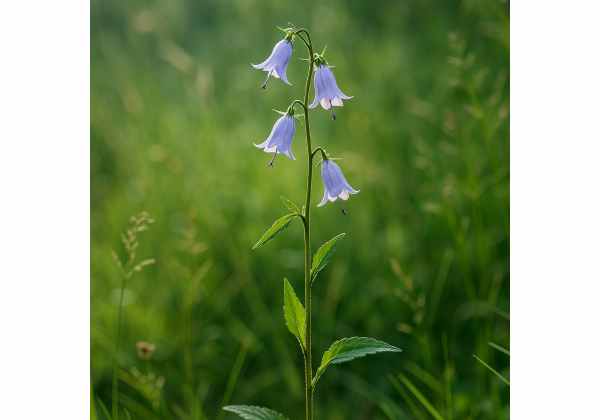
Nan Sha Shen, usually identified with Adenophora triphylla and related Adenophorae Radix material in East Asian herbal practice, is a traditional root used mainly for dryness-related respiratory complaints. It has a long reputation as a moistening, soothing herb for dry cough, throat irritation, scanty phlegm, and the kind of internal dryness that leaves the mouth and chest feeling depleted rather than congested. In modern research, its most interesting features include anti-inflammatory activity, antioxidant potential, and a diverse mix of plant compounds such as phenolic acids, flavonoids, sterols, saponins, and polysaccharide-rich fractions.
What makes Nan Sha Shen especially interesting is the way it sits between tradition and emerging science. Traditional use emphasizes lung and stomach moisture, while laboratory and animal studies suggest effects on airway inflammation, mucus regulation, and oxidative stress. At the same time, human evidence is still limited, which means it is best viewed as a supportive herb rather than a stand-alone treatment. Understanding what it may help, how it is commonly taken, and where its limits lie is the key to using it well.
Quick Overview
- Traditionally used to soothe dry cough, throat dryness, and irritated airways.
- Early research suggests anti-inflammatory and antioxidant effects, especially in respiratory models.
- A common traditional decoction range is about 9 to 15 g of dried root per day.
- Avoid self-use during pregnancy, breastfeeding, or for children unless a qualified clinician advises it.
Table of Contents
- What Nan Sha Shen is and how it is used in traditional practice
- Key ingredients and medicinal properties
- Potential health benefits for the lungs throat and dry cough
- Other emerging benefits under study
- How Nan Sha Shen is prepared and used
- Dosage timing and how long to use it
- Safety side effects and who should avoid it
What Nan Sha Shen is and how it is used in traditional practice
Nan Sha Shen is the dried root used in traditional East Asian medicine from Adenophora species, most often linked in modern writing to Adenophora triphylla and closely related authenticated sources. In practice, it is valued less as a stimulating herb and more as a restoring one. The classic picture is dryness: a dry cough that will not settle, a scratchy throat, hoarseness, or a chest that feels irritated but not heavily burdened with thick phlegm. In the digestive context, it is also used when dryness shows up as thirst, low fluid tolerance, or a sensation of heat and depletion.
That traditional framework matters because it helps explain why Nan Sha Shen is not usually chosen for every kind of cough. It is considered more suitable for dry, irritated, or deficiency-type patterns than for chills, heavy congestion, or thick sticky mucus from an acute infection. In plain terms, it is more of a soothing and replenishing root than a harsh expectorant.
One common source of confusion is the difference between Nan Sha Shen and Bei Sha Shen. Both are “Sha Shen” herbs and both are often described as moistening. Nan Sha Shen is generally thought to be a little better for coughing and phlegm that arise from dryness affecting the lungs, while Bei Sha Shen is often described as slightly more fluid-restoring for the stomach and deeper yin depletion. In real-world herbal practice, the distinction matters because formulas are chosen for patterns, not just ingredient names.
Nan Sha Shen is also a food-like medicinal in some regional traditions. The root may be boiled into decoctions, combined with pears, lily bulb, or other moistening ingredients, and included in formulas meant to calm irritative cough or throat discomfort. That partly explains why many people describe it as a “gentle” herb. It is not usually the centerpiece of an aggressive, fast-acting intervention. Instead, it often plays a supportive role in a broader formula designed to soothe tissues and reduce irritation over time.
From a modern perspective, that traditional positioning is helpful. It tells readers what to expect and what not to expect. Nan Sha Shen is not a bronchodilator in the pharmaceutical sense, not a substitute for urgent asthma care, and not a cure for serious lung disease. Its more realistic role is as a supportive herb for dryness-related symptoms, especially when used thoughtfully and, ideally, in the context of a well-built formula.
Key ingredients and medicinal properties
Nan Sha Shen contains a chemically diverse profile rather than one single “magic” compound. That is typical of medicinal roots. Current research points to a mixture of phenolic acids, flavonoids, sterols, terpenoid-like compounds, carbohydrates, lipids, and other small metabolites that may work together rather than separately. This matters because the herb’s traditional benefits likely come from a combined matrix of compounds instead of one isolated marker.
Among the compounds most often highlighted are chlorogenic acid and luteolin-type constituents, along with sterols such as beta-sitosterol and triterpenoid-related compounds including lupenone. Researchers also discuss saponin-rich fractions and polysaccharide-containing fractions when looking at immune and anti-inflammatory actions. In practical language, these classes suggest several broad properties: antioxidant activity, modulation of inflammatory signaling, support for irritated mucosal surfaces, and possible effects on mucus production and tissue recovery.
A useful way to think about Nan Sha Shen is to group its properties into four main categories.
- Moistening and soothing
Traditional use strongly emphasizes relief for dry, irritated tissues, especially in the throat and lungs. While modern chemistry does not translate perfectly into traditional language, the overall profile fits a plant used to calm irritation rather than provoke strong elimination. - Anti-inflammatory
Cell and animal studies repeatedly point toward anti-inflammatory effects. This may help explain why the herb shows promise in models involving airway irritation, immune-cell infiltration, and tissue damage. - Antioxidant
Phenolic compounds and related metabolites may help buffer oxidative stress. This is especially relevant in respiratory research, where pollution, inflammation, and oxidative injury often overlap. - Airway-supportive
Some research suggests an influence on mucus balance, cough response, and inflammatory burden in the airways. That does not make it a proven clinical respiratory drug, but it does support the direction of its traditional use.
It is also worth noting that the chemical profile can vary by species authentication, plant part, processing method, and growing environment. Studies have shown that roots and aerial parts do not have identical bioactivity, and the composition of hydrothermal extracts can differ from that of the raw root. That means teas, powders, and concentrated extracts may not behave in exactly the same way.
For readers familiar with soothing herbs such as marshmallow root, the comparison can be helpful. Nan Sha Shen is not identical, but it belongs in the same general conversation about herbs used to calm irritated tissues rather than overstimulate them. Its character is less about dramatic symptom suppression and more about steady support where dryness, inflammation, and sensitivity overlap.
Potential health benefits for the lungs throat and dry cough
The most defensible health claims for Nan Sha Shen center on respiratory support. That is where traditional use is strongest and where modern preclinical research is most consistent. The key point, though, is that evidence remains mostly non-human. So the right wording is “may help support” rather than “has been proven to treat.”
The first likely benefit is support for dry cough and throat irritation. In traditional use, this is the main reason people reach for Nan Sha Shen. It is especially suited to coughs that feel dry, lingering, or heat-irritated rather than wet and heavy. This distinction matters. Someone with an acute viral illness and thick mucus may not be looking at the same herbal strategy as someone with a persistent dry throat after illness, long talking, environmental dryness, or constitutional depletion.
The second likely benefit is mucus regulation without excessive drying. Some herbs push mucus out by being sharp or stimulating. Nan Sha Shen appears gentler. Animal work has suggested antitussive and expectorant activity, which fits the traditional idea that it can help the lungs work more comfortably without overcooling or over-drying the system.
The third likely benefit is airway calming in inflammatory states. Studies on Adenophora root extracts have reported reductions in inflammatory markers, inflammatory cell infiltration, and tissue changes in experimental respiratory models. This does not mean people should use it as a replacement for inhalers, steroids, or prescribed asthma treatment. It does mean the herb deserves serious attention as a supportive botanical in formulas aimed at irritated airways.
The fourth likely benefit is protection against oxidative stress in lung tissue. Pollution-related respiratory irritation often involves both inflammation and oxidative damage. Extract studies have shown a pattern of antioxidant support in lung models exposed to particulate matter. That is especially interesting because it expands the herb’s traditional story into a modern environmental context.
A practical way to summarize the respiratory potential is this:
- It may soothe dry, irritated airways.
- It may help reduce the urge to cough in dryness-dominant patterns.
- It may support a healthier mucus response.
- It may help moderate inflammatory stress in the lungs.
In herbal combinations, Nan Sha Shen is often paired with other lung-supportive roots. One classic comparison is platycodon root, which is more known for opening and directing herbs toward the lungs, while Nan Sha Shen is more known for moistening and calming. Together, these kinds of herbs illustrate a broader principle of traditional formulation: one herb soothes, another disperses, another harmonizes.
That combined logic is also why people sometimes feel disappointed when trying a single herb in isolation. Nan Sha Shen is often best understood as a formula herb whose strengths become clearer when matched to the right symptom pattern and combined with complementary plants.
Other emerging benefits under study
Although respiratory use remains the main focus, Nan Sha Shen is being studied for more than just cough and throat support. These other areas are promising, but they should be treated as early-stage, not established human outcomes.
One area is general anti-inflammatory support beyond the lungs. Laboratory studies suggest that different fractions of Adenophora triphylla may affect inflammatory signaling in immune cells. That opens the door to broader applications, but it also raises a useful caution: a cell study is not the same as a clinical effect. It can suggest direction, not proof.
Another area is antioxidant potential. Phenolic compounds from the plant, especially in aerial parts and root extracts, show free-radical-scavenging activity in laboratory settings. That kind of activity often looks encouraging because oxidative stress is involved in so many chronic processes. Still, antioxidant findings are better understood as supportive background mechanisms than as direct evidence that the herb will prevent disease.
A third area is metabolic and weight-related research. Some older experimental work has looked at anti-adipogenic and anti-obesity effects of root extracts or isolated compounds. This is interesting scientifically, but it is far too early to position Nan Sha Shen as a weight-management herb for the public. The evidence base is much weaker here than it is for respiratory support.
A fourth area is antifungal and antimicrobial investigation. Extracts of Adenophora triphylla have shown effects against fungal biofilm formation in lab settings. This is a noteworthy finding, especially because biofilms are clinically relevant. But again, an in vitro result does not translate directly into a home-use recommendation.
There is also preliminary cancer-related research, including work on apoptosis, angiogenesis, and tumor-associated pathways in cell and animal models. These studies are useful for drug discovery and mechanism research, but they should not be turned into casual claims that the herb “fights cancer.” That would go far beyond what the evidence supports.
Finally, there are signals that Adenophora preparations may have broader functional-food potential. Modern metabolomics research has renewed interest in how extraction methods change the plant’s chemical profile and possible uses in foods or supplements. This does not automatically make every commercial product meaningful, but it does suggest the herb has room to grow as a researched botanical.
The best way to read these emerging benefits is with disciplined optimism. Nan Sha Shen is a medically interesting plant. It has enough phytochemical depth and preclinical activity to justify further study. But outside respiratory and dryness-related traditional use, most of its modern claims still belong in the “investigational” category. That balanced view is more useful than either hype or dismissal.
Formulators sometimes combine it with harmonizing herbs such as licorice root to soften a formula, support the throat, and improve overall tolerability. That does not prove a new indication, but it reflects how Nan Sha Shen is often used in practice: as part of a thoughtful, pattern-based combination rather than as a one-note herb.
How Nan Sha Shen is prepared and used
Nan Sha Shen is most commonly used as a dried root. In traditional settings, it is usually simmered as a decoction, but modern consumers also encounter powders, granules, capsules, tinctures, and concentrated extracts. The best form depends on the goal.
For traditional respiratory support, decoction remains the most classic approach. A decoction is useful when the herb is part of a broader formula and when a person wants the warming, hydrating ritual of a cooked preparation. This form also fits the traditional understanding of the herb as something used steadily over days rather than taken like a one-time quick fix.
For convenience, granules and capsules are easier. These forms make sense for people who do not want to cook herbs every day. The tradeoff is that products differ widely in strength and standardization, so label instructions can vary a lot.
For formulation, Nan Sha Shen is often paired with herbs that address related but slightly different problems. Examples include herbs that moisten, herbs that gently transform phlegm, and herbs that calm the throat. This is one reason self-prescribing from a single symptom can be tricky. “Cough” is not one thing. A dry, scratchy cough after talking all day is different from a rattling cough with fever and thick mucus.
Common real-world uses include:
- lingering dry cough after illness
- throat dryness from overuse of the voice
- dry mouth with mild heat signs
- supportive use in dryness-predominant herbal formulas
- recovery periods where tissues feel irritated rather than acutely infected
It is less appropriate as a self-care herb when symptoms suggest urgent medical assessment, such as wheezing, chest pain, low oxygen, coughing blood, persistent fever, or worsening shortness of breath. In those cases, delay is the wrong move.
Nan Sha Shen can also be used in food-style preparations, especially soups and gentle tonic broths. That approach fits its character well. It is not a harsh herb, and many traditional users see it as something that supports gradual recovery rather than forcing a dramatic effect.
Readers who already know soothing throat botanicals such as slippery elm may find the general use-pattern familiar. The difference is that Nan Sha Shen is more deeply rooted in East Asian formula traditions and is often selected for a broader dryness picture, not just surface throat coating.
In short, the herb is best used with a clear goal. If the goal is to soothe dry respiratory irritation, it makes sense. If the goal is to self-treat a serious lung disease, replace prescription care, or chase every speculative benefit online, it does not.
Dosage timing and how long to use it
Human dosing for Nan Sha Shen is not standardized by large modern clinical trials, so dosage advice is best framed as traditional practice, not definitive medical dosing. In traditional decoction use, a commonly cited range is about 9 to 15 g of dried root per day, though the exact amount may be lower or higher depending on the formula, the person’s constitution, and the condition being addressed.
That range is most relevant for raw or sliced dried root used in a decoction. It should not be automatically transferred to capsules, powders, or extracts because concentrated products vary greatly in strength. A 500 mg capsule of one extract may not correspond neatly to another product, and a spray-dried granule may represent a very different raw-herb equivalent than a simple powder.
A practical way to approach dosage is this:
- Start with the product form.
- Match the form to the context.
- Use the lowest effective traditional or label-based amount.
- Reassess after several days rather than assuming more is better.
For timing, Nan Sha Shen is often taken once or twice daily when used in decoction or divided formulas. If it is being used to soothe dryness, people often prefer it earlier in the day and again later in the afternoon or evening. It is not known as a stimulating herb, so it usually does not need to be reserved for mornings only.
For duration, short courses of several days to a few weeks are more sensible than indefinite self-use. If dryness-related cough or throat symptoms are not improving within a reasonable period, the better next step is reassessment, not automatic escalation. Persistent cough always deserves a broader look at causes such as reflux, asthma, medication effects, chronic sinus drainage, or more serious lung conditions.
A few helpful rules keep dosing safer:
- Use traditional ranges only for traditional forms.
- Follow manufacturer directions for extracts and capsules.
- Do not stack multiple products containing the same herb without calculating the total intake.
- Avoid treating label strength and raw-herb weight as interchangeable.
- Stop and reassess if symptoms worsen or new symptoms appear.
Because Nan Sha Shen is often formula-based, individualized dosing from a trained practitioner can be especially useful. That is true when the picture is mixed, such as dryness plus phlegm, or throat dryness plus digestive weakness.
Safety side effects and who should avoid it
Nan Sha Shen is generally discussed as a relatively gentle herb, but “gentle” does not mean risk-free. The biggest safety issue is not that the herb is known to be highly toxic. It is that good human safety data are limited, especially for long-term use, high-dose extracts, pregnancy, breastfeeding, and complex medication combinations.
For most healthy adults using a standard traditional amount for a short period, the herb is unlikely to be dramatically problematic. Still, possible downsides include mild digestive discomfort, individual sensitivity, or mismatch with the symptom pattern. For example, someone with a very cold, congested, phlegmy presentation may find it less suitable than someone with obvious dryness.
The people who should be most cautious include:
- pregnant or breastfeeding individuals
- children unless supervised by a qualified clinician
- people with known allergy to Campanulaceae-family plants or prior reaction to this herb
- people with chronic lung disease who are considering replacing conventional treatment
- people taking multiple medications when herb-drug interaction data are unclear
That last point matters. There is not enough strong evidence to map out every meaningful drug interaction with confidence. When interaction data are sparse, the safest approach is modesty. If someone takes prescription medicines for asthma, immune conditions, blood pressure, diabetes, or serious chronic illness, adding a concentrated herbal extract without guidance is not ideal.
It is also important to remember that traditional identification matters. “Sha Shen” naming can cause confusion between Nan Sha Shen and Bei Sha Shen, and commercial quality can vary. Misidentification or poor authentication is a bigger practical safety problem than many casual herb guides admit.
Another safety issue is expectation. Nan Sha Shen should not be used as a substitute for urgent evaluation in cases of severe cough, wheezing, chest tightness, unexplained weight loss, coughing blood, or prolonged respiratory symptoms. Supportive herbs and delayed diagnosis are a bad combination.
People who want a broader, gentle respiratory strategy sometimes compare it with herbs such as mullein, but the same rule applies across the board: soothing herbs can support recovery, yet they do not replace diagnosis or indicated treatment.
In the end, the safest summary is simple. Nan Sha Shen may be a useful supportive herb for dryness-related respiratory irritation, but the evidence is still mainly traditional and preclinical. That makes careful use, moderate expectations, and professional guidance the smartest path.
References
- Profiling of phytochemicals in Adenophora triphylla using LC-Q-TOF/MS-based untargeted metabolomics 2025
- The influence of spatial distribution and transcriptional regulation of secondary metabolites on the bioactivities of Adenophora triphylla (Japanese lady bell) 2024
- Adenophora Stricta Root Extract Alleviates Airway Inflammation in Mice with Ovalbumin-Induced Allergic Asthma 2023
- Adenophora Stricta Root Extract Protects Lung Injury from Exposure to Particulate Matter 2.5 in Mice 2022
- Antitussive, expectorant, and anti-inflammatory effects of Adenophorae Radix powder in ICR mice 2019
Disclaimer
This article is for educational purposes only and is not medical advice, diagnosis, or treatment. Nan Sha Shen has a long history of traditional use, but modern human evidence remains limited, and most current findings come from laboratory or animal studies. Herbal products can vary in identity, quality, and strength. Anyone who is pregnant, breastfeeding, managing a chronic illness, taking prescription medicines, or dealing with persistent or serious respiratory symptoms should speak with a qualified healthcare professional before using this herb.
If this article was useful, please consider sharing it on Facebook, X, or your preferred platform.