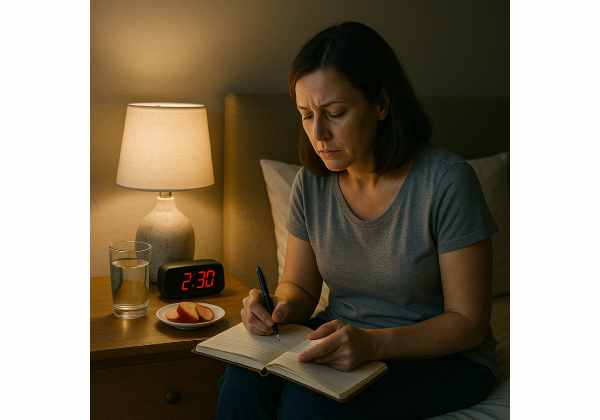
Night eating syndrome is a pattern of eating and sleep disruption in which a person repeatedly eats a large share of their daily food intake after dinner or wakes from sleep to eat while fully aware of what they are doing. It is not the same as occasionally wanting a bedtime snack, eating late because of a busy schedule, or waking hungry once in a while after a missed meal.
The condition sits at the intersection of eating behavior, sleep, mood, and circadian rhythm. Many people with night eating syndrome feel distressed by the pattern, especially when nighttime eating feels hard to resist, interferes with sleep, or creates shame, secrecy, fatigue, or concerns about health. Because the symptoms can look like insomnia, binge eating, stress eating, or a sleep disorder, careful evaluation matters.
What matters most about night eating syndrome
- It usually involves recurrent evening overeating, waking at night to eat, or both.
- The person is typically awake, aware, and able to remember the nighttime eating episodes.
- Common signs include low morning appetite, insomnia, strong urges to eat at night, and mood that worsens later in the day.
- It can be confused with binge eating disorder, sleep-related eating disorder, delayed sleep timing, medication effects, or ordinary late eating.
- Professional evaluation may matter when the pattern causes distress, sleep loss, medical concerns, unsafe nighttime behavior, or symptoms of another eating disorder or mood disorder.
Table of Contents
- What Night Eating Syndrome Means
- Symptoms and Signs
- Similar Conditions and Key Differences
- Causes and Possible Mechanisms
- Risk Factors
- Complications and Health Effects
- Diagnostic Context and Assessment
- When Professional Evaluation Matters
What Night Eating Syndrome Means
Night eating syndrome is best understood as a repeated shift of eating into the evening and nighttime hours, usually alongside sleep disturbance and emotional distress. The defining issue is not simply eating at night, but a persistent pattern in which nighttime eating becomes a central part of the person’s daily rhythm.
In clinical descriptions, night eating syndrome often includes one or both of the following patterns:
- Evening hyperphagia: eating a large portion of daily food intake after the evening meal.
- Nocturnal ingestions: waking from sleep and eating during the night.
A commonly used threshold is eating at least 25% of daily calories after dinner, although clinicians do not rely on calorie math alone. They also look at frequency, distress, awareness, sleep disruption, health effects, and whether another condition better explains the pattern.
One important feature is awareness. A person with night eating syndrome usually knows they are awake and eating. They may feel driven to eat before they can return to sleep, but they generally remember the episode later. That is different from some parasomnias, in which a person may eat while only partly conscious and have little or no memory of what happened.
Night eating syndrome is often classified within the broader group of feeding and eating disorders rather than as a simple sleep habit. It can appear in people of many body sizes. Although it has been studied often in people with obesity, type 2 diabetes, bariatric surgery histories, and other eating disorders, it is not defined by body weight.
The condition can also vary in severity. Some people eat small amounts during several awakenings. Others consume large evening meals or snacks and feel unable to change the timing. Some describe it as a nightly pattern; others have episodes that flare during stress, depression, anxiety, disrupted schedules, or periods of poor sleep.
Occasional late eating does not mean a person has night eating syndrome. Eating late after shift work, travel, social events, religious observance, a long commute, or an unusual day is different from a recurring syndrome that causes distress or impairment. The clinical question is whether the pattern is persistent, difficult to control, linked with sleep or mood symptoms, and not better explained by another medical, psychiatric, sleep, or substance-related cause.
Symptoms and Signs
The central symptoms of night eating syndrome involve delayed eating, nighttime awakenings to eat, and sleep disruption. Many people also notice a distinct daily pattern: little appetite in the morning, stronger urges to eat in the evening, and more emotional discomfort later in the day.
Common symptoms and signs include:
- Eating a large amount after dinner. This may involve repeated snacking, grazing, or a second meal late in the evening.
- Waking during the night to eat. The person is awake enough to choose food and usually remembers eating.
- Reduced morning hunger. Some people skip breakfast or feel unable to eat early in the day.
- Trouble falling asleep or staying asleep. Eating may feel tied to the ability to return to sleep.
- A belief that eating is needed for sleep. The person may feel they “cannot get back to sleep” unless they eat something.
- Evening mood worsening. Sadness, irritability, anxiety, loneliness, tension, or guilt may become more noticeable at night.
- Distress or shame about the pattern. Some people hide evidence of nighttime eating or feel embarrassed discussing it.
- Daytime effects. Poor sleep can contribute to fatigue, low energy, difficulty concentrating, and reduced functioning.
The foods eaten at night vary. Some people choose sweets, carbohydrates, snack foods, or leftovers. Others eat whatever is easy and available. The specific food is less important than the repeated timing, the sense of compulsion or distress, and the connection with sleep.
Night eating syndrome may include episodes that feel emotionally driven, but it is not always experienced as a classic binge. In binge eating disorder, episodes typically involve eating an objectively large amount of food in a discrete period with a sense of loss of control. In night eating syndrome, the defining feature is the timing of intake, especially after dinner or after waking from sleep. Some people can have both patterns, which can make assessment more complex.
It is also possible for symptoms to be underreported. People may minimize nighttime eating because they see it as a personal failure, assume it is “just a bad habit,” or feel worried about being judged. Others may not realize how often it happens until a partner notices, food goes missing, sleep becomes fragmented, or daytime fatigue becomes hard to ignore.
A practical way to recognize the pattern is to look across a full day and night rather than focusing only on one snack. In night eating syndrome, appetite, mood, sleep, and eating tend to cluster into a recurring rhythm: low intake earlier in the day, increasing urge or intake later, and repeated sleep interruption or late-night eating.
Similar Conditions and Key Differences
Night eating syndrome overlaps with several eating, sleep, mood, and medical conditions, so the distinction is important. The same behavior—eating at night—can have different meanings depending on awareness, timing, amount eaten, emotional state, medication use, sleep stage, and medical context.
| Condition or pattern | How it can look similar | Key distinction |
|---|---|---|
| Ordinary late-night snacking | Eating after dinner or before bed | Usually occasional, flexible, and not strongly tied to distress, sleep disruption, or impairment |
| Binge eating disorder | Eating large amounts with distress or loss of control | The timing may be any time of day; night eating syndrome is defined by evening or nocturnal timing |
| Sleep-related eating disorder | Eating during the night | Often involves partial awareness, impaired recall, unusual food combinations, or unsafe food preparation |
| Insomnia | Repeated awakenings and difficulty returning to sleep | Night eating syndrome includes eating as a recurrent part of the awakening pattern |
| Delayed sleep phase | Later bedtime, later wake time, and late meals | Late eating may follow a shifted schedule rather than a distinct syndrome of distressing nighttime eating |
| Medical or medication-related hunger | Night hunger or waking to eat | Symptoms may relate to glucose changes, medication effects, pregnancy, substance use, or another medical cause |
The distinction from sleep-related eating disorder is especially important. In sleep-related eating disorder, a person may eat while only partly awake, have little memory of the episode, combine odd foods, eat unsafe or inedible items, or get injured while preparing food. Night eating syndrome is usually more wakeful and remembered. If someone finds wrappers, burns, cuts, kitchen messes, or missing food with little recall, a sleep disorder evaluation may be more relevant than a standard eating-disorder assessment alone.
Night eating syndrome can also be confused with insomnia because eating may become part of the routine after waking. A person may first wake because of stress, discomfort, circadian rhythm disruption, or another sleep problem, then eat because it seems to help them settle. Over time, the eating and waking can become linked. A broader insomnia evaluation may be relevant when difficulty sleeping is persistent, severe, or unclear.
Delayed sleep timing can complicate the picture. A person with a very late natural sleep schedule may eat at midnight because that is their normal evening, not because they are waking from sleep to eat. In contrast, night eating syndrome usually involves eating after the main evening meal or after awakenings from sleep. When late meals occur alongside a shifted body clock, delayed sleep phase syndrome may be part of the differential diagnosis.
Mood and anxiety symptoms can also blur the picture. Depression may reduce daytime appetite and increase evening eating. Anxiety can cause nighttime awakenings or a need for soothing routines. Some people with trauma-related symptoms may feel more activated or unsafe at night. These patterns do not automatically equal night eating syndrome, but they can coexist with it and shape how symptoms appear.
Causes and Possible Mechanisms
Night eating syndrome does not have one proven cause. Current evidence points to a combination of circadian timing, appetite regulation, sleep disruption, mood symptoms, stress response, learned patterns, and possible biological vulnerability.
A leading idea is that night eating syndrome involves a delay or misalignment in the rhythm of eating. In many people, hunger and food intake are concentrated earlier in the day, with a long overnight fast. In night eating syndrome, the eating rhythm shifts later. The person may not feel hungry in the morning, may eat modestly during the day, and then feel a stronger drive to eat in the evening or after waking.
Circadian rhythm may be part of this pattern. The body’s internal clock helps coordinate sleep, appetite, digestion, temperature, hormone release, and alertness. When eating repeatedly occurs during the usual rest phase, it may reinforce a late eating schedule. This does not mean the person is choosing the pattern in a simple way. Biological timing, sleep loss, stress, and learned associations can all make the pattern feel automatic or difficult to resist.
Sleep disruption is another plausible pathway. Repeated awakenings create opportunities for eating, and eating may become linked with returning to sleep. Some people describe nighttime eating as calming, settling, or necessary, even when they feel regret afterward. Over time, the brain may learn that waking is followed by eating, and the cycle can become self-reinforcing.
Mood and stress appear to be strongly relevant. Night eating syndrome is often reported alongside depression, anxiety, stress, low self-esteem, emotional eating, and other eating-disorder symptoms. Evening can be a vulnerable time for many people: fewer distractions, more fatigue, more loneliness, and reduced structure. For some, food becomes tied to comfort, relief, or sleep readiness. For others, the pattern may feel more physical than emotional, with hunger or restlessness driving the episode.
Appetite-related hormones and neuroendocrine signals have also been studied, including systems involved in hunger, satiety, sleep, and stress. Findings have not produced a simple diagnostic hormone pattern, but they support the idea that night eating syndrome is more than a habit. It likely reflects an interaction between behavior and biological regulation.
Genetic and familial factors may play a role, although the research base is still developing. Family patterns of night eating have been described, and newer biobank research has begun exploring genetic associations. These findings are early and do not mean night eating syndrome is determined by genes. They do suggest that vulnerability may differ from person to person.
Medication and substance effects can sometimes contribute to nighttime eating, but they may also point toward a different diagnosis. Sedative-hypnotic medications, some psychiatric medications, alcohol use, and certain sleep disorders can be linked with nocturnal eating or altered awareness. When nighttime eating begins suddenly after a medication change or substance use pattern changes, that timing is clinically important.
Risk Factors
Risk factors for night eating syndrome include sleep problems, mood symptoms, eating-disorder symptoms, stress, obesity-related conditions, and disrupted daily routines. Having a risk factor does not mean someone will develop the condition, and night eating syndrome can occur without the most obvious risk factors.
The most relevant risk factors include:
- Insomnia and fragmented sleep. More nighttime awakenings can create more opportunities for eating and may strengthen the link between eating and returning to sleep.
- Depression and anxiety symptoms. Evening sadness, worry, irritability, or tension may increase vulnerability to late eating patterns.
- Other eating-disorder symptoms. Binge eating, emotional eating, restrictive daytime eating, body image distress, or chaotic eating patterns can overlap with night eating syndrome.
- High stress or major life strain. Stress can affect appetite, sleep, mood, and daily structure.
- Evening chronotype or irregular sleep timing. People who naturally run later, work late, or have inconsistent schedules may be more exposed to late eating patterns.
- Obesity and weight-related medical concerns. Night eating syndrome has often been studied in people with obesity, though it is not limited to any body size.
- Type 2 diabetes or metabolic concerns. Night eating symptoms can complicate eating patterns and may be relevant when blood sugar, medication timing, or overnight hunger is part of the picture.
- Bariatric surgery history or evaluation. Night eating symptoms may be assessed before or after bariatric procedures because eating patterns can affect health outcomes.
- Medication or substance factors. Some medicines and substances may affect appetite, sleep, awareness, or nighttime behavior.
Age and sex patterns are less settled than many people assume. Studies have reported night eating symptoms in adolescents, young adults, college students, middle-aged adults, and older adults. Some samples show higher rates in certain groups, but findings vary depending on how night eating syndrome is defined and measured.
Body size deserves careful wording. Night eating syndrome can be associated with higher body mass index in some studies, but the relationship is inconsistent. A person does not need to have obesity to have night eating syndrome, and weight alone cannot diagnose or rule it out. The more important clinical issue is the pattern of nighttime eating, sleep disruption, distress, impairment, and possible comorbid conditions.
Restrictive daytime eating can also be relevant. When a person eats very little earlier in the day—whether because of low morning appetite, dieting, shame, a busy schedule, or nausea—the body may push harder for food later. In night eating syndrome, this can become part of a daily rhythm: limited morning intake, increasing evening drive, nighttime eating, and then low appetite again the next morning.
Because anxiety, depression, and eating disorders may overlap, screening can be useful in some situations. Clinicians may consider tools or interviews similar in purpose to depression screening, anxiety screening, or eating disorder screening, depending on the person’s symptoms and setting.
Complications and Health Effects
The main complications of night eating syndrome come from repeated sleep disruption, distress, altered eating patterns, and possible effects on metabolic and mental health. The impact varies widely: some people experience mild impairment, while others have significant fatigue, shame, health concerns, or worsening psychiatric symptoms.
Sleep is often the most immediate problem. Waking to eat can fragment the night, reduce sleep quality, and make mornings harder. Even when the person returns to sleep quickly, repeated awakenings may contribute to daytime sleepiness, reduced attention, low motivation, irritability, and poorer work or school functioning. If the person already has insomnia, sleep apnea, restless legs symptoms, nightmares, or shift-work sleep disruption, nighttime eating may add another layer of impairment.
Mental health effects can be substantial. Many people feel guilt, embarrassment, secrecy, or frustration about eating at night. Some worry they lack willpower, even though the pattern may involve circadian, sleep, and mood mechanisms. Shame can delay disclosure, which in turn can delay assessment. Night eating syndrome can also coexist with depression, anxiety, binge eating disorder, substance use concerns, or trauma-related symptoms, making overall distress more complex.
Eating patterns may become increasingly disrupted. Low morning appetite can lead to skipped breakfast or limited daytime intake. That can contribute to stronger evening hunger, which may reinforce the pattern. Some people find that daytime food choices, hunger cues, and meal structure become difficult to interpret because so much of their intake has shifted late.
Metabolic and weight-related effects are possible but not identical for everyone. Research has linked night eating symptoms with higher body mass index, poorer sleep quality, type 2 diabetes, lower physical activity, and reduced health-related quality of life in some populations. However, findings are not uniform, and night eating syndrome should not be reduced to a weight issue. The same diagnosis may look different in a person with stable weight, a person with diabetes, a person after bariatric surgery, or a person with another eating disorder.
Night eating may also affect digestive comfort. Eating close to sleep or during the night can contribute to reflux, indigestion, or discomfort in some people, especially if large amounts are eaten or if the person lies down soon afterward. These symptoms are not specific to night eating syndrome, but they can add to poor sleep and morning fatigue.
Safety concerns are usually more prominent when awareness is impaired, which suggests a parasomnia or medication-related nocturnal eating rather than classic night eating syndrome. Still, anyone who cooks while drowsy, uses sharp tools at night, eats unsafe foods, or has episodes they cannot remember needs careful assessment. In that situation, a clinician may consider sleep conditions that require a different evaluation, including whether polysomnography is appropriate.
The broader complication is loss of control over daily rhythm. Food, sleep, mood, and energy begin to revolve around a nighttime pattern that the person may not want but feels unable to interrupt. That distress and functional impact are part of what separates a syndrome from a harmless preference for late snacks.
Diagnostic Context and Assessment
Night eating syndrome is assessed through symptom history, eating and sleep patterns, awareness during episodes, distress, impairment, and exclusion of better explanations. There is no single blood test, brain scan, or home checklist that can diagnose it on its own.
A clinician will usually ask about the pattern across several weeks or months, not just one difficult night. Important questions include:
- How often does eating happen after dinner or after waking from sleep?
- Roughly how much of the day’s food intake occurs late in the evening or at night?
- Does the person wake from sleep to eat, or do they simply stay up late and eat?
- Are they fully aware during the episode?
- Do they remember the eating the next day?
- Do they feel unable to return to sleep unless they eat?
- Is morning appetite reduced?
- Are there symptoms of depression, anxiety, trauma, insomnia, binge eating, purging, substance use, or medication effects?
- Does the pattern cause distress, shame, health concerns, or impairment?
Some assessments use questionnaires such as the Night Eating Questionnaire, but questionnaires are screening tools rather than stand-alone diagnoses. They can help organize symptoms and severity, but clinical judgment is still needed.
Food and sleep records can be useful for assessment because memory can be imperfect, especially when symptoms occur during the night. A record may include sleep time, awakenings, foods eaten, hunger level, mood, stress, and whether the person felt fully awake. This can help distinguish a late schedule from true nocturnal eating and can show whether symptoms cluster around stress, mood shifts, medication changes, or sleep disruption.
The differential diagnosis is central. A clinician may consider binge eating disorder if there are large episodes with loss of control. Bulimia nervosa may be relevant if there is purging, laxative misuse, or compensatory behavior. Sleep-related eating disorder may be considered if awareness or recall is reduced. Medical review may matter if symptoms could reflect diabetes-related overnight hunger, gastrointestinal symptoms, pregnancy, thyroid disease, substance use, or medication effects.
Assessment may also include the impact of the symptoms. Night eating syndrome is more clinically significant when it causes distress, disrupts sleep, affects relationships, worsens mood, creates metabolic concerns, or interferes with daily functioning. Someone who eats late by preference and feels well may not meet the same threshold as someone who wakes nightly, feels compelled to eat, sleeps poorly, and feels ashamed.
Because the condition crosses several clinical areas, different professionals may encounter it: primary care clinicians, psychiatrists, psychologists, eating disorder specialists, sleep medicine clinicians, dietitians, endocrinologists, or bariatric teams. The exact assessment depends on the person’s symptoms, risks, and medical background. A broader mental health screening in primary care may be a starting point when the person is unsure where the pattern fits.
When Professional Evaluation Matters
Professional evaluation matters when nighttime eating is recurrent, distressing, hard to control, or linked with sleep loss, medical concerns, mood symptoms, or possible safety risks. Evaluation is especially important when the pattern feels less like a preference and more like something the person cannot reliably stop.
Consider seeking evaluation when any of the following apply:
- Nighttime eating happens repeatedly and causes distress, shame, or secrecy.
- Eating after dinner or after awakenings makes up a large share of daily intake.
- The person often wakes to eat and feels unable to return to sleep without food.
- Sleep is fragmented, nonrestorative, or associated with daytime fatigue.
- There are symptoms of depression, anxiety, trauma, substance use, or another eating disorder.
- There is purging, laxative misuse, severe restriction, fainting, rapid weight change, or fear of eating during the day.
- The person has diabetes, episodes of low blood sugar, bariatric surgery history, pregnancy, or another medical condition that could make nighttime eating medically important.
- Episodes involve reduced awareness, poor recall, unsafe food preparation, injuries, or eating inedible or unsafe substances.
- A medication change, sedative use, alcohol use, or other substance exposure seems connected to the symptoms.
Urgent evaluation is appropriate when night eating occurs alongside suicidal thoughts, self-harm, severe depression, confusion, dangerous sleep behaviors, chest pain, severe hypoglycemia symptoms, repeated vomiting, dehydration, or any situation where the person may not be safe. Those warning signs go beyond night eating syndrome itself and may indicate a medical, psychiatric, or sleep-related problem needing prompt attention.
It can help to describe the pattern plainly: “I wake up several nights a week and eat before I can fall asleep again,” or “I eat very little in the morning, then most of my food after dinner.” Specific details are often more useful than labels. Frequency, awareness, memory, sleep timing, foods eaten, mood, medications, and medical conditions can all help a clinician sort out what is happening.
Night eating syndrome is often misunderstood because it can look like a habit from the outside. In reality, it may reflect a complex pattern involving sleep, circadian timing, appetite, mood, stress, and learned associations. Naming the pattern accurately is not about blame. It is about understanding whether the symptoms fit night eating syndrome, another condition, or a combination that deserves careful assessment.
References
- Night Eating Syndrome 2025 (Clinical Review)
- An Updated Review of Night Eating Syndrome: An Under-Represented Eating Disorder 2022 (Review)
- Night Eating Syndrome in Patients With Obesity and Binge Eating Disorder: A Systematic Review 2022 (Systematic Review)
- A Scoping Review on the Association between Night Eating Syndrome and Physical Health, Health-Related Quality of Life, Sleep and Weight Status 2023 (Scoping Review)
- Clinical and genetic associations for night eating syndrome in a patient biobank 2024 (Clinical Research)
- Beat the Clock: Assessment of Night Eating Syndrome and Circadian Rhythm in a Sample of Greek Adults 2024 (Clinical Research)
Disclaimer
This content is for general educational purposes only and is not a substitute for professional medical advice, diagnosis, or treatment. Nighttime eating can have eating-disorder, sleep, psychiatric, medication-related, or medical causes, so persistent or distressing symptoms should be discussed with a qualified health professional.
Thank you for taking the time to read this resource; sharing it may help someone recognize that recurrent nighttime eating is a health pattern worth understanding, not a personal failing.