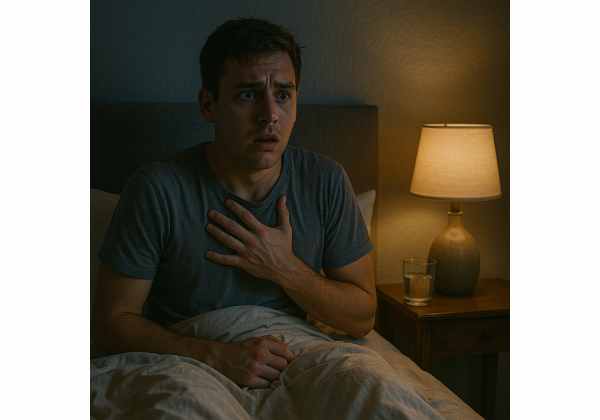
Nightmares are common, especially during stress, illness, poor sleep, or major life changes. Nightmare disorder is different. It involves repeated, disturbing dreams that are vivid enough to wake a person, are remembered clearly, and cause real distress or daytime impairment.
For some people, the main problem is fear of going back to sleep. For others, it is exhaustion, mood changes, anxiety, shame about the dreams, or worry that the nightmares signal something more serious. The condition can occur on its own, but it also commonly appears alongside trauma-related symptoms, anxiety, depression, insomnia, substance withdrawal, certain medications, and other sleep disorders.
What matters most to recognize:
- Nightmare disorder involves repeated, distressing, well-remembered dreams that usually wake the person and leave them alert afterward.
- The dreams often involve threat, danger, helplessness, loss, pursuit, injury, death, or other intense emotional themes.
- It is commonly confused with night terrors, nocturnal panic attacks, REM sleep behavior disorder, sleep paralysis, and trauma flashbacks.
- Professional evaluation may matter when nightmares are frequent, worsening, linked with trauma, causing sleep avoidance, or impairing daily life.
- Urgent evaluation is important if nightmares occur with suicidal thoughts, self-harm risk, violent dream enactment, serious injury, seizures, confusion, or breathing problems during sleep.
Table of Contents
- What Nightmare Disorder Means
- Symptoms and Signs
- How Nightmare Disorder Differs From Other Night Events
- Causes and Brain-Sleep Mechanisms
- Risk Factors and Related Conditions
- Children, Teens, and Adults
- Complications and Daytime Effects
- Diagnostic Context and When Evaluation Matters
What Nightmare Disorder Means
Nightmare disorder is a sleep-wake condition in which recurring nightmares cause significant distress, sleep disruption, or problems with daytime functioning. A single bad dream, or even a cluster of nightmares during a stressful week, does not necessarily meet the threshold for a disorder.
Clinically, nightmare disorder is usually understood as a REM sleep parasomnia. Parasomnias are unusual experiences or behaviors that occur during sleep, during partial arousal from sleep, or during the transition between sleep and wakefulness. Nightmares most often occur during rapid eye movement sleep, the stage when vivid dreaming is common and the body is normally relaxed.
A typical nightmare disorder episode has several recognizable features. The dream is vivid, emotionally intense, and unpleasant. The person wakes from it and can often describe the dream in detail. After waking, they are usually alert and oriented rather than confused. The dream commonly involves a threat to survival, safety, physical integrity, relationships, identity, or emotional security.
The key distinction is impact. Many people have occasional nightmares and move on with little lasting effect. Nightmare disorder is more likely when nightmares repeatedly lead to:
- Fear of falling asleep or returning to sleep
- Prolonged wakefulness after the dream
- Fatigue or poor concentration the next day
- Mood changes, irritability, anxiety, or dread
- Avoidance of sleep, bedtime, darkness, or reminders of the dream
- Distress that feels disproportionate to “just a bad dream”
Nightmare disorder can be idiopathic, meaning it is not clearly caused by another condition. It can also be associated with trauma, chronic stress, mood disorders, anxiety disorders, substance use, medication effects, or sleep disruption. Some people notice that their nightmares have repeated themes. Others experience varied dream content but a consistent emotional tone of fear, shame, helplessness, grief, or danger.
It can help to distinguish nightmare disorder from the broader experience of stress-related nightmares. Stress can trigger disturbing dreams in anyone, but nightmare disorder is considered when the pattern becomes persistent, distressing, and impairing.
Nightmare disorder is not a sign of weakness, poor character, or imagination “running wild.” It reflects a sleep and emotion-processing problem that can be shaped by brain arousal, memory, fear learning, trauma exposure, mental health symptoms, and the quality of sleep itself.
Symptoms and Signs
The core symptom of nightmare disorder is repeated awakening from disturbing, well-remembered dreams that cause distress or impairment. The signs may appear during the night, immediately after waking, and throughout the next day.
Nightmares often feel more intense than ordinary dreams. They may include danger, pursuit, attack, helplessness, humiliation, death, accidents, conflict, bodily harm, abandonment, or frightening images that do not follow a clear story. The dream does not have to be realistic to be clinically important. What matters is the emotional effect and the pattern of disruption.
Common nighttime symptoms include:
- Repeated vivid nightmares, often in the second half of the night
- Sudden awakening from the dream
- Clear recall of dream details
- Rapid alertness after waking
- Fear, panic, sadness, anger, disgust, guilt, or shame after the dream
- Trouble falling back asleep
- Avoidance of sleep because of fear that the nightmare will return
- Increased heart rate, sweating, trembling, or tense muscles after waking
Some people wake quietly but distressed. Others sit up, cry, call out, or seek reassurance. Unlike some other sleep disorders, nightmare disorder usually does not involve complex movements such as walking around, fighting, leaving the bed, or acting out the dream. If those behaviors occur, a different or additional sleep disorder may need to be considered.
Daytime signs can be just as important. Repeated nightmares may lead to non-restorative sleep, fatigue, irritability, emotional sensitivity, reduced motivation, and difficulty concentrating. A person may become preoccupied with dream content, worry about what it “means,” or avoid reminders connected to the dream. In trauma-related nightmares, the dream may replay parts of an event or carry similar themes of threat, powerlessness, or danger.
Nightmare disorder can also affect relationships. A bed partner may notice frequent awakenings, restless sleep, crying, tense breathing, or reluctance to talk about what happened. Children may seek a parent, resist sleeping alone, or describe frightening images in simple terms. Adults may minimize the problem because they feel embarrassed or assume nightmares are not a valid health concern.
The frequency of nightmares varies. Some people have them several times a week; others have clusters during periods of stress and partial remission at other times. The severity depends not only on frequency, but also on distress, sleep loss, fear of sleep, and daytime impairment.
A useful clinical clue is the person’s state after waking. In nightmare disorder, they are usually awake, oriented, and able to describe the dream. If the person appears confused, inconsolable, amnestic, physically active, or unaware of what happened, another nighttime event may be involved.
How Nightmare Disorder Differs From Other Night Events
Nightmare disorder is often mistaken for other sleep or nighttime anxiety events. The differences usually involve timing, memory, alertness, movement, and whether the experience is a dream, a panic episode, a flashback, or a disorder of arousal.
| Night event | Typical pattern | How it differs from nightmare disorder |
|---|---|---|
| Ordinary nightmares | Occasional disturbing dreams, often during stress | Usually do not cause persistent distress, sleep avoidance, or major daytime impairment |
| Night terrors | Sudden screaming, intense fear, confusion, and little recall | Often occurs from deep non-REM sleep; the person may not remember a clear dream |
| Nocturnal panic attacks | Waking abruptly with panic symptoms such as racing heart, shortness of breath, or fear of dying | The person may not recall a vivid dream that caused the awakening |
| REM sleep behavior disorder | Dream enactment with movements, shouting, punching, kicking, or injury risk | Physical dream enactment is more prominent and may require sleep-specialist evaluation |
| Sleep paralysis | Temporary inability to move while falling asleep or waking, sometimes with frightening hallucinations | The person is partly awake and immobilized rather than waking from a completed nightmare |
| Trauma flashbacks | Intrusive re-experiencing of trauma while awake or near sleep | May feel like the event is happening again, not simply remembered as a dream |
| Nocturnal seizures | Brief, stereotyped nighttime events with unusual movements, confusion, or injury | Dream recall may be absent or vague; episodes may be repetitive in a highly similar physical pattern |
Night terrors are one of the most common points of confusion. During a night terror, the person may scream, appear terrified, sweat, breathe rapidly, and be difficult to comfort. However, they are often not fully awake and may have little or no memory of a dream the next morning. Nightmare disorder is different because the person wakes up and can usually report the dream.
Nocturnal panic attacks can also be difficult to separate from nightmares because both can involve sudden awakening and intense fear. Panic attacks during sleep may produce chest tightness, trembling, dizziness, shortness of breath, and fear of dying without a clear dream narrative. People who wake with panic symptoms may benefit from understanding how nocturnal panic attacks differ from dream-triggered awakenings.
REM sleep behavior disorder is especially important to distinguish. In nightmare disorder, the person may wake frightened but usually does not physically act out the dream in a complex or violent way. In REM sleep behavior disorder, the normal muscle relaxation of REM sleep is reduced, so the person may move, shout, punch, kick, fall from bed, or injure themselves or a bed partner.
Sleep paralysis can feel terrifying and may include a sensed presence, pressure on the chest, or visual hallucinations. It differs from nightmare disorder because the frightening experience occurs during partial wakefulness with temporary inability to move.
These distinctions matter because the same word, “nightmare,” may be used casually for several different experiences. A careful description of what happens before, during, and after the event is often more useful than the label alone.
Causes and Brain-Sleep Mechanisms
Nightmare disorder usually develops from a combination of sleep disruption, emotional arousal, memory processing, and vulnerability factors. There is rarely one single cause that explains every case.
REM sleep is closely tied to vivid dreaming, emotional memory, and autonomic activity. During REM sleep, the brain can generate intense imagery and emotional scenarios while the body is normally kept relatively still. This is one reason nightmares often feel vivid and are remembered clearly after awakening. For readers who want broader context on sleep stages, REM sleep and memory are closely linked in the way the brain processes emotional information.
One influential explanation is that nightmares involve disrupted emotion regulation during dreaming. Dreams may normally help the brain process emotional material, but in nightmare disorder, threat themes may remain intense, repetitive, and poorly resolved. The dream may not provide a sense of mastery, safety, or emotional completion. Instead, the person wakes in distress, which can reinforce fear of sleep.
Several pathways can contribute:
- Stress arousal: Ongoing stress can keep the nervous system on alert, increasing the chance that threat-based dream content will emerge.
- Trauma memory: Traumatic experiences can lead to repeated dreams that replay or symbolize danger, helplessness, loss, or violation.
- Sleep fragmentation: Frequent awakenings can make dream recall more likely and may intensify awareness of disturbing dreams.
- Emotional dysregulation: Depression, anxiety, anger, grief, and shame can shape dream content and increase distress after waking.
- Medication or substance effects: Some medicines and substances can affect REM sleep, dream intensity, or sleep continuity.
- Withdrawal states: Alcohol, sedatives, cannabis, or other substances may be associated with vivid dreams or REM rebound when use changes or stops.
- Physical illness and fever: Illness can disrupt sleep and produce unusually vivid, frightening dreams.
Medications are a practical but sensitive area. Some antidepressants, beta blockers, dopamine-related medicines, and sleep-related medications have been associated with vivid dreams or nightmares in some people. This does not mean a person should stop a prescribed medication on their own. It means medication timing, recent changes, dose changes, and new symptoms are relevant details during evaluation.
Nightmare disorder can also be shaped by learning. If a person begins to fear bedtime, they may delay sleep, sleep irregularly, or become more vigilant at night. This can worsen sleep quality and make nightmares feel more likely or more threatening. Over time, the fear of the nightmare may become part of the problem.
The dream content itself does not always reveal a simple cause. A nightmare about being chased does not necessarily mean one specific hidden conflict; a nightmare about illness does not necessarily predict disease. Clinically, the more important questions are how often the nightmares happen, how much distress they cause, what else is occurring in the person’s sleep and mental health, and whether there are signs of another disorder.
Risk Factors and Related Conditions
Nightmare disorder is more likely when a person has factors that increase emotional arousal, disrupt sleep, or make threatening dream content more persistent. Risk factors do not guarantee the condition, but they can raise the likelihood that nightmares become frequent and impairing.
Trauma exposure is one of the strongest associations. Nightmares are common in post-traumatic stress disorder, and they may replay a traumatic event or reflect similar themes without matching the event exactly. People with trauma-related symptoms may also have hypervigilance, avoidance, emotional numbing, intrusive memories, and startle responses. When trauma symptoms are part of the picture, a structured PTSD screening process may help clarify whether nightmares are occurring within a broader trauma-related pattern.
Mental health conditions are also closely related. Nightmares are reported across depression, anxiety disorders, bipolar disorder, psychotic disorders, borderline personality disorder, dissociative symptoms, grief-related conditions, and substance use disorders. The relationship can run in both directions: distress may increase nightmares, and nightmares may worsen mood, anxiety, sleep quality, and daytime coping.
Sleep problems raise risk as well. Insomnia, irregular sleep timing, sleep deprivation, circadian rhythm disruption, and fragmented sleep can all make nightmares more noticeable and more disruptive. Nightmares may also worsen insomnia by making sleep feel unsafe. The overlap between sleep, anxiety, and mental health is especially important when nightmares occur with racing thoughts, bedtime dread, or repeated nighttime awakenings.
Other risk factors and associations include:
- High current stress or major life transitions
- Childhood adversity or chronic exposure to threat
- Frequent rumination or worry
- Poor sleep quality or inconsistent sleep schedules
- Fever, illness, pain, or medical stress
- Alcohol use, withdrawal, or heavy substance use
- Certain medications or recent medication changes
- Family tendency toward parasomnias or vivid dreaming
- Neurological conditions that affect sleep architecture
- Pregnancy, postpartum sleep disruption, or hormonal transitions in some people
Children may be more prone to nightmares during developmental periods when imagination, fear of separation, and difficulty distinguishing dreams from reality are prominent. Adults may be more likely to experience nightmare disorder in connection with trauma, mood symptoms, insomnia, medications, or medical conditions.
Not every nightmare has a psychiatric cause. A person can have frequent nightmares during a period of physical illness, grief, burnout, sleep deprivation, or life stress without having a separate mental health diagnosis. At the same time, persistent nightmares should not be dismissed as harmless if they are affecting sleep, safety, or daytime functioning.
The most useful view is broad and contextual. Nightmare disorder sits at the intersection of sleep, emotion, memory, arousal, and health. Looking only at dream content misses the wider pattern that often explains why the nightmares are happening and why they are hard to shake.
Children, Teens, and Adults
Nightmare disorder can occur at any age, but it may look different in children, adolescents, and adults. Age affects how nightmares are described, how much distress is visible, and what other conditions should be considered.
In children, nightmares are common and often occur during normal development. A child may wake crying, seek a caregiver, describe monsters or danger, or resist sleeping alone after a frightening dream. Younger children may have trouble separating dream imagery from real events, so reassurance-seeking can be intense. Occasional nightmares are usually not the same as nightmare disorder. Concern rises when nightmares are frequent, cause marked distress, disrupt the household’s sleep, or lead to persistent bedtime fear.
Children may show daytime effects indirectly. Instead of saying “I’m distressed by nightmares,” they may become irritable, clingy, inattentive, fearful at bedtime, or tired at school. In some cases, nightmares may appear after bullying, family stress, grief, scary media exposure, medical illness, or trauma. Repeated nightmares in a child should be interpreted in context rather than assumed to have one meaning.
In adolescents, nightmares may overlap with anxiety, depression, trauma symptoms, irregular sleep schedules, substance use, and screen-related sleep disruption. Teens may not volunteer dream details, especially if the content feels embarrassing, violent, sexual, or shame-based. Daytime clues may include sleep avoidance, late-night phone use to avoid being alone with thoughts, school fatigue, mood swings, or worsening concentration.
Adults often present with a longer pattern. Some have had nightmares since childhood; others develop them after trauma, military exposure, assault, loss, medical events, relationship violence, or intense occupational stress. Adults may be more likely to connect nightmares with daytime functioning, work performance, relationship strain, and fear of sleep. They may also be taking medications or using substances that can affect dreams and sleep continuity.
Older adults require careful attention when disturbing dreams occur with movement, injury, confusion, or neurological symptoms. Vivid dreams alone can occur at any age, but dream enactment behaviors such as punching, kicking, falling from bed, or injuring a bed partner raise concern for REM sleep behavior disorder or other neurological sleep conditions rather than uncomplicated nightmare disorder.
Across all ages, the same principle applies: the dream is only one part of the clinical picture. Frequency, distress, memory of the dream, orientation after waking, physical behavior during sleep, medical history, medication exposure, and daytime impact all help determine whether the pattern fits nightmare disorder or another condition.
Complications and Daytime Effects
The main complications of nightmare disorder come from repeated distress, sleep disruption, and fear of sleep. Even when nightmares do not cause physical harm, they can affect mood, concentration, relationships, and overall quality of life.
Sleep loss is one of the most common problems. A person may wake from a nightmare and remain alert for a long time because the body is still activated. If this happens repeatedly, sleep can become shortened and fragmented. Some people start delaying bedtime because they dread the possibility of another nightmare. Others wake early and avoid returning to sleep. Over time, the bedroom itself may become associated with fear rather than rest.
Daytime impairment can include:
- Fatigue or sleepiness
- Poor concentration and slower thinking
- Irritability or emotional reactivity
- Anxiety about the next night
- Lower motivation or reduced productivity
- Headaches, muscle tension, or general physical unease
- Social withdrawal or reluctance to discuss the dreams
- Reduced school, work, or caregiving functioning
Nightmare disorder can also worsen existing mental health symptoms. Distressing dreams may intensify depression, anxiety, trauma reminders, anger, shame, or hopelessness. The person may feel trapped in a cycle: daytime distress fuels nighttime nightmares, and nightmares make daytime distress harder to manage.
In trauma-related cases, nightmares may contribute to avoidance. A person may avoid sleep, darkness, silence, certain rooms, physical closeness, or reminders linked to the dream or trauma. This avoidance can shrink daily life and increase distress. It may also affect partners or family members who are unsure how to respond.
There are relationship complications as well. Bed partners may lose sleep, feel worried, or become distressed by repeated awakenings. The person with nightmares may feel guilty for disturbing someone else or may sleep separately to avoid embarrassment. Children’s nightmares can disrupt caregivers’ sleep and add stress to the household.
Safety concerns are usually limited in nightmare disorder because complex dream enactment is not typical. However, safety becomes more urgent if nightmares are accompanied by violent movements, falls, wandering, choking, gasping, seizure-like activity, or confusion after waking. Those features may point to another sleep or neurological condition.
Nightmares also deserve attention when they occur with suicidal thoughts, self-harm urges, severe depression, or a sense of being unable to stay safe. Nightmares have been associated with suicide risk in psychiatric populations, especially when combined with hopelessness, insomnia, trauma symptoms, or severe mood symptoms. The presence of nightmares does not mean a person will harm themselves, but it does mean clinicians should take the full emotional context seriously.
Diagnostic Context and When Evaluation Matters
Nightmare disorder is diagnosed through a clinical history that examines the dream pattern, sleep pattern, distress level, daytime impact, and possible alternative explanations. A sleep study is not required for every person with nightmares, but it may be important when the symptoms suggest another sleep disorder.
A clinician usually asks about the frequency, timing, content, and intensity of the nightmares. They may ask how quickly the person becomes alert after waking, whether they remember the dream, how long it takes to return to sleep, and whether the nightmares cause sleep avoidance or daytime impairment. It is also common to review medical conditions, trauma history, mental health symptoms, alcohol or substance use, and prescribed or over-the-counter medications.
A useful evaluation may include questions such as:
- How often do the nightmares happen?
- Do they wake you from sleep?
- Can you remember the dream clearly?
- Do they tend to happen later in the night or at any time?
- Do you move, shout, kick, punch, walk, or fall out of bed?
- Do you wake confused, or are you quickly alert?
- Are there breathing pauses, choking, snoring, or gasping?
- Did the nightmares begin after trauma, illness, medication changes, or substance changes?
- Are they affecting mood, concentration, work, school, relationships, or safety?
- Are there thoughts of self-harm or not wanting to live?
If insomnia is a major part of the pattern, clinicians may also evaluate chronic sleep problems more broadly. An insomnia screening can help separate difficulty sleeping because of nightmares from insomnia that exists independently or worsens the nightmares.
Polysomnography, often called an overnight sleep study, is not usually needed for straightforward nightmare disorder. It becomes more relevant when there are signs of REM sleep behavior disorder, sleep apnea, periodic limb movements, nocturnal seizures, unusual injuries, or unclear nighttime behaviors. A polysomnography sleep study can record breathing, movement, oxygen levels, brain activity, and sleep stages when the differential diagnosis is more complex.
Evaluation matters sooner when nightmares are severe, frequent, new in later adulthood, linked with trauma, associated with medication or substance changes, or accompanied by unusual behaviors. It also matters when someone avoids sleep to the point of exhaustion, feels unable to function during the day, or has worsening depression, anxiety, or panic symptoms.
Urgent professional evaluation is important if nightmares occur alongside suicidal thoughts, self-harm risk, violent behavior during sleep, serious injury, seizure-like episodes, new confusion, hallucinations while fully awake, or breathing problems during sleep. People who are unsure whether symptoms are psychiatric, neurological, or sleep-related may need broader assessment, especially when nighttime events occur with daytime confusion, weakness, fainting, chest pain, or severe behavioral changes. In more serious situations, guidance on when to seek emergency help for mental health or neurological symptoms may be relevant.
The goal of diagnosis is not to overpathologize every bad dream. It is to identify when nightmares have become a recurring sleep and distress pattern, when another condition may be contributing, and when safety or daytime functioning requires timely attention.
References
- Nightmare Disorder 2024 (Review)
- Bad dream, nightmares and psychopathology: a systematic review 2024 (Systematic Review)
- Nightmares and psychiatric symptoms: a systematic review of longitudinal, experimental, and clinical trial studies 2023 (Systematic Review)
- A systematic review of Nightmare prevalence in children 2023 (Systematic Review)
- Enhancing identification and diagnosis of nightmare disorder in active duty patients at a sleep disorders center: A quality improvement initiative 2026 (Quality Improvement Study)
- Parasomnias in Adults 2023 (Clinical Reference)
Disclaimer
This content is for general educational purposes only and is not a substitute for professional medical advice, diagnosis, or treatment. Recurrent nightmares, sleep-related injury, trauma symptoms, severe mood changes, or thoughts of self-harm should be discussed with a qualified health professional or emergency service as appropriate.
Thank you for taking the time to learn about this sensitive sleep and mental health topic; sharing it may help someone recognize when nightmares deserve careful attention.