Nyatoh Puteh, botanically known as Palaquium oxleyanum, is not a typical medicinal herb. It is a tropical Southeast Asian tree in the Sapotaceae family, valued far more for its latex and timber than for any well-established internal herbal use. That distinction matters. When people search for its health benefits, they are usually entering a topic where historical utility, material science, and medicinal folklore overlap, but not always cleanly. The clearest health-related relevance of Nyatoh Puteh comes from its latex, which contributes to gutta-percha, a durable, moldable, and biologically compatible material long used in dentistry and earlier in wound-protective and medical applications.
That does not make the tree a proven oral remedy. In fact, direct species-specific evidence for ingestible medicinal use is very limited in accessible authoritative sources. So the best way to understand Nyatoh Puteh is as a medically relevant tree material rather than a mainstream herbal supplement. A careful article should therefore focus on what is actually supported: its latex, its biomedical significance, its practical uses, and the real limits of its medicinal claims.
Key Takeaways
- Nyatoh Puteh is best known for latex that contributes to gutta-percha, a material still valued in dental care.
- Its strongest health relevance is material-based, especially in root canal filling and older wound-protective applications.
- No validated oral dose range in g, mL, or drops has been established for self-care use.
- Avoid ingesting home-made bark or latex preparations, and avoid self-use during pregnancy, breastfeeding, childhood, or when plant identity is uncertain.
Table of Contents
- What is Nyatoh Puteh and why it is not a typical herb
- Key ingredients and material properties
- Potential health benefits and what evidence actually shows
- Nyatoh Puteh in traditional use and modern biomedical practice
- How Nyatoh Puteh is processed and used
- Dosage, timing, and duration
- Safety, side effects, and who should avoid it
What is Nyatoh Puteh and why it is not a typical herb
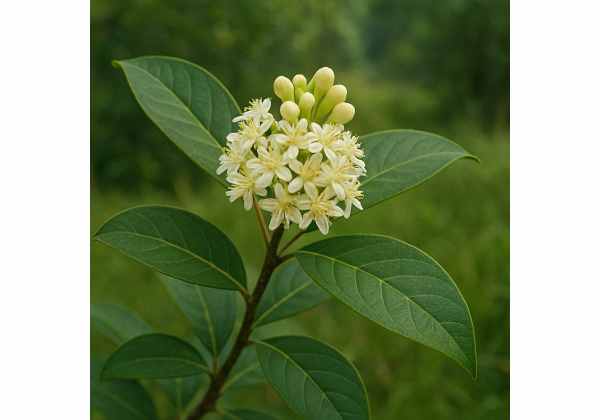
Nyatoh Puteh is a medium-sized tropical forest tree native to parts of Thailand, Malaysia, Singapore, and nearby regions. In botanical references, it appears as Palaquium oxleyanum, one of several Palaquium species associated with gutta-percha production. Unlike kitchen herbs or commonly used medicinal roots, this species is not mainly known for teas, tinctures, edible leaves, or dietary supplements. Its importance is economic, industrial, and indirectly medical.
The tree’s major claim to relevance comes from the milky latex found in its tissues. Once processed, that latex contributes to gutta-percha, a trans-polyisoprene-rich natural material with a very useful combination of properties: it softens with heat, becomes moldable, then hardens on cooling while holding shape. Those characteristics made it historically valuable for tools, cable insulation, and molded objects. More importantly for health-related discussion, the same material became useful in dentistry and other medical contexts.
This makes Nyatoh Puteh fundamentally different from herbs that are discussed for direct physiological effects after ingestion. It belongs more to the world of biomaterials than to the world of self-care botanicals. That does not make it unimportant. In some ways it makes it more distinctive. But it does mean the reader should adjust expectations early. Looking for blood sugar control, mood support, or anti-inflammatory capsules here will lead to confusion. Looking for a plant source connected to bio-inert dental materials is much closer to the truth.
There is also a species-specific caution worth stating clearly: many health claims online about tropical trees get copied across entire genera without good evidence. That is especially risky with Palaquium. Some species are studied for latex, others for timber, and others may have local uses that do not automatically apply to Nyatoh Puteh. So this article stays close to what is actually traceable for Palaquium oxleyanum: latex production, gutta-percha relevance, historical medical-material use, and the lack of a clear modern internal herbal record.
For readers looking for a more familiar plant used directly on skin, a gentler and better-known option such as aloe vera for topical support is much easier to understand in day-to-day practice. Nyatoh Puteh sits in a narrower category. It is best approached as a medically relevant tree product, not as a beginner-friendly herb.
Key ingredients and material properties
If Nyatoh Puteh is discussed honestly, the phrase “key ingredients” needs to be interpreted differently than it would for a tea herb or spice. The most important constituent associated with this tree is not a famous antioxidant or alkaloid. It is the latex that contributes to gutta-percha, a natural plant material composed largely of trans-polyisoprene. That structural detail matters because it explains why gutta-percha behaves differently from conventional rubber.
Rubber is dominated by the cis form of polyisoprene, which makes it elastic. Gutta-percha, by contrast, is rich in the trans form, which makes it comparatively rigid, thermoplastic, and moldable rather than springy. That difference is the foundation of its biomedical usefulness. A material that softens with heat, can be shaped precisely, then firms up again without obvious warping is valuable in controlled settings such as dental obturation.
Beyond trans-polyisoprene itself, processed gutta-percha products used in dentistry are not raw plant latex. They are manufactured materials that may contain gutta-percha, zinc oxide, waxes, metal sulfates for radiopacity, and other formulation components. So when people talk about Nyatoh Puteh being “used in dentistry,” they are really talking about a plant-derived industrial biomaterial, not about chewing bark, drinking sap, or applying raw latex straight from the tree.
From a medicinal-property standpoint, three terms are most useful:
Biocompatible
Gutta-percha has long been valued because it is generally well tolerated in dental settings and behaves as an inert filling core material when properly used.
Thermoplastic
It softens with heat and can be condensed or adapted into a shaped space, then firms again on cooling. That is why it is practical in endodontic work.
Bio-inert
Historically, gutta-percha was attractive for medical and chemical applications because it did not react as aggressively as many alternative materials.
These are not “medicinal properties” in the same sense as an herb lowering inflammation after oral use. They are medical-material properties, and that is the right language for this species.
This also explains why Nyatoh Puteh should not be confused with a pharmacologically rich medicinal bark just because it comes from a tree. If someone wants a classic botanical with more traditional internal use, witch hazel as an astringent plant remedy makes more sense conceptually than Nyatoh Puteh, which sits much closer to material science.
So the key constituent story is simple but important: Nyatoh Puteh matters because its latex contributes to a useful natural biomaterial. Its most important “active” characteristic is not direct systemic action in the body, but a set of physical and biomedical properties that made gutta-percha historically and clinically valuable.
Potential health benefits and what evidence actually shows
The most important phrase in this section is “actually shows.” With Nyatoh Puteh, evidence does not support a long list of conventional herbal health benefits. Instead, it supports a much narrower and more specific set of health-related uses tied mainly to latex-derived material applications.
The strongest supported health relevance is dental use. Gutta-percha remains one of the most established materials used in root canal filling. Its role is not to heal by pharmacology in the same way a drug does. Its role is structural and protective: it helps obturate, or fill, prepared root canals so that the space can be sealed and microbial re-entry reduced. That is a real health benefit, but it belongs to dental biomaterials rather than herbal therapeutics.
A second historically grounded benefit is medical-device and protective use. Older literature and regional historical accounts describe gutta-percha being considered for medical instruments and for protective wound-related applications. Again, this is a material-based benefit. The value comes from the latex’s physical behavior and relative inertness, not from an evidence-based internal healing effect.
A third possible but much weaker category is indirect topical relevance through latex-derived protection. Historically, gutta-percha was used where a durable, shaped, moisture-resistant covering or filling material was helpful. That is not the same as saying Nyatoh Puteh bark, leaf, or latex is a proven topical herb for eczema, ulcers, or burns.
This is where restraint matters. A reader might assume that because a plant yields a medically used material, the raw plant must also offer direct antimicrobial, anti-inflammatory, or analgesic benefits. That leap is not supported here. Accessible species-specific references for Palaquium oxleyanum focus overwhelmingly on latex harvesting and timber, not on validated internal medicinal use.
So what should count as a fair benefit summary?
- Best supported: latex-derived relevance in dentistry and earlier medical-material applications
- Historically plausible: protective and wound-related utility through processed gutta-percha
- Not established: self-prescribed oral or raw-herbal benefits for digestion, inflammation, immunity, or chronic disease
This narrower conclusion is still useful. In fact, it is more useful than forcing Nyatoh Puteh into the template of a mainstream medicinal herb. For readers who want a botanical chosen for direct internal physiological support, a true herbal profile such as chamomile for well-known soothing use is much more appropriate.
Nyatoh Puteh’s real value lies in precision. It is a plant of medical significance because it gave rise to a trusted biomaterial, not because it has a broad, clinically validated oral-medicinal record. That may sound modest, but it is also accurate, and accuracy is the only sensible basis for a health article on this species.
Nyatoh Puteh in traditional use and modern biomedical practice
Nyatoh Puteh belongs to a class of plants that were often more important in practice than in formal herbal theory. Historically, what mattered most was not “Which disease does this tree treat?” but “What can this latex be made to do?” In Southeast Asia, gutta-bearing trees were valued because their latex could be collected, coagulated, softened, shaped, and hardened again into durable forms. That made them economically important long before they were framed in modern biomedical language.
In early regional use, gutta-percha was fashioned into utilitarian objects such as handles and molded goods. Once European medical and industrial observers recognized the material’s unusual properties, interest expanded quickly. By the mid-nineteenth century, gutta-percha was being discussed for medical instruments and later became deeply important in insulation and dental filling applications. Nyatoh Puteh was not necessarily the highest-grade source compared with some other Palaquium trees, but it was among the species harvested for the broader gutta-percha trade.
Modern biomedical practice has refined this history. Today, gutta-percha is best known in endodontics, where it serves as a standard root canal filling core material. It is not used because it is trendy or exotic. It is used because decades of clinical handling have shown that it is practical, shapeable, visible on radiographs when formulated appropriately, and generally compatible with professional dental procedures.
That modern role helps clarify the difference between traditional resource use and modern medical use. Traditional harvesters valued the raw latex and its transformability. Modern clinicians value the processed, standardized material that comes out of manufacturing systems. Those are related, but not identical, realities.
There is also a sustainability lesson here. Historically, gutta-percha extraction was often destructive, and heavy demand damaged wild populations. For a species such as Palaquium oxleyanum, that history matters because it reminds readers that health-related plant uses do not exist in isolation. A plant can be medically useful and ecologically vulnerable at the same time.
So when people ask about Nyatoh Puteh’s “uses,” the clearest answers are these:
- It has been harvested as a source of gutta-percha latex.
- That latex has historical links to medical instruments and protective applications.
- In modern practice, processed gutta-percha remains strongly associated with dental root canal filling.
- Direct species-specific internal herbal use is not the strongest or clearest part of its profile.
That last point is the key. Nyatoh Puteh matters in health contexts, but mostly as the origin of a medical material rather than a conventional medicinal herb. Once that is understood, the rest of the article becomes much easier to interpret responsibly.
How Nyatoh Puteh is processed and used
Nyatoh Puteh is not a herb that is normally prepared as a household tea, tincture, syrup, or capsule. Its most meaningful use depends on latex processing, and that alone changes how the plant should be understood.
Traditionally, latex was collected from gutta-bearing trees by cutting or tapping the bark. In many historical settings, collection was inefficient and sometimes destructive, especially when trees were felled to obtain larger quantities. The latex would then be allowed to coagulate or be heated and worked until it formed a more stable mass. From there it could be softened again in hot water, molded, pressed, or formed into blocks and shaped goods.
That process is critical because raw sap is not the end product. The medically relevant material is processed gutta-percha, not fresh latex straight from the tree. In modern dental use, the material is manufactured to controlled specifications, sterilized or handled aseptically, and shaped into cones or other clinical forms designed for root canal obturation. This is a very different situation from folk latex collection.
A practical reader should therefore think in three layers:
Raw tree latex
This is the botanical source, but not a consumer-ready medicinal product.
Processed gutta-percha
This is the historical material that made the tree medically and industrially interesting.
Standardized dental material
This is the current professional form used in endodontics, where performance depends on manufacturing quality, not just on the tree itself.
These layers matter because they explain why do-it-yourself use is inappropriate. A raw latex harvested from an unknown tree in an unknown environment is not equivalent to a dental material manufactured under controlled conditions. The plant may grow in areas affected by contamination, improper identification, or inconsistent latex quality. None of those risks belong in a self-care setting.
It also explains why Nyatoh Puteh has no meaningful place in beginner herbalism. A person looking for everyday medicinal plant use should think of teas, salves, or standardized extracts with known traditions and safer handling. Nyatoh Puteh belongs to a different category. Its route from tree to health use runs through material preparation, not through casual raw ingestion.
In short, this is not a “brew and drink” plant. It is a “harvest, process, formulate, and apply professionally” plant. That distinction is the single most important practical point in the whole article. Without it, Nyatoh Puteh can sound like a mysterious medicinal tree. With it, the plant becomes much clearer: a source of a useful natural biomaterial rather than a general-purpose household remedy.
Dosage, timing, and duration
The dosage section for Nyatoh Puteh is unusual because the most accurate answer is also the least dramatic: there is no validated oral medicinal dose for self-care use. No standard range in grams, milliliters, drops, or capsules has been established for Palaquium oxleyanum as a mainstream herb.
This is not a minor missing detail. It is a reflection of the plant’s real profile. Nyatoh Puteh is not commonly documented as an internal medicinal species in accessible authoritative references. Its relevance lies in latex-derived material use, especially as gutta-percha, not in a doseable oral preparation that readers can safely copy at home.
That means dosage has to be discussed in two separate ways.
The first is internal herbal dosing, where the responsible answer is simple:
- No validated oral dose is established.
- No standard tea, tincture, or capsule form exists for routine self-use.
- No evidence-based daily intake can be recommended.
The second is clinical material use, where the concept of “dose” is different. In dentistry, gutta-percha is used as a shaped filling material selected according to tooth anatomy and endodontic technique. The relevant variables are not milligrams per day or drops before meals. They are cone size, canal preparation, compaction technique, heating approach, and sealing protocol. In other words, the material is professionally applied, not self-dosed.
Timing and duration follow the same logic. There is no oral course to begin or stop. Instead, there is a professional procedural context. A root canal filling is placed once in the course of treatment and then evaluated clinically over time. That is a medical-material timeline, not an herbal dosing schedule.
This is why any claim that Nyatoh Puteh can be “taken” for inflammation, digestion, or immunity should be treated with skepticism unless strong species-specific evidence appears. At present, the plant does not belong in the category of orally self-prescribed medicinal herbs.
For readers who are searching because they want an actual ingestible botanical, it is better to pivot early toward a plant with clearer traditional dosing and safety boundaries. Nyatoh Puteh is simply not that kind of herb. Its most medically meaningful use happens in the hands of trained dental professionals using standardized material.
So the dosage conclusion is firm: no validated internal dose, no safe self-prescribing range, and no reason to improvise. That may make this section shorter than in other herb articles, but in this case it is exactly the right level of honesty.
Safety, side effects, and who should avoid it
Safety for Nyatoh Puteh is less about a famous toxic compound and more about misuse, false assumptions, and context. Because the species is not a well-established oral medicinal herb, the greatest risk comes from treating it like one.
The first concern is unvalidated internal use. A tree that yields a medically useful latex is not automatically safe to ingest. Raw bark, sap, or home-made latex preparations are not standardized for purity, concentration, or contamination. There is no reliable evidence-based oral dose, which means any attempt to self-medicate internally moves into guesswork very quickly.
The second concern is source contamination. Trees harvested from unknown environments may carry surface contaminants or be processed with poor hygiene. Latex-bearing forest trees are not the same as culinary herbs grown for direct handling and consumption. Even if a plant is correctly identified, that does not make raw use sensible.
The third concern is species confusion and over-extrapolation. Nyatoh Puteh is one of several Palaquium species connected with gutta-percha. Claims that apply to one species, one latex grade, or one manufactured material should not automatically be transferred to another. This is especially important online, where broad genus-level claims are often repeated as though they were species-specific medical facts.
The fourth concern is professional versus nonprofessional use. In dentistry, gutta-percha is handled in a tightly defined clinical context. Outside that context, the same material no longer has a clear do-it-yourself medical role. A root canal filling material is not a home wound filler, and raw latex is not a substitute for dental care.
People who should avoid self-directed medicinal use include:
- Pregnant individuals
- Breastfeeding individuals
- Children
- Anyone with a history of severe plant or latex sensitivity
- Anyone wanting to ingest bark, sap, or improvised preparations
- Anyone with dental pain who is tempted to self-treat instead of seeing a dentist
Potential side effects from inappropriate use are mostly practical rather than elegantly described in trials: oral irritation, contamination risk, unpredictable reactions to raw latex, delay in proper medical or dental treatment, and harm from using the wrong species or the wrong material in the wrong way.
If a person is looking for mild topical botanical support, a plant with a clearer consumer safety record is usually the better choice. Nyatoh Puteh should not be used as an experimental substitute for standard wound care, dental treatment, or oral herbal therapy. Its safest role remains the one supported by evidence: as the source of a professionally prepared medical material, not as a self-care herb.
That is the real safety lesson. The problem with Nyatoh Puteh is not that it is definitively poisonous. It is that it is too easy to misclassify. Once it is mistaken for a normal medicinal herb, the chance of poor decisions rises sharply.
References
- Palaquium oxleyanum Pierre 2026. (Official Species Page)
- Gutta-percha in endodontics – A comprehensive review of material science 2019. (Review)
- Antibacterial Activity of Endodontic Gutta-Percha—A Systematic Review 2024. (Systematic Review)
- Antimicrobial efficacy of modified gutta-percha for obturation – A systematic review 2025. (Systematic Review)
- Tapping History 2007. (Historical Review)
Disclaimer
This article is for educational purposes only and does not replace medical advice, diagnosis, or treatment. Nyatoh Puteh is not a well-established oral medicinal herb, and its best-supported health relevance comes from latex-derived gutta-percha used in professional dental and related material applications. Do not ingest raw latex, bark, or home-made preparations, and do not use this plant as a substitute for wound care or dental treatment. Anyone considering medicinal use of Nyatoh Puteh should speak with a qualified healthcare professional first.
If this article helped you, please share it on Facebook, X, or your preferred platform so others can find careful, evidence-based plant information.