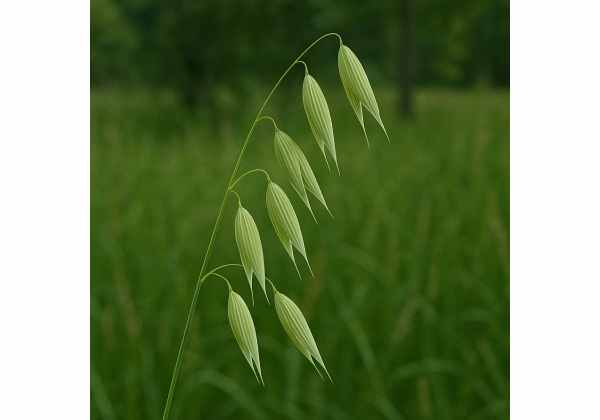
Oat straw is the green, above-ground part of the oat plant, usually gathered before the plant fully matures into grain. In herbal practice, it is valued less as a “strong” remedy and more as a gentle, restorative one. People most often use it to support the nervous system, ease periods of mild mental stress, soften tension, and support better sleep quality. Modern supplements also use concentrated green oat extracts for attention, working memory, and stress-response support.
What makes oat straw interesting is its combination of traditional use and a modest but growing clinical literature. It contains a mix of plant compounds, including polyphenols, flavonoids, triterpene saponins, and minerals, though exact amounts vary widely by product and harvest stage. That variability helps explain why one product may be a simple tea while another is a standardized cognitive-support extract.
For most people, oat straw fits best as a steady, low-drama herb: not a quick fix, but a supportive option for nervous exhaustion, light sleep support, and everyday resilience when used thoughtfully.
Quick Overview
- Oat straw is mainly used as a gentle nervine for mild mental stress and sleep support.
- Standardized green oat extracts may modestly support attention, processing speed, and working memory.
- A common adult tea dose is 3 g of dried herb per infusion.
- It is best avoided during pregnancy and breastfeeding, in children under 12, and by people with oat allergy or uncertain gluten tolerance.
Table of Contents
- What oat straw is and how it differs from other oat products
- Key ingredients and medicinal properties
- Potential health benefits and what the evidence shows
- Traditional uses and modern ways to take it
- Oat straw dosage, timing, and how long to use it
- Safety, side effects, interactions, and who should avoid it
- How to choose a good product and set realistic expectations
What oat straw is and how it differs from other oat products
“Oat straw” is a common herbal name for the aerial parts of Avena sativa—the stems, leaves, and immature tops—used before full grain maturity. In formal herbal and European monograph language, you may also see it called “oat herb.” That matters because many people confuse oat straw with oatmeal, oat bran, oat beta-glucan supplements, or milky oats, and they are not interchangeable.
A useful way to separate them is this:
- Oat straw or oat herb is used mainly for nervous system support, stress relief, and sleep support.
- Milky oats refers to the fresh seed tops harvested in the milky stage and is often used in tinctures for frazzled or depleted nerves.
- Oat grain, bran, and beta-glucan are more closely tied to cholesterol, blood sugar, satiety, and digestive health.
- Colloidal oatmeal is usually a skin-care ingredient made from oat grain, not a nervous-system herb.
This distinction helps keep expectations realistic. A tea made from oat straw is not the same as eating a bowl of oats for soluble fiber, and a green oat extract capsule is not the same as colloidal oatmeal for itchy skin.
In practical herbal use, oat straw is often described as a nutritive nervine. That means it is traditionally used not because it forces a sharp biological effect, but because it supports recovery, steadiness, and resilience over time. It is the kind of herb people reach for when stress has become draining rather than dramatic: trouble winding down, a “wired but tired” feeling, mild sleep disturbance, or a sense of nervous depletion after long work stress, illness, or overtraining.
Another source of confusion is product labeling. Some supplements say oat straw, others say green oat extract, and others use Avena sativa herb extract. These may overlap, but they are not always the same. Tea products are usually simple dried herb. Capsules and liquid extracts may be concentrated, solvent-extracted, or standardized differently. That means benefits, onset, and dosing can vary more than many buyers expect.
If you already use young green plant supplements, it can help to compare oat straw with other aerial plant products such as barley grass, which is also used as a green plant concentrate but is aimed more at nutrient density than nervous-system support.
The bottom line is simple: oat straw is best understood as a gentle herbal support for stress, rest, and nervous-system steadiness, not as a fiber supplement, a strong sedative, or a cure-all.
Key ingredients and medicinal properties
Oat straw contains a broad mix of plant compounds rather than one single “star ingredient.” That is part of why it has a reputation as a balanced, whole-plant tonic. It also means the exact chemistry depends heavily on harvest timing, the part of the plant used, growing conditions, and whether the final product is a tea, tincture, juice, or standardized extract.
The most discussed compound groups include:
- Polyphenols, including phenolic acids and oat-associated antioxidant compounds
- Flavonoids, which contribute to antioxidant and signaling effects
- Triterpene saponins, including avenacosides and related constituents
- Polysaccharides and water-soluble plant fractions
- Minerals, often including calcium, magnesium, iron, and silica in varying amounts
- Avenanthramides, a distinctive group associated with oats, although levels differ by plant part and preparation
From an herbal perspective, oat straw is usually described with three broad medicinal properties.
First, it is considered nervine.
This is the most traditional description. A nervine herb is used to support the nervous system, especially when stress, mental fatigue, tension, or poor sleep are involved. Oat straw is not typically viewed as a heavy tranquilizer. Instead, it is seen as gently settling and restorative.
Second, it is considered nutritive or trophorestorative.
That language points to long-term support rather than immediate symptom suppression. In plain terms, oat straw is often used when someone feels run down, overstimulated, thin on reserves, or slower to recover from stress. This may reflect a mix of its mineral content, whole-plant chemistry, and traditional pattern of use rather than one proven isolated mechanism.
Third, it may have mild vasoactive and cognitive-support properties in extract form.
This is where modern research becomes interesting. Concentrated green oat extracts appear to influence attention, processing speed, or working memory in some human studies, and possible mechanisms discussed in research include effects on signaling pathways, cerebral blood flow, or enzyme activity related to cognition. That said, these findings apply most clearly to specific extract preparations, not automatically to every tea or powder sold as oat straw.
It is also important to avoid one common mistake: turning broad chemistry into exaggerated promises. Saying oat straw contains minerals and antioxidants is reasonable. Saying it “rebuilds nerves,” “boosts hormones,” or “acts like a natural stimulant” goes too far.
If your interest is mainly in mineral-rich herbal tonics, it may be helpful to compare oat straw with alfalfa, another herb discussed for its broad nutritive profile, though the traditional uses are not identical.
A sensible summary is that oat straw combines gentle calming, restorative support, and possibly modest cognition-related effects when used in the right form. Its strength is not pharmacological force. Its strength is steadiness.
Potential health benefits and what the evidence shows
Oat straw sits in an unusual place: traditional use is stronger than the clinical evidence overall, but the clinical evidence is not empty. The best-supported modern claims are narrower than many supplement labels suggest.
1. Mild mental stress support
This is the most established traditional use. European herbal monographs recognize oat herb for relief of mild symptoms of mental stress and as an aid to sleep. That does not mean it works like a prescription anti-anxiety drug. It means it has a long history of plausible, safe use for mild tension, nervous irritability, and stress-related restlessness.
In daily life, this is the person who feels overextended, less resilient, and harder to settle by evening. Oat straw often fits best in that low-to-moderate range, especially when stress has a fatigue component.
2. Sleep support
Oat straw is commonly used in evening teas or tincture blends for sleep, but it is better described as a sleep-supporting herb than a sleep-inducing one. It may help people who struggle to unwind, rather than people with severe insomnia. If used at bedtime, it is often combined with stronger relaxing herbs.
3. Cognitive function and attention
This is the most interesting modern research area. Studies using standardized green oat extracts suggest acute improvements in attention, processing speed, working memory, or executive performance in some healthy adults. Effects appear more convincing for specific extract products than for ordinary tea. A systematic review found that acute supplementation may help some cognitive measures, while longer-term results are more mixed.
That nuance matters. Oat straw is not a guaranteed “focus supplement,” and the evidence is not strong enough to put it in the same category as a drug. Still, it is reasonable to say that certain green oat extracts show modest promise for short-term cognitive support.
4. Stress response and vascular support
Some research suggests green oat extracts may improve aspects of vascular function and may soften certain physiological stress responses. These effects are promising, but they are still too preliminary to market oat straw as a heart-health herb in the same way oat beta-glucan is discussed for cholesterol.
What it probably does not do well
Oat straw is often oversold for libido, testosterone, major mood disorders, and dramatic nerve repair. Those claims run ahead of the evidence. It is wiser to think in terms of support rather than cure.
For readers comparing calming herbs, lemon balm has a more clearly recognized reputation for easing tension and supporting calm, while oat straw is often chosen for a gentler, more nourishing style of support.
The best evidence-based conclusion is this: oat straw appears most useful for mild stress, bedtime unwinding, and possibly modest cognitive support when a standardized green oat extract is used. It is not the right herb for people expecting large, immediate effects.
Traditional uses and modern ways to take it
One reason oat straw remains popular is that it is easy to use. It works well as a tea, blends easily with other herbs, and is also available as tinctures, fluid extracts, capsules, and concentrated green oat extracts.
Traditional uses
Herbal traditions most often use oat straw for:
- nervous exhaustion
- mild anxiety or stress tension
- restlessness linked to overwork
- support during recovery from prolonged strain
- support for easier sleep onset
- general nervous-system nourishment
Traditionally, it is often chosen for people who are depleted rather than agitated. That distinction is useful. Some herbs suit sharp, restless tension; oat straw is often preferred when the nervous system feels overused and under-restored.
Common forms
Tea or infusion
This is the most traditional and often the gentlest option. It suits people who want a steady, food-like herbal approach. Oat straw is mild in flavor and works well alone or in blends.
Tincture or liquid extract
Better for people who want portability, quicker dosing, or more consistent use. Tinctures are common in nervous-system formulas.
Capsules or tablets
Convenient, though these vary widely. Some are simply powdered herb, while others contain concentrated extracts.
Standardized green oat extract
This is the form most often used in cognitive-function studies. If you are buying oat straw primarily for focus, attention, or working memory support, this is usually the category worth looking at.
Practical ways to use it
For day-to-day life, oat straw often fits into one of three patterns:
- Daytime support for steady nerves during busy periods
- Evening wind-down for tension that makes sleep harder
- Longer restorative use for several weeks when stress has been draining
It is also commonly paired with other herbs. Some combinations are traditional and practical:
- with chamomile for evening relaxation
- with lemon balm for tension and restlessness
- with nettle or other nutritive herbs for general restoration
- with stronger sleep herbs only when needed
A simple rule is to match the form to the goal. Tea makes sense for routine calming and bedtime ritual. Extracts make more sense for convenience or research-style cognitive support. Capsules make sense if taste is a barrier.
For people building a bedtime routine, chamomile is a natural companion herb because it is often used for the same “settle down before sleep” window, though its feel is a bit more obviously relaxing than oat straw’s.
Oat straw is rarely about intensity. It works best when built into a repeatable pattern: afternoon tea during a stressful month, a bedtime cup during a rough patch, or a standardized extract during periods when you want gentler cognitive support without a stimulant feel.
Oat straw dosage, timing, and how long to use it
Dosage depends heavily on the form. This is one of the biggest reasons people get confused with oat straw. A tea dose, a liquid extract dose, and a standardized capsule dose can look very different while all being “correct” for their category.
Common adult doses
For traditional oat herb preparations, practical adult ranges often look like this:
- Dried herb infusion: 3 g of dried herb per cup or infusion
- Liquid extract (1:4–6): up to 5 mL, up to 3 times daily
- Fresh expressed juice: 10 mL, 3 to 4 times daily
- Other preparations: amounts equivalent to about 3 g dried herb daily
For concentrated green oat extracts used in research, doses have varied quite a bit. Human studies have used single or repeated doses such as:
- 430 mg
- 800 mg
- 860 mg
- 1290 mg
- 1500 mg daily in some longer studies
These numbers should not be mixed casually with tea or tincture dosing because they refer to specific extracts, not raw herb. Always check whether the label lists plain herb weight, extract weight, or an extract ratio.
When to take it
For stress support:
Morning or afternoon use is often best, especially if you want the herb to soften tension without making bedtime the only target.
For sleep support:
Take tea or an evening dose about 30 to 60 minutes before bed. The effect is usually gentle, so ritual matters too: warmth, slower pacing, and consistency.
For cognitive support from extract products:
Many studies looked at acute effects within hours after a dose, so these products are often taken earlier in the day or before periods of mental work.
How long should you use it?
Oat straw is often used in one of two ways:
- Short-term, for a stressful week or a few nights of poor unwinding
- Medium-term, for 2 to 8 weeks during periods of nervous depletion
Because it is a gentle herb, people often do best by judging it over time rather than after one dose. A fair trial is usually at least 1 to 2 weeks for tea and several weeks for restorative use.
Signs your approach needs adjustment
- You feel no benefit at all after a fair trial and your dose is very low
- You are using a tea but expecting research-style focus effects from an extract
- The product hides the extract ratio or actual dose
- You feel overly sleepy during the day
- You have symptoms that are too severe for self-treatment
If your real goal is rebuilding overall resilience rather than getting an instant calming effect, it can help to think of oat straw the way people think about stinging nettle: as a steady support herb that often works best through regular use, not dramatic single servings.
Safety, side effects, interactions, and who should avoid it
Oat straw is generally considered well tolerated, especially in traditional forms such as tea and standard herbal extracts. That said, “generally safe” does not mean “for everyone” or “safe in every form.”
Who should avoid or use extra caution
People with oat allergy
Anyone with a known oat allergy should avoid oat straw unless specifically advised otherwise by a qualified clinician.
People with celiac disease or medically necessary gluten avoidance
Pure oat herb is not the same as wheat, but contamination and uncertain protein content remain practical concerns. Product quality matters here. If you must avoid gluten strictly, choose only products with clear testing or certification rather than assuming all oat straw is safe.
Pregnant or breastfeeding people
Use is generally not recommended during pregnancy or breastfeeding because safety has not been established well enough.
Children under 12
Traditional monograph guidance does not recommend use in children under 12 because adequate data are lacking.
People using multiple sedating products
Even though oat straw is mild, it may add to sleepiness in sensitive people, especially when combined with alcohol, sleep aids, strong relaxing herbs, or sedating medications.
Side effects
Reported side effects are limited, and many people tolerate oat straw without problems. Still, possible issues can include:
- digestive upset in sensitive users
- headache or feeling “off” with concentrated extracts
- excessive drowsiness in susceptible people
- allergic reactions in those sensitive to oats or grasses
If a product makes you feel foggy, overly sleepy, itchy, or unwell, stop using it and reassess the formula, dose, and product quality.
Interactions
Formal interaction data are limited, and no major interactions are consistently reported in the traditional monograph. Even so, caution is sensible with:
- sedatives and sleep medications
- alcohol
- multi-herb calming formulas
- products containing ethanol if you need to avoid alcohol exposure
When not to self-treat
Do not rely on oat straw alone if you have:
- persistent insomnia
- panic symptoms
- severe anxiety
- major depression
- unexplained fatigue
- progressive cognitive decline
In those cases, oat straw may still have a supporting role, but it should not delay proper medical evaluation. The herb is best suited for mild, self-limited situations or as a supportive part of a broader plan.
Used properly, oat straw has a favorable safety profile. The main risks are not usually from the herb itself, but from poor product selection, unrealistic expectations, or using it in place of needed medical care.
How to choose a good product and set realistic expectations
A good oat straw product starts with transparency. Because the name can cover several very different preparations, label quality matters more than many shoppers realize.
What to look for on the label
Choose products that clearly state:
- the botanical name Avena sativa
- the plant part used, such as oat herb, aerial parts, or green oat extract
- whether the product is plain herb, liquid extract, dry extract, or juice
- the extract ratio, if relevant
- the exact amount per serving in g or mg
- third-party testing when possible
If a brand promises dramatic mood elevation, hormone effects, or instant mental performance but hides the actual form and amount, that is a warning sign.
Match the product to the goal
Choose tea or simple dried herb if you want:
- a gentle daily ritual
- bedtime support
- a nourishing, low-intensity herbal option
Choose a liquid extract if you want:
- convenience
- flexible dosing
- a stronger herbal preparation without capsules
Choose a standardized green oat extract if you want:
- a product closer to what was used in cognitive studies
- a more measurable capsule dose
- a daytime support option that is not built around caffeine
Set realistic expectations
The most helpful mindset is this: oat straw is a support herb, not a rescue herb.
Reasonable expectations include:
- feeling a bit less frayed after several days or weeks
- easier winding down at night
- modest daytime steadiness
- subtle support for focus with the right extract
Unreasonable expectations include:
- immediate sedation like a sleeping pill
- a major nootropic effect from a basic tea
- treatment of severe anxiety or depression
- a replacement for therapy, sleep hygiene, or medical care
It also helps to judge oat straw by the right outcomes. Instead of asking, “Did I feel something dramatic?” ask:
- Am I settling more easily in the evening?
- Do I feel less brittle under everyday stress?
- Is my sleep onset slightly easier?
- Do I feel steadier rather than stimulated?
Those are the kinds of changes oat straw is more likely to offer.
For people who prefer nutritive herbs and green restorative plants, oat straw often belongs in the same broader conversation as mineral-rich tonics and gentle calming herbs. Its value is not in intensity. Its value is in repeatable usefulness, especially when stress has worn you down more than it has revved you up.
References
- Avenae herba – herbal medicinal product | European Medicines Agency (EMA) 2026 (Official Monograph Summary)
- Effect of Avena sativa (Oats) on cognitive function: A systematic review of randomized controlled trials – PubMed 2023 (Systematic Review)
- Acute and Chronic Effects of Green Oat (Avena sativa) Extract on Cognitive Function and Mood during a Laboratory Stressor in Healthy Adults: A Randomised, Double-Blind, Placebo-Controlled Study in Healthy Humans – PMC 2020 (RCT)
- Effects of a Green Oat Herb Extract on Cognitive Performance and Neurophysiological Activity: A Randomized Double-Blind Placebo-Controlled Study – PMC 2021 (RCT)
- A Review of Health-Beneficial Properties of Oats – PubMed 2021 (Review)
Disclaimer
This article is for educational purposes only and is not a diagnosis or treatment plan. Oat straw may be appropriate for mild stress or sleep support, but it is not a substitute for medical care, mental health treatment, or evaluation of persistent fatigue, insomnia, anxiety, or cognitive symptoms. Use extra caution if you are pregnant, breastfeeding, avoiding gluten for medical reasons, allergic to oats, or taking sedating medicines. When in doubt, review any herbal product with a qualified clinician or pharmacist who knows your health history.
If this article was helpful, please share it on Facebook, X, or your preferred platform to help others find reliable, practical herbal guidance.