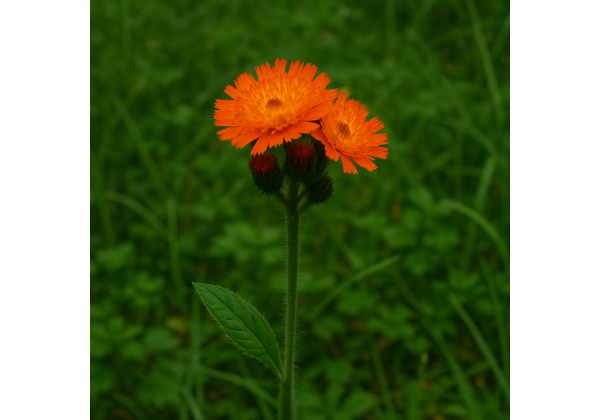
Orange Hawkweed is a vivid orange-flowered member of the daisy family, long admired in cottage gardens and just as often criticized as a fast-spreading weed. Its medicinal story is more complicated than its appearance suggests. In old European folk practice, hawkweeds were used as mild diuretics, astringents, and wound herbs, and orange hawkweed was sometimes grouped with related species for teas and poultices. Modern herbal science, however, has not kept pace with that tradition. Direct clinical evidence for Hieracium aurantiacum itself is extremely limited, and much of what is said about its health value today is inferred from the broader hawkweed group, especially mouse-ear hawkweed.
That does not make the plant irrelevant. Orange Hawkweed likely contains phenolic compounds, flavonoids, tannins, and flower pigments that help explain its traditional reputation for mild urinary support, surface-level astringency, and antioxidant potential. Still, it is best approached as a folk herb with narrow, cautious uses rather than as a proven modern remedy. Understanding that distinction is what makes the plant interesting—and what keeps its use responsible.
Key Facts
- Orange Hawkweed is mainly associated with traditional mild diuretic and astringent use, not well-proven clinical treatment.
- Its likely useful actions are urinary flushing support and gentle topical tightening of irritated tissue.
- A traditional hawkweed infusion range is 2 to 4 g dried herb in water, up to 3 times daily.
- It should be avoided during pregnancy and breastfeeding, in children under 18, and by people with Asteraceae allergy or conditions requiring restricted fluid intake.
Table of Contents
- What Orange Hawkweed is and why species confusion matters
- Key ingredients and medicinal properties
- Potential health benefits and what the evidence really says
- Traditional uses and how Orange Hawkweed has been used
- Dosage, preparations, and why exact dosing is uncertain
- Safety, side effects, interactions, and who should avoid it
- How to source it safely and set realistic expectations
What Orange Hawkweed is and why species confusion matters
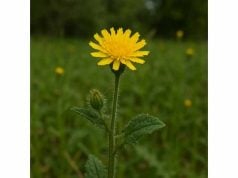
Orange Hawkweed, usually listed botanically as Hieracium aurantiacum and often treated in newer taxonomy as Pilosella aurantiaca, is a perennial herb in the Asteraceae family. It forms a low basal rosette, sends up leafless flowering stems, and produces vivid orange to red-orange flower heads. The plant is native to parts of Europe but is now well known in many other regions as an escaped ornamental and, in some places, a serious invasive species.
That ecological fame creates a strange problem for readers looking for health information. Most modern writing about orange hawkweed focuses on identification and control, not on therapeutic use. Meanwhile, older herbal traditions often speak more broadly about “hawkweed” or “pilosella” without being careful about species. As a result, claims about Orange Hawkweed often borrow from related plants, especially mouse-ear hawkweed, Pilosella officinarum or Hieracium pilosella, which has a more developed traditional monograph history in Europe.
This difference matters more than it may seem. In herbal medicine, plants from the same genus can overlap in chemistry and traditional use, but they are not automatically interchangeable. Orange Hawkweed may share some phenolic compounds and folk uses with related hawkweeds, yet the strongest regulatory and historical medicinal documentation belongs to mouse-ear hawkweed, not to Orange Hawkweed itself. That means any article that presents Orange Hawkweed as a well-established clinical herb would be overstating the evidence.
A practical way to think about the plant is this:
- Orange Hawkweed is a folk-use plant with limited direct evidence.
- Mouse-ear hawkweed is the related hawkweed species with clearer traditional European documentation.
- Modern clinical proof for Orange Hawkweed is weak to absent.
- Most credible claims involve gentle, traditional functions such as urinary flushing and mild astringency, not disease treatment.
This species confusion is also why dosage advice can be messy. A dose quoted in an herbal monograph may refer to Pilosella officinarum, while an online blog may casually apply it to Hieracium aurantiacum. That is not automatically wrong, but it is an extrapolation, and readers deserve to know that.
Orange Hawkweed is also easy to romanticize because it looks so vivid and old-world. But it is better understood as a plant with an interesting folk record, plausible phytochemistry, and limited direct confirmation. That framing keeps the article useful. It also prevents the common mistake of turning an attractive wildflower into a miracle herb.
If your interest is mainly in mild urinary-support herbs with clearer traditional use, a more established comparison point is uva ursi for lower urinary tract support, which has a much more defined place in herbal practice than Orange Hawkweed does.
Key ingredients and medicinal properties
Orange Hawkweed does not have one famous “signature molecule” in the way some herbs do. Instead, its medicinal interest appears to come from a familiar herbal pattern: polyphenols, flavonoids, tannins, related phenolic acids, and pigment compounds that may contribute antioxidant, astringent, and mild antimicrobial actions. Research on the wider Hieracium and Pilosella group points repeatedly to this chemistry profile, even though the exact compounds and amounts vary by species and plant part.
From the available literature on hawkweeds as a group, the most relevant constituent categories include:
- Flavonoids, which are often linked with antioxidant and capillary-supportive effects
- Phenolic acids, including caffeic and chlorogenic acid derivatives in related hawkweed species
- Tannins, which help explain astringent and tissue-tightening qualities
- Hydroxycoumarins, reported in related hawkweed species
- Triterpenoids, present in some related taxa
- Carotenoid pigments, especially in brightly colored flowers such as Orange Hawkweed
For Orange Hawkweed specifically, the bright flower color suggests an active pigment profile, and broad flower-focused reviews identify Hieracium aurantiacum among species containing carotenoid compounds. That supports the idea that the flowers are chemically active, but it does not prove a clinical benefit by itself. Pigments may contribute antioxidant behavior, yet many colorful plants never become useful medicines.
In plain herbal language, Orange Hawkweed is best described as having three possible medicinal properties.
First, it is likely mildly astringent.
Astringent herbs contain compounds, often tannins, that cause a gentle tightening of tissue. Traditionally, that is why hawkweeds were sometimes used on small wounds, minor skin irritation, or tissue states described as “relaxed” or overly moist.
Second, it may be mildly diuretic.
The strongest traditional use in related hawkweed species is increasing urine flow as part of urinary flushing. That does not mean treating infection directly. It means helping increase urinary output when paired with adequate fluid intake.
Third, it likely has antioxidant and modest antimicrobial potential.
This is plausible from the chemistry of the genus and from experimental studies in related species, but it remains much more laboratory-based than clinically proven.
What Orange Hawkweed probably is not is a strong anti-inflammatory drug, a reliable blood-sugar herb, or a proven antihypertensive plant. Those claims appear in scattered folk and online descriptions, but they run well ahead of the evidence.
A useful way to judge the plant is to separate chemical promise from practical certainty. Chemical promise means the herb contains compounds that make mild bioactivity believable. Practical certainty means we have enough human data to know what it does in real-world care. Orange Hawkweed has more of the first than the second.
This is common in smaller folk herbs. Many have the right kinds of compounds to be interesting, but only a handful are studied deeply enough to justify confident modern recommendations. Orange Hawkweed belongs in the interesting category, not the settled one.
Potential health benefits and what the evidence really says
If a reader searches for Orange Hawkweed benefits, the most responsible answer is that the plant’s direct evidence base is thin. Most credible “benefits” are either traditional claims or cautiously inferred from the wider hawkweed group. That does not make them false, but it does mean they should be presented as possibilities rather than certainties.
1. Mild urinary flushing support
This is the strongest traditional lane for hawkweeds in European herbal medicine. Related hawkweed species, especially mouse-ear hawkweed, are recognized for increasing the amount of urine as an adjuvant in minor urinary tract complaints when used with sufficient fluid intake. Orange Hawkweed is often mentioned in the same folk-use orbit, which is why it sometimes appears in old herb lists as a diuretic tea herb.
The key phrase is urinary flushing, not infection treatment. This sort of herb may help dilute urine and increase flow, but it should not be mistaken for a replacement for diagnosis or antibiotics when infection signs are present.
2. Gentle astringent and topical support
Traditional hawkweed use also includes topical application for minor wounds or irritated tissue. Astringency is the likely explanation. If a plant contains tannins and related phenolics, it may help create a light tightening, drying, or toning effect on the surface of tissue.
This is one of the more believable traditional uses because it does not require a dramatic systemic effect. A mild plant can still be useful on the surface. Still, there is very little modern clinical work on Orange Hawkweed poultices, washes, or salves specifically.
3. Antioxidant potential
Reviews of the Hieracium and Pilosella group describe antioxidant-related compounds and experimental activity. Orange Hawkweed’s flowers also contribute pigment compounds consistent with antioxidant interest. That makes it fair to describe the herb as having antioxidant potential. It is not fair to claim that drinking the tea reliably produces measurable antioxidant benefits in humans.
4. Mild antimicrobial interest
The hawkweed group has also shown some antimicrobial activity in laboratory settings, and old herbals sometimes describe hawkweed as “bactericidal” or useful for infected tissues. The modern evidence for Orange Hawkweed itself remains too limited to make this a central recommendation, but it helps explain why folk medicine sometimes extended the plant to wound or chest complaints.
5. Respiratory folk use
Older herb literature sometimes lists hawkweed for coughs, bronchitis, or whooping cough. This is best treated as historical information, not current evidence-based guidance. The traditional use exists, but the proof is not there.
That is why Orange Hawkweed should not be marketed as a lung herb in the same confident way as classic expectorants or soothing respiratory plants. For most people, its more believable traditional role remains urinary and astringent rather than respiratory.
If you are comparing it with gentler fluid-balance herbs, dandelion is a more familiar mild diuretic benchmark and generally has a much clearer contemporary herbal identity.
The bottom line is simple: Orange Hawkweed may offer mild urinary, astringent, and antioxidant support, but the evidence is mostly traditional and indirect. Its health “benefits” are best described as plausible and limited, not proven and broad.
Traditional uses and how Orange Hawkweed has been used
Orange Hawkweed comes from a style of herbalism where plants were often grouped by observation, taste, and long use rather than by modern trial design. In that older framework, hawkweeds were valued as small, useful herbs rather than as major heroic remedies. Their roles were usually simple: move fluid, dry excess moisture, tone tissue, and assist mild complaints.
Traditional uses associated with Orange Hawkweed or the broader hawkweed group include:
- herbal infusions for mild urinary complaints
- use as a diuretic or “depurative” herb
- folk use in coughs and bronchitic complaints
- external application for small wounds or surface irritation
- occasional use where an astringent bitter herb was desired
The language of older herbals can sound broader than modern evidence supports. Terms such as depurative, vulnerary, or bactericide were often used loosely. In present-day language, those claims should be translated more cautiously:
- depurative often meant a plant thought to support elimination
- vulnerary meant a wound herb
- bactericide often reflected observation or early laboratory thinking rather than strong modern infection evidence
This older use pattern makes Orange Hawkweed more understandable. It was not seen as a specialist pharmaceutical plant. It was used as a small-support herb that could be infused, combined, or applied externally.
How it was likely prepared
Traditional use generally centers on the aerial parts, sometimes with flowers and sometimes with mixed herb material. Common forms historically included:
- Infusion or tea, especially for urinary use
- Liquid extract, in more formal herbal preparations
- Syrup, in older respiratory-style formulas
- Poultice or wash, for external application
This does not mean every preparation is well supported today. It means these are the kinds of preparations historically associated with hawkweed use.
Where tradition is stronger than evidence
The most useful modern reading of this history is not “our ancestors proved it works,” but “our ancestors used it consistently for certain mild complaints.” That long use matters, especially for safety context and plausible direction of benefit. Still, it is not the same thing as modern clinical confirmation.
Orange Hawkweed also has another complication: because it is not among the most commercially important herbs, much of its old use survives in scattered herbals, regional traditions, and discussions of related hawkweeds. That makes the tradition real but somewhat fragmented.
For topical use, astringent herbs are often used where the tissue feels mildly irritated, damp, or superficial rather than deeply infected. In modern practice, many people would more naturally reach for calendula for gentle topical soothing, which has a clearer contemporary profile than Orange Hawkweed.
The best way to honor Orange Hawkweed’s traditional use is to keep it modest. Historically, it was a support herb. It was not a cure-all, and there is little reason to reinvent it as one now.
Dosage, preparations, and why exact dosing is uncertain
Dosage is the most delicate part of any Orange Hawkweed guide because there is no well-established modern clinical dose specific to Hieracium aurantiacum. Most practical numbers come from traditional hawkweed use and from regulatory monographs on the related species mouse-ear hawkweed, not from controlled trials on Orange Hawkweed itself.
That means dose advice has to be framed honestly: these are traditional hawkweed reference ranges, not rigorously validated species-specific doses for Orange Hawkweed.
Traditional hawkweed ranges often cited
For related hawkweed preparations, the traditional oral ranges most often mentioned include:
- Infusion: 2 to 4 g dried herb in hot water, up to 3 times daily
- Powdered herb: roughly 280 to 520 mg per dose in formal monograph-style preparations
- Older liquid extract references: 2 to 4 mL, often 3 times daily in older literature
These figures help create a practical ceiling for how strongly hawkweeds have traditionally been used. They also show that hawkweed is usually treated as a mild herb rather than a high-dose bulk tonic.
Which form makes the most sense
Tea or infusion
This is the most historically natural form. It fits the plant’s traditional use and is the easiest way to keep the dose gentle. If used, it should be prepared from correctly identified, clean, dried aerial material.
Powder or capsule
Less traditional for Orange Hawkweed specifically, but sometimes used when hawkweed is grouped with related species. Product transparency matters here.
Liquid extract
This is harder to use safely unless the extract is well labeled and species identity is certain.
Topical use
Traditional topical use is best kept mild and limited to intact or only very superficially irritated skin. It is not a substitute for wound care.
Timing and duration
Because Orange Hawkweed is mainly discussed for mild urinary and astringent support, a practical approach would be:
- earlier in the day for urinary-use teas
- short-term use, usually several days to up to 2 weeks
- stop and reassess if symptoms persist
This is not a plant that invites indefinite self-prescribing. A short, clearly defined trial makes more sense than routine daily use for months.
Why exact dosing remains uncertain
There are four reasons dosing is less clear than with major herbs:
- The best documentation is on a related hawkweed species.
- Traditional texts vary in plant part, preparation, and strength.
- Direct human studies on Orange Hawkweed are lacking.
- Taxonomy and naming changes can blur which species older texts meant.
That uncertainty should lead to caution, not fear. The safest conclusion is that Orange Hawkweed belongs in the low-dose, short-term, folk-use category. It is not a plant to megadose, combine aggressively, or treat as interchangeable with highly standardized modern extracts.
If someone wants to experiment with it at all, the reasonable route is modest tea-based use, careful plant identification, and a clear stopping point.
Safety, side effects, interactions, and who should avoid it
Safety data for Orange Hawkweed itself are limited, which means a responsible safety section has to combine common herbal caution with what is known from traditional hawkweed use and related species. The good news is that hawkweeds are not widely known as highly toxic herbs. The less comfortable truth is that “not known to be highly toxic” is not the same as “well studied.”
Who should avoid it
Pregnant or breastfeeding people
There is not enough safety data to support use during pregnancy or breastfeeding. This is one of the clearest avoid categories.
Children and adolescents under 18
Related hawkweed monographs do not recommend use in this age group because adequate data are lacking.
People with Asteraceae allergy
Orange Hawkweed belongs to the daisy family. Anyone who reacts strongly to ragweed, chamomile, arnica, or related Asteraceae plants should be cautious and may be better off avoiding it.
People with severe heart or kidney disease requiring restricted fluid intake
Because traditional use depends on adequate hydration and mild urinary flushing, this is not an herb for people who have been told to limit fluids.
People with unexplained urinary symptoms
Fever, pain with urination, spasms, flank pain, or blood in the urine are not situations for self-treatment with a folk diuretic herb.
Possible side effects
No consistent modern side-effect pattern is well established for Orange Hawkweed, but realistic possibilities include:
- stomach upset
- mild nausea with bitter tea
- allergic rash or oral irritation in sensitive people
- dizziness or dehydration if combined with poor fluid intake or stacked with other diuretics
Possible interactions
Documented interaction data are sparse, but caution is sensible with:
- prescription diuretics
- other strong urinary herbs
- medicines where dehydration or fluid shifts matter
- multi-herb formulas containing several Asteraceae plants if allergy is a concern
A note on topical safety
Traditional external use may sound harmless, but it still deserves care. Do not apply improvised fresh plant preparations to infected wounds, deep cuts, burns, or broken skin with unknown contamination risk. Wild-harvested plant material can carry dirt, microbes, or chemical residues.
When to stop and seek help
Stop use and get medical advice if:
- urinary symptoms worsen or last beyond a short trial
- fever or blood in the urine appears
- breathing symptoms are significant
- a rash or allergic reaction develops
- you feel lightheaded, unusually dry, or unwell
Orange Hawkweed’s risk profile is probably modest when used gently and briefly, but the lack of robust data means caution is part of responsible use. The herb’s traditional reputation does not cancel the need for judgment.
How to source it safely and set realistic expectations
For Orange Hawkweed, sourcing is almost as important as dosage. Because the plant is not a mainstream medicinal herb, quality control is not as straightforward as it is with chamomile, peppermint, or nettle. That makes self-harvesting and product selection more complicated than many readers expect.
Identification matters
Orange Hawkweed has a distinctive look, but the hawkweed group is taxonomically messy. Several related species resemble each other, and local naming can be inconsistent. If you harvest it yourself, you need confidence in:
- the rosette growth form
- the hairy stems and leaves
- the orange flower heads
- the milky sap common to the group
- the difference between it and other hawkweed or daisy-family lookalikes
If there is any doubt, do not harvest for medicinal use.
Harvesting concerns
Even correctly identified Orange Hawkweed may be a poor herbal source if it comes from:
- roadsides
- sprayed lawns
- industrial margins
- sites contaminated by runoff
- invasive-control areas treated with herbicides
This is especially important because Orange Hawkweed often grows where land managers actively try to remove it.
Product concerns
Commercial Orange Hawkweed products are not especially common. If you find one, look for:
- the exact botanical name
- the plant part used
- whether it is plain herb or extract
- any standardization data
- contamination testing
A vague label that says only “hawkweed extract” is not enough.
Set expectations by evidence, not folklore
The right expectation is not “this bright wildflower will fix my kidneys” or “this old folk herb must work for everything.” A better expectation is:
- it may offer mild traditional urinary support
- it may have gentle astringent qualities
- it may contain interesting phenolic compounds
- it does not have direct modern clinical proof for major health claims
This is actually freeing. Once you stop expecting Orange Hawkweed to be a hidden miracle herb, it becomes easier to evaluate honestly. At that point, the plant can be appreciated for what it is: a historically interesting, lightly used herb with a narrow plausible role.
For most readers, the wisest approach is not to make Orange Hawkweed a daily self-care staple. It is better suited to careful short-term experimentation, preferably by experienced herbal users who understand both the limits of folk evidence and the importance of correct identification.
Orange Hawkweed is a plant where realism is a strength. It has enough tradition to deserve thoughtful discussion, enough chemistry to justify interest, and enough uncertainty to demand restraint.
References
- Ethnopharmacology, phytochemistry, and bioactivities of Hieracium L. and Pilosella Hill (Cichorieae, Asteraceae) species 2021 (Review)
- Pilosellae herba cum radice – herbal medicinal product | European Medicines Agency (EMA) 2025 (Official Summary)
- Assessment report on Pilosella officinarum Vall. (syn Hieracium pilosella L.), herba cum radice 2024 (Official Assessment Report)
- Exploring Plants with Flowers: From Therapeutic Nutritional Benefits to Innovative Sustainable Uses 2023 (Review)
Disclaimer
This article is for educational purposes only and should not be used as a substitute for medical advice, diagnosis, or treatment. Orange Hawkweed is a folk-use herb with limited direct clinical evidence, and much of its reported use is based on related hawkweed species rather than strong human trials on Hieracium aurantiacum itself. Do not use it to self-treat urinary infections, persistent swelling, respiratory illness, or open wounds without appropriate medical care. Extra caution is warranted if you are pregnant, breastfeeding, under 18, allergic to Asteraceae plants, or taking diuretic or fluid-sensitive medicines.
If this article helped you, please share it on Facebook, X, or your preferred platform so others can find practical, evidence-aware herbal information.