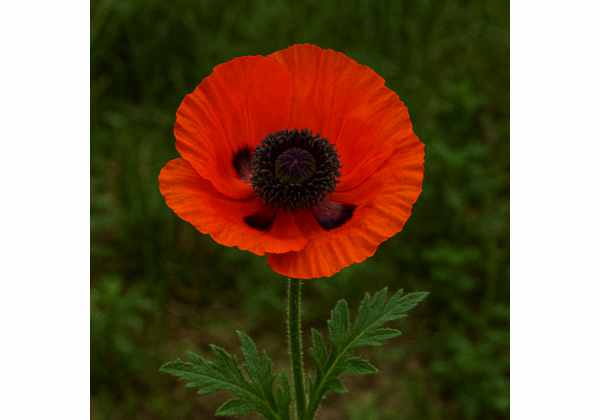
Oriental poppy, or Papaver orientale, is best known as a dramatic ornamental flower, yet it also has a lesser-known medicinal history and a surprisingly complex chemistry. That combination makes it interesting, but it also makes it easy to misunderstand. Many people assume all poppies work the same way. In reality, different Papaver species can vary sharply in their alkaloid profile, safety, and practical herbal value. Oriental poppy contains pharmacologically relevant compounds and appears in ethnobotanical records, especially for soothing, topical, and traditional folk uses. At the same time, it is not a well-standardized modern medicinal herb with a clearly validated human dosage.
That is the key idea to keep in mind throughout this guide. Oriental poppy may offer potential benefits through its alkaloids and other plant compounds, and traditional reports point to uses for discomfort, irritation, and external care. Still, the best evidence is chemical, ethnobotanical, and preclinical rather than clinical. This article explains what the plant is, what its key ingredients are, which benefits are plausible, how it has been used, what dosage questions matter most, and where the real safety boundaries begin.
Core Points
- Oriental poppy is chemically interesting because of its alkaloids, but it is not a routine evidence-based self-care herb.
- Traditional reports suggest soothing and topical uses, especially for mild irritation and external care.
- Strong claims for pain relief, sleep support, or broad medicinal action in humans remain unproven.
- No validated oral dosage range in mg/day or mL/day has been established for self-treatment.
- Avoid medicinal use during pregnancy, breastfeeding, childhood, or alongside opioids, sedatives, or alcohol.
Table of Contents
- What Oriental Poppy Is and Why Identification Matters
- Key Ingredients and Medicinally Relevant Compounds
- Potential Health Benefits and What the Evidence Actually Shows
- Traditional Uses and Modern Preparations
- Dosage, Timing, and Practical Use
- Safety, Side Effects, and Who Should Avoid It
- When Oriental Poppy Is Not the Best Herbal Choice
What Oriental Poppy Is and Why Identification Matters
Oriental poppy is a perennial member of the poppy family, Papaveraceae. In gardens it is prized for its large crepe-like flowers, coarse hairy foliage, and short but spectacular blooming season. Medicinally, though, the most important fact is not its beauty. It is its identity. People often use the word “poppy” as if it refers to one plant with one set of effects. That is not how the genus works.
Papaver orientale is not the same plant as opium poppy (Papaver somniferum), and it should not be treated as a simple substitute. It also sits close to other related poppy species that can be confused in horticulture, botany, and even older medicinal literature. That confusion matters because poppy chemistry is driven largely by alkaloids, and alkaloid profiles can differ significantly between species, plant parts, maturity stages, and growing conditions.
From a practical health perspective, this means a reader should separate three very different ideas:
- an ornamental perennial with a history of folk use
- a chemically active plant with notable alkaloids
- a standardized herbal medicine with dependable clinical dosing
Oriental poppy fits the first two categories far better than the third. That does not make it useless, but it does change how it should be approached. It is better understood as a plant of ethnobotanical and pharmacological interest than as a mainstream kitchen-herb remedy.
Identification also matters because different parts of the plant are not equivalent. Petals, leaves, seed heads, seeds, and latex are not interchangeable. Traditional soothing uses generally concern gentle preparations, especially from petals or fresh plant material in specific local contexts. By contrast, concentrated sap or home-extracted preparations raise a very different level of risk.
The safest way to think about Oriental poppy is this: start with correct plant identity, then narrow the discussion to the exact plant part and preparation. Without that step, the phrase “Oriental poppy benefits” becomes too vague to be reliable. Proper identification does not just improve botanical accuracy. It is the first step in preventing accidental misuse, false expectations, and avoidable side effects.
Key Ingredients and Medicinally Relevant Compounds
The most important medicinally relevant compounds in Oriental poppy are its alkaloids. These are nitrogen-containing plant chemicals that often have strong physiological effects in humans and animals. In poppies, alkaloids are the main reason the genus attracts pharmacological interest at all.
For Papaver orientale, older chemistry work on the plant’s latex identified two especially important morphinan-related alkaloids: oripavine and thebaine. Those names matter because they signal real pharmacological potential, not merely folklore. They also signal the need for caution, since compounds in this class can affect the nervous system and are not the kind of plant chemicals people should experiment with casually.
Beyond those better-known alkaloids, Oriental poppy appears to share broader phytochemical themes with the Papaver genus as a whole. That includes:
- alkaloids with potential neurological and analgesic relevance
- phenolic compounds that may contribute antioxidant activity
- flavonoid-type compounds that can support general bioactivity
- volatile and minor secondary compounds that may shape the overall effect of extracts
Still, there is an important limitation here. When people ask for “key ingredients,” they often expect a neat supplement label style answer, as if one can rank the actives with precision. Oriental poppy does not fit that model well. Its chemistry is variable. Plant part, harvest stage, drying method, and extraction technique all influence what ends up in a final preparation.
This is why the same plant can be described in two very different ways. A gardener may know it as a harmless ornamental flower, while a phytochemist may focus on morphinan-related constituents with clear pharmacological implications. Both views are partially true, but they apply to different contexts.
Another useful point is that whole-plant activity does not always mirror the effect of isolated compounds. A petal infusion used traditionally is not the same as concentrated latex, and neither is the same as a purified alkaloid. That distinction helps explain why Oriental poppy can have a mild traditional reputation in one setting and a much more serious pharmacological profile in another.
In plain language, the key ingredients in Oriental poppy are important precisely because they make the plant more than decorative. But they also make it less suitable for casual self-medication. The stronger the chemistry, the less room there is for guesswork. With Oriental poppy, that balance leans toward respect and restraint rather than enthusiastic dosing.
Potential Health Benefits and What the Evidence Actually Shows
When discussing Oriental poppy health benefits, the most honest answer is that there are plausible benefits, traditional reports, and promising chemistry, but limited direct clinical proof. That may sound cautious, but it is the right starting point.
The benefits most often associated with poppy-family plants include soothing effects, pain-related effects, calming properties, and broader bioactivities such as antioxidant or anti-inflammatory action. For Oriental poppy specifically, the strongest reasonable claims fall into four areas.
First, the plant has ethnobotanical relevance for gentle soothing uses. Historical regional reports describe preparations of petals for gastrointestinal discomfort in an emollient or coating role. That does not mean Oriental poppy is a proven treatment for digestive disease. It means people have used it traditionally where a soft, calming preparation was desired.
Second, topical use has been described in folk practice. Fresh plant juice or simple external applications have been used on minor wounds or irritated tissue in some traditions. Again, this is best read as traditional use, not as proof that Oriental poppy is a clinically verified wound herb.
Third, the plant’s alkaloids suggest possible pain-related and nervous-system effects. This is the most attention-grabbing part of the story, but also the one most likely to be overstated. Pharmacological potential is not the same thing as safe home use. The chemistry explains why researchers care about the plant, but it does not automatically justify using it for self-treatment of pain or insomnia.
Fourth, extracts from Papaver species more broadly have shown antioxidant, anti-inflammatory, antimicrobial, and other preclinical activities. Oriental poppy may share some of that potential, but the leap from a laboratory finding to a practical human benefit is large.
So what does the evidence actually support today? A balanced conclusion would be:
- traditional soothing use is plausible
- topical folk use is historically reported
- pharmacologically relevant compounds are clearly present
- strong human evidence for routine medicinal use is still lacking
That last point matters most. If your goal is sleep support, nervous system calming, or stress relief, better-studied herbs such as passionflower usually make more practical sense. Oriental poppy remains more of a specialized, caution-worthy plant than a first-line herbal remedy.
Its potential benefits are real enough to deserve interest, but not established enough to support confident therapeutic claims for the average reader. In herbal medicine, that is a meaningful distinction. Interest should lead to careful judgment, not automatic use.
Traditional Uses and Modern Preparations
Oriental poppy’s traditional uses appear to be modest, local, and context-dependent rather than broad and standardized. Ethnobotanical records from parts of the Caucasus describe the petals in water infusions for gastrointestinal complaints and the fresh juice of flowers or leaves for external application on wounds. Those uses are gentle in character. They suggest a plant applied for soothing, coating, or local care rather than one universally relied upon as a major medicinal tonic.
That traditional profile is useful because it keeps expectations realistic. Oriental poppy was not historically famous in the same way as some widely traded medicinal herbs. Its uses seem more regional and practical than strongly codified. That is important when modern readers encounter exaggerated claims online.
Today, most people are far more likely to encounter Oriental poppy as a garden plant than as a professionally prepared herbal product. When it does show up in medicinal discussion, the preparations usually fall into a few broad categories:
- mild petal infusions
- fresh plant material in folk topical use
- extracts discussed in research contexts
- home preparations that vary too much to be considered standardized
Modern use becomes risky when people confuse “traditional” with “safe in any form.” A simple petal infusion is not equivalent to concentrated plant sap, seed capsule extracts, or improvised homemade concentrates. Raw latex and concentrated extracts are especially poor candidates for unsupervised use because they shift the plant away from gentle folk practice and toward unpredictable pharmacology.
In practical herbal terms, Oriental poppy is not the first plant most clinicians or experienced herbalists would choose for common digestive complaints, mild stress, or surface irritation. For everyday digestive support, for example, a better-studied option such as peppermint is usually a more sensible choice. That does not erase Oriental poppy’s traditional use. It simply places it in proper context.
Modern preparations also face a quality problem: there is no widely accepted standard for what an “Oriental poppy herbal product” should contain. That means two products labeled similarly could behave very differently. Without standardization, potency and safety become harder to predict.
The best way to interpret Oriental poppy’s traditional and modern uses is to see them as part of a narrow, cautious herbal niche. The plant has a real medicinal story, but it is not a broad-spectrum self-care herb. Its traditional uses deserve respect, yet its modern use demands better boundaries than many people assume.
Dosage, Timing, and Practical Use
Dosage is the section where Oriental poppy stops behaving like a typical herbal article topic. For many herbs, it is possible to give a familiar range in grams, cups, capsules, or milliliters. For Papaver orientale, that kind of neat recommendation would be misleading. There is no well-established, evidence-based oral dosage range for self-treatment.
That is not a small technical gap. It is the central practical fact. Any source that offers a confident standardized dose for Oriental poppy without clearly defining the plant part, extraction method, and safety context should be treated skeptically.
A sensible practical approach looks like this:
- Do not treat Oriental poppy as a daily general-wellness herb.
- Do not use raw latex, home-extracted concentrates, or concentrated capsule material.
- Do not assume petal preparations are equivalent to other plant parts.
- Keep any folk-style use short, cautious, and low-intensity rather than concentrated.
- Stop immediately if you notice drowsiness, nausea, constipation, dizziness, agitation, or unusual mental effects.
Timing also matters. This is not a plant to use before driving, working with machinery, or combining with other substances that can affect alertness. Even when the intended use is mild, the chemistry of the genus argues for caution around the nervous system.
For topical folk use, the practical bar is different. A simple patch test and limited trial on a small area makes far more sense than broad application. If your interest is surface soothing, a more predictable option such as calendula is usually easier to use safely because it has a more familiar topical tradition and a clearer practical framework.
A better question than “How much Oriental poppy should I take?” is “Should I be self-dosing this plant at all?” In many cases, the most responsible answer is no, especially for oral use. That does not mean the plant has no medicinal value. It means its value lies more in carefully interpreted traditional use and pharmacological interest than in home dosing convenience.
In short, Oriental poppy does not have a trustworthy self-care dosage playbook. The lack of a validated range is itself a safety signal. For most readers, that is more useful than a forced number.
Safety, Side Effects, and Who Should Avoid It
Safety is where Oriental poppy deserves more attention than many casual herb guides give it. The plant’s medicinal interest comes largely from alkaloids, and alkaloids are exactly the kind of compounds that can create meaningful adverse effects, interactions, or dosing uncertainty when used improperly.
The first safety rule is simple: do not assume that ornamental means inert. A plant can be common in gardens and still deserve caution in medicinal use.
Potential side effects from inappropriate oral exposure or overly concentrated preparations may include:
- nausea or vomiting
- drowsiness or mental slowing
- dizziness or impaired alertness
- constipation
- unusual agitation or neurological symptoms
Because Oriental poppy chemistry overlaps with opioid-related alkaloid pathways, it should not be mixed casually with sedatives, opioid medicines, sleep aids, alcohol, or other substances that depress alertness or respiration. Even when the exact strength of a preparation is unclear, that uncertainty is part of the risk.
People who should avoid medicinal use of Oriental poppy include:
- pregnant or breastfeeding women
- children and adolescents
- people with a history of substance misuse
- those taking opioids, sedatives, or strong sleep medications
- people who need full alertness for driving or hazardous work
- anyone with an unexplained seizure history or major neurological vulnerability
- people with known sensitivity to poppies or related plants
Another important point is product reliability. If a plant is not commonly standardized as a medicinal product, contamination, misidentification, or inconsistent potency become more likely. That is especially relevant with poppy-family plants, where species confusion can create a false sense of safety.
Medical attention is warranted immediately if a preparation causes marked sleepiness, slowed breathing, confusion, seizure-like activity, or a dramatic change in coordination. Those are not “wait and see” symptoms.
There is also a psychological safety issue: some readers see a plant with pharmacological alkaloids and assume that means it must be strong and effective. In herbal practice, strength without standardization is often a drawback, not an advantage. The more potent or variable the chemistry, the more important trained supervision becomes.
For Oriental poppy, the safest default is to treat it as a plant that may have medicinal relevance but does not invite routine self-experimentation. Respecting that boundary is not fear-based. It is what evidence-aware herbal judgment looks like.
When Oriental Poppy Is Not the Best Herbal Choice
One of the most useful things an herb article can do is say when a plant is not the best option. Oriental poppy is a good example. It is interesting, historically meaningful, and chemically active, yet it is often a poor first choice for practical self-care.
If your goal is ordinary pain relief, you are usually better served by herbs or products with a clearer evidence base, a better-defined safety profile, and more familiar dosing. For people specifically interested in plant-based pain support, white willow generally makes more sense as a starting point than Oriental poppy. The same logic applies to other goals. For mild digestive discomfort, peppermint is more practical. For calming support, chamomile or passionflower usually fit better. For topical soothing, calendula is easier to use predictably.
That does not mean Oriental poppy lacks value. Its value is simply different. It may be worth studying, discussing in ethnobotanical contexts, or handling with professional caution when plant chemistry is the focus. It may also be perfectly worth growing as a beautiful ornamental perennial. But beauty, tradition, and pharmacological intrigue do not automatically add up to a good self-care herb.
A good rule is to match the herb to the job. If a person wants a gentle, everyday medicinal plant with clear preparation methods and a relatively accessible safety margin, Oriental poppy is rarely the easiest answer. If a person wants to understand how certain traditional plants bridge folk medicine and serious alkaloid chemistry, it becomes much more compelling.
So what is the bottom line? Oriental poppy has potential health relevance, but its strongest role today is as a plant of cautious interest rather than broad recommendation. Its medicinal story is real, yet incomplete. Its chemistry is notable, yet not beginner-friendly. Its traditional uses are worth remembering, yet not a substitute for clinical evidence.
For most readers, the wisest conclusion is simple: admire the plant, respect its chemistry, and choose better-studied herbs when the goal is practical daily use.
References
- Papaver Plants: Current Insights on Phytochemical and Nutritional Composition Along with Biotechnological Applications 2022 (Review)
- Herbgenomics meets Papaveraceae: a promising -omics perspective on medicinal plant research 2024 (Review)
- Recent Advances in Alkaloids from Papaveraceae in China: Structural Characteristics and Pharmacological Effects 2024 (Review)
- Papaver orientale L. Papaver somniferum L. Papaveraceae 2017 (Ethnobotany Reference Entry)
- Alkaloids of Papaver orientale and papaver pseudo-orientale 1975 (Foundational Chemistry Study)
Disclaimer
This article is for educational purposes only and does not replace medical advice, diagnosis, or treatment. Oriental poppy is not a well-standardized self-care herb, and concentrated preparations, latex, or home extracts should not be used without qualified professional guidance. Seek medical help promptly for severe drowsiness, breathing changes, confusion, seizure-like symptoms, or any suspected poisoning. Always talk with a clinician before using any poppy-family plant medicinally if you are pregnant, breastfeeding, taking prescription medicines, or have a chronic medical condition.
If this article helped you, please share it on Facebook, X (formerly Twitter), or your preferred platform.