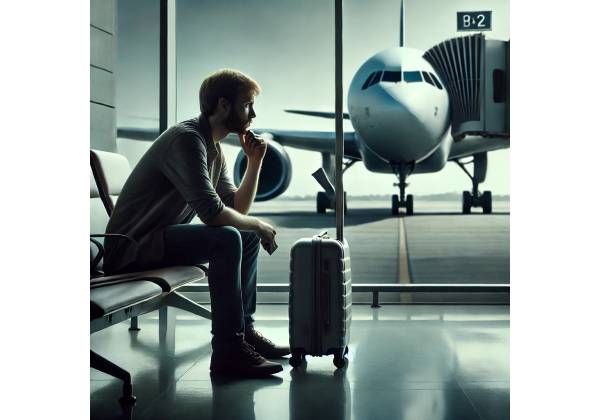
For some people, flying is mildly uncomfortable. For others, it begins days before the trip, grows sharper at the airport, and can turn takeoff, turbulence, or landing into a period of intense dread. Aerophobia, also called aviophobia or fear of flying, is more than ordinary travel stress. It can shape careers, strain family life, and shrink a person’s world by making distant work, holidays, and important events feel out of reach.
This article explains what aerophobia is, how it shows up, why it develops, how it is diagnosed, and which treatments are most likely to help. It also covers practical ways to manage fear before and during a flight. The goal is not to minimize the fear, but to make it understandable and more treatable.
Table of Contents
- What Aerophobia Really Is
- Symptoms and Panic Signs
- Causes and Risk Factors
- How Diagnosis Is Made
- Daily Impact and Complications
- Treatment Options That Help
- Coping and Flight Preparation
- When to Seek Help
What Aerophobia Really Is
Aerophobia is a specific phobia centered on flying or on situations closely linked to flying. The fear may focus on the aircraft itself, turbulence, takeoff, landing, enclosed space, lack of control, crashing, or being unable to escape. Some people feel distressed only once the cabin door closes. Others become anxious when they book a ticket, watch airport scenes on television, or even think about an upcoming trip.
A key point is that aerophobia is not simply dislike or caution. Many travelers prefer a train to a plane, feel tense in rough weather, or grip the armrest during turbulence. That is common. A phobia is different because the fear is intense, persistent, and out of proportion to the immediate danger. It also leads to avoidance or to enduring the situation with marked distress.
How it often presents
Aerophobia can appear in several patterns:
- Event-focused fear: fear peaks during takeoff, turbulence, or landing.
- Catastrophic fear: the mind fixes on crashing, mechanical failure, or losing control.
- Body-focused fear: the person becomes frightened by their own racing heart, dizziness, or sense of panic.
- Situational fear: the problem is partly about crowds, security lines, enclosed cabins, or being far from help.
This matters because two people can both say, “I’m afraid of flying,” while meaning very different things. One may mainly fear turbulence. Another may fear panic symptoms in a crowded cabin. Another may avoid flying because of a traumatic past flight or because of a broader anxiety disorder. Good treatment starts by understanding that difference.
Aerophobia may exist on its own, but it can also overlap with panic disorder, claustrophobia, generalized anxiety, health anxiety, or trauma-related symptoms. In some cases, the person is less afraid of the plane than of what they might feel on the plane.
The most useful way to think about aerophobia is this: it is a learned fear response that the brain treats as a threat pattern. That pattern can become strong, but it can also be retrained. For many people, that is the turning point. The fear feels absolute, but it is usually modifiable with the right approach.
Symptoms and Panic Signs
Aerophobia affects both mind and body. Some symptoms begin well before travel. Others appear only near a gate, during boarding, or when the plane starts moving. The body’s alarm system does not wait for logic to catch up, so a person may know that flying is statistically safe and still feel intense fear.
Common emotional and mental symptoms
People with aerophobia often describe:
- intense dread before a trip
- repeated “what if” thoughts
- vivid mental images of disaster
- strong urge to cancel or postpone
- feeling trapped or unable to cope
- difficulty concentrating before or during travel
- irritability, restlessness, or sleeplessness the night before flying
Anticipatory anxiety is especially common. The flight may be days away, yet the nervous system is already reacting. This can create a cycle in which the person begins to fear not only the flight, but the buildup to the flight.
Common physical symptoms
Aerophobia can trigger classic anxiety and panic symptoms, including:
- sweating
- trembling
- shortness of breath
- chest tightness
- nausea
- dizziness
- tingling
- dry mouth
- racing heartbeat
- feeling faint or unreal
These symptoms can be frightening on their own. A person may start to interpret them as proof that something terrible is happening: “I’m going to pass out,” “I’m losing control,” or “I won’t survive this flight.” That interpretation can intensify the fear and push the body into a full panic response.
What a panic episode may look like
A panic surge linked to flying often unfolds fast:
- A trigger appears, such as boarding, engine noise, or turbulence.
- The body reacts with adrenaline.
- The person notices the body reaction and becomes alarmed.
- Catastrophic thoughts multiply.
- Symptoms escalate within minutes.
Not everyone with aerophobia has full panic attacks, but many do experience panic-like episodes. Children may show the same fear in different ways, such as crying, freezing, clinging, or becoming angry.
The severity can vary from trip to trip. A person may manage one short flight but feel overwhelmed on a later flight after stress, poor sleep, illness, or a bad prior experience. That variation does not mean the fear is imaginary. It means the fear system is sensitive to context.
A useful clue that the problem may be aerophobia rather than ordinary nerves is functional impact. When fear repeatedly leads to avoidance, severe distress, or major disruption, it deserves closer attention.
Causes and Risk Factors
Aerophobia does not come from one single cause. In most cases, it develops from a mix of temperament, learning, stressful experiences, and the meanings a person assigns to flying. The fear may start after one event or build gradually over years.
Common pathways into aerophobia
Several patterns are common:
- A distressing flight experience: severe turbulence, an emergency landing, a medical event on board, or a moment of feeling trapped can leave a lasting imprint.
- Learning through observation: hearing frightened family members talk about flying, seeing alarming news coverage, or watching dramatic flight scenes can shape expectations.
- Fear generalization: a person who already fears enclosed spaces, heights, loss of control, or panic sensations may begin to fear flying because it combines several triggers at once.
- Stress load: major life stress, burnout, grief, or health worries can lower resilience and make preexisting fear more likely to flare.
Why the brain keeps the fear going
Once fear becomes linked to flying, avoidance tends to reinforce it. If a person cancels a flight and feels immediate relief, the brain learns that avoidance worked. The relief is real, but it teaches the nervous system to remain fearful the next time. Over time, the range of triggers can widen from the aircraft to airports, booking sites, travel planning, or even conversation about flying.
Certain thinking patterns also maintain the problem. These include:
- overestimating danger
- underestimating one’s ability to cope
- treating normal aircraft sensations as signs of catastrophe
- interpreting anxiety symptoms as dangerous rather than temporary
Risk factors that may raise vulnerability
Aerophobia is more likely in people who have:
- a history of anxiety disorders or panic attacks
- other specific phobias
- trauma exposure
- strong sensitivity to bodily sensations
- perfectionism or high need for control
- family patterns of anxious coping
- major stress, fatigue, or poor sleep
Some people are especially distressed by uncertainty. Flying places trust in pilots, weather systems, maintenance, and procedures that the passenger cannot control directly. For someone who copes by monitoring and controlling their environment, that can feel unusually hard.
It is also important to distinguish aerophobia from realistic fear based on a specific situation. A person who is anxious because of an active medical problem, severe motion sickness, or a recent traumatic event may need a broader assessment. The question is not whether the fear feels real. It does. The question is whether the fear response has become excessive and self-reinforcing.
Understanding the roots of aerophobia can reduce shame. It is not a weakness of character. It is usually a conditioned fear pattern, and conditioned fear can be treated.
How Diagnosis Is Made
Diagnosis begins with a careful clinical conversation, not with a scan, blood test, or airport simulation. A clinician usually asks what happens before, during, and after flying; how long the fear has been present; what the person avoids; and how much it interferes with work, family life, education, or health care. The aim is to understand the pattern, the trigger, and the level of impairment.
What clinicians usually look for
Aerophobia is generally identified when several features are present:
- the fear is strong and clearly tied to flying or flying-related situations
- exposure almost always brings marked anxiety
- the person avoids flying or endures it with intense distress
- the fear is out of proportion to the actual situation
- daily life is limited in a meaningful way
- the problem is not better explained by another condition
The last point matters. Fear of flying can resemble, overlap with, or be driven by other problems. A clinician may consider:
- panic disorder: fear of panic symptoms more than fear of the aircraft
- claustrophobia: fear of enclosed spaces
- agoraphobia: fear of being unable to escape or get help
- post-traumatic stress: fear linked to a prior traumatic event
- obsessive-compulsive symptoms: intrusive catastrophic thoughts with repetitive checking
- medical issues: conditions that can mimic anxiety symptoms, such as vestibular problems or heart rhythm issues
Questions that help clarify the picture
A thorough assessment often explores:
- What exactly is feared most: crashing, turbulence, panic, entrapment, or something else?
- Does the fear start at booking, at boarding, or only in the air?
- Has there been a past bad flight or another trauma?
- Are there fears in other settings, such as elevators, bridges, or crowded places?
- Is alcohol or medication being used to get through flights?
This level of detail helps shape treatment. Someone whose main trigger is turbulence may need a different starting point than someone whose main trigger is panic in enclosed space.
Diagnosis can also include rating the severity of symptoms and tracking avoided situations. For example, a person may be able to board but not take off, or manage short domestic flights but not longer flights over water. These differences help create a treatment plan that is graded and realistic.
An accurate diagnosis should feel clarifying, not limiting. It puts a name to a pattern, separates aerophobia from other problems when possible, and guides next steps. For many people, the diagnostic process is the first time the fear becomes organized enough to tackle.
Daily Impact and Complications
Aerophobia is often dismissed because flights are occasional rather than daily. In real life, the impact can be much broader. Fear of flying can shape jobs, relationships, education, finances, and self-confidence. It may also lead to habits that create new problems.
How it affects daily life
A person with significant aerophobia may:
- turn down work travel, promotions, or training
- avoid family weddings, funerals, and reunions
- choose long, exhausting overland travel instead
- spend heavily on complicated alternate routes
- feel isolated when loved ones live far away
- postpone holidays, study programs, or medical care
The burden is not only practical. Many people feel embarrassed, especially when others tell them to “just relax” or point out that flying is safe. Shame can make the condition harder to discuss and delay treatment. Some begin to see themselves as difficult, unreliable, or limited, even though the problem is treatable.
Common complications
The main complication is a widening pattern of avoidance. Fear rarely stays neatly contained. A person may start by avoiding long flights, then all flights, then airports, travel planning, or any situation that produces similar body sensations. That narrowing of life is one of the strongest reasons to address the problem early.
Other complications can include:
- worsening general anxiety
- panic attacks
- depression linked to restriction and lost opportunities
- relationship strain
- poor sleep before trips
- overuse of alcohol or sedating medication as a coping tool
Relying heavily on alcohol or sedatives may seem useful in the moment, but it can backfire. It may interfere with exposure learning, leave the person feeling less in control, and create safety issues, especially when mixed with dehydration, exhaustion, or other medicines.
The hidden cost of “managing” by avoidance
Avoidance can make life look organized from the outside while causing growing distress underneath. Some people build careers that avoid travel, choose destinations only reachable by car, or repeatedly ask others to travel without them. Over time, the cost becomes emotional as well as logistical.
There is also the stress of uncertainty. Even if no flight is booked, the person may live with a background fear of future obligations. A wedding invitation, job interview, or family emergency can become a source of dread rather than anticipation.
One of the most helpful shifts in treatment is moving from the question, “How do I avoid this feeling?” to “How do I reduce the power this fear has over my life?” That change opens the door to recovery. The aim is not perfect calm on every flight. It is freedom, function, and a wider life.
Treatment Options That Help
Aerophobia is treatable, and the most effective care usually targets the fear directly rather than only trying to calm symptoms in the moment. For most people, the leading approach is cognitive behavioral therapy, especially exposure-based treatment.
Exposure-based therapy
Exposure therapy works by helping the brain learn, through repeated experience, that the feared situation can be faced without the predicted catastrophe occurring. It is gradual, structured, and collaborative. The person is not pushed into the hardest step on day one.
A treatment plan may move through steps such as:
- reading about flight procedures
- looking at aircraft images
- listening to airport or engine sounds
- watching takeoff videos
- visiting an airport
- sitting in a parked aircraft or simulator
- taking a short flight
- repeating flights until anxiety drops and confidence rises
Exposure can be done in real life, through guided imagery, or through virtual reality. Newer research suggests that app-based and virtual reality tools can help some people reduce fear of flying or specific phobia symptoms, especially when they make practice more accessible.
Cognitive and skills-based work
Treatment often includes more than exposure alone. Helpful elements may include:
- identifying catastrophic thoughts
- learning how anxiety peaks and settles
- reducing “safety behaviors” that keep fear alive
- practicing grounded breathing and attention control
- building a plan for turbulence, delays, and uncertainty
These skills do not replace exposure, but they can make it more manageable. A person learns to notice fear without treating it as an emergency.
What about medication?
Medication is not usually the main treatment for specific phobias. In some cases, a clinician may prescribe short-term medication for severe situational anxiety or for overlapping problems such as broader anxiety or depression. That decision should be individualized.
Important points include:
- medication may lessen symptoms without changing the underlying fear pattern
- sedating yourself is not the same as recovering
- self-medicating with alcohol is risky and can worsen control
- medicine choices should be discussed with a qualified clinician, especially before travel
Many people improve significantly with therapy alone. Others do best with a combination of therapy and carefully chosen medication support.
The encouraging news is that treatment does not require a lifetime of endless analysis. Aerophobia often responds well to targeted, practical work. Progress is usually measured not only by feeling calmer, but by being able to do what fear had been preventing.
Coping and Flight Preparation
Self-help strategies are most useful when they support treatment rather than replace it. They can lower distress, improve a sense of control, and help a person practice new skills before, during, and after a flight. The goal is steady preparation, not a frantic search for reassurance at the last minute.
Before the trip
Build a clear plan several days in advance:
- book earlier rather than repeatedly checking and delaying
- choose a direct flight when possible
- allow extra time for the airport
- reduce sleep deprivation before travel
- avoid excess caffeine if it makes your body jittery
- eat regularly and stay hydrated
- write down your fear ladder and coping statements
- decide how you will respond if anxiety rises
It can help to identify your main trigger. If your fear centers on turbulence, your plan may focus on tolerating uncertainty. If it centers on panic sensations, your plan may focus on allowing body symptoms to rise and fall without escape.
During the flight
Useful in-the-moment strategies include:
- Name the reaction. Say to yourself, “This is anxiety, not danger.”
- Lengthen the exhale. A slow exhale can help prevent rapid overbreathing.
- Ground attention. Notice five things you can see, four you can feel, three you can hear.
- Reduce threat scanning. Looking constantly at staff faces, wing movement, or every sound usually feeds fear.
- Let waves pass. Anxiety often rises fast and falls if you stop fighting every sensation.
Some people benefit from telling a flight attendant, quietly and briefly, that they are a nervous flyer. That is not a cure, but it can reduce the pressure to hide distress.
What to avoid
Certain habits can keep the fear cycle going:
- drinking heavily before or during the flight
- checking for “signs” of danger every few seconds
- canceling the moment anxiety rises
- insisting on rigid rituals that become safety crutches
- judging yourself harshly for feeling afraid
A good flight is not necessarily one with zero anxiety. A good flight may be one in which anxiety showed up and you still stayed with the plan.
Over time, recovery usually comes from repeated, tolerable contact with the feared situation. Even partial success counts. Boarding when you once could not board, staying seated through takeoff, or completing a short flight are meaningful gains. Confidence rarely appears first. It tends to grow after action.
When to Seek Help
Professional help is worth considering when fear of flying begins to organize your life around itself. That can happen long before the problem looks dramatic from the outside. You do not need to wait for a severe panic attack or a total inability to travel.
Signs it is time to get help
Seek assessment or treatment if:
- you avoid important trips because of fear
- flights cause intense distress before or during travel
- your work, family life, or education is being limited
- you rely on alcohol or medication just to get on a plane
- the fear is spreading to other situations
- you think more about escaping the flight than completing it
- low mood, shame, or hopelessness are building around the problem
Help is also important if your fear seems tied to trauma, repeated panic attacks, depression, or other anxiety symptoms. In those cases, treatment may need to address more than the flight itself.
What recovery usually looks like
Recovery is rarely a straight line. Many people improve in steps:
- first, they understand the fear better
- next, they reduce avoidance in smaller situations
- then, they practice structured exposure
- later, they complete flights with less distress and less recovery time afterward
The first successful flight does not have to feel easy to count as progress. A person may still feel anxious and yet function far better than before. Over time, symptoms often become less intense, shorter in duration, and less convincing.
A realistic goal is not to love turbulence or feel serene on every journey. It is to make flying possible without major suffering and without letting fear decide where life can go. For some people, that means routine confidence. For others, it means manageable nerves and full participation in work, family, and travel anyway.
If you ever feel overwhelmed by anxiety, unsafe because of substance use, or distressed to the point of hopelessness, seek urgent support from a qualified health professional or local emergency resources. Aerophobia is treatable, and the outlook is generally good when the problem is addressed directly. The earlier you begin, the less time fear has to narrow your world.
References
- Phobia – simple/specific: MedlinePlus Medical Encyclopedia 2024 (Medical Encyclopedia). ([MedlinePlus][1])
- The relative efficacy and efficiency of single- and multi-session exposure therapies for specific phobia: A meta-analysis 2022 (Systematic Review and Meta-Analysis). ([PubMed][2])
- Automated mobile virtual reality cognitive behavior therapy for aviophobia in a natural setting: a randomized controlled trial 2022 (RCT). ([PubMed Central][3])
- oVRcome – Self-guided virtual reality for specific phobias: A randomised controlled trial 2023 (RCT). ([PubMed][4])
- An internet-based treatment for flying phobia using 360° images: A feasibility pilot study 2022 (Pilot Study). ([PubMed][5])
Disclaimer
This article is for general educational purposes and is not a substitute for medical or mental health care. Aerophobia can overlap with panic disorder, trauma-related conditions, claustrophobia, and medical problems that may need professional assessment. Diagnosis and treatment should be tailored by a qualified clinician, especially if symptoms are severe, travel is unavoidable, or medication, alcohol, or other substances are being used to cope.
If this article was useful, please consider sharing it on Facebook, X, or your preferred platform.