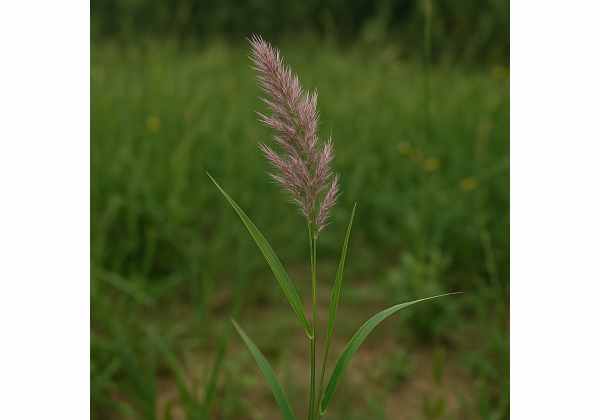
Palmarosa is a fragrant tropical grass best known for the essential oil distilled from its leaves and flowering tops. Although it belongs to the same broad plant group as lemongrass and citronella, its scent is softer, sweeter, and more rose-like because it is especially rich in geraniol. In traditional and modern practice, palmarosa is used far more often as an aromatic and topical botanical than as an internal remedy. People turn to it for skin care, scalp care, home aromatherapy, and gentle support for body odor control and surface cleansing.
What makes palmarosa interesting is the overlap between tradition and chemistry. Its oil contains compounds associated with antimicrobial, anti-inflammatory, and antioxidant activity, which helps explain why it appears in skin blends, massage oils, and diffusers. At the same time, the strongest evidence still comes from laboratory and formulation research rather than large clinical trials in humans. That means palmarosa is best approached as a supportive botanical with practical uses, not a proven cure. Used well, it can be elegant, versatile, and genuinely helpful. Used carelessly, it can still irritate sensitive skin or worsen fragrance-related reactions.
Quick Overview
- Palmarosa is mainly valued for skin-balancing and deodorizing support, especially in diluted topical blends.
- Its main active profile suggests antimicrobial and anti-inflammatory potential, with the strongest evidence coming from lab research.
- A typical adult topical dilution is 1% to 2%, which is about 1 to 2 drops per 5 mL of carrier oil.
- People with fragrance allergy, very reactive skin, asthma triggered by scents, or pregnancy-related safety concerns should avoid unsupervised use.
Table of Contents
- What palmarosa is and what makes it distinctive
- Palmarosa key ingredients and how they work
- Palmarosa benefits and medicinal properties
- Best uses for skin, scalp, and aromatherapy
- Dosage, dilution, and how to use it
- Safety, side effects, interactions, and who should avoid it
- What the research shows and how to choose a good product
What palmarosa is and what makes it distinctive
Palmarosa is an aromatic grass in the Cymbopogon genus, a plant group that also includes lemon grass and citronella. Its botanical name is commonly written as Cymbopogon martini or Cymbopogon martinii, depending on the source. The plant grows in warm climates and has long, narrow leaves with flowering tops that carry the highest aromatic value. When the plant is steam-distilled, it yields a pale yellow to light olive essential oil with a sweet floral scent that many people describe as rose-like, grassy, and slightly citrusy.
That aroma matters because it explains much of palmarosa’s identity. Unlike sharper, more camphor-like oils, palmarosa tends to feel rounder and softer. This makes it popular in perfumery, skin care, soap making, massage blends, and room diffusion. It is sometimes called “Indian geranium” in trade contexts, not because it is a geranium, but because of its rosy character and high geraniol content.
In practice, “palmarosa” can refer to three related things:
- the living herb or grass
- the distilled essential oil
- commercial products that contain the oil in diluted form
For health use, the essential oil is the form people usually mean. The dried herb is much less common in modern Western herbal practice than the oil itself.
Palmarosa is especially valued for three broad reasons. First, it has a pleasant scent that blends easily with floral, citrus, and woody oils. Second, it has a chemical profile that may help support skin comfort, microbial balance, and mild deodorizing goals. Third, it is often perceived as gentler than stronger essential oils, although “gentler” does not mean risk-free.
It is also useful to understand what palmarosa is not. It is not a standard culinary herb, not a first-line medical treatment, and not an oil that should be swallowed casually at home. It belongs much more comfortably in the category of supportive topical and aromatic care. That distinction keeps expectations realistic.
A balanced way to view palmarosa is this: it is a fragrant medicinal plant with meaningful traditional and cosmetic use, promising laboratory evidence, and limited direct human clinical evidence. People often get the best results from it when they use it for modest, well-defined purposes such as facial oil blends, scalp care routines, massage, or room diffusion rather than expecting dramatic systemic effects.
Palmarosa key ingredients and how they work
The defining feature of palmarosa is its chemistry. While exact composition varies with cultivar, climate, harvest stage, plant part, and distillation method, palmarosa oil is usually dominated by geraniol. In many analyses, geraniol is by far the main constituent, with smaller amounts of geranyl acetate, linalool, and trace monoterpenes adding nuance to the oil’s scent and biological activity.
Geraniol
Geraniol is the star compound in palmarosa. It gives the oil much of its floral, rose-like aroma and is one reason palmarosa shows up in perfumes and skin products. From a functional point of view, geraniol is associated with antimicrobial, antioxidant, and inflammation-modulating activity in experimental settings. That does not automatically make palmarosa a medicine, but it does help explain why formulators use it in products meant for blemish-prone skin, scalp care, and odor control.
Geranyl acetate
Geranyl acetate contributes to the softer, sweeter side of palmarosa’s aroma. It is less discussed than geraniol, but it still helps shape both fragrance and overall performance. In aromatic blends, it helps round off harsher notes and makes the oil feel more elegant and wearable.
Linalool and minor compounds
Small amounts of linalool and other terpenes can influence both scent and biological behavior. These minor constituents may not dominate the label, but they matter because essential oils act as mixtures, not as single isolated chemicals. That is one reason whole-oil behavior can differ from what a person might predict based on geraniol alone.
Several practical points follow from this chemistry.
- Composition changes matter. One bottle of palmarosa may smell slightly greener, sweeter, or rosier than another because crop conditions and distillation influence the final profile.
- The whole oil behaves as a blend. People often focus on one headline compound, but minor constituents can affect skin feel, volatility, and tolerability.
- Higher concentration is not always better. A more concentrated application may increase irritation risk without improving usefulness.
Palmarosa’s medicinal reputation rests largely on what these volatile compounds appear to do in laboratory models. Researchers have explored antimicrobial effects against bacteria and fungi, effects on inflammatory signaling, and skin-related product applications. These findings are encouraging, but they should be translated into everyday practice with care. “Biologically active” does not mean “safe in any amount,” and it does not mean “clinically proven for every advertised use.”
A helpful rule is to think of palmarosa as a chemically active fragrance plant. Its value comes from a mix of pleasant aroma and meaningful bioactivity. That combination is why it works so well in personal care and aromatherapy settings, and also why proper dilution matters. Because the oil is active, it deserves the same respect you would give any concentrated botanical extract.
Palmarosa benefits and medicinal properties
Palmarosa is often described as antimicrobial, anti-inflammatory, antioxidant, calming, and skin-supportive. Those labels are not random, but they need context. The most defensible benefits are the ones that match palmarosa’s chemistry and its strongest research areas: skin care, scalp support, odor management, and aromatherapy-style relaxation.
Skin-balancing support
This is probably palmarosa’s most practical use. Many people like it in facial oils, serums, or spot blends because it feels less harsh than some stronger essential oils. It is often chosen for skin that is oily, uneven, or blemish-prone. People also use it for skin that feels rough or depleted because its rosy scent gives it a “restorative” reputation.
That said, it is important not to oversell this. Palmarosa is not a substitute for prescription acne treatment, eczema treatment, or infection care. Its role is supportive and cosmetic, especially when it is part of a broader routine that includes a bland moisturizer and sun protection.
Scalp and dandruff support
Palmarosa has become more interesting for scalp care because of emerging work on dandruff-associated microbes. This does not prove that every palmarosa shampoo will work, but it gives a reasonable basis for including it in carefully formulated scalp products. People with flaky, oily, or itchy scalps sometimes prefer it because it smells cleaner and more floral than medicinal anti-dandruff products.
Mild deodorizing and cleansing use
Because of its scent and microbial effects, palmarosa is commonly used in natural deodorant blends, foot oils, and linen or room sprays. In these settings, it functions as both a fragrance and a supportive active ingredient. This is one of the easiest ways to appreciate it in daily life.
Relaxation and emotional comfort
Like many fragrant oils, palmarosa may help create a calm atmosphere when diffused or inhaled gently. The evidence here is stronger for aromatherapy as a general category than for palmarosa specifically, but the soft floral profile makes intuitive sense for rest, decompression, or massage.
People sometimes compare it with tea tree for blemish-prone skin, but the experience is very different. Tea tree is sharper and more medicinal. Palmarosa is smoother, sweeter, and often preferred when someone wants a more elegant scent profile.
The broad medicinal properties most reasonably associated with palmarosa are:
- antimicrobial potential
- antioxidant activity
- mild inflammation-modulating activity
- aromatic support for relaxation
- supportive topical use for scalp and skin routines
These properties make palmarosa appealing, but they do not turn it into a stand-alone therapy. Its best role is usually supportive, especially in topical care and aromatherapy rather than internal self-treatment.
Best uses for skin, scalp, and aromatherapy
Palmarosa is at its best when used in simple, realistic ways. It does not need an elaborate protocol. In fact, overcomplicated routines often increase the chance of irritation without improving results.
For skin care
A diluted palmarosa blend can be added to an unscented carrier oil such as jojoba, squalane, or fractionated coconut oil. People usually use it on intact skin, not on raw, cracked, or freshly irritated areas. Practical goals include:
- supporting oily or combination skin
- adding a floral note to nighttime facial oils
- helping deodorize body oils or foot oils
- pairing with a plain moisturizer for a more spa-like routine
For the face, lower concentrations are better. Many people do well with 0.5% to 1% rather than jumping to 2%.
For scalp care
Palmarosa can be added to a scalp oil, a pre-shampoo treatment, or an unscented shampoo base. A modest dilution is usually enough. Massage it into the scalp, leave it on briefly if tolerated, then rinse well. This approach may suit people who want a gentler botanical option for scalp freshness and mild flaking support.
For massage and body care
Palmarosa’s floral-grassy aroma makes it excellent in massage blends. It pairs especially well with lavender, bergamot-style citrus notes, and soft wood oils. A body oil with palmarosa can feel grounding without being heavy or overly sedating.
For home aromatherapy
In a diffuser, palmarosa is often used to make a room feel clean, calm, and lightly floral. It works especially well in bedrooms, reading spaces, and treatment rooms because it is less sharp than many “clean-smelling” oils. It can also be used in personal inhalers or on a scent strip for brief inhalation.
A few common-sense habits improve results:
- Use palmarosa for one clear purpose at a time.
- Keep blends simple, especially if you have sensitive skin.
- Start with low concentrations.
- Stop if the scent feels irritating, heavy, or headache-provoking.
- Do not apply it directly to eyes, mucous membranes, or broken skin.
Palmarosa is also nice in natural perfumery and linen sprays, but those uses are mainly aesthetic rather than medicinal. That is perfectly fine. Not every botanical benefit has to be dramatic to be valuable. Sometimes the real benefit is that a product is pleasant enough to use consistently and gentle enough to fit into daily life.
Dosage, dilution, and how to use it
There is no universally established medical dose of palmarosa for internal use, and that is an important point. Most sensible guidance focuses on dilution, application area, and duration of use rather than milligrams swallowed per day. For home use, palmarosa is best treated as a topical and aromatic oil.
Topical dilution ranges
These are practical ranges for adults using intact skin:
- Face or very sensitive skin: 0.5% to 1%
- General body use: 1% to 2%
- Short-term targeted use on small areas: up to 3% if tolerated
A simple way to think about this is:
- 1% dilution = about 1 drop per 5 mL carrier oil
- 2% dilution = about 2 drops per 5 mL carrier oil
If you are making 10 mL of facial oil, 1 to 2 drops total is usually enough. For a 30 mL body oil, about 6 to 12 drops is a typical range depending on sensitivity.
Diffusion and inhalation
For room diffusion, 3 to 5 drops in a diffuser is usually plenty for a small to medium room. Run it for 15 to 30 minutes, then reassess. Longer is not always better, especially if scents trigger headaches or airway irritation.
For personal inhalation, 1 to 2 drops on an aroma stick, tissue, or diffuser jewelry pad is usually sufficient.
Bath and shower use
Do not drip essential oils directly into bath water. Oil floats, which means the undiluted droplets can sit on the skin and sting or irritate. Instead, mix 2 to 4 drops first into a dispersing base or a carrier such as unscented bath oil, then add that mixture.
How often to use it
For facial or scalp routines, once daily or every other day is usually enough to judge tolerance. For diffuser use, occasional sessions are generally better than constant exposure. For massage or body oil, use as needed rather than by rigid schedule.
What about oral use
Routine oral use is not recommended without a qualified clinician who understands essential oil safety. Palmarosa oil is concentrated, and “natural” does not make it safe to ingest casually. If a product is sold for internal use, that still does not mean it is appropriate for every person, every dose, or every medical condition.
A good dosage philosophy for palmarosa is low, diluted, and purposeful. Start below the amount you think you need, observe your skin and comfort level, and increase only when there is a clear reason to do so.
Safety, side effects, interactions, and who should avoid it
Palmarosa is often described as relatively well tolerated when diluted, but that should not be confused with “safe for everyone.” Like any essential oil, it can cause problems when used undiluted, overused, or applied by someone with a fragrance sensitivity.
Possible side effects
The most likely side effects are topical and scent-related:
- skin irritation
- burning or stinging
- redness
- allergic contact dermatitis
- headache or nausea from strong scent exposure
- cough or airway discomfort in scent-sensitive people
Even a pleasant-smelling oil can trigger a reaction if the skin barrier is already impaired. This is one reason patch testing is worth the effort.
Who should be cautious or avoid it
Use extra caution or avoid unsupervised use if you are:
- pregnant or breastfeeding
- using it on infants or very young children
- highly sensitive to fragrances
- prone to eczema flares or allergic contact dermatitis
- asthmatic and triggered by scented products
- using multiple active skin products that already irritate the skin
People with broken skin, infected wounds, or unexplained rashes should not self-treat with palmarosa oil. Those situations call for a proper diagnosis first.
Medication and condition considerations
Palmarosa does not have a long list of well-established drug interactions in the way some oral herbs do, but caution is still wise. If you are under care for a chronic skin condition, severe allergies, migraines triggered by scents, or a respiratory condition, adding essential oils can complicate the picture. If your skin routine already includes retinoids, exfoliating acids, benzoyl peroxide, or prescription anti-inflammatory creams, introducing palmarosa at the same time can make it harder to tell what is causing irritation.
Patch testing
A practical patch test looks like this:
- Prepare the product at the final dilution you plan to use.
- Apply a small amount to the inner forearm or behind the ear.
- Wait 24 hours.
- Do not use it widely if itching, redness, burning, or swelling appears.
Another source of confusion is mistaken identity. Palmarosa is sometimes loosely associated with other aromatic grasses such as citronella, but the oils are not interchangeable in scent, comfort, or intended use.
The safest approach is simple: buy a well-labeled oil, dilute it properly, patch test it, and reserve it for modest uses on intact skin or for limited diffusion. That keeps the chance of benefit high and the chance of trouble much lower.
What the research shows and how to choose a good product
The research picture for palmarosa is promising but narrow. The strongest direct work focuses on chemical composition, antimicrobial activity, fungal activity, scalp-related microbes, and product formulation. Broader aromatherapy research supports the idea that essential oils can influence mood, comfort, and perceived well-being, but those findings usually apply to aromatherapy as a category rather than proving that palmarosa itself has unique clinical effects.
That leads to an honest bottom line: palmarosa has plausible mechanisms, useful traditional and cosmetic roles, and encouraging experimental data, but it still lacks the kind of large, condition-specific human trials that would justify strong medical claims.
This matters because it changes how you should shop for it. A good palmarosa product should be treated more like a quality personal-care ingredient than like a miracle cure.
What to look for
Choose a product with:
- the botanical name on the label
- the plant part if available
- extraction method, usually steam distillation
- a dark glass bottle
- a recent lot number or batch code
- an aroma that smells floral-grassy, not harsh, sour, or stale
If a seller promises that palmarosa cures infections, heals chronic disease, or replaces prescription treatment, that is a warning sign.
Forms to choose from
The most practical options are:
- pure essential oil for experienced users who know how to dilute
- pre-diluted roller or body oil for beginners
- scalp or skin formulations where palmarosa is one ingredient among several
- diffuser blends for aromatic use
Pre-diluted products are often the smartest starting point for people who want convenience and lower error risk.
How to store it
Keep the bottle tightly closed, away from light, heat, and steam. Bathrooms are usually a poor long-term storage spot. A cool cabinet is better. Essential oils slowly oxidize, and older oxidized oils are more likely to irritate skin.
How to judge whether it is helping
Ask concrete questions:
- Is my skin calmer or more irritated?
- Does my scalp feel fresher after two weeks?
- Does the scent help me relax, or does it overwhelm me?
- Am I using it consistently at a safe dilution?
These kinds of questions are more useful than abstract hopes. Palmarosa usually works best as a small, well-chosen part of a routine rather than the center of one. When used that way, it can offer real value: a graceful aroma, supportive skin and scalp use, and a pleasant bridge between herbal tradition and modern daily care.
References
- Palmarosa essential oil inhibits the growth of dandruff-associated microbes by increasing ROS production and modulating the efflux pump 2025 (Experimental Study)
- The Therapeutic Potential of Essential Oils in Managing Inflammatory Skin Conditions: A Scoping Review 2024 (Scoping Review)
- Essential oils for clinical aromatherapy: A comprehensive review 2024 (Review)
- Antifungal activity of essential oils and their potential synergistic effect with amphotericin B 2024 (Experimental Study)
- Essential Oils as Dermocosmetic Agents, Their Mechanism of Action and Nanolipidic Formulations for Maximized Skincare 2024 (Review)
Disclaimer
This article is for educational purposes only and does not replace medical advice, diagnosis, or treatment. Palmarosa essential oil is a concentrated botanical product that may cause irritation, allergy, or scent-related symptoms in some people. It should not be used internally without qualified professional guidance, and it should never replace prescribed treatment for skin disease, infection, respiratory symptoms, or other health conditions. People who are pregnant, breastfeeding, treating children, managing chronic illness, or using prescription skin therapies should consult a qualified healthcare professional before use.
If you found this article helpful, please consider sharing it on Facebook, X (formerly Twitter), or your preferred platform.