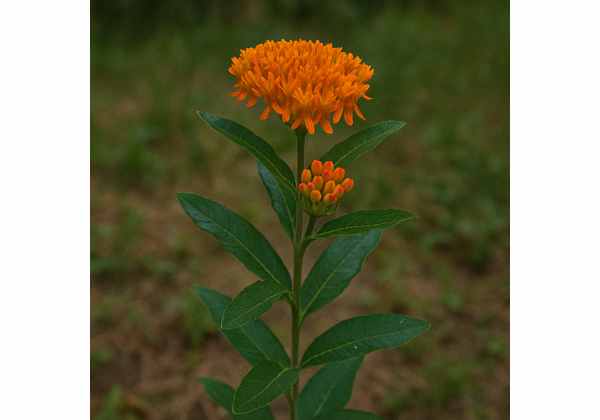
Pleurisy root, Asclepias tuberosa, is one of the classic North American respiratory herbs, remembered as much for its old reputation as for its bright orange flowers. Also called butterfly weed, it was traditionally used for pleuritic chest pain, dry and irritated coughs, feverish colds, and lung congestion that needed both soothing and movement. That history explains the name, but it also creates a modern challenge: pleurisy root is widely respected in traditional herbal medicine, yet it has far less clinical research than many people assume.
The root contains pregnane glycosides, flavonoids, tannins, triterpenes, and other constituents that help explain why herbalists have long described it as expectorant, diaphoretic, antispasmodic, and anti-inflammatory. At the same time, this is not a casual kitchen herb. It belongs to a plant family with real toxicological complexity, and concentrated or poorly chosen use can cause nausea, vomiting, diarrhoea, eye irritation from latex exposure, and interaction concerns. The clearest modern view is that pleurisy root remains a valuable traditional herb for the lungs, but it is best used with realistic expectations, modest doses, and careful attention to safety.
Essential Insights
- Pleurisy root is best known as a traditional herb for dry, tight, irritated respiratory states and feverish chest complaints.
- Its strongest likely actions are expectorant, antispasmodic, diaphoretic, and mildly anti-inflammatory rather than antibiotic or disease-curing.
- No standardized modern dose exists, but traditional use often falls around 1–4 g dried root per day or 1–5 mL tincture up to three times daily.
- Avoid pleurisy root in pregnancy, use cautiously while breastfeeding, and do not combine it casually with cardiac glycoside drugs such as digoxin.
Table of Contents
- What Pleurisy Root Is and Why It Became a Lung Herb
- Key Ingredients and Medicinal Properties
- Pleurisy Root for Cough, Chest Tightness, and Feverish Colds
- What Modern Evidence Actually Supports
- How Pleurisy Root Is Used and Typical Dosage
- Safety, Side Effects, Interactions, and Who Should Avoid It
What Pleurisy Root Is and Why It Became a Lung Herb
Pleurisy root is the dried root of Asclepias tuberosa, a North American perennial best known in gardens as butterfly weed. Its bright orange flowers, deep taproot, and importance to pollinators often make people think of it first as a native ornamental. In herbal medicine, though, the part that mattered most was the root. Traditional practitioners, Indigenous communities, and later Eclectic physicians reached for it especially in chest complaints that felt dry, painful, tight, or “stuck.” That older pattern of use is still the key to understanding the herb now.
The name itself tells the story. “Pleurisy” refers to inflammation of the pleura, the tissues surrounding the lungs, often accompanied by sharp pain that worsens with breathing or coughing. Earlier herbal medicine did not separate symptom support from disease categories in the same way modern medicine does. A plant that seemed to relieve painful breathing, encourage gentle expectoration, and support sweating during fever could easily become known as a pleurisy remedy. Over time, pleurisy root developed a broader respiratory reputation that extended to bronchitis, pneumonia recovery, influenza-like illnesses, dry constricted coughs, and irritation of the airways.
That history is credible, but it should not be romanticized. Pleurisy root is a traditional herb, not a modern evidence-backed treatment for pleurisy itself. It cannot replace diagnosis of chest pain, pneumonia, asthma, or other serious lung disease. What tradition does tell us is more specific and more useful: the herb was repeatedly chosen for respiratory states marked by dryness, chest tension, difficult expectoration, and feverish discomfort. In practical herbal thinking, that is a coherent pattern.
The plant also belongs to the milkweed family, and that family background matters. Milkweeds are chemically active plants. Some species are richer in cardenolides than others, and Asclepias tuberosa appears to be lower in cardenolides than many better-known milkweeds, but it is not chemically trivial. Its latex and root chemistry help explain both its medicinal interest and its caution profile. This is one reason pleurisy root never settled into the same easy household role as gentler respiratory herbs.
Another reason the herb remained specialized is taste and action. Pleurisy root is not a pleasant everyday beverage herb. The dried root is bitter, somewhat acrid, and traditionally thought best in small, repeated doses rather than in large casual amounts. That places it in a category closer to purposeful respiratory herbs than to comforting culinary teas. In older herbal systems, that was often a sign that the plant was doing more than merely flavoring a drink.
For modern readers, the most helpful conclusion is simple. Pleurisy root became a lung herb because many generations used it for dry, tight, painful respiratory states, not because modern trials proved it as a stand-alone remedy. The historical reputation is real. The best current use of that reputation is to understand the herb’s pattern, not to exaggerate its certainty.
Key Ingredients and Medicinal Properties
Pleurisy root’s medicinal profile begins with glycosides, especially pregnane glycosides, but the chemistry is broader than that. Studies on Asclepias tuberosa roots have identified multiple pregnane-type glycosides, including structurally distinctive secopregnane compounds. These are among the most important species-specific constituents described in the literature and are part of what makes the plant pharmacologically interesting. They also help explain why Asclepias tuberosa is not just another mild flower-root in folk medicine.
The plant is also commonly described as containing cardiac glycoside-related compounds or cardenolide-type constituents, although the exact balance appears different from some other milkweed species. This point deserves careful wording. Pleurisy root belongs to a chemically active family, and some herbal monographs list cardenolides such as asclepiadin and related glycosidic constituents. At the same time, newer comparative work suggests A. tuberosa is relatively low in cardenolides compared with more toxic milkweeds. The safest interpretation is that pleurisy root is chemically active enough to deserve caution, but it should not be treated as interchangeable with higher-cardenolide milkweed species.
Beyond glycosides, pleurisy root contains flavonoids, tannins, triterpenes, resins, and a volatile fraction. These compounds help support the way traditional herbalists described the herb: expectorant, antispasmodic, diaphoretic, bronchodilating, carminative, and mildly anti-inflammatory. Flavonoids and tannins can help explain some of the plant’s antioxidant and tissue-modulating effects. Triterpenes and resinous compounds often appear in herbs that influence mucus, irritation, or local circulation. Together, they create a plant that feels more active than its bright flowers might suggest.
In practice, these ingredients point to a herb that does several modest but useful things at once. It seems to encourage movement of stuck mucus without being overly harsh. It may relax spasm or chest tightness in some traditional contexts. It has a long reputation for supporting perspiration during feverish colds. And it may help settle irritated tissue rather than simply stimulating it. That combination is why older herbalists valued it so highly in chest complaints that were dry, hot, tight, or painful.
Still, the chemistry also explains why pleurisy root is not a simple self-care herb. A plant with active glycosides and emetic potential needs more respect than a light mint or floral tea. Large doses have long been associated with nausea, vomiting, and diarrhoea. Latex exposure from the plant can also irritate the eye and surrounding tissues. This is why pleurisy root is better understood as a skilled-use respiratory herb than as an “immune support” plant for casual everyday use.
Compared with gentler respiratory demulcents such as marshmallow root, pleurisy root is sharper, more directive, and more traditionally suited to congestion with tension or fever rather than to simple dryness alone. That distinction matters. The chemistry suggests a herb that moves and relaxes, not just one that coats and soothes. In respiratory herbalism, that is an important difference.
Pleurisy Root for Cough, Chest Tightness, and Feverish Colds
If there is one area where pleurisy root’s reputation is strongest, it is respiratory discomfort marked by tightness, pain, and difficult mucus movement. Traditional herbalists did not usually describe it as a general tonic for every cough. They tended to reserve it for patterns that sounded more specific: painful coughing, dry and constricted airways, pleuritic discomfort, bronchial irritation, early chest infections, or feverish states where sweat and expectoration were both needed. That traditional nuance is far more useful than a broad statement that it is “good for the lungs.”
Its classic actions make sense within that pattern. As an expectorant, pleurisy root was thought to help move mucus that was sticky or not clearing easily. As an antispasmodic, it was used where coughing came with tightness or constriction. As a diaphoretic, it had a role in feverish colds and influenza-like illnesses where a warm, sweating herb was considered useful. And as a mild relaxant for respiratory tissues, it was often described as easing soreness rather than simply stimulating more cough. That combination helps explain why the herb developed such a loyal following in older Western practice.
Pleurisy root was also traditionally used in pneumonia, bronchitis, and asthma-like states, but this requires careful interpretation today. Historical use does not mean the herb can treat pneumonia or replace inhalers, antibiotics, or urgent care. What it does mean is that practitioners observed benefit when the person had chest irritation, painful breathing, or thick mucus that needed support. In that sense, the herb may still have a useful place in respiratory herbal formulas, but only as supportive care, not as disease management on its own.
There is another feature worth noticing: pleurisy root was often favored when the cough was not only productive but also uncomfortable. Some respiratory herbs stimulate mucus movement well but feel rough or irritating in a sensitive chest. Pleurisy root’s traditional reputation is a little more balanced. It was valued not just for moving secretions, but for making the respiratory process feel easier and less tight. That helps distinguish it from simpler stimulating expectorants.
The herb was also used during fevers, particularly when the picture involved dry skin, chest discomfort, or the need to “open the pores” in older terminology. Modern readers do not need to adopt that exact language to understand the logic. A diaphoretic herb is one that encourages a gentle sweat response, and in older systems this was considered part of helping the body move through an acute illness. Pleurisy root fits that older framework well.
In blended formulas, it makes the most sense alongside other traditional respiratory herbs rather than on its own. Historically and practically, it belongs closer to plants such as great mullein than to general immune herbs. That is because its main value is not broad immune enhancement. It is pattern-based respiratory support: tight chest, dry cough, painful breathing, stuck mucus, and feverish strain. When the herb is understood at that level, its old reputation becomes much easier to interpret sensibly.
What Modern Evidence Actually Supports
Modern evidence for pleurisy root is much thinner than its historical reputation. That is the central fact readers need to know. The plant remains important in herbal medicine because of long-standing traditional use and coherent pharmacological plausibility, not because it has been confirmed by multiple modern clinical trials. There are no strong human studies showing that pleurisy root reliably treats pleurisy, pneumonia, bronchitis, or asthma in the way many popular articles imply.
What the modern literature does offer is a combination of phytochemical evidence, case-based safety information, and limited experimental findings. Root studies have identified multiple pregnane glycosides and related compounds, and some of these fractions have shown biological activity in laboratory settings, including fibroblast proliferation in one study. That is interesting, but it is not direct evidence for lung use in humans. It suggests the plant contains active molecules worth paying attention to, not that its traditional respiratory actions have been clinically proven.
This is a common situation with older herbs. The tradition is deep, the chemistry is real, but the bridge to modern clinical evidence is incomplete. In pleurisy root’s case, that means the strongest present-day claims should stay modest. It is reasonable to say the herb has a credible traditional place in respiratory herbalism and that its constituent profile supports expectorant, antispasmodic, diaphoretic, and anti-inflammatory interpretations. It is not reasonable to say it is an evidence-based treatment for lower respiratory disease.
There is also a cautionary side to the modern evidence. Safety reports show that contact with Asclepias tuberosa latex can cause eye toxicity and corneal oedema, which reminds us that “natural” does not mean inert. This does not cancel out the herb’s medicinal history. It simply shows that the plant’s chemistry is strong enough to matter. The same applies to the herb’s emetic tendency in higher doses and its potential interactions with cardiac glycoside drugs.
So where does that leave pleurisy root in practice? Probably where many traditional herbs belong today: as a pattern-based supportive herb best used by experienced practitioners or careful readers who understand its limits. Its role is not to replace standard care for serious chest symptoms. It is to complement a wider approach when the presentation matches the herb’s traditional affinity.
This is also why the herb should not be marketed the way better-studied respiratory plants sometimes are. Even compared with herbs that also have long chest-use histories, pleurisy root remains less clinically developed than options such as elecampane or other better-known expectorant herbs. Yet it still has value. The value lies in nuance: dry, tight, painful, feverish respiratory states where a bitter, moving, sweat-supportive herb makes sense. Modern evidence does not erase that pattern. It simply asks us to hold it with more humility. That is often the most trustworthy way to keep a traditional herb genuinely useful.
How Pleurisy Root Is Used and Typical Dosage
Pleurisy root is usually taken as a tincture, decoction, powder, capsule, or occasionally a cold infusion. The root is the medicinal part, and the choice of preparation often reflects a practical truth: the dried root is bitter and not especially pleasant as a simple tea. This is one reason many herbalists prefer tinctures or capsules. The taste is workable, but it is not the kind of herb most people sip casually for comfort.
There is no standardized modern dose established by clinical trials, so all dosage guidance should be understood as traditional or practitioner-derived rather than medically fixed. Within that frame, commonly cited traditional ranges are fairly consistent. A decoction often falls around 1–4 g of dried root per day. Tincture ranges are often given around 1–5 mL up to three times daily, usually with a 1:5 preparation in moderate alcohol. Some monographs also list cold infusions in the range of 25–100 mL three times daily. These numbers do not mean everyone should use the herb that way. They mean this is the scale on which the herb has traditionally been used.
The way the herb is given may matter as much as the amount. Older herbalists often favored small, repeated doses instead of large infrequent ones. That fits the herb’s profile well. Pleurisy root is not usually presented as a “take a big dose and wait” remedy. It is more often framed as something that gently shifts a pattern over hours or days. For respiratory use, that makes sense. If a herb is meant to help chest tightness, mucus movement, or feverish discomfort, repeated smaller doses can feel more appropriate than aggressive one-time use.
Timing depends on the purpose. In traditional respiratory formulas, pleurisy root was often given during the active phase of a chest cold, bronchial irritation, or painful cough rather than as a daily preventive tonic. It may fit best when the complaint is already present: cough that is dry or difficult, tight breathing with irritation, or feverish illness where gentle expectoration and sweating support are desired. It is not usually a first-choice herb for general wellness or long-term daily supplementation.
Blending can also improve its practicality. Because pleurisy root is bitter and somewhat sharp, it is often paired with more soothing or balancing herbs. In respiratory formulas, it is traditionally compatible with herbs that either soften irritation or help move congestion more comfortably. In that context, pairing it with licorice can make good practical sense, though anyone with blood pressure or medication concerns should treat blends as carefully as the main herb.
The biggest mistakes to avoid are simple. Do not assume stronger is better. Do not use the herb casually for every cough. Do not confuse traditional ranges with proof of universal safety. And do not treat the plant as a substitute for diagnosis when there is chest pain, shortness of breath, wheezing, pneumonia concern, or persistent fever. Pleurisy root’s dosage only makes sense when its purpose does too.
Safety, Side Effects, Interactions, and Who Should Avoid It
Pleurisy root’s safety profile is more nuanced than that of a gentle kitchen herb, but less dramatic than that of the most toxic milkweeds. In ordinary traditional doses, it has long been used medicinally, yet excessive doses are associated with nausea, vomiting, and diarrhoea. That alone is enough reason not to treat the herb casually. In older herbal practice, larger doses were sometimes described as emetic or purgative. Modern readers should take that as a warning, not as a feature.
Pregnancy is a clear avoid category. Traditional and modern herbal cautions both advise against pleurisy root in pregnancy because of its possible emetic action, uterine stimulation, and potential estrogenic activity suggested in some discussions. Breastfeeding is also a cautious area. Food-like use is not the issue here because the plant is not really a culinary herb, but medicinal use should only happen under qualified guidance, not by self-experimentation.
Drug interactions deserve attention as well. The main practical warning is with cardiac glycoside drugs such as digoxin. Because pleurisy root contains glycosidic constituents and belongs to a family known for cardiac-active chemistry, combination use is best avoided unless supervised by a knowledgeable professional. The herb is also sometimes cautioned around hormone-sensitive conditions or therapies because of theoretical estrogenic activity in some reports, though this area is less clear than the cardiac warning.
Certain digestive conditions also call for caution. Because the herb can be emetic in larger amounts, people with hiatus hernia, oesophageal varices, active stomach ulcer, or peptic ulcer disease should not use it casually. Even in people without those issues, a dose that is too strong can make the stomach feel worse rather than better. This is one of the clearest signs that pleurisy root is a practitioner-style herb rather than a beginner’s self-care herb.
There is also the issue of latex exposure. Asclepias tuberosa can release milky latex, and case literature shows that eye exposure can cause serious corneal irritation and oedema. This may sound far removed from herbal use, but it is actually a useful reminder: the plant is biologically active enough to demand respect. Anyone harvesting or handling fresh material should be careful not to touch their eyes and should wash exposed skin if irritation occurs.
Finally, sustainability is part of safety in a broader sense. Pleurisy root is widely grown as butterfly weed, but wild populations can still be pressured by habitat loss and harvesting. Root herbs are especially vulnerable because harvesting kills the plant. For a species with ecological importance and herbal value, cultivated sources are the responsible choice.
Compared with gentler respiratory herbs, pleurisy root sits closer to plants that benefit from skilled use and clear boundaries. It is not as notorious as some high-risk botanicals, but it is also not a plant to dose casually because an internet article made it sound like a simple cough tea. That is why readers looking for strong respiratory action with more complexity should keep it in the same caution-minded category as lobelia: potentially useful, but only when respect comes first.
References
- Pleurisy Root (Asclepias tuberosa): Benefits, Safety, Uses | Herbal Reality 2024 (Monograph)
- BUTTERFLY MILKWEED 2002 (USDA Plant Guide)
- 8,12;8,20-diepoxy-8,14-secopregnane glycosides from roots of Asclepias tuberosa and their effect on proliferation of human skin fibroblasts 2011
- Corneal Toxicity Following Exposure to Asclepias Tuberosa 2017
- Cardenolides May Affect Herbivory on Milkweeds (Asclepias spp.) by the Root-Knot Nematode Meloidogyne incognita 2025
Disclaimer
This article is for educational purposes only and is not medical advice. Pleurisy root is a traditional respiratory herb, but it is not a substitute for professional care for chest pain, pneumonia, asthma, serious cough, shortness of breath, or persistent fever. Seek qualified medical advice before using pleurisy root if you are pregnant, breastfeeding, taking prescription medicines, or managing heart, lung, or ulcer-related conditions.
If you found this article useful, please share it on Facebook, X, or your preferred platform to help more readers discover careful, evidence-aware herbal information.