A good pre-workout meal for weight loss should do two things at once: give you enough energy to train well and still fit your calorie deficit. That balance matters more than chasing a perfect “fat-burning” food. If you under-eat before harder sessions, your workout quality can drop, recovery can feel worse, and later hunger can rebound. If you eat too much or choose the wrong foods too close to training, you may feel heavy, sluggish, or nauseated.
The best approach depends on timing, workout type, and your overall diet. Some sessions need only a light snack. Others go better with a full meal one to three hours beforehand. This article breaks down what to eat, when to eat it, what to avoid, and how to make pre-workout meals work inside a practical fat-loss plan.
Table of Contents
- Why pre-workout meals matter
- When to eat before exercise
- What to eat two to four hours before
- What to eat thirty to ninety minutes before
- Best pre-workout meals by workout type
- Foods and mistakes that can backfire
- How to fit pre-workout meals into a calorie deficit
Why pre-workout meals matter
Pre-workout meals matter for weight loss because fat loss is not just about eating less. It is also about keeping your training useful, your hunger manageable, and your routine consistent enough to repeat for months. A smart meal before exercise can help on all three fronts.
The biggest benefit is performance. Carbohydrates are the most useful quick fuel for moderate to high-intensity exercise, especially for lifting, intervals, longer cardio, and sports with repeated hard efforts. When you start those sessions under-fueled, you may notice lower output, a weaker pump, reduced training volume, slower paces, or a higher perceived effort. Over time, those small drops can make it harder to preserve muscle and harder to burn as many calories through quality movement.
Protein matters too, although not in the same way as carbs. A protein-containing pre-workout meal can support muscle protein balance and help you spread protein intake more evenly across the day. That is especially helpful when you are dieting, because muscle retention becomes more important as calories get tighter. If your overall protein intake is already solid, the pre-workout meal does not need to be huge. It just needs to fit into the day.
There is also a behavioral side. Many people assume skipping food before exercise will accelerate weight loss. Sometimes it only shifts the problem. You may train poorly, feel wiped out afterward, then overeat later because hunger hits hard. That pattern is common in people who exercise after work and come home ravenous. In those cases, a planned pre-workout snack often improves both training and calorie control.
That does not mean everyone needs to eat before every session. A short walk, easy mobility session, or light workout may feel perfectly fine without food. The goal is not to add extra meals blindly. The goal is to fuel the sessions that benefit from it.
A simple way to think about it is this:
- harder training usually benefits more from pre-workout fuel
- longer sessions usually benefit more than short ones
- training in a calorie deficit increases the value of good timing
- people prone to post-workout overeating often do better with planned fuel
- people who train very early may need a snack instead of a full meal
Pre-workout nutrition is not a magic lever for fat loss, but it can make your overall plan work better. That is why it fits naturally into a broader calorie deficit strategy and often matters just as much as the foods you eat afterward.
When to eat before exercise
Timing changes what kind of pre-workout meal makes sense. The closer you are to exercise, the smaller and simpler the meal should usually be. The farther away you are, the more balanced and substantial it can be.
The main reason is digestion. A mixed meal with protein, carbs, fat, and fiber can work very well if you have enough time to digest it. The same meal eaten 20 minutes before intervals is a good way to feel uncomfortable. On the other hand, a very small carb-focused snack may be perfect right before training but not enough if your last proper meal was six hours ago.
A useful framework looks like this:
| Time before exercise | Best approach | What it usually looks like |
|---|---|---|
| 2 to 4 hours | Full balanced meal | Protein, moderate carbs, lower to moderate fat, some produce |
| 60 to 90 minutes | Smaller meal or larger snack | Easier-to-digest carbs with some protein |
| 30 to 60 minutes | Light snack | Mostly quick carbs, sometimes a little protein |
| Under 30 minutes | Optional and minimal | Small carb source or nothing if the session is easy |
The right timing also depends on your schedule. Morning exercisers usually have less time and lower appetite, so they often do better with something small and easy, then a proper meal afterward. Midday exercisers can often rely on breakfast as their pre-workout meal if timing lines up. Evening exercisers usually benefit from planning the afternoon well, because a long gap between lunch and training often sets up low energy and intense post-workout hunger.
Your digestive tolerance matters just as much as the clock. Some people can lift on oatmeal and yogurt 45 minutes after eating. Others need a banana and a shake, or they feel bloated. This is where experimentation matters. You are not trying to discover the perfect universal meal. You are trying to find the repeatable setup that gives you steady energy without stomach issues.
It also helps to think of timing as a range, not an exact minute. There is no magic in eating exactly 47 minutes before training. Being consistent with a routine that suits your stomach and your schedule matters much more.
If meal timing tends to drift from day to day, getting more structure around appetite-friendly meal timing can make pre-workout fueling easier, especially when late workouts and long workdays push hunger to extremes.
What to eat two to four hours before
When you have a decent gap before exercise, the best pre-workout meal is usually a normal balanced meal built around protein and carbs. This is the easiest window to work with because you have enough time to digest more volume and more variety.
A practical target for many adults is:
- about 25 to 40 grams of protein
- a moderate serving of carbs, often around 30 to 75 grams depending on body size and workout demands
- lower to moderate fat
- some vegetables or fruit, but not so much fiber that digestion becomes uncomfortable
This is not the time for an ultra-light “diet meal” if you are about to do a hard session. It is also not the time for a giant cheat-style meal. You want something filling enough to support training but not so heavy that it sits in your stomach.
Good examples include:
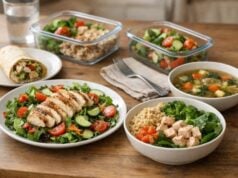
- chicken, rice, and roasted vegetables
- turkey sandwich on whole-grain bread with fruit
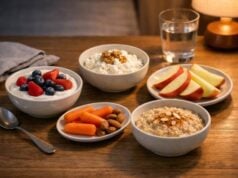
- Greek yogurt bowl with oats, berries, and a little nut butter
- eggs, toast, and fruit
- tofu, rice, and stir-fried vegetables
- tuna and potato bowl with a light dressing
The biggest difference between a good pre-workout meal and a random healthy meal is the carb emphasis. Before exercise, carbs earn a larger role because they support energy and training quality. That does not mean you need refined sugar or sports products for every workout. It simply means that very low-carb meals are often not the best choice before harder sessions, especially if you are already dieting.
This is where choosing the right carbs for a calorie deficit helps. Potatoes, oats, fruit, rice, beans, wraps, and bread can all work well if portions match your needs and the meal sits well in your stomach.
Protein still belongs here because pre-workout meals are not only about the next 60 minutes. They are part of your full-day intake. Hitting another solid protein feeding before training can help you stay on track with muscle retention, especially if you are trying to lose fat without looking or feeling flat.
Try not to overdo fats in this window if the meal is on the closer end. Fat slows digestion, which is not always a problem, but a high-fat meal one to two hours before training can feel heavy for some people. The same goes for very high-fiber meals if you are prone to GI issues.
The easiest rule is simple: if you have two to four hours, eat a normal meal that looks like something you would happily eat on any healthy day, but make sure it contains enough carbs to actually support the session ahead.
What to eat thirty to ninety minutes before
When your workout is closer, your pre-workout food should become smaller, simpler, and easier to digest. This is where snacks beat full meals.
The closer you are to training, the more helpful it is to emphasize quick carbs and keep fat, fiber, and large portions under control. Protein can still fit, but it should usually come from easy sources and moderate amounts. A small yogurt, whey shake, milk-based smoothie, or cottage cheese portion can work well for many people.
Good snack options in the 30 to 90 minute window include:
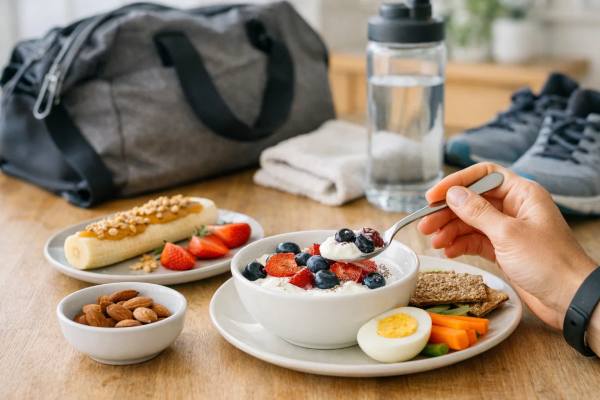
- banana and a protein shake
- Greek yogurt and honey
- toast with jam and a few slices of turkey
- applesauce and whey mixed with water
- low-fiber cereal with milk
- rice cakes with yogurt or cottage cheese
- a small smoothie made with fruit and protein
A useful starting point is:
- 15 to 30 grams of carbs for a short or moderate session
- 25 to 45 grams of carbs for a longer or harder session
- 10 to 20 grams of protein if tolerated
Those numbers do not need to be exact. They are there to stop two common mistakes: eating almost nothing and wondering why the workout feels flat, or turning a quick snack into a full meal and feeling awful halfway through.
This window is especially helpful for people who train early in the morning or right after work. If you do not want a full breakfast before a 6:30 a.m. gym session, that is fine. A banana and a shake may be enough. If you train at 5:30 p.m. and lunch was at noon, a planned snack around 4:00 p.m. can be the difference between a strong session and dragging yourself through it.
For weight loss, this snack should be budgeted, not treated like bonus food. It counts. But that does not make it a bad choice. A 150 to 250 calorie snack that improves training quality and prevents a 700-calorie rebound later is often a smart trade.
This is also the window where convenience matters most. Keep a few reliable options around so you do not default to vending machine snacks or go into the workout empty. If you need ideas that fit easily into a deficit, a short list of low-calorie snacks and high-protein snack options can make the routine much easier to repeat.
Best pre-workout meals by workout type
Not every workout needs the same fuel. A pre-workout meal should match the demand of the session, not just the time on the clock.
Strength training
For lifting, a combination of carbs and protein usually works best. Carbs support training quality and volume, while protein helps you distribute intake across the day. A good meal one to three hours before lifting might be chicken and rice, yogurt with oats and fruit, or eggs with toast. If you are closer to the session, a banana and a protein shake often works well.
This matters even more in a deficit because keeping performance up is one of the best ways to preserve muscle. That is why pre-workout nutrition and your overall protein strategy connect closely with fat loss and muscle retention.
HIIT and harder cardio
Intervals, spin classes, circuits, and harder runs usually benefit from carbs more than easy steady movement does. Starting those sessions low on energy often makes the workout feel much harder than it should. In this case, lighter carbs before training can be more helpful than a high-protein or high-fat meal.
Longer endurance sessions
If you are doing 60 minutes or more of moderate to hard cardio, carbs become even more important. A proper meal a few hours before or a carb-focused snack closer to training usually improves how the session feels. Very low-carb pre-workout meals are less likely to shine here unless you are intentionally adapting to that style of training and know it suits you.
Easy walking or low-intensity sessions
These usually need the least deliberate fueling. If you are going for a brisk walk, easy incline treadmill session, or light recovery ride, you may not need anything special beforehand if you ate reasonably earlier. Convenience and comfort matter more than optimization.
Early-morning workouts
This is less about science and more about practicality. Many people do not want a full meal at dawn. That is fine. A small snack, a few sips of something carb-containing, or a shake can be enough. Others feel good training without food if the session is short and not too intense.
If your workout routinely leaves you wiped out, ravenous, or underperforming, that is your clue that your current pre-workout setup is not doing enough. Match the fuel to the work. You do not need the same meal before a 30-minute walk and a heavy lower-body session.
Foods and mistakes that can backfire
A pre-workout meal can be healthy on paper and still be a bad choice for the session ahead. The issue is usually not the food itself. It is the timing, portion size, or digestion.
The most common problem foods before exercise are:
- very fatty meals
- very high-fiber meals
- large portions of raw vegetables
- spicy or greasy restaurant food
- heavy creamy sauces
- foods you know upset your stomach
- large amounts of sugar alcohols or “diet” treats
These foods are not off-limits in a weight-loss plan. They are just often poor timing choices before training. A burger and fries can fit your calories, but it is rarely ideal 45 minutes before intervals. A giant bran-heavy breakfast may look virtuous, but it can feel rough before a run. A super healthy salad can also backfire if it is huge, fibrous, and too low in actual fuel.
Common mistakes include:
- Training hard after too long without food.
This often shows up as dizziness, low energy, irritability, or poor performance. - Choosing protein without enough carbs.
A protein shake alone is sometimes fine, but it may not be enough before a demanding session. - Eating too much too close to exercise.
The meal may be nutritious, but the timing is wrong. - Saving all your calories for later.
This can make pre-workout hunger and post-workout overeating more likely. - Using pre-workout foods as an excuse for “earned” extras.
Fueling the session is smart. Randomly adding hundreds of calories because you exercised is not the same thing.
Caffeine deserves a quick mention too. It can improve alertness and performance for some people, but timing and tolerance matter. Too much, especially later in the day, can wreck sleep and make hunger and recovery worse the next day. That is why a practical approach to caffeine timing matters more than treating every workout like a supplement experiment.
The best pre-workout meal is the one that lets you train hard enough to matter without upsetting your stomach or wrecking the rest of your day. “Healthy” is not enough on its own. The meal has to be useful.
How to fit pre-workout meals into a calorie deficit
The smartest way to use pre-workout meals for weight loss is to treat them as part of your daily structure, not as an extra on top of everything else. The calories count, but so do the benefits.
A good first step is to place more of your carbs around the workouts that matter most. That does not mean eating low-carb all other times. It means giving your body the easiest fuel when it is most useful. For example, if you lift after work, it often makes sense to keep lunch balanced, use a carb-and-protein snack in the afternoon, then have a solid dinner rather than arriving at the gym depleted.
This is one reason many people do better with a planned macro structure instead of improvising. If you already know your protein target and roughly how your carbs are spread, it becomes easier to slot in a pre-workout meal without blowing your day. A more structured macro-based meal plan can be especially helpful when your training schedule changes from day to day.
A few practical strategies work well:
- move 150 to 300 calories from another part of the day into the pre-workout window
- keep dinner satisfying, but do not save all your carbs for night if you train earlier
- use repeatable meals so you are not guessing every day
- match bigger pre-workout meals to harder sessions, not to every session
- keep easy grab-and-go options on hand for rushed days
For many people, under-fueling workouts leads to one of two outcomes: poorer training quality or rebound eating later. Neither helps fat loss. In contrast, a well-placed pre-workout meal can help you train better, preserve more lean mass, and avoid the “I deserve everything in the kitchen” effect afterward.
There is also a point where trying to push the deficit too hard starts hurting results. If you are chronically flat in the gym, unusually sore, losing strength quickly, or constantly obsessing about food, your diet may be too aggressive or too poorly timed. In that case, the solution is not always more discipline. Sometimes it is better meal distribution, more sensible pre-workout fuel, or a less severe deficit.
Pre-workout meals are not mandatory, but they are one of the easiest ways to make a fat-loss plan feel more athletic and more sustainable. You are not just feeding the workout. You are building a routine that supports better output, better appetite control, and better adherence over time.
References
- Carbohydrates and Endurance Exercise: A Narrative Review of a Food First Approach 2023 (Review)
- The effect of protein intake on athletic performance: a systematic review and meta-analysis 2024 (Systematic Review)
- Athletes’ nutritional demands: a narrative review of nutritional requirements 2024 (Review)
- Identifying and Analyzing Low Energy Availability in Athletes: The Role of Biomarkers and Red Blood Cell Turnover 2024 (Review)
- Exercise-Induced Gastrointestinal Symptoms in Endurance Sports: A Review of Pathophysiology, Symptoms, and Nutritional Management 2023 (Review)
Disclaimer
This article is for general educational purposes only and is not a substitute for medical advice, diagnosis, or treatment. If you have diabetes, digestive disorders, a history of disordered eating, or you are pregnant, breastfeeding, or taking medications that affect appetite or blood sugar, get personalized advice before changing your pre-workout nutrition.
If this article helped, consider sharing it on Facebook, X, or your preferred platform.