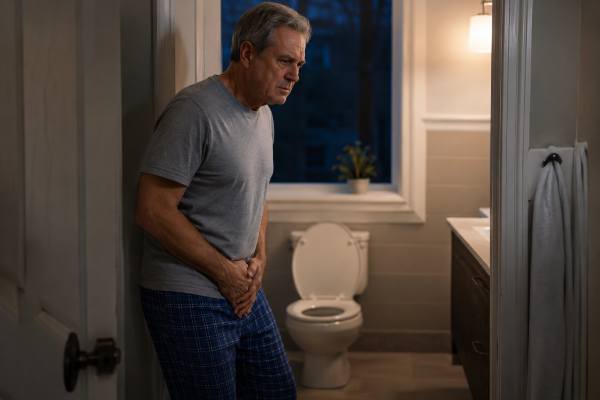
Prostate cancer often grows quietly at first. Many men with early prostate cancer feel normal, have no pain, and notice no change in urination. That is why symptoms alone are not a reliable way to rule it out. When problems do appear, they may include a weaker urine stream, trouble starting, needing to pee more often at night, blood in the urine or semen, pelvic discomfort, bone pain, or unexplained weight loss. These symptoms can be alarming, but they are not always cancer. Enlarged prostate, infection, kidney stones, bladder problems, and medications can cause similar changes.
The safest approach is to take new or persistent symptoms seriously without assuming the worst. A clinician can check for common causes, review your risk factors, and decide whether PSA testing, urine testing, prostate exam, MRI, or referral to a urologist is needed.
Table of Contents
- Early Prostate Cancer Often Has No Symptoms
- Urinary Changes That Can Raise Concern
- Pain, Blood, and Other Warning Signs
- Symptoms That Are More Often BPH or Infection
- Who Should Be Extra Careful About Symptoms
- What Happens When You Get Checked
- When to Seek Urgent Care
- How to Track Symptoms Before Your Appointment
Early Prostate Cancer Often Has No Symptoms
A man can have prostate cancer and feel completely well. The prostate sits below the bladder and surrounds the urethra, the tube that carries urine out of the body. Small cancers can grow inside the gland without pressing on that tube, irritating the bladder, or causing pain.
This is one reason prostate cancer is different from many problems men notice right away, such as a urinary tract infection or kidney stone. Early disease may not burn, ache, bleed, or change erections. A normal urine stream also does not prove the prostate is cancer-free.
Symptoms are more likely when a tumor grows large enough to affect nearby structures, when cancer is more advanced, or when another prostate condition is happening at the same time. For example, a man may be diagnosed with prostate cancer after seeing a doctor for urinary symptoms that were mostly caused by benign prostate enlargement. The symptoms led to testing, but they were not specific to cancer.
That distinction matters. Many men delay care because their symptoms come and go, seem mild, or feel like “just getting older.” Others panic when they wake up twice at night to urinate. Neither reaction is ideal. The goal is to notice patterns, know the warning signs, and get checked when symptoms are new, persistent, worsening, or paired with higher risk.
Screening is separate from symptom evaluation. Screening means testing before symptoms appear, usually with a PSA blood test after a discussion about benefits and downsides. Symptom evaluation means checking a problem that is already happening. A man with blood in the urine, new bone pain, or worsening urinary trouble should not wait for a routine screening visit.
Men who want a deeper look at age-based testing can review when prostate cancer screening is usually discussed, but symptoms should be handled based on what is happening now.
Urinary Changes That Can Raise Concern
Urinary symptoms are common in men, especially after age 50. They can happen with prostate cancer, but they are more often caused by benign prostatic hyperplasia, also called BPH, or by bladder and infection-related conditions.
The changes that deserve medical attention include:
- Trouble starting to pee
- A weak or slower urine stream
- A stream that stops and starts
- Straining to empty the bladder
- Feeling like the bladder is not empty after urinating
- Needing to urinate more often than usual
- Waking up repeatedly at night to pee
- Sudden urgency that is hard to hold
- Dribbling after finishing
- New leakage or accidents
A slow change over years often points toward BPH, which is noncancerous enlargement of the prostate. A sudden change over days may suggest infection, inflammation, medication effects, constipation, or urinary retention. Prostate cancer can overlap with either pattern, so the timeline helps guide the exam but does not give a final answer.
Weak stream and trouble starting
A weak stream usually means urine is meeting resistance or the bladder muscle is not pushing well. The prostate can narrow the urethra as it enlarges. Scar tissue, certain medications, nerve problems, and bladder muscle weakness can also cause this.
Prostate cancer is not the most common reason for weak flow, but new or worsening obstruction should be checked. This is especially true if the change is paired with blood, pelvic pain, abnormal PSA, weight loss, or a family history of prostate cancer.
A focused article on weak urine stream causes can help separate common patterns, but persistent changes still need a clinician’s assessment.
Nighttime urination
Waking once at night to urinate can be normal, especially after drinking fluids late, using alcohol, taking diuretics, or having poor sleep. Waking two, three, or more times most nights can point to BPH, overactive bladder, sleep apnea, diabetes, leg swelling, or other health problems.
Nighttime urination alone is not a strong prostate cancer signal. It becomes more concerning when it is new, worsening, or part of a wider pattern: weak stream, urgency, incomplete emptying, pelvic pain, blood in urine, or abnormal test results.
Urgency and frequent urination
Urgency feels like the bladder gives little warning. Frequency means going more often than usual. These symptoms may come from bladder irritation, caffeine, infection, diabetes, overactive bladder, or prostate enlargement.
Cancer is only one possible cause. Still, do not ignore urgency that starts suddenly, keeps returning, wakes you often, or comes with fever, burning, blood, back pain, or trouble emptying.
Pain, Blood, and Other Warning Signs
Pain and bleeding are not the usual first signs of early prostate cancer, but they should be taken seriously. They can come from noncancerous causes, yet they often need testing because the possible causes range from minor irritation to infection, stones, bladder cancer, or advanced prostate disease.
| Symptom | Possible causes | Why it should be checked |
|---|---|---|
| Blood in urine | UTI, kidney stone, enlarged prostate, bladder or kidney disease, cancer | Even one episode can need urine testing and sometimes imaging or cystoscopy. |
| Blood in semen | Inflammation, infection, recent procedure, prostate irritation, rarely cancer | Persistent or recurrent episodes need evaluation, especially after age 40. |
| Pelvic, hip, or lower back pain | Muscle strain, arthritis, prostatitis, nerve problems, cancer spread | Ongoing deep pain without a clear injury deserves attention. |
| Bone pain | Injury, arthritis, other bone disease, cancer spread | Prostate cancer can spread to bones, especially the spine, hips, ribs, or pelvis. |
| Unexplained weight loss or fatigue | Many medical causes, including cancer, thyroid disease, infection, depression, diabetes | Unplanned weight loss needs a broader medical workup. |
Blood in urine
Blood in the urine may look pink, red, cola-colored, or smoky. Sometimes it is only found on a urine test. It should not be dismissed because there is no pain. Kidney stones often hurt, but bladder and prostate problems may bleed without much discomfort.
A clinician may order a urinalysis, urine culture, kidney function tests, imaging, or referral to a urologist depending on age, smoking history, infection signs, and whether bleeding repeats. Men can also compare common causes in blood in urine in men, but visible blood should be checked promptly.
Blood in semen
Blood in semen can look red, brown, rust-colored, or pink. In younger men, it is often linked to inflammation, infection, vigorous sex, long gaps between ejaculation, or recent procedures. In men over 40, repeated episodes are more likely to trigger prostate testing, STI testing, urine studies, or urology referral.
One isolated episode may not be dangerous, but blood in semen plus urinary symptoms, pelvic pain, fever, abnormal PSA, or repeated episodes needs medical review.
Bone pain and advanced symptoms
When prostate cancer spreads, it often goes to bone. Pain may feel deep, persistent, and different from a typical pulled muscle. It may affect the lower back, hips, pelvis, ribs, or thighs. Pain that wakes you from sleep, keeps worsening, or appears without an injury should be checked.
Advanced prostate cancer can also cause unexplained weight loss, poor appetite, fatigue, leg swelling, anemia, or nerve symptoms. These symptoms do not automatically mean cancer, but they should not be watched for months at home.
Symptoms That Are More Often BPH or Infection
Most urinary symptoms in older men are not caused by prostate cancer. BPH, prostatitis, urinary tract infections, overactive bladder, and medication effects are common. The challenge is that symptoms overlap, so doctors use testing rather than guesswork.
BPH is noncancerous growth of the prostate. It can squeeze the urethra and make urination slower or less complete. It does not turn into prostate cancer, but a man can have both. A clear comparison of BPH vs prostate cancer symptoms can help explain why symptoms alone are not enough.
Prostatitis means inflammation of the prostate. It may be bacterial or nonbacterial. It can cause pelvic pain, painful ejaculation, burning with urination, urinary frequency, fever, chills, or flu-like symptoms. Acute bacterial prostatitis can make a man very sick and needs prompt treatment.
A urinary tract infection in men is usually considered more complicated than a simple UTI in many women because it may involve the prostate, bladder emptying problems, stones, or other anatomy-related issues. Symptoms may include burning, cloudy urine, foul-smelling urine, urgency, fever, or lower abdominal pain.
Overactive bladder causes urgency and frequency, sometimes with leakage. It may happen without prostate cancer or BPH. Caffeine, alcohol, bladder irritants, diabetes, neurologic conditions, and some medications can contribute.
Medications can also affect urination. Decongestants, some antihistamines, antidepressants, opioids, and drugs with anticholinergic effects can make it harder to empty the bladder. Diuretics can increase frequency. Starting or changing a medication shortly before symptoms appear is an important clue.
The main mistake is assuming a symptom has one obvious cause. A weak stream may be BPH, but it can coexist with elevated PSA. Burning may be infection, but infection can also raise PSA and complicate interpretation. Blood may come from a stone, but visible blood still needs evaluation. Testing helps sort these out.
Who Should Be Extra Careful About Symptoms
Some men have a higher chance of prostate cancer or a higher chance of aggressive disease. For them, new urinary symptoms, blood, pelvic pain, or abnormal PSA results deserve faster follow-up.
Risk is higher in men who:
- Are age 50 or older
- Are Black or have African ancestry
- Have a father, brother, or son with prostate cancer
- Have several relatives with prostate, breast, ovarian, pancreatic, or colon cancer
- Have a known inherited mutation such as BRCA1, BRCA2, Lynch syndrome genes, or other cancer-risk variants
- Had a prior elevated PSA, abnormal prostate exam, or concerning prostate MRI
- Have had a previous prostate biopsy with atypical or high-risk findings
Age matters because prostate cancer becomes more common as men get older. Family history matters most when relatives were diagnosed young, had aggressive disease, developed metastatic cancer, or died from prostate cancer. A single older relative with low-risk prostate cancer may carry less concern than several close relatives with early or advanced disease.
Black men are often advised to discuss screening earlier because risk and death rates are higher in this group. Men with strong family history or known inherited mutations may also start conversations earlier than average-risk men. The exact age and testing interval should be individualized.
Symptoms in a higher-risk man do not mean cancer is present. They do mean the threshold for checking PSA, repeating abnormal tests, or seeing a urologist may be lower. A man with strong family history should not wait months to see whether a weak stream or pelvic discomfort improves.
Men already taking medications that affect PSA should mention them. Finasteride and dutasteride, used for BPH or hair loss, can lower PSA values. Doctors often interpret PSA differently in men taking these drugs. Testosterone therapy, urinary infections, recent ejaculation, cycling, and recent prostate procedures can also affect the timing or interpretation of tests.
What Happens When You Get Checked
The first visit is usually not a biopsy. Most evaluations start with a history, symptom review, physical exam, urine test, and sometimes PSA. The goal is to identify urgent problems, treat obvious infection or retention, and decide whether prostate cancer testing is needed.
A clinician may ask:
- When did the symptoms start?
- Are they getting worse or staying the same?
- Is there pain, fever, blood, or weight loss?
- How often do you urinate during the day and night?
- Do you strain, leak, or feel incomplete emptying?
- Have you had UTIs, stones, prostatitis, or prior prostate procedures?
- What medications and supplements do you take?
- Is there a family history of prostate or related cancers?
A urine test can look for blood, infection, glucose, protein, or other clues. If infection is suspected, a urine culture may identify the bacteria and guide antibiotics. If urinary retention is suspected, a bladder scan can check how much urine remains after peeing.
PSA, or prostate-specific antigen, is a protein made by prostate cells. A higher PSA can happen with prostate cancer, but it can also rise from BPH, prostatitis, urinary infection, recent ejaculation, cycling, catheter use, or recent prostate manipulation. A low PSA lowers concern but does not eliminate risk completely.
Because PSA can be affected by temporary factors, doctors may repeat it before moving to invasive testing, especially if it is only mildly elevated and there are no urgent signs. Men who want more detail can read what a PSA test measures and how results are usually interpreted.
A digital rectal exam may be offered to feel the back surface of the prostate for hard, irregular, or asymmetric areas. It cannot feel the whole prostate and cannot rule cancer out by itself. Still, an abnormal exam may increase concern and lead to urology referral.
If PSA remains elevated, the exam is abnormal, or risk is high, the next step may be a prostate MRI. MRI can help identify suspicious areas and guide whether a biopsy is needed. It can also help target the biopsy if one is done. More detail on how prostate MRI results are used may help men understand why MRI is often part of the modern pathway.
A prostate biopsy is the test that confirms cancer. During biopsy, small tissue samples are removed and examined under a microscope. The results can show whether cancer is present, how aggressive it looks, and whether active monitoring or treatment should be discussed. A separate guide to what happens during prostate biopsy can help set expectations if a urologist recommends one.
When to Seek Urgent Care
Some symptoms should not wait for a routine appointment. Urgent care or emergency evaluation is needed when urination suddenly becomes impossible, severe pain appears, fever is present, or nerve symptoms suggest pressure on the spine.
Seek urgent care now for:
- Inability to urinate, especially with lower belly pain or pressure
- Fever, chills, and pelvic or back pain
- Severe flank pain with nausea or blood in urine
- Heavy blood in urine or clots
- New leg weakness, numbness, or trouble walking
- Numbness in the groin or saddle area
- Loss of bladder or bowel control
- Severe bone pain after a minor fall or without clear injury
- Confusion, weakness, or signs of serious infection
Urinary retention can damage the bladder or kidneys if not treated. It may require a catheter to drain the bladder and testing to find the cause. Retention can happen from BPH, infection, medications, constipation, neurologic problems, or advanced prostate disease.
Fever with pelvic pain, painful urination, or difficulty peeing can point to acute prostatitis or a complicated infection. This can become serious and may need antibiotics quickly. Men with diabetes, weakened immune systems, kidney disease, or recent urinary procedures should be especially cautious.
New weakness, numbness, or loss of bladder or bowel control with back pain is an emergency. Prostate cancer can sometimes spread to the spine and press on nerves, but other conditions can do this too. Fast treatment may protect nerve function.
Visible blood in urine does not always require the emergency room, but heavy bleeding, clots, inability to urinate, dizziness, or severe pain does. A single painless episode should still be reported promptly even if it clears.
How to Track Symptoms Before Your Appointment
Clear details help the clinician decide what to test first. You do not need a perfect diary, but writing down the pattern for several days can make the visit more useful.
Track these details:
- Urination pattern: How many times you pee during the day and how often you wake at night.
- Stream changes: Weak flow, stop-start stream, straining, spraying, dribbling, or incomplete emptying.
- Pain location: Pelvis, lower back, hips, ribs, testicles, penis, or flank.
- Blood: Whether it appears in urine or semen, its color, how often it happens, and whether there are clots.
- Triggers: Alcohol, caffeine, long bike rides, new workouts, sexual activity, constipation, or new medications.
- General symptoms: Fever, chills, fatigue, weight loss, poor appetite, or night sweats.
- Risk factors: Family history, ancestry, prior PSA results, prior biopsy, and any genetic testing results.
Bring a medication list, including over-the-counter drugs, supplements, testosterone, hair-loss drugs, prostate medications, and decongestants. Include doses if possible. Mention recent ejaculation, cycling, urinary infection, catheter use, or prostate procedures before PSA testing because these can affect timing.
Do not stop prescribed medication just to see whether symptoms change unless a clinician tells you to. Do not take leftover antibiotics for urinary symptoms. They may partly treat an infection, blur test results, or fail to cover the right bacteria.
It also helps to be direct about sexual and urinary symptoms. Doctors who evaluate prostate problems are used to discussing ejaculation pain, erection changes, leakage, semen changes, and pelvic discomfort. These details can change the testing plan.
If the workup does find prostate cancer, the next steps depend on grade, stage, PSA level, MRI findings, biopsy results, age, overall health, and personal priorities. Not every prostate cancer needs immediate surgery or radiation. Some low-risk cancers are monitored closely. Higher-risk disease may need treatment. A separate review of prostate cancer treatment options explains how monitoring, surgery, radiation, hormone therapy, and other approaches are usually compared.
References
- Early Detection of Prostate Cancer: AUA/SUO Guideline Part I: Prostate Cancer Screening 2023 (Guideline)
- Early Detection of Prostate Cancer: AUA/SUO Guideline Part II: Considerations for a Prostate Biopsy 2023 (Guideline)
- EAU Guidelines on Prostate Cancer – Diagnostic Evaluation 2026 (Guideline)
- Understanding Prostate Changes: A Health Guide for Men 2024 (Official Page)
- Prostate-Specific Antigen 2024 (Review)
- Prostate Cancer Screening 2023 (Review)
Disclaimer
This article is for education and should not replace care from a qualified health professional. New urinary symptoms, blood in urine or semen, pelvic pain, bone pain, abnormal PSA results, or unexplained weight loss should be discussed with a clinician. Seek urgent care for inability to urinate, fever with pelvic or back pain, heavy bleeding, leg weakness, groin numbness, or loss of bladder or bowel control.