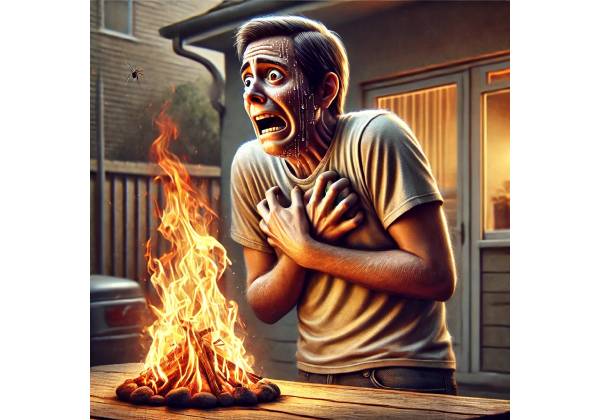
Pyrophobia is an intense fear of fire. That fear may focus on visible flames, but it can also extend to stoves, fireplaces, candles, fireworks, smoke, or any place where fire feels possible. A healthy respect for fire is normal and protective. Pyrophobia is different because the reaction becomes disproportionate, persistent, and disruptive. Instead of simple caution, the person may live in a state of alertness, avoid ordinary tasks, or panic when they encounter even a low-risk fire cue.
In clinical practice, pyrophobia is usually understood within the broader framework of specific phobia. That matters because the condition is treatable. Many people improve when the fear is identified clearly, separated from related problems such as trauma or obsessive checking, and addressed with structured psychological care. With the right support, people can reduce avoidance, regain confidence, and handle everyday fire-related situations more calmly and safely.
Table of Contents
- What Pyrophobia Is
- Signs and Symptoms
- Causes and Risk Factors
- How It Is Diagnosed
- Daily Impact and Complications
- Treatment and Therapy Options
- Management, Safety and Outlook
What Pyrophobia Is
Pyrophobia means an overwhelming fear of fire or fire-related situations. The fear may be triggered by a candle flame, a gas stove, a barbecue grill, a fireplace, fireworks, smoke, or even the thought of being trapped in a building fire. For some people, the main problem is open flame. For others, the fear centers on what fire represents: injury, loss of control, destruction, suffocation, or sudden catastrophe.
That distinction matters because fire is not a harmless object. It can burn, spread, and become life-threatening quickly. Because of that, some level of caution around fire is healthy. Pyrophobia becomes clinically important when the fear is much stronger than the actual level of risk in everyday situations and begins to drive repeated avoidance. A person may refuse to cook, avoid restaurants with candles, panic when a lighter is used nearby, or spend long periods checking for fire hazards in ways that disrupt daily life. Clinically, that pattern is usually assessed as a form of specific phobia rather than as a standalone diagnostic category.
Pyrophobia can look very different from one person to another. Some people fear only direct contact with flames. Others react strongly to cues associated with fire, such as:
- Smoke alarms
- The smell of smoke
- Electrical outlets and appliances
- Hot surfaces
- Campfires and fire pits
- Fire drills
- News about wildfires or house fires
- Dry weather or crowded indoor spaces with limited exits
The fear can also be narrow or broad. One person may be able to tolerate a stove but panic at fireworks. Another may avoid any situation involving potential combustion, including candles, matches, heaters, grills, or even driving during wildfire season. In children, pyrophobia may show up as refusal to enter certain rooms, strong distress during cooking, or repeated questions about whether the house will burn down.
It is also important to separate pyrophobia from other conditions. It is not the same as pyromania, which involves a pathological urge to set fires rather than fear them. It may overlap with trauma after a burn injury, house fire, explosion, or wildfire evacuation. It can also resemble obsessive-compulsive checking when the person repeatedly inspects appliances, wiring, or exits. The label matters less than understanding the true driver of the fear. Some people fear fire itself. Others fear being trapped, losing loved ones, or making a fatal mistake. Treatment works best when that deeper pattern is identified clearly.
Signs and Symptoms
The symptoms of pyrophobia can be emotional, physical, mental, and behavioral. In mild cases, the person becomes tense around flames but still functions. In more severe cases, even a small, controlled fire cue can trigger panic or intense avoidance. The reaction may happen immediately in the presence of fire, or it may build hours in advance if the person knows they will face a feared situation.
Emotional symptoms often include dread, helplessness, and a constant sense that something terrible is about to happen. The person may feel embarrassed by the fear while also feeling unable to control it. They may know that a single candle at a dinner table is unlikely to cause harm and still feel a surge of alarm that overrides logic.
Physical symptoms are often similar to panic symptoms and may include:
- Racing heart
- Sweating
- Trembling
- Shortness of breath
- Chest tightness
- Nausea
- Dizziness
- Feeling faint
- Muscle tension
- Trouble sleeping before exposure to a feared situation
Some people also experience intrusive mental images, such as a kitchen bursting into flames, smoke filling a room, or loved ones being injured in a fire. Those images can feel vivid and convincing. The result is often hypervigilance. A person may scan every room for wires, exits, extinguishers, smoke detectors, or anything that looks combustible. When this becomes rigid and repetitive, it can blur into checking behavior rather than simple caution.
Behavioral symptoms often show the true severity of the condition. A person might:
- Avoid cooking on a stove
- Refuse to light candles or use a fireplace
- Decline social events with barbecues, fireworks, or fire pits
- Avoid hotels or apartments above the ground floor
- Repeatedly inspect appliances before leaving home
- Refuse to use space heaters or ovens
- Stay away from dry wooded areas during warm seasons
- Leave restaurants or gatherings if a fire cue appears
In children, symptoms may include crying, clinging, refusal, tantrums, or sleeping problems after exposure to fire-related media or drills. In adults, the symptoms may be quieter but still serious. Some people become experts at arranging life around the fear, so the problem stays hidden. They may appear merely careful while privately feeling constant strain.
A useful distinction is this: a reasonable fear leads to sensible safety behavior, but pyrophobia produces excessive distress, rigid avoidance, and a loss of freedom. When fear of fire begins to control ordinary tasks, social plans, or a person’s sense of safety, it is no longer just caution. It is a condition that deserves assessment and treatment.
Causes and Risk Factors
Pyrophobia usually develops through a mix of experience, temperament, learning, and interpretation. There is rarely one single cause. For some people, the fear starts after a frightening event, such as a kitchen fire, burn injury, electrical fire, wildfire evacuation, fireworks accident, or a house fire involving injury, chaos, or sudden displacement. For others, the fear builds more gradually through repeated warnings, anxious family messages, or exposure to vivid stories about fires and disasters.
Direct experience is one of the clearest pathways. If fire once felt painful, unpredictable, or life-threatening, the brain may begin treating any fire-related cue as a danger signal. That signal can then generalize. A person who was injured by hot oil on a stove may later fear all cooking appliances. Someone who lived through a house fire may react not only to flames but also to smoke smell, alarms, hotel corridors, or blocked exits. When the nervous system links many cues to one frightening event, the fear becomes broader and harder to shake.
Indirect learning matters too. Children often absorb fear from adults. If a parent reacts with intense alarm to any flame, repeatedly describes disaster scenarios, or communicates that fire is everywhere and uncontrollable, a child may learn to view ordinary fire cues as extreme threats. Media can also intensify fear, especially after dramatic coverage of wildfires, apartment fires, explosions, or deaths caused by smoke inhalation.
Several factors can increase vulnerability:
- Family history of anxiety disorders or phobias
- High sensitivity to threat or physical sensations
- Childhood behavioral inhibition
- Previous traumatic fire or burn experience
- History of panic attacks
- Trauma related to confinement, smoke, or evacuation
- A strong need for predictability and control
- Coexisting obsessive or checking tendencies
Risk can also rise when the fear is not really about fire alone. The deeper concern may be one of these:
- “I will not escape in time.”
- “I will make a fatal mistake.”
- “I cannot trust other people to be careful.”
- “If smoke starts, I will panic and freeze.”
- “I will lose everyone and everything.”
That difference matters because two people may both say they fear fire, but one is mainly reacting to trauma, while the other is reacting to uncertainty, bodily panic, or responsibility. Those are not identical treatment problems.
It is also worth noting that fire is culturally charged. It symbolizes warmth and celebration in some settings, and destruction in others. A person who has seen fire only as threat may be especially vulnerable to interpreting even low-risk situations as unsafe. Over time, avoidance strengthens that interpretation. Each avoided candle, stove, or campfire brings short-term relief, and that relief teaches the brain that escape was necessary. This is one reason untreated pyrophobia often grows more entrenched with time rather than fading on its own.
How It Is Diagnosed
There is no lab test or brain scan that confirms pyrophobia. Diagnosis is clinical. A mental health professional usually evaluates the fear within the broader diagnosis of specific phobia, while also checking whether the symptoms are better explained by trauma, obsessive-compulsive symptoms, panic disorder, or another anxiety condition. The purpose of diagnosis is not just to apply a label. It is to identify the pattern clearly enough to guide treatment.
A careful assessment usually begins with a detailed conversation. The clinician may ask:
- What exactly triggers the fear?
- Open flames
- Smoke
- Heat
- Cooking appliances
- Fireworks
- Alarms
- Places with limited exits
- What happens during exposure?
- Panic symptoms
- Freezing
- Checking
- Escape
- Crying
- Intrusive images
- Trouble breathing or sleeping
- How much does the fear interfere with life?
- Avoiding cooking
- Missing social activities
- Refusing travel or overnight stays
- Reorganizing daily routine around fire risk
- When did the fear begin?
- After a specific event
- Gradually in childhood
- During a stressful period
- After repeated exposure to frightening stories or warnings
The clinician will also ask whether the fear is excessive relative to the real risk and whether it has been persistent over time. Those features are central in diagnosing specific phobia. If the fear is understandable, brief, and tied to a recent real danger, it may not meet that threshold. If it is persistent, out of proportion, and linked to major avoidance, it is more likely to qualify.
Differential diagnosis is especially important in pyrophobia. Similar presentations can arise from:
- Post-traumatic stress after a fire, explosion, or burn
- Obsessive-compulsive disorder with repeated checking of appliances or exits
- Panic disorder with fear of losing control in enclosed spaces
- Generalized anxiety with broad safety concerns
- Health anxiety related to smoke inhalation or injury
In children, assessment may also need to account for developmental stage. Young children often fear danger vividly, but a phobia is more likely when the fear is persistent, intense, and clearly impairing. Some clinicians use structured questionnaires or severity scales to support the interview, but the interview remains the most important part of diagnosis.
A good diagnosis also clarifies practical safety concerns. Fire is real, so treatment is never about making someone careless. It is about restoring proportion, reducing panic, and helping the person respond to genuine risk sensibly rather than reacting to every cue as if disaster were imminent.
Daily Impact and Complications
Pyrophobia can quietly reshape daily life. Because fire-related cues are woven into ordinary routines, the condition can affect much more than occasional social situations. Cooking, heating, travel, celebrations, work tasks, and even relaxation at home may become harder. A person may build an entire lifestyle around avoiding flame, smoke, or any situation that feels even slightly combustible.
One common effect is loss of independence. Someone who fears fire intensely may stop using the stove, oven, candles, grills, fireplaces, or space heaters. They may depend on others for cooking or home tasks. They may avoid staying in hotels, refuse upper floors, or decline vacations in dry regions because wildfire risk feels intolerable. What begins as caution can become a system of restrictions that steadily narrows daily choice.
The condition can affect several areas:
- Home life, through avoidance of cooking or heating equipment
- Social life, through refusal of restaurants, birthdays, barbecues, and holidays involving candles or fireworks
- Work life, if the job includes kitchens, machinery, soldering, industrial heat, or emergency drills
- Travel, especially in hotels, aircraft, campgrounds, or wildfire-prone regions
- Sleep, when the person lies awake checking appliances or imagining fire scenarios
Some people with pyrophobia become chronically hyperalert. They check smoke detectors repeatedly, inspect cords and outlets, rehearse escape routes, or worry intensely about other people’s carelessness. While some fire safety habits are wise, phobic checking is different. It is repetitive, hard to stop, and driven by distress rather than proportionate preparation. In that state, reassurance often helps only briefly. The next doubt returns quickly.
Complications may include:
- Ongoing anxiety and exhaustion
- Panic attacks in everyday environments
- Relationship strain if family members feel controlled by the fear
- Social withdrawal
- Reduced confidence in managing ordinary risks
- Spillover into broader avoidance of crowds, enclosed spaces, or travel
There can also be a paradoxical safety problem. A person who fears fire intensely may know a great deal about alarms, exits, and hazards, yet their panic may interfere with calm decision-making. In a real emergency, extreme fear can impair concentration and lead to freezing or confusion. That is one reason treatment matters. The goal is not simply to reduce distress in low-risk situations, but to help the person become steadier and more effective around real fire safety.
Untreated pyrophobia can also spread. Someone who once feared only fireworks may begin to fear kitchens, then electrical devices, then any public place where evacuation seems uncertain. This kind of generalization is common in phobias. Early treatment can prevent that widening pattern and help the person reclaim normal, ordinary parts of life before fear becomes their default organizing principle.
Treatment and Therapy Options
Pyrophobia is often very treatable. The strongest evidence for specific phobia supports cognitive behavioral therapy with exposure-based work, and recent reviews and guideline appraisals continue to identify CBT, exposure therapy, and virtual reality exposure approaches among the key psychosocial options for specific phobias. The main principle is simple: treatment helps the brain relearn that not every fire-related cue signals immediate catastrophe.
Exposure therapy is usually gradual and planned. It does not involve throwing someone into a terrifying situation without preparation. Instead, the clinician and patient build a stepwise ladder from least distressing to most distressing cues. A treatment sequence for pyrophobia might include:
- Talking about fire in a calm setting
- Looking at still images of candles or fireplaces
- Watching short videos of controlled flames
- Standing near an unlit candle or stove
- Observing a candle being lit by someone else
- Remaining near a small controlled flame long enough for anxiety to settle
- Practicing ordinary tasks such as lighting a candle safely or using a stove under guidance
The details depend on the person. Someone with trauma after a house fire may need a different pace and structure than someone whose fear developed more gradually. If trauma is central, trauma-focused therapy may need to come first or be integrated into the plan. Exposure works best when it targets the actual fear structure rather than assuming all fire fear is the same.
CBT also helps identify catastrophic thoughts, such as:
- “If I see a flame, it will spread instantly.”
- “I will lose control and be unable to act.”
- “If I make one mistake, disaster will happen.”
- “I cannot tolerate this feeling of danger.”
The goal is not forced positive thinking. It is more accurate appraisal, better tolerance of uncertainty, and less dependence on avoidance.
Other useful treatment elements may include:
- Education about fear conditioning and avoidance
- Relaxed breathing and grounding skills
- Work on reducing repetitive checking
- Behavioral experiments around perceived risk
- Virtual reality exposure when real-life cues are hard to stage
- Medication for coexisting anxiety or depression when clinically appropriate
Medication is not usually the main treatment for a specific phobia, but it may help when the person also has panic disorder, major anxiety symptoms, or depression. Decisions about medication should be individualized. The central treatment target remains the fear-and-avoidance cycle. Once that cycle weakens, many people regain abilities they had quietly surrendered to the phobia.
Management, Safety and Outlook
Managing pyrophobia well means holding two truths at the same time. Fire deserves respect, and panic is not the same as safety. Good management is not about pretending fire is harmless. It is about responding to real risk with proportion and preparation instead of constant alarm.
Daily self-management usually works best when it is concrete. Helpful strategies may include:
- Learning basic fire safety once, then avoiding repetitive rechecking
- Writing down a simple home safety plan
- Practicing one or two reliable calming skills instead of many different ones
- Preparing for planned exposure exercises in small steps
- Reducing avoidance gradually rather than all at once
- Noticing when the goal shifts from safety to impossible certainty
A practical home plan can help. For example, the person may confirm smoke alarms are working, keep exit paths clear, store matches safely, and review what to do in an actual emergency. After that, the task is to stop rechecking the same issue over and over when nothing has changed. That boundary is important because excessive checking tends to feed the phobia rather than resolve it.
Support from family can help when it is calm and specific. More useful phrases include:
- “Let us focus on the next step.”
- “You are anxious, but you are not in immediate danger.”
- “The plan is already in place.”
- “We can stay with this feeling for a minute and see it settle.”
Less helpful responses include mocking the fear, arguing about logic in the middle of panic, or providing endless reassurance every time anxiety rises. Those approaches often keep the cycle going.
Professional help becomes especially important when pyrophobia is causing:
- Avoidance of cooking, heating, or basic household tasks
- Panic attacks
- Significant sleep loss
- Social withdrawal
- Conflict at home
- Widening fear that spreads to more and more situations
- Distress related to past fire trauma
Seek urgent help right away if severe anxiety is accompanied by suicidal thoughts, self-harm risk, chest pain, fainting, or inability to function safely. A real fire emergency should always be treated as an emergency, regardless of whether a person also lives with pyrophobia.
The outlook is generally good. Specific phobias often respond well to targeted treatment, especially when exposure work is structured and repeated. Improvement does not always mean a person becomes completely relaxed around every flame or fire cue. More often, it means they can cook, attend social events, travel, and respond to safety issues without being ruled by dread. That kind of recovery matters. It restores freedom, confidence, and the ability to distinguish real danger from fear that has grown too large.
References
- Specific Phobia 2025
- Psychosocial interventions for anxiety disorders in adults: evidence mapping and guideline appraisal 2025 (Guideline Review)
- Internet- and mobile-based interventions for the treatment of specific phobia: A systematic review and preliminary meta-analysis 2021 (Systematic Review and Meta-Analysis)
- Recent developments in the intervention of specific phobia among adults: a rapid review 2020 (Rapid Review)
- Pyrophobia (Fear of Fire): Causes, Symptoms and Treatment 2022
Disclaimer
This article is for educational purposes only and is not a substitute for medical, psychological, or emergency care. Pyrophobia can overlap with trauma-related disorders, panic disorder, obsessive-compulsive symptoms, and other anxiety conditions that require proper assessment. Seek help from a licensed mental health professional if fear of fire is interfering with daily life, safety, sleep, relationships, work, or independence. Seek urgent help immediately if you have suicidal thoughts, are unable to care for yourself safely, or are facing a real fire or smoke emergency.
If this article was helpful, please consider sharing it on Facebook, X, or another platform that may help someone else understand the condition and seek support.