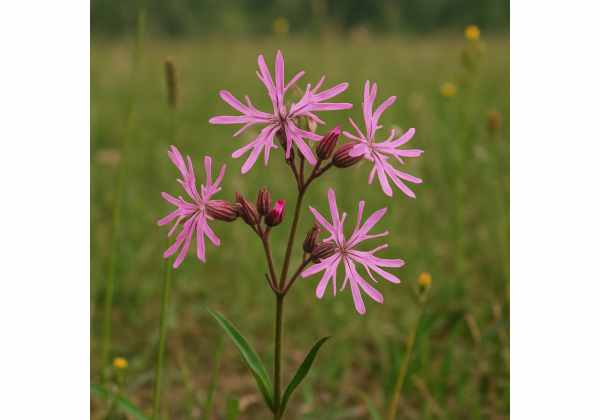
Ragged robin is a delicate pink wildflower best known for brightening damp meadows, but it also has a small and intriguing place in European herbal history. Botanically, the plant is often listed in modern sources as Silene flos-cuculi, while much of the scientific literature still refers to it as Lychnis flos-cuculi. That naming split matters because readers may otherwise miss useful research on the same species. Although ragged robin is not a mainstream medicinal herb on the level of chamomile or peppermint, it has attracted attention for its flavonoids, phenolic acids, saponins, and phytoecdysteroids.
Its traditional uses were modest rather than dramatic. Historical reports describe it as a folk remedy for headache, stomach pain, and wound-related applications, while newer laboratory studies suggest antioxidant, antimicrobial, and cell-active properties worth further study. Still, the most important point is balance: ragged robin is a promising research plant, not a clinically established herbal medicine. Understanding that distinction helps you approach its benefits, uses, dosage, and safety with realistic expectations.
Key Insights for Ragged Robin
- Ragged robin shows promising antioxidant and mild antimicrobial activity in laboratory studies, but human clinical evidence is still lacking.
- Traditional use centered on headache, stomach discomfort, and external wound care rather than long-term daily supplementation.
- A cautious traditional-style infusion is about 1–2 g dried aerial parts per 150–250 mL hot water.
- Pregnant or breastfeeding people, children, and anyone with serious illness or heavy medication use should avoid unsupervised internal use.
Table of Contents
- What ragged robin is and why it stands out
- Key compounds and medicinal properties
- Potential benefits and what the evidence shows
- Traditional uses and practical modern applications
- How to prepare and use ragged robin
- Dosage timing and how long to use it
- Safety side effects and who should avoid it
What ragged robin is and why it stands out
Ragged robin is a perennial flowering plant in the Caryophyllaceae family, a group that also includes campions and pinks. Its narrow, deeply cut petals give each bloom a frayed, feathery look, which explains the common name. In the wild, it prefers moist meadows, marsh edges, and floodplain habitats. That ecological preference is one reason the plant has become less common in some areas: drainage, agricultural change, and habitat loss have reduced the wet places where it naturally thrives.
From an herbal perspective, ragged robin is unusual because it sits between folklore and modern phytochemical interest. It is not a classic commercial herb with a long pharmacy tradition, but it has enough traditional use and enough measurable bioactive chemistry to draw serious research attention. Much of the modern literature still uses the older botanical name Lychnis flos-cuculi, while updated taxonomy often places it in the genus Silene. For readers, growers, and herbal product buyers, that means checking both names on labels and research summaries.
The parts most relevant to herbal use are the aerial portions of the plant, especially the flowering herb. Traditional references also mention the flowers specifically. In laboratory settings, researchers have examined extracts from flowers, stems, leaves, roots, and even micropropagated plant material grown under controlled conditions. That matters because different parts of the plant contain different balances of compounds, and a flower-rich extract is not necessarily interchangeable with a root extract.
Ragged robin stands out for another reason: it is better viewed as a “potential medicinal plant” than an established remedy. That distinction helps prevent the two most common mistakes people make with niche herbs:
- assuming that traditional use automatically proves effectiveness
- assuming that interesting lab chemistry automatically translates to safe daily supplementation
A practical way to think about ragged robin is this: it is a wildflower with a credible research profile, but it is still early in the evidence pipeline. If you are looking for a gentle, well-established herbal tea for everyday soothing, something like chamomile’s better-studied calming and digestive support is usually the more evidence-aligned first choice. Ragged robin becomes more interesting when the goal is learning about emerging botanicals, traditional European herb lore, or carefully limited exploratory use.
Because it can be locally vulnerable in wetland habitats, ethical sourcing matters. Foraging should be approached cautiously, and in some places it may be inappropriate or restricted. Cultivated or responsibly sourced material is the better option whenever the herb is used for educational or herbal purposes.
Key compounds and medicinal properties
Ragged robin’s medicinal interest comes from a blend of phytochemicals rather than one dominant “headline” ingredient. Research has identified several important groups of compounds, and each helps explain why the plant has been described as biologically active.
The best-known compound groups include:
- Flavonoids, especially derivatives related to apigenin and luteolin, along with compounds such as vitexin and orientin
- Phenolic acids, including caffeic, ferulic, and protocatechuic acids
- Triterpenoid saponins, a class of soap-like plant constituents that often have membrane-active and expectorant-style properties in herbal medicine
- Phytoecdysteroids, especially 20-hydroxyecdysone and polypodine B
- Volatile compounds and fatty acid derivatives, which may contribute to the plant’s broader chemical profile
Flavonoids and phenolic acids are the easiest place to begin because they are familiar from many medicinal plants. In practical terms, these compounds are often associated with antioxidant behavior. That does not mean “anti-aging” in the marketing sense. It means they can help neutralize reactive molecules in laboratory systems and may support tissue resilience under stress. In herbs, antioxidant activity is often one clue that a plant might have broader soothing, protective, or restorative potential.
The saponins are especially interesting because they help place ragged robin within a wider herbal pattern. Saponin-rich plants often have a long tradition of use for cleansing, expectorant, or membrane-related actions. In theory, these compounds may contribute to some of the herb’s traditional topical uses and its laboratory antimicrobial profile. At the same time, saponins are also one reason concentrated internal use deserves caution, since strong preparations can irritate the stomach in some people.
The phytoecdysteroids make ragged robin more distinctive. These plant steroids are not the same as anabolic steroids used in medicine or sport. In the research world, they are studied for adaptogenic, metabolic, wound-related, and cell-signaling effects. Their presence in ragged robin is one reason the herb keeps appearing in plant biotechnology and pharmacognosy papers. It also explains why researchers are interested in tissue culture methods that could produce consistent plant material rich in these compounds.
Taken together, these compounds suggest several medicinal properties that are plausible but not yet clinically settled:
- antioxidant activity
- mild antimicrobial and antifungal potential
- possible wound-supportive or tissue-calming effects
- cell-modulating actions that deserve more study
The key phrase is “deserve more study.” Ragged robin’s chemistry is impressive for a little-used meadow herb, but medicinal properties on paper are not the same as proven therapeutic outcomes in real people. That is why a thoughtful article on this plant should emphasize both sides: the chemical profile is genuinely interesting, but it supports cautious curiosity rather than confident medical claims.
Potential benefits and what the evidence shows
When people search for ragged robin health benefits, the central question is usually not “what compounds does it contain?” but “what might it actually help with?” The most honest answer is that ragged robin has potential benefits supported mainly by traditional use and laboratory research, not by strong human clinical trials.
The best-supported potential benefits fall into four areas.
Antioxidant support
Extracts of ragged robin have shown antioxidant activity in laboratory testing, especially in plant material rich in polyphenols. This fits well with the herb’s flavonoid and phenolic acid content. In practical language, that suggests the plant may help protect tissues from oxidative stress in experimental settings. What it does not prove is that drinking ragged robin tea will produce a measurable health benefit in people. Antioxidant activity is a useful clue, not a final verdict.
Mild antimicrobial and antifungal potential
Some extracts have shown inhibitory activity against bacteria, fungi, and even amoebic organisms in laboratory experiments. This is one of the most intriguing parts of the research, especially because it gives some biological context to traditional wound-related use. Still, these findings come from controlled experimental models, not from clinical trials showing that ragged robin safely treats infections in humans.
Possible topical soothing or wound-related value
Traditional use and some pharmacological discussion point toward wound-supportive potential. This likely reflects a combination of polyphenols, saponins, and other secondary metabolites. In the real world, that may justify a cautious role for a cooled infusion as a wash or compress for minor, intact-skin concerns. But it should not be stretched into claims that ragged robin heals wounds better than standard care or replaces appropriate medical treatment.
Traditional headache and digestive use
Historical sources mention ragged robin flowers or decoctions for headache, stomach pain, and related folk complaints. These uses are important because they show how the plant was actually used in traditional settings. But they are also the weakest in modern evidence terms. At present, there is no strong clinical basis for recommending ragged robin as a reliable herb for migraine, dyspepsia, or gastrointestinal disease. For everyday digestive discomfort, a more established herb such as peppermint for cramping and post-meal discomfort is usually the more practical option.
So what does the evidence really say? It says ragged robin is promising, especially as a source of interesting bioactive compounds, but it remains an emerging medicinal plant rather than a settled herbal remedy. A careful reader should come away with realistic expectations:
- promising lab profile
- modest traditional use
- no well-established therapeutic indication in modern clinical practice
- best suited to cautious, limited, informed use rather than confident self-medication
That may sound restrained, but in herbal medicine, restraint is often a sign of quality. It respects both the plant and the evidence.
Traditional uses and practical modern applications
Ragged robin’s traditional uses were never as broad or commercially developed as those of major European herbs, but the historical record is still useful. Ethnomedicinal reports describe the flowers as a decoction or wine-based preparation for headache, malaria-related complaints, and stomach pain. Other traditional references discuss external use for wound care. These accounts matter because they show the plant was not valued as a general tonic; it had more specific, situational uses.
In modern practice, the smartest way to use those traditions is not to copy them literally, but to translate them into realistic categories of use.
The most practical modern applications
- Short-term, mild internal use for occasional discomfort A light infusion may appeal to people exploring lesser-known European herbs. This should be treated as a cautious, occasional preparation rather than a daily wellness tea.
- Topical wash or compress This is one of the more sensible modern applications because it aligns with the plant’s traditional wound-related use and with the general chemistry of polyphenol- and saponin-containing herbs.
- Educational or formula-based use Ragged robin may be included in small, carefully designed traditional blends, especially by herbalists interested in older European materia medica.
What it should not be used for is just as important:
- not as a substitute for malaria treatment
- not as a first-line herb for chronic digestive disease
- not as a routine remedy for recurrent migraines
- not as a replacement for proper wound cleaning and medical assessment
A useful modern framing is that ragged robin fits better in the category of minor supportive herb than primary treatment herb. If the goal is gentle external skin support, many people will find more predictable options in herbs such as calendula for superficial irritation and soothing washes. Ragged robin may still have a place, but it is better chosen deliberately than casually.
Another important modern application is conservation-aware herbalism. Because ragged robin is tied to wet meadow ecosystems, using it thoughtfully means respecting its habitat story. That can mean choosing cultivated material, using small amounts, and not treating it like a bulk everyday tea.
The plant also has value as a “bridge herb” for readers who want to understand how modern herbal science develops. It shows the full progression clearly:
- a modest folk use appears in local traditions
- researchers identify active compounds
- lab studies find interesting biological effects
- safety and clinical questions remain unresolved
That progression is common in medicinal plant research, and ragged robin is a good example of why herbal use should remain flexible and evidence-aware. Traditional use deserves respect, but it works best when paired with practical limits, careful sourcing, and the willingness to admit when a plant is still more promising than proven.
How to prepare and use ragged robin
Because ragged robin is not a standardized pharmacy herb, preparation matters a great deal. The plant can be approached in a few sensible ways, but simple forms are better than concentrated or improvised ones.
1. Infusion
For most educational or low-intensity internal use, an infusion is the best place to start. This means pouring hot water over the dried flowering aerial parts and letting them steep. An infusion is more appropriate than a hard decoction for a delicate flowering herb because prolonged boiling may extract more bitterness and unpredictability without necessarily improving usefulness.
A practical method is:
- measure the dried herb
- pour freshly boiled water over it
- cover and steep for about 10 minutes
- strain well
- drink warm, or let it cool if using externally
This form is best for mild, short-term use. The taste is usually herbaceous with a faint bitterness.
2. Cooled wash or compress
A cooled infusion can be used as a wash or compress on small areas of intact or mildly irritated skin. This is one of the most defensible ways to use ragged robin because it stays close to traditional practice while limiting systemic exposure. Use a clean cloth or cotton pad, apply gently, and make fresh batches rather than storing the liquid for long periods.
3. Tincture or fluid extract
Commercial tinctures may exist, but this is the least beginner-friendly format because concentrations vary widely. With a niche herb like ragged robin, label quality matters even more than usual. If a product does not clearly identify the botanical name, plant part, and extraction ratio, it is better skipped.
4. Powder or capsules
These are generally not the first choice. Powder makes it easy to consume more than intended, and capsule products can create a false sense of standardization when the herb itself has limited clinical dosing data.
Preparation also depends on your goal. If you want a low-residue, skin-comforting botanical rinse, ragged robin infusion may be reasonable. If what you really want is cooling hydration after minor heat exposure, aloe vera is often the more direct and familiar option. Matching the form to the goal prevents disappointment and keeps herbal use grounded.
A few good preparation habits can make any use safer:
- use dried, clean, correctly identified plant material
- avoid old or musty herb
- make small batches
- stop if the preparation causes stomach upset or skin irritation
- do not combine it casually with many other herbs the first time you try it
With a plant like ragged robin, simplicity is a strength. The less complicated the preparation, the easier it is to judge whether it suits you.
Dosage timing and how long to use it
The most important dosage fact about ragged robin is also the easiest to miss: there is no well-established clinical dosage for human therapeutic use. That means any practical range should be treated as cautious, traditional-style guidance rather than evidence-based medical dosing.
For a simple infusion, a conservative starting range is:
- 1–2 g dried aerial parts per 150–250 mL hot water
- steep for about 10 minutes
- start with 1 cup once daily
- if well tolerated, increase to 1 cup up to twice daily
Some herbal users may choose up to three cups daily, but with a niche herb and limited safety data, staying at the lower end is the more prudent choice. Stronger is not automatically better.
For external use as a rinse or compress, the same preparation can be used, then allowed to cool. A clean cloth may be applied for about 10–15 minutes, once or twice daily, depending on comfort and skin response.
Timing
Ragged robin is best used:
- after food if you have a sensitive stomach
- earlier in the day the first time, so you can notice any reaction
- as a short trial rather than an open-ended routine
Duration
A sensible self-care window is:
- 3–7 days for a brief trial
- up to 14 days at most without professional guidance
If there is no clear benefit within that period, continuing usually makes little sense. Herbs with limited evidence should earn their place quickly.
What about tinctures
Because tincture strengths vary, the safest rule is to follow the product label rather than guessing a dose. If a manufacturer does not provide clear dosing and botanical details, that is a quality problem, not something the user should try to solve by improvising.
A practical dosing mindset
The best dosing strategy for ragged robin is not “How much can I take?” but “What is the minimum amount that lets me evaluate whether this herb agrees with me?” That mindset is especially useful for lesser-known herbs. It reduces the chance of stomach irritation, respects the lack of human data, and makes it easier to recognize whether the plant is doing anything meaningful.
In short, ragged robin dosage should be:
- low to moderate
- short-term
- simple in preparation
- adjusted cautiously
- stopped promptly if benefit is absent
That may feel conservative, but with emerging herbs, conservatism is often the most intelligent form of herbal practice.
Safety side effects and who should avoid it
Ragged robin’s safety profile is limited by one major issue: there is far less human safety data than people often assume. Laboratory work suggests the plant is biologically active, which is exactly why casual overuse is a poor idea. A plant can be interesting and still deserve caution.
Likely side effects
Based on its chemistry and the way similar herbs behave, the most plausible side effects are:
- stomach upset
- nausea from overly strong preparations
- loose stools or digestive irritation in sensitive people
- skin irritation or rash with topical use
- allergy in people who react to the plant itself or to related botanicals
Concentrated preparations deserve more caution than weak teas or brief topical washes. Some ragged robin extracts have shown acute toxicity in laboratory models at certain concentrations, which reinforces the point that “natural” does not mean risk-free.
Who should avoid internal use
The most cautious approach is to avoid unsupervised internal use in:
- pregnancy
- breastfeeding
- children
- people with significant liver or kidney disease
- people with chronic gastrointestinal disorders
- people taking multiple prescription medicines
- anyone with a history of strong plant allergies
There are no well-defined human drug interaction studies for ragged robin. That sounds reassuring, but it really means the interaction profile is unknown, not proven safe. If you take prescription medicines with a narrow safety margin, the responsible choice is to skip experimental self-use.
Topical safety
Topical use is usually easier to justify than internal use, but it still needs guardrails:
- use only on small areas
- patch-test first
- do not apply to deep, infected, or serious wounds
- stop if redness, burning, or itching worsens
If your goal is topical support for sore tissue, it is also worth remembering that not all wound-related herbs have the same risk profile. Some, like comfrey, come with much stricter safety boundaries, especially around internal use and broken skin. Ragged robin appears gentler in principle, but it is also less studied.
When not to self-treat
Do not rely on ragged robin for:
- persistent or severe headache
- fever with abdominal pain
- suspected infection
- heavy or unexplained bleeding
- non-healing wounds
- any condition that could represent malaria, ulcer disease, or a spreading skin infection
Those are medical situations, not herbal experiments.
The safest summary is simple. Ragged robin is a fascinating medicinal wildflower in research terms, but it is still a low-certainty herb in clinical terms. That means the wisest use is modest, short-term, carefully sourced, and easy to stop. People who want dependable outcomes for digestion, skin comfort, or minor stress-related symptoms will usually do better starting with better-studied herbs and reserving ragged robin for informed, limited use.
References
- Ragged Robin (Lychnis flos-cuculi) – a plant with potential medicinal value – ScienceDirect 2014 (Review)
- Phytochemical Screening, Phenolic Compounds and Antioxidant Activity of Biomass from Lychnis flos-cuculi L. In Vitro Cultures and Intact Plants – PMC 2021
- Two Ecdysteroids Isolated from Micropropagated Lychnis flos-cuculi and the Biological Activity of Plant Material – PubMed 2021
- Biotechnological stimulation of phenolics in Lychnis flos-cuculi shoot cultures | Plant Cell, Tissue and Organ Culture (PCTOC) | Springer Nature Link 2025
- Medicinal plants of the family Caryophyllaceae: a review of ethno-medicinal uses and pharmacological properties – PMC 2015 (Review)
Disclaimer
This article is for educational purposes only and is not medical advice, diagnosis, or treatment. Ragged robin is a traditionally used herb with emerging laboratory research, but it does not have well-established clinical indications, standardized therapeutic dosing, or a fully defined safety profile for routine internal use. Do not use it as a substitute for professional care, especially for infection, persistent pain, significant digestive symptoms, severe headache, pregnancy-related concerns, or chronic illness. Check with a qualified clinician before using ragged robin internally if you are pregnant, breastfeeding, take prescription medicines, or have a significant medical condition.
If you found this article useful, please consider sharing it on Facebook, X, or your preferred platform to help others discover evidence-aware herbal information.