Ragweed, most commonly Ambrosia artemisiifolia, is a late-summer flowering plant in the daisy family that inspires two very different conversations. In everyday life, it is best known as a major source of seasonal allergy symptoms. In herbal and phytochemical research, however, it also attracts interest because it contains bitter sesquiterpene lactones and other plant compounds with measurable biological activity in laboratory studies. That contrast matters. Ragweed is not a mainstream wellness herb with a long record of safe household use. Its strongest real-world medical role today is in carefully standardized allergy testing and allergen immunotherapy, not in casual teas, powders, or tinctures.
A balanced article on ragweed has to keep both sides in view. There are legitimate reasons scientists study its compounds, and there are also clear reasons to be cautious. Below, you will find what ragweed is, which ingredients researchers focus on, what its potential benefits and medicinal properties may be, how it is actually used, what dosing means in practical terms, and who should avoid it altogether.
Quick Facts
- Ragweed compounds show anti-inflammatory and antimicrobial potential in laboratory studies, but these effects are not well proven as home herbal benefits in humans.
- The clearest evidence-backed use is specialist-supervised ragweed pollen immunotherapy for seasonal allergy, not homemade oral preparations.
- A prescription ragweed sublingual tablet commonly provides 12 Amb a 1-U once daily and is started at least 12 weeks before pollen season; no validated do-it-yourself oral dose exists.
- Avoid ragweed if you have a known ragweed or Asteraceae allergy, uncontrolled asthma, prior severe reactions to allergen therapy, or if you are pregnant or breastfeeding without medical guidance.
Table of Contents
- What ragweed is and why it matters
- Ragweed key ingredients and active compounds
- Health benefits and what the evidence actually shows
- Medicinal uses and the forms people actually encounter
- Dosage, timing, and why self-dosing is problematic
- Side effects, safety, and who should avoid ragweed
- How to think about ragweed in a practical care plan
What ragweed is and why it matters
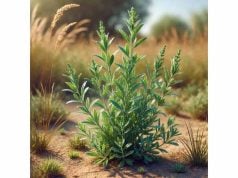
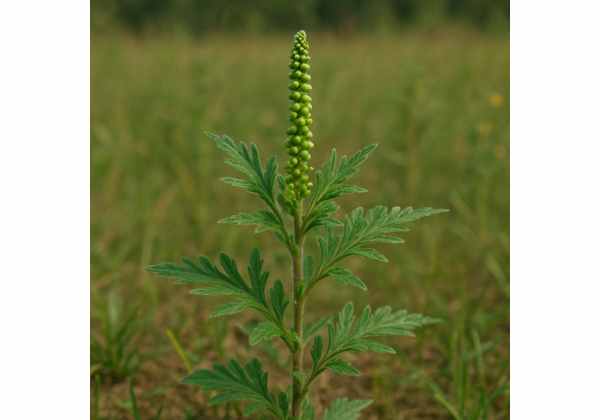
Common ragweed is an annual plant in the Asteraceae family, the same broad botanical family that includes chamomile, daisies, marigold, and sunflower. It usually grows in disturbed ground such as roadsides, empty lots, field edges, and construction areas. The leaves are deeply divided and fern-like, and the plant produces greenish flower spikes rather than showy blossoms. Its pollen season often peaks from late summer into early autumn, which is why ragweed is closely associated with sneezing, itchy eyes, and nasal congestion at that time of year.
From a health perspective, ragweed matters for three reasons.
First, it is a major aeroallergen. For many people, the word “ragweed” does not mean an herb to take; it means the plant that triggers hay fever, itchy eyes, throat irritation, and sometimes asthma flares. That alone makes it different from gentler culinary herbs or traditional tonics.
Second, ragweed has drawn interest in phytochemical research. Investigators have isolated multiple sesquiterpene lactones and related compounds from the aerial parts of the plant. In cell and animal work, some of these molecules have shown anti-inflammatory, antimicrobial, cytotoxic, and antiparasitic activity. Those findings are scientifically interesting, but they do not automatically mean the whole plant is safe or effective for routine home use.
Third, ragweed occupies an unusual place in medicine because its best-established clinical use is not as a tea or capsule. Instead, standardized ragweed pollen extracts and tablets are used in allergy diagnosis and allergen immunotherapy. In other words, clinicians sometimes use the allergen itself in controlled doses to train the immune system in people with confirmed ragweed allergy.
This is why ragweed needs a more careful discussion than many herb profiles. It is not enough to ask whether it has “benefits.” You also have to ask which part of the plant, which preparation, which goal, and which person. A plant that can contain promising bioactive molecules can still be the wrong choice for self-treatment, especially when the same plant is a common cause of allergy and dermatitis.
Ragweed key ingredients and active compounds
The compounds that make ragweed scientifically interesting are not vitamins or minerals. They are mostly secondary plant metabolites, especially sesquiterpene lactones. These bitter compounds are common in many Asteraceae plants and help explain both ragweed’s biological activity and some of its risks.
The most important groups to know are:
- Sesquiterpene lactones
These are the headline compounds in ragweed research. They include molecules such as ambrosin, cumanin, ambrosic acid, artesovin, and related lactones. Researchers study them because they can interact with inflammatory signaling, microbial growth, and cellular stress pathways. - Phenolic compounds and flavonoids
Ragweed also contains antioxidant-type compounds that may contribute to laboratory anti-inflammatory or free-radical-scavenging effects. These are supportive rather than defining compounds. - Essential oil constituents
Some studies of ragweed essential oil and extracts have found antimicrobial or phytotoxic effects. These findings are more relevant to plant chemistry and agricultural or experimental uses than to household herbal use. - Allergenic proteins in pollen
From a medical standpoint, these are among the most important components of all. Ragweed pollen contains major allergens such as Amb a 1, which play a central role in seasonal allergic rhinitis and in the standardized dosing of prescription allergen products.
What is easy to miss is that the same chemistry can point in opposite directions. The sesquiterpene lactones are part of why ragweed is studied for potential medicinal actions, but they also help explain why people in the daisy family allergy group may react to it. Compounds that are biologically active enough to affect inflammation or microbes are also active enough to irritate skin, provoke sensitivity, or create toxicology questions.
Another practical point is that plant chemistry varies. Growth stage, geography, weather, and handling can change how much of certain sesquiterpene lactones a ragweed sample contains. That means one homemade tea, dried powder, or tincture is not reliably comparable to another. For readers trying to make safe decisions, this is a central issue: ragweed is not a plant where “a little of the herb” gives a predictable dose.
In plain language, ragweed’s key ingredients are real and pharmacologically interesting, but they do not create a simple at-home herbal remedy. They create a plant that belongs more in the category of careful research subject and specialist-controlled allergen product than in casual self-experimentation.
Health benefits and what the evidence actually shows
If you search ragweed online, you may find broad claims about anti-inflammatory, detoxifying, antimicrobial, or respiratory benefits. The evidence needs to be sorted more carefully than that.
The most realistic way to think about ragweed’s potential benefits is to divide them into preclinical benefits and clinically supported benefits.
Preclinical potential comes from laboratory and animal studies. Ragweed compounds, especially sesquiterpene lactones, have shown several promising actions:
- anti-inflammatory effects
- antimicrobial and antifungal activity
- antiproliferative and cytotoxic activity in experimental settings
- antiprotozoal activity in some models
These findings matter because they show that ragweed is pharmacologically active. They also help explain why researchers keep studying Ambrosia species. But preclinical activity is not the same as proven therapeutic benefit in people taking ragweed by mouth. Many plants show impressive lab effects and never become safe, effective home remedies.
Clinically supported benefit is a much narrower category. Here, ragweed’s strongest role is in allergen immunotherapy for confirmed ragweed pollen allergy. In that setting, standardized ragweed pollen products can reduce seasonal symptoms over time by changing immune response. That can translate into less sneezing, fewer watery eyes, reduced nasal congestion, and lower medication use during ragweed season for appropriate patients.
This distinction is the heart of the article. The best-supported benefit is not “drink ragweed for inflammation.” It is “use carefully standardized ragweed allergen therapy under medical supervision if you have diagnosed ragweed allergy.”
What about folk uses? Ragweed has been used in some contemporary herbal circles for excess mucus, seasonal congestion, topical applications, and other complaints. Those traditions are interesting, but they do not yet give the plant the same evidence base as a well-studied household herb. If someone is looking for botanical support for seasonal rhinitis, they often review alternatives such as butterbur for hay fever relief because those products have been discussed more directly as symptom-support tools.
The bottom line is simple. Ragweed may offer:
- research-backed pharmacological potential from its compounds, and
- real clinical benefit when used as standardized allergy immunotherapy.
Outside those lanes, the evidence becomes much thinner. That does not make ragweed useless. It makes it a plant where honesty matters more than marketing language.
Medicinal uses and the forms people actually encounter
When people ask how ragweed is used medicinally, they are often imagining one of three very different things: a folk herb, a topical preparation, or a medical allergy product. Those are not interchangeable.
1. Prescription allergy products
This is the most established use. Ragweed pollen is used in skin testing, subcutaneous immunotherapy, and sublingual immunotherapy for people with confirmed ragweed pollen allergy. These products are standardized, regulated, and dosed according to allergen units rather than kitchen-style herbal measures. They are intended to reduce sensitivity over time, not to provide instant relief.
2. Folk herbal preparations
Some people have used above-ground ragweed as teas, tinctures, powders, or fresh preparations. These uses are usually aimed at seasonal catarrh, thick mucus, minor skin issues, or general herbal experimentation. The problem is that these preparations are not standardized, safety data are weak, and the very people most interested in ragweed are often those who react to it. For that reason, homemade oral use is difficult to recommend.
3. Topical or external use
External use sounds safer at first, but it can still be risky. Ragweed belongs to a plant family known for contact sensitivity in some people, especially those reactive to sesquiterpene lactones. A person with a daisy-family sensitivity may develop redness, itching, or dermatitis after skin contact. That makes “natural” topical use less reassuring than it may seem.
A practical way to judge the forms is this:
- Most defensible: prescription pollen extracts or tablets used under clinician supervision
- Questionable: homemade teas, powders, raw plant blends, and oral folk preparations
- Potentially irritating: topical preparations, especially in sensitive people
For symptom-based self-care, many readers are better served by thinking in terms of the symptom rather than the plant. Someone with watery, irritated eyes during allergy season may be more interested in supportive options like eyebright for watery, irritated eyes than in taking ragweed itself. That is often a more rational herbal decision.
So, what are ragweed’s real medicinal uses? In modern practice, the answer is mostly allergy diagnosis and immunotherapy. Everything else sits in a more speculative zone that requires extra caution, especially because the plant’s allergenic and sensitizing potential is not a side note. It is central to the story.
Dosage, timing, and why self-dosing is problematic
Ragweed is one of those plants where the word dosage can mislead people. There is a dosage framework for prescription ragweed allergen therapy, but there is no well-established, evidence-based household oral dose for ragweed herb that can be recommended with confidence.
That distinction matters.
For prescription sublingual immunotherapy, a common standardized approach is one tablet daily containing a defined amount of ragweed allergen, started at least 12 weeks before ragweed season and continued throughout the season. For injection immunotherapy, dosing is individualized and adjusted in a clinic setting according to sensitivity, reaction history, and build-up schedule. These are medical dosing systems, not herbal wellness dosing systems.
Why is self-dosing problematic?
- The plant is chemically variable.
Two homemade preparations may differ substantially in their concentration of active and sensitizing compounds. - The wrong “active” may dominate.
A person may be seeking anti-inflammatory effects while mostly delivering allergenic or irritating material. - There is no validated home-use target.
Ragweed does not have a broadly accepted oral range comparable to common herbs like peppermint or ginger. - Toxicology is not reassuring enough to improvise.
In repeated-dose animal work, oral ragweed exposure at 500 to 1000 mg/kg raised safety concerns. Animal data do not convert directly into human use instructions, but they do argue against casual extrapolation.
Timing also depends on the form. Immunotherapy works on a seasonal training model, meaning it is started well before peak pollen exposure. That is very different from taking an herb “as needed” when symptoms begin.
A safer way to phrase the dosage issue is this:
- For diagnosed ragweed allergy, use only clinician-guided standardized products.
- For non-allergy self-treatment, do not assume there is a safe or effective ragweed tea, capsule, or tincture dose.
- For natural seasonal support, it often makes more sense to study better-characterized options, including quercetin dosing basics, than to invent a ragweed protocol.
So if your real question is, “How much ragweed should I take per day?” the most responsible answer is: there is no validated do-it-yourself oral dose that can be recommended for general use. The only dosing with clear structure belongs to prescription allergen products.
Side effects, safety, and who should avoid ragweed
Ragweed safety deserves more attention than its marketing-friendly “benefit” claims. This is not because the plant is automatically dangerous to everyone, but because the kinds of reactions it can cause are meaningful and, in some settings, severe.
The main concerns include the following.
- Allergic reactions
This is the most obvious issue. If you already react to ragweed pollen, taking ragweed-related products without medical guidance is a poor idea. Symptoms can range from itching and congestion to wheezing, hives, and more serious systemic reactions in sensitive people. - Cross-reactivity within the Asteraceae family
People sensitive to daisies, chrysanthemums, marigold, chamomile, or related plants may also react to ragweed. This is especially relevant for topical products and raw plant handling. - Contact dermatitis
Sesquiterpene lactones can irritate or sensitize the skin. Gloves are sensible if you are handling the plant directly. - Respiratory risk in asthma
Uncontrolled or unstable asthma raises the stakes. Ragweed pollen allergy can worsen lower-airway symptoms, and prescription allergen therapy requires careful screening in asthma patients. - Gastrointestinal and systemic uncertainty with oral use
Because household oral use is poorly standardized, side effects may include stomach upset, nausea, or unexpected sensitivity. More importantly, long-term safety is not well defined. - Risk during immunotherapy
Prescription ragweed extracts and tablets can be very useful, but they still carry real warnings, including severe allergic reactions. First dosing and dose escalation are handled with that risk in mind.
Who should avoid ragweed or use it only under professional supervision?
- people with a known ragweed allergy
- people with a strong Asteraceae family sensitivity
- those with severe, unstable, or uncontrolled asthma
- people with a history of severe reactions to allergen immunotherapy
- anyone with eosinophilic esophagitis in the context of sublingual allergen therapy
- people taking drugs that can complicate emergency treatment of anaphylaxis, such as beta-blockers
- those who are pregnant or breastfeeding, unless a clinician specifically advises otherwise
- children, especially for any unsupervised herbal use
For gentler seasonal-support strategies, some people prefer herbs with a more familiar safety profile, such as stinging nettle as another traditional allergy-support herb. That still does not replace medical care, but it illustrates the larger point: ragweed is not the default “natural” option it may appear to be.
How to think about ragweed in a practical care plan
The most useful way to think about ragweed is not, “Is it good or bad?” It is, “What problem am I trying to solve, and is ragweed really the right tool?”
If your problem is late-summer hay fever, the first step is confirmation. Ragweed season overlaps with other irritants, and not every September sneeze is ragweed. A proper diagnosis can tell you whether ragweed is truly the driver. If it is, the most evidence-based plan usually includes some combination of:
- pollen avoidance strategies during high-count days
- standard symptom relief such as antihistamines or nasal therapy
- discussion of ragweed-specific immunotherapy if symptoms are recurrent and significant
If your interest is herbal medicine, the decision becomes more selective. Ragweed contains interesting compounds, but “interesting chemistry” is not the same as “good self-care herb.” For most people, ragweed is best viewed as a plant with research value and specialist allergy applications rather than as an everyday tonic.
If your interest is natural anti-inflammatory support, it is worth asking whether you actually need ragweed itself. Plants with broader culinary or clinical familiarity may offer a more comfortable starting point. Ragweed tends to become attractive mainly because of novelty, local abundance, or folk reputation, not because it clearly outperforms safer, better-described options.
A practical rule is this:
- Choose prescription ragweed products only for diagnosed allergy and only with clinician oversight.
- Avoid inventing a home oral dose from powders, teas, or tinctures.
- Treat skin exposure with respect if you have any history of daisy-family reactions.
- Seek medical care promptly for wheezing, throat symptoms, generalized hives, or swelling after exposure.
Ragweed is a plant where nuance protects you. It has real bioactive compounds, real medical relevance, and real risks. The smartest use of that information is not to romanticize the plant or fear it, but to place it in the correct category: scientifically interesting, clinically useful in allergy medicine, and too reactive for casual self-prescribing.
References
- A comprehensive phytochemical and pharmacological review on sesquiterpenes from the genus Ambrosia 2022 (Review)
- Targeted Screening and Quantification of Characteristic Sesquiterpene Lactones in Ambrosia artemisiifolia L. at Different Growth Stages 2024
- Global Ragweed Allergy: Molecular Allergens and Integrated Control Strategies 2025 (Review)
- Repeated-dose toxicity of common ragweed on rats 2017
- DailyMed – RAGWITEK- ambrosia artemisiifolia pollen tablet 2021 update (Official prescribing information)
Disclaimer
This article is for educational purposes only and does not diagnose, treat, or replace individualized medical care. Ragweed can cause significant allergic reactions, and its home herbal use is not supported by a well-established safety or dosing framework. Do not start ragweed-based products, especially allergen tablets, extracts, or homemade preparations, without appropriate clinical guidance if you have asthma, allergy history, pregnancy, breastfeeding, chronic illness, or take prescription medicines.
If you found this article useful, please consider sharing it on Facebook, X, or your preferred platform to help others make safer, better-informed decisions about ragweed.