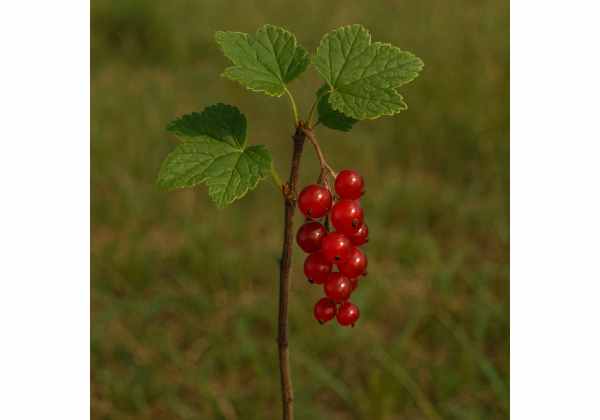
Red currant, Ribes rubrum, is a bright, translucent berry with a tart snap and a surprisingly sophisticated nutrition profile. It sits somewhere between fruit and functional food: light, refreshing, and naturally rich in vitamin C, organic acids, fiber, and polyphenols that help explain its crisp taste and growing reputation in wellness writing. Long appreciated in European kitchens for jams, jellies, syrups, sauces, and summer desserts, red currant also deserves attention for its anthocyanins, flavonols, and antioxidant potential.
Still, the most useful way to understand red currant is not as a miracle remedy, but as a smart berry to eat regularly. It has credible food-based benefits for antioxidant intake, digestive support, and variety in a plant-rich diet, while newer studies are exploring more specific properties such as spasmolytic and anti-inflammatory effects. At the same time, medicinal-dose evidence remains limited, and concentrated extracts should not be treated as equivalent to the fresh fruit. A well-rounded article on red currant therefore has to cover both its nutritional strengths and the limits of what science has actually confirmed.
Essential Insights
- Red currants provide vitamin C, polyphenols, and fiber that support antioxidant intake and a more nutrient-dense diet.
- Their tart berries may offer mild digestive and astringent value, especially when used as whole fruit rather than highly sweetened preserves.
- A practical food portion is about 1/2 to 1 cup fresh berries, roughly 60 to 120 g per serving.
- People with a confirmed berry allergy or very acid-sensitive stomach should be cautious, especially with juices, concentrates, or large portions.
Table of Contents
- What red currant is and why it deserves attention
- Red currant key ingredients and medicinal properties
- Potential health benefits and what is most credible
- Traditional food uses, modern wellness uses, and best forms
- Dosage, serving size, and when food use makes more sense than supplements
- Safety, side effects, and who should avoid overdoing red currant
- How to buy, store, and use red currants well
What red currant is and why it deserves attention
Red currant is the glossy scarlet fruit of Ribes rubrum, a deciduous shrub in the Grossulariaceae family. The berries grow in dangling clusters, usually ripening in early to mid-summer, and are known for a flavor that is bright, sharp, and more acidic than sweet. That tartness is part of the fruit’s identity. Unlike many modern berries bred mainly for sweetness, red currants keep a brisk, almost sparkling profile that makes them useful in both sweet and savory cooking.
In culinary traditions across northern and central Europe, red currants have long been used in jams, jellies, cordials, fruit sauces, pastries, compotes, and chilled desserts. Their acidity allows them to cut through richer foods, which is why they pair so well with cream, yogurt, roast meats, and buttery pastry. Yet their value is not only culinary. Red currants are also part of the broader berry category that nutrition science watches closely because berries tend to be concentrated sources of vitamin C, phenolic compounds, and pigment-related antioxidants.
One reason red currant deserves more attention is that it often gets overshadowed by darker berries such as blackcurrant, blueberry, or chokeberry. Those fruits usually attract more headlines because their pigment levels are higher. Red currants, however, offer a different kind of balance. They are lighter, brighter, lower in sweetness, and still clearly rich in beneficial plant compounds. They may not be the most anthocyanin-dense berry in the produce aisle, but they remain a meaningful source of polyphenols and vitamin C, especially when eaten fresh and whole.
Another reason red currant stands out is its versatility. It works as a fruit, a garnish, a preserve ingredient, and a refreshing acidic accent. This flexibility matters in real dietary life. A healthy food is more likely to be used often if it also improves flavor, texture, and visual appeal. Red currants do exactly that. They turn simple yogurt into a sharper breakfast, balance sweet desserts, brighten sauces, and make homemade preserves feel more vivid and less flat.
From a wellness standpoint, red currant is best approached as a functional berry rather than a high-dose medicinal plant. That frame is useful because it matches the evidence. The fruit has credible nutritional strengths and interesting emerging bioactivity, but its strongest case is still food-based. In other words, red currant matters because it is easy to integrate into everyday eating while quietly contributing antioxidants, fiber, and tart complexity.
Red currant key ingredients and medicinal properties
Red currant’s health value begins with its chemistry. Although it is not as deeply pigmented as blackcurrant, it still contains a meaningful mix of vitamin C, anthocyanins, flavonols, phenolic acids, organic acids, and fiber. That combination helps explain both its tart taste and the food-first medicinal properties traditionally associated with berries.
Vitamin C is one of the easiest nutrients to appreciate in red currant. It contributes to antioxidant defense, collagen formation, iron absorption, and immune function. In practical terms, it is one reason red currants feel refreshing rather than heavy. Their tartness is not just flavor; it reflects a matrix of acids and antioxidant compounds that shape how the fruit behaves in the body and in the kitchen.
The most discussed plant compounds in red currants are the polyphenols. These include flavonols such as quercetin derivatives, phenolic acids, tannin-related compounds, and smaller amounts of anthocyanins that give the berries their ruby tone. A newer red currant juice study also identified cyanidin-3-O-glucoside as the dominant anthocyanin in the tested juice sample, while quercetin was a leading flavonol in the corresponding waste extract. Those details are useful because they show that red currant’s chemistry is not generic berry chemistry. It has its own profile, even if the total anthocyanin level is lower than in blackcurrant or chokeberry.
The fruit also contains organic acids, which contribute to taste, preservation quality, and culinary usefulness. These acids help explain why red currants perform so well in jellies, sauces, and bright fruit compotes. Fiber adds another practical layer. Whole red currants bring bulk and structure that juice alone cannot supply, which is one reason whole-fruit use generally has a stronger nutritional case than strained syrup or sugary jelly.
When people use the phrase medicinal properties, red currant is best described with measured terms such as:
- antioxidant
- mildly astringent
- nutritive
- digestive-supportive in a general food sense
- potentially anti-inflammatory or spasmolytic in preclinical settings
That last point deserves careful wording. A recent red currant juice study found antioxidant and spasmolytic activity in laboratory models, which is promising, especially for gastrointestinal comfort. But promising is not the same as proven in routine human treatment. The fruit’s most defensible medicinal property remains that it is a nutrient-dense berry with polyphenol activity, not that it is a stand-alone treatment for a diagnosed condition.
For readers who already think in berry chemistry terms, red currant sits in the same general conversation as bilberry and other anthocyanin-rich berries, though its profile is typically brighter, more acidic, and somewhat lighter in color intensity. That comparison helps clarify its role: not the darkest berry on the shelf, but still very much part of the polyphenol-rich berry family.
Potential health benefits and what is most credible
The most helpful way to discuss red currant’s benefits is to rank them by how solid they are. That keeps the article useful and prevents the usual berry exaggeration.
The most credible benefit is nutritional antioxidant support. Red currants provide vitamin C and polyphenols in a compact serving, and that makes them a practical addition to a diet centered on colorful plant foods. This does not mean the fruit neutralizes disease on its own. It means it contributes to a pattern of eating that tends to support oxidative balance, vascular health, and general nutrient quality over time.
A second realistic benefit is diet quality improvement through flavor. Tart fruits can do something that sweeter foods often cannot: they wake up meals. Red currants can make yogurt, oats, salads, sauces, and fruit desserts more appealing without relying entirely on added sugar. This is not a glamorous benefit, but it is a real one. Foods that encourage people to eat more fruit, more plain dairy, and more whole-grain or plant-based dishes deserve more credit than they usually get.
A third plausible benefit is mild digestive support. Whole berries bring fiber, water, and acidity, which may help some people enjoy fruit more regularly and support bowel regularity in the context of a balanced diet. The fruit’s tartness and astringency also help explain why currants historically found a place in preserves, tonics, and simple home preparations. This is still a food-level effect, not a drug-like one.
Where the science becomes more tentative is in cardiometabolic and anti-inflammatory claims. Reviews of anthocyanin-rich berries suggest that berry intake may support vascular markers, glycemic control, and inflammatory balance. Red currants fit within that larger berry pattern, but the evidence is strongest for berry categories and anthocyanin-rich interventions overall, not for red currant alone in isolation. That distinction matters. It is fair to say red currants belong in the class of health-supportive berries. It is less fair to suggest that a bowl of red currants has been uniquely proven to lower a specific lab marker.
There is also growing interest in preclinical spasmolytic activity. A recent study on red currant juice and waste extract found antioxidant and smooth-muscle relaxing effects in vitro, raising interesting possibilities for gastrointestinal applications. But this is still an early-stage finding. It supports red currant’s scientific interest more than it supports self-treatment advice.
So what should a careful reader take away?
- Red currants are clearly worthwhile as a nutrient-dense berry.
- Their strongest benefits are food-based, not supplement-based.
- Their polyphenols and vitamin C make them a smart part of a fruit-rich diet.
- More specific medicinal claims remain promising but not firmly established.
That is why red currant makes more sense beside foods like cranberry and other tart functional berries than beside high-dose botanical extracts marketed as targeted therapies. Its strength is consistency, not intensity.
Traditional food uses, modern wellness uses, and best forms
Red currants have always made the most sense where food and wellness overlap. Historically, they were not prized because they tasted like candy. They were valued because they preserved well, added brightness to cooking, and brought a sharp, cleansing fruit note that richer foods needed. That is still true today.
The classic traditional forms include:
- fresh berries eaten in season
- jam and jelly
- syrup and cordial
- compote
- dessert fillings
- sharp sauces for roast meats
- fruit layers in yogurt, cream, or custard dishes
This matters because the form of red currant changes its nutritional value. Fresh or lightly cooked whole berries retain the best balance of fiber, acidity, and polyphenols. Juice can still be useful, especially if unsweetened, but it removes fiber and can be easier to overconsume. Jellies and syrups preserve flavor beautifully, yet they often bring far more sugar than fruit in the final serving. For people interested in health as much as taste, that difference is worth remembering.
Modern wellness use is usually gentler and more practical than medicinal advertising suggests. Red currants work well in:
- unsweetened yogurt bowls
- overnight oats
- fruit compotes with minimal sugar
- blended sauces for poultry or fish
- freezer-friendly berry blends
- diluted juice spritzers
- low-sugar jam for modest portions
These uses respect the fruit’s real strengths. Red currants are best when their acidity stays visible. Too much sugar can make them more dessert ingredient than health food. A small amount of sweetness is often enough.
There is also a growing interest in red currant juice, extracts, and by-product powders. Researchers are studying not only the fruit juice itself but also the leftover pomace or waste fraction, which can be rich in flavonols and tannins. That is scientifically exciting and may matter to future food innovation. For everyday readers, though, the message is simpler: whole berries and minimally processed preparations are still the safest and most intuitive starting point.
Another practical point is that red currants are excellent in mixed berry preparations because they bring acidity where softer berries bring sweetness. In that sense, they play a balancing role similar to what blackberries do in mixed berry cooking, though red currants are usually more tart and less fleshy.
The best forms, nutritionally speaking, are usually:
- fresh whole berries
- frozen whole berries
- lightly cooked compotes with limited sugar
- unsweetened or lightly diluted juice
- preserves used in modest amounts
This ranking is useful because it keeps wellness advice realistic. Red currant does not need to be turned into a capsule to be valuable. It already works well in the forms people have enjoyed for generations. The smartest use is often the least dramatic one.
Dosage, serving size, and when food use makes more sense than supplements
With red currant, dosage should mostly be thought of as serving size, not as a medicinal prescription. That is one of the most important distinctions in the article. Unlike certain herbal extracts, red currant is best supported as a food, and the evidence does not establish a standardized therapeutic dose for capsules, powders, or concentrates.
A practical serving of fresh red currants is about 1/2 to 1 cup, or roughly 60 to 120 g. That range is large enough to contribute useful vitamin C, fiber, and polyphenols without pushing the fruit into “more is better” territory. It also works naturally in real meals: a small handful on yogurt, a bowlful in a fruit salad, or a moderate serving folded into breakfast oats or a dessert topping.
Frozen berries work similarly and are often easier to use because fresh red currants can be seasonal and delicate. For juice, a small glass is usually more reasonable than repeated large servings, especially because juice loses fiber and may be much easier to drink quickly than whole berries are to eat. With preserves, portion size matters even more. A tablespoon or two can add pleasure and flavor, but once a preserve becomes mostly sugar delivery, the fruit’s health argument weakens.
What about extract-based use? This is where caution becomes more important. Newer research on red currant juice and waste extract is promising, but it does not yet produce a reliable home dosing framework. There is no widely accepted daily amount for red currant extract in the way that some better-studied supplements have established trial ranges. That means readers should resist the common mistake of converting interesting lab findings into self-prescribed concentrate use.
A sensible hierarchy looks like this:
- Whole fruit first
This gives the best balance of fiber, acids, micronutrients, and polyphenols. - Lightly processed forms second
Frozen fruit, simple compote, or modest unsweetened juice can still be valuable. - Preserves in small portions
Useful for enjoyment, but no longer nutritionally equivalent to the fresh fruit. - Supplements only with product-specific caution
Promising research exists, but dosage is not standardized for general self-care.
This is why food use usually makes more sense than supplements. Whole berries carry fewer unknowns, create less risk of overconcentration, and support better eating habits overall. If the main goal is fiber or bowel regularity, something like psyllium offers a clearer fiber-specific strategy. If the goal is general berry nutrition, red currants already do that well as food.
So the most honest dosage advice is straightforward: eat red currants as a fruit, not as an improvised medicine. A regular serving in the 60 to 120 g range is practical, enjoyable, and much easier to justify than concentrated self-experimentation.
Safety, side effects, and who should avoid overdoing red currant
Red currants are generally safe for most healthy adults when eaten in normal food amounts. That is the starting point and the most important safety message. They are a berry, not a harsh medicinal plant, and their ordinary culinary use has a strong history behind it. Still, even safe foods can cause problems in specific contexts, especially when the form changes from whole fruit to concentrate, syrup, or supplement.
The most common issue is simple digestive sensitivity. Because red currants are tart and acidic, large portions may bother people who are prone to reflux, sour stomach, or acid-related upper digestive discomfort. This does not mean the fruit is harmful. It just means highly acidic berries are not equally comfortable for everyone, especially on an empty stomach.
A second consideration is added sugar in processed forms. Red currant jam, jelly, syrup, and dessert fillings can be delicious, but they are not nutritionally interchangeable with fresh berries. People managing blood sugar, energy intake, or dental health should keep that difference in mind. The fruit itself is not the main concern here; the sweetened form is.
A third issue is allergy, although it appears uncommon. Anyone with a known berry allergy or a history of oral itching, swelling, rash, or unusual reactions to currants should avoid experimenting with larger amounts or with concentrated products. Whole-fruit allergy concerns are one thing; concentrated extracts can behave differently and should never be assumed safe by default.
It is also wise not to overread the fruit’s preclinical research. A laboratory finding about antioxidant or spasmolytic activity does not justify large volumes of concentrated juice, homemade extract, or repeated supplementation. Overdoing acidic fruit concentrates can irritate the stomach and add a surprising amount of sugar if the product is sweetened.
Who should be most cautious?
- people with a confirmed berry allergy
- those with active reflux or very acid-sensitive stomachs
- people relying on sweetened preserves as if they were equivalent to whole fruit
- anyone considering concentrated extracts without clear product guidance
One more practical point: fruit and leaves are not the same thing. The broader Ribes genus includes studies and traditional uses involving leaves and extracts, but an article focused on red currant fruit should not blur those categories. Fruit safety does not automatically authorize leaf-based self-treatment.
For most readers, safety is mainly about form and portion. A moderate serving of fresh berries is a very different experience from a large glass of syrup or a concentrated powder. If gentler fruit support is the goal for someone with a delicate stomach, milder choices may be easier to tolerate than very tart berries. The right lesson is not to fear red currants, but to use them in the form that matches your own digestion and diet.
How to buy, store, and use red currants well
Red currants are at their best when they look vivid, feel firm, and still hold their shine. Because they are delicate cluster berries, handling matters more than many first-time buyers expect. A beautiful punnet can deteriorate quickly if it is warm, crushed, or left damp in a sealed container.
When buying fresh red currants, look for:
- taut, glossy berries
- bright red color with minimal dullness
- intact clusters where possible
- little to no leaking juice
- no fuzzy growth or collapsed berries
A few soft berries in a cluster are not unusual, but widespread wrinkling or moisture at the bottom of the container suggests the fruit is already declining. If you can buy currants on the stem, that often helps preserve them a little better during transport and short storage.
At home, refrigerate them promptly and handle them lightly. Wash just before use rather than before storage, since extra moisture can speed spoilage. If you need longer keeping time, freezing works very well. Spread the berries in a single layer first, then transfer them once frozen so they do not clump too heavily. Frozen red currants are excellent for compotes, sauces, smoothies, and baking, even if their raw texture softens after thawing.
In the kitchen, red currants reward restraint. Because they are naturally tart, they rarely need to be buried under sugar. A small amount of honey or sugar often goes farther than expected. They also pair especially well with:
- yogurt and kefir
- apples and pears
- raspberries and strawberries
- game, poultry, and richer meats
- vanilla and almond
- soft cheeses
One of the most useful habits with red currants is to divide them by purpose. Keep some for fresh use, freeze some for later, and turn the ripest portion into a low-sugar compote or sauce. That way the fruit serves multiple roles without forcing you into one heavily sweetened preserve.
It also helps to remember what red currants are best at. They are not a sugary snack replacement for grapes or cherries. They are a brightening fruit. They sharpen a dish, deepen a sauce, and add visual contrast. In that sense, they behave more like a culinary accent berry than a bland grab-and-go fruit.
For people who enjoy building colorful, high-variety meals, red currants can be a subtle but valuable upgrade. They make breakfast more vivid, sauces more balanced, and desserts less one-dimensional. Used that way, they become more than a seasonal novelty. They become one of those quietly intelligent foods that improve a diet not by being extreme, but by being used well and often enough to matter.
References
- The Current State of Knowledge on Ribes spp. (Currant) Plants 2025 (Review)
- Red Currant (Ribes rubrum L.) Fruit Waste Extract and Juice as Potential Spasmolytic Agents 2025
- Red Fruits Composition and Their Health Benefits—A Review 2022 (Review)
- Anthocyanins, Anthocyanin-Rich Berries, and Cardiovascular Risks: Systematic Review and Meta-Analysis of 44 Randomized Controlled Trials and 15 Prospective Cohort Studies 2021 (Systematic Review)
- Effect of Ozonation on the Mechanical, Chemical, and Microbiological Properties of Organically Grown Red Currant (Ribes rubrum L.) Fruit 2022
Disclaimer
This article is for educational purposes only and is not a substitute for medical advice, diagnosis, or treatment. Red currants are best understood as a nutritious food with promising bioactive properties, not as a proven stand-alone therapy for disease. If you have food allergies, reflux, a medically restricted diet, or plan to use concentrated currant extracts rather than ordinary food portions, seek personalized guidance from a qualified clinician.
If you found this article helpful, please share it on Facebook, X, or another preferred platform so more readers can discover accurate, food-first wellness information.