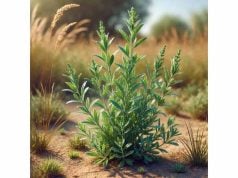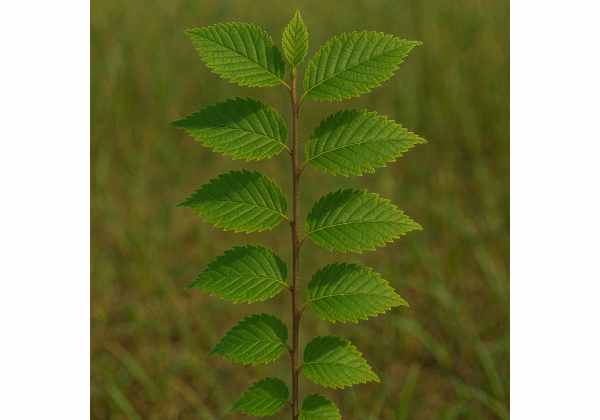
Red elm, more widely known as slippery elm, is one of the most respected soothing herbs in North American traditional medicine. The remedy comes from the tree’s inner bark, which becomes rich, thick, and gel-like when mixed with water. That slippery texture is more than a curiosity. It explains why red elm has long been used for irritated throats, dry coughs, heartburn, indigestion, and other complaints involving sensitive mucous membranes. The bark is valued chiefly for its mucilage, a group of polysaccharides that coat and calm tissue, though tannins and other minor compounds likely add gentle astringent and protective effects.
What makes red elm appealing today is its practicality. It is not an exotic herb with dramatic claims. Instead, it is a classic demulcent: a plant that soothes, softens, and protects. At the same time, it deserves a realistic reading. Traditional use is strong, but modern clinical research is still limited, and many claimed benefits rest more on long experience than on large human trials.
Core Points
- Red elm is best known for coating and soothing irritated tissues in the throat, esophagus, and stomach.
- The inner bark may also help calm mild bowel irritation because its mucilage forms a soft protective gel.
- Traditional use suggests 1 to 3 tsp powder in 240 mL water, up to 3 times daily.
- People who are pregnant, have serious swallowing problems, or take important oral medicines should use extra caution or avoid unsupervised use.
Table of Contents
- What red elm is and why it is better known as slippery elm
- Key ingredients and medicinal properties of red elm
- Potential health benefits and what the evidence says
- Traditional uses and the best supported modern applications
- How to prepare and use red elm
- Dosage timing and practical use tips
- Safety interactions and who should avoid red elm
What red elm is and why it is better known as slippery elm
Red elm is the medicinal tree Ulmus rubra, a North American elm whose inner bark has been used for generations as a soothing remedy. In everyday herbal language, most people know it as slippery elm rather than red elm. Both names refer to the same plant. The name “slippery” comes from the way the inner bark swells in water and forms a soft, slick gel. That simple physical property explains nearly all of the herb’s classic uses.
Unlike many herbs that are valued for a strong aroma, a bitter taste, or a highly concentrated extract, red elm works mainly through texture. Once hydrated, the bark produces mucilage, a group of water-loving plant polysaccharides that coat irritated tissue. This makes the herb especially relevant for the mouth, throat, esophagus, stomach, and intestines. In practical terms, red elm is often chosen when a person wants comfort, not stimulation. It is less about pushing the body to do something and more about creating a protective layer where tissue feels dry, raw, inflamed, or easily aggravated.
The medicinal part is the inner bark, not the leaves, fruit, or wood. Quality matters because the bark is where the mucilage is concentrated. When you see red elm powder, slippery elm bark powder, slippery elm lozenges, or slippery elm capsules, they are usually referring to the prepared inner bark. The herb is often used alone, but it also appears in blends for sore throat, reflux, bowel irritation, and convalescent digestive support.
Red elm is often compared with other soothing, mucilage-rich herbs. That comparison is helpful because it places the plant in the right category. If you already know the gentle coating effect of marshmallow root as another classic demulcent, you already understand the basic therapeutic style of red elm. Both herbs are chosen when tissue needs calming and protection more than strong stimulation.
A second reason red elm remains important is that it bridges traditional herbalism and practical modern use. Some older herbs have largely disappeared from daily life. Red elm has not. It still appears in lozenges, powders, teas, and GI-support formulas because the core use is easy to understand and directly relevant. A sore throat, irritated esophagus, dry cough, or unsettled stomach are all situations where a mucilage-rich herb makes intuitive sense.
At the same time, it is wise to separate traditional popularity from clinical certainty. Red elm has a long history of safe and helpful use, but much of its reputation comes from demulcent action and long experience rather than large modern trials. That does not make it unhelpful. It simply means its strongest case is still rooted in mechanism, observation, and practical use.
Key ingredients and medicinal properties of red elm
Red elm’s medicinal identity begins with its mucilage. This is the plant’s most important and best-known constituent group. Mucilage is made of large, water-binding polysaccharides that swell and become gel-like when mixed with liquid. In red elm, these high-molecular-weight sugars are the reason the bark feels thick, slippery, and soothing. They are also the reason the herb is classed as a demulcent, meaning it coats and protects irritated mucous membranes.
The most relevant constituents in red elm include:
- Mucilage polysaccharides, including complex sugars and uronic-acid-containing compounds
- Tannins, which may contribute mild astringent and tissue-toning effects
- Resin-like and other minor bark compounds, which may add to the herb’s overall activity
- Small amounts of minerals and plant sterols, which matter less than the mucilage but are part of the bark’s broader composition
In practical herbal medicine, the mucilage is the star. When mixed with water, it creates a soft, protective layer that can temporarily calm throat irritation, ease the sensation of dryness, and reduce friction on inflamed surfaces in the digestive tract. This is why red elm is frequently described as soothing rather than strongly medicinal in the pharmaceutical sense. Its benefits come less from chemical stimulation and more from surface protection.
That said, the herb is not chemically empty beyond mucilage. Tannins and related compounds likely help explain why red elm has also been described as mildly astringent, protective, and useful in surface applications. In traditional use, that combination of mucilage plus a mild tightening effect made sense for irritated skin, sore tissues, and overstimulated digestion.
Researchers also remain interested in red elm because the bark may have additional biological effects beyond simple coating. Laboratory and review literature suggest antioxidant potential and possible microbiota-related activity. This should be interpreted carefully. These findings are promising but still secondary to the herb’s best-established role as a demulcent. In other words, red elm may do more than coat tissue, but the coating effect remains the clearest reason to use it.
Its medicinal properties are best summarized as:
- demulcent
- emollient
- mildly astringent
- soothing to irritated mucosa
- supportive rather than forceful
That profile helps explain where red elm fits and where it does not. It is a good match for dryness, scratchiness, irritation, and surface discomfort. It is a poor match for people looking for a fast stimulant, strong antimicrobial, or highly targeted extract. When used well, it belongs in the same broad soothing category as herbs people reach for when the goal is protection and comfort.
This is also why red elm is often chosen in blends rather than as a stand-alone “active.” A formula may include it to soften the overall effect, protect mucosa, or make an irritated throat or gut lining feel less reactive. In that role, the herb’s humble, quiet medicinal properties become a genuine strength.
Potential health benefits and what the evidence says
Red elm’s benefits are easiest to understand when grouped by the tissues it most often touches: the throat, upper digestive tract, lower bowel, and skin. In each of those areas, its central action is similar. The hydrated bark forms a mucilage-rich gel that can reduce friction, soften irritation, and create a temporary protective barrier.
The most credible potential benefits include the following.
Throat and mouth soothing
This is one of red elm’s most familiar uses. Lozenges and powders containing slippery elm are widely used for scratchy throat, dry cough, hoarseness, and voice strain. The mechanism is straightforward. The mucilage coats irritated tissue and may reduce the sense of dryness or rawness. That does not mean it cures infection, but it can make inflamed tissue feel calmer and less exposed. For people who primarily want respiratory soothing, mullein for gentle throat and cough support is often considered alongside red elm, but red elm is usually thicker and more coating.
Upper GI support
Red elm has long been used for heartburn, reflux discomfort, indigestion, and a “hot” or irritated stomach. Its appeal here is again mechanical rather than strongly chemical. The gel can sit over irritated mucosa and may make the esophagus and stomach feel less raw. Modern reviews continue to discuss red elm in relation to upper GI symptoms, but they also make an important point: most human evidence involves combination products, not red elm alone. That means the mechanism makes sense, the traditional use is strong, and the stand-alone clinical proof is still limited.
Bowel comfort
Some people use red elm for mild diarrhea, bowel irritation, or mixed bowel patterns because the hydrated fiber-like mucilage can soothe the lining and normalize stool texture. Emerging laboratory work also suggests potential microbiota-related effects, though this is still a developing area rather than a settled clinical claim.
Topical soothing
Traditional use also includes poultices or moist applications for irritated skin, boils, and minor inflamed surfaces. This is plausible because demulcent herbs often feel softening and protective when used externally.
The evidence, however, needs honest framing. Red elm is one of those herbs where traditional logic is stronger than stand-alone clinical proof. Human research exists, but much of it is indirect. Some studies involve multi-herb gut formulas. Some data are preclinical or in vitro. Reviews generally support its historical role as a soothing agent, especially for upper GI irritation, but they do not show robust evidence for treating disease on its own.
That does not make the herb ineffective. It makes it a classic low-risk, symptom-soothing botanical rather than a heavily trialed therapy. If used with that expectation, red elm makes sense. If used as a cure-all, it does not.
Traditional uses and the best supported modern applications
Red elm has a long history in Indigenous and later North American herbal practice. The inner bark was used not only as medicine, but also as a survival food, a poultice material, and a general soothing agent during illness and recovery. This broader context matters because it shows the herb was valued as a practical healer: safe enough for repeated use, nourishing enough for weakness, and soft enough for inflamed tissues.
Traditional uses commonly included:
- sore throat and cough
- stomach upset and heartburn
- diarrhea and bowel irritation
- urinary irritation
- external poultices for boils, ulcers, and inflamed skin
- convalescent nourishment when digestion was weak
That list may look broad, but it is actually quite coherent. Every use involves one of two patterns: either the tissue is irritated and needs protection, or the person is depleted and needs something bland, soft, and easy to tolerate. Red elm fits both of those situations well.
In modern practice, the best-supported applications are narrower and more realistic. The strongest uses today are:
- Throat comfort
Lozenges, teas, and warm powders are commonly used for scratchiness, hoarseness, dry cough, and voice strain. - Upper digestive soothing
Red elm can be useful when a person feels burning, irritation, or rawness in the esophagus or stomach, especially when the goal is comfort rather than strong acid suppression. - Gentle bowel support
When taken with enough liquid, the mucilage can soften irritation and help normalize stool consistency in some people. - External soothing
Traditional poultice-style use still makes sense for mild, superficial irritation when cleanliness and common sense are maintained.
What red elm is not best suited for is just as important:
- it is not a strong antimicrobial herb
- it is not a substitute for reflux medication when symptoms are severe
- it is not a fast laxative
- it is not a cure for ulcers, inflammatory bowel disease, or chronic cough
It also works best when matched to the right expectation. Someone looking for a sharp, warming digestive stimulant may be happier with bitters or spices. Someone looking for a thick, bland, comforting herb usually finds red elm more satisfying. That distinction prevents disappointment.
In practice, red elm often overlaps with other soothing botanicals. A blend might pair it with honey, licorice, or marshmallow for throat comfort, or with gentler digestive herbs in gut formulas. Still, even when used alone, the herb’s classic role remains clear: it creates a calmer surface. That may sound modest, but for irritated mucosa, modest is often exactly what is needed.
The most defensible modern applications are therefore the least flashy ones. Red elm is most useful when it is used for what it has always done best: coating, easing, and supporting irritated tissue without trying to do too much.
How to prepare and use red elm
Red elm is flexible, but the way you prepare it changes the experience. Because the key constituent is mucilage, the goal is usually to hydrate the powder or bark thoroughly enough to create the protective gel. In practical terms, that means red elm is often easier to use as a powder or fine granule than as a coarse tea herb.
Powder mixed with water
This is the most classic and often the most effective form. The powder is stirred into warm or room-temperature water and allowed to thicken. Some people drink it as a thin tea, while others prefer a thicker gruel-like preparation. This approach is especially useful for upper GI discomfort because it lets the mucilage coat the throat and digestive tract directly.
A practical method is:
- place the powder in a cup or small bowl
- add water gradually while stirring
- let it sit briefly so it thickens
- drink slowly rather than all at once
The texture can surprise first-time users. It becomes slippery, soft, and somewhat bland. That texture is the point.
Lozenges
Lozenges are convenient for throat irritation, voice strain, or travel. They work best when allowed to dissolve slowly so the mucilage stays in contact with the mouth and throat. This is often the easiest form for people who want the herb mainly for scratchiness or hoarseness.
Tea or infusion
A tea made from powdered or granulated bark can be useful, but “tea” is slightly misleading because red elm is less about steeping aromatic compounds and more about suspending mucilage in water. The drink is often cloudy and slightly thick. That is normal.
External paste or poultice
Traditionally, red elm could be mixed with water into a paste and applied to irritated skin or superficial inflamed areas. This is a more old-fashioned use, but it remains understandable from a demulcent standpoint.
Red elm also combines well with other soothing herbs. In throat blends, people sometimes pair it with honey or licorice in traditional soothing formulas. In gut-oriented blends, it may be used alongside other demulcents or mucosal-supportive ingredients. Still, it is worth trying it by itself first so you can tell what it does for you.
A few practical preparation tips help a lot:
- stir slowly to prevent clumping
- use enough water, because the bark thickens quickly
- drink it soon after mixing, before it becomes too dense
- choose powders or lozenges from reputable sources
- do not treat thickness as a sign of overdose; it is simply how the herb behaves
The best form depends on the goal. For throat comfort, lozenges or slowly sipped liquid often work best. For digestive soothing, a hydrated powder or gruel is usually the more direct choice.
Dosage timing and practical use tips
Red elm is one of those herbs where traditional dosage guidance exists, but modern clinical dosing studies are still limited. That means dosage should be framed as traditional use guidance, not as a medically established therapeutic standard. The most commonly cited traditional range is:
- 1 to 3 teaspoons of slippery elm powder in 240 mL water
- up to 3 times daily
That range is broad enough to allow adjustment by purpose and tolerance. Someone using red elm for mild throat irritation may do well with the lower end. Someone using it for more persistent upper GI soothing may prefer a thicker or slightly larger preparation, provided it is well tolerated.
Timing matters because red elm is a coating herb.
Helpful timing options
- Between meals for throat or upper GI comfort
- Before bed when dryness, cough, or reflux-like irritation tends to worsen at night
- As needed during symptom flares rather than as a mandatory daily long-term habit
- Away from oral medications because the mucilage may slow or reduce absorption
That last point is especially important. A practical rule is to separate red elm from oral medicines by at least 1 to 2 hours, and sometimes longer when the medication is critical. This is one of the most common mistakes people make. Because red elm feels gentle, they assume timing does not matter. In reality, gentle coating is exactly why timing matters.
A few other practical tips make dosing easier:
- start with the lower end if you are new to the herb
- drink enough water with powders and capsules
- for lozenges, follow the product label rather than improvising
- use a looser drink for throat comfort and a thicker one for digestive coating
- do not expect an instant “drug-like” effect; think in terms of soothing over minutes to hours
Another common mistake is using red elm when a more clearly fiber-focused approach would be better. If the main goal is stool bulk or constipation management rather than mucosal soothing, psyllium for a more explicitly fiber-driven digestive strategy may be the better fit. Red elm can help bowel comfort, but it is not simply a substitute for structured fiber therapy.
Long-term daily use is another area where judgment matters. Many people use red elm only during symptom flares, such as a sore throat, reflux irritation, or a few days of bowel sensitivity. That pattern often makes more sense than indefinite daily use, especially when the real problem has not been evaluated. If symptoms keep returning, the herb may be comforting, but the cause still needs attention.
In short, red elm dose is less about pushing the upper limit and more about finding the smallest amount that creates a soothing gel and meaningful relief.
Safety interactions and who should avoid red elm
Red elm is generally considered one of the gentler herbal products, especially compared with strongly stimulant, laxative, or alkaloid-rich herbs. Available safety reviews have not linked it to liver injury, and serious toxicity from ordinary oral use appears uncommon. Still, “gentle” does not mean “careless.” The same mucilage that makes red elm useful is also the main reason it needs thoughtful timing and appropriate use.
The most important safety issue is interaction through reduced absorption. Because the hydrated bark forms a coating layer, it may delay or decrease the absorption of oral medications and supplements taken at the same time. This is why it is best separated from prescription drugs, thyroid medication, iron, and other important oral products. A gap of at least 1 to 2 hours is a reasonable starting rule.
Other safety points include:
- Possible allergy or sensitivity
Rare skin reactions and pollen-related sensitivity have been described. If you know you react strongly to elm pollen or tree products, use caution. - Pregnancy and breastfeeding
Modern oral safety data are limited. Traditional warnings also exist because slippery elm has historically been associated with practices aimed at affecting pregnancy. That does not prove ordinary oral bark powder is dangerous, but it does justify caution and professional advice rather than self-prescribing. - Swallowing and fluid intake
Powders become very thick. People with swallowing difficulty or a history of esophageal narrowing should be careful and use ample liquid. - Persistent symptoms
Red elm may soothe irritation, but it does not replace evaluation when symptoms are severe, recurrent, or unexplained.
People who should be especially cautious include:
- those taking important daily oral medicines
- pregnant or breastfeeding people
- people with swallowing disorders
- those with persistent reflux, black stools, vomiting blood, or unexplained weight loss
- anyone with recurrent severe abdominal pain
It is also helpful to know when not to reach for red elm first. If the problem is mild and occasional, a simpler remedy such as chamomile for gentle everyday soothing may be enough. Red elm becomes more useful when irritation feels raw, dry, or mechanically aggravated rather than simply tense or crampy.
A final practical point is product quality. Since the medicinal part is the inner bark, reputable sourcing matters. Powders, capsules, and lozenges should clearly list Ulmus rubra or slippery elm bark. Quality also affects texture. A good product thickens noticeably in water. If it does not, it may be low quality, stale, or overly diluted.
Overall, red elm has a favorable safety profile for a traditional herb, but the right attitude is still measured use. It is best seen as a tissue-soothing aid, not as a cure-all and not as something to layer thoughtlessly on top of every medication or chronic symptom.
References
- Natural Products in the Management of Gastroesophageal Reflux Disease: Mechanisms, Efficacy, and Future Directions – PMC 2025 (Review)
- Slippery Elm – LiverTox – NCBI Bookshelf 2024 (Government/NCBI Reference)
- Effectiveness of Nutritional Ingredients on Upper Gastrointestinal Conditions and Symptoms: A Narrative Review – PubMed 2022 (Review)
- Herbal formula improves upper and lower gastrointestinal symptoms and gut health in Australian adults with digestive disorders – PubMed 2020 (Controlled Clinical Trial)
- Slippery Elm Uses, Benefits & Dosage 2025 (Professional Monograph)
Disclaimer
This article is for educational purposes only and does not provide medical advice, diagnosis, or treatment. Red elm, also called slippery elm, may help soothe irritated tissues, but it is not a substitute for professional care when symptoms are severe, persistent, or unexplained. Seek medical advice for ongoing reflux, trouble swallowing, severe abdominal pain, blood in vomit or stool, or chronic throat symptoms. Use extra caution if you are pregnant, breastfeeding, take prescription medicines, or have conditions that affect swallowing or digestion.
If you found this article useful, please share it on Facebook, X, or your preferred platform to help others find careful, practical herbal information.