Red feather clover, better known in most herbal texts as red clover, is a flowering legume long used in teas, tinctures, and standardized extracts for women’s health and general herbal support. Its botanical name, Trifolium pratense, points to one of the most familiar meadow plants in Europe and beyond, yet its medicinal reputation goes well beyond its appearance. Today, red clover is best known for its naturally occurring isoflavones, especially biochanin A and formononetin, compounds that have mild estrogen-like activity and have been studied most often for menopausal hot flashes, bone health, and lipid balance.
That said, red clover deserves a balanced reading. It is not a miracle herb, and the research is more mixed than many supplement labels suggest. Some trials show meaningful help for vasomotor symptoms, while others find smaller or uncertain effects. Its strongest value is as a targeted herbal option for selected adults, especially around menopause, used thoughtfully and with attention to safety. That is particularly important for people with hormone-sensitive conditions, bleeding risks, or questions about long-term use.
Quick Overview
- Red clover may modestly reduce menopausal hot flashes and night sweats in some women.
- Its isoflavones may offer mild support for bone and lipid markers during menopause.
- A typical supplemental range is 40 to 100 mg total aglycone isoflavone equivalents per day.
- People with breast cancer history, hormone-sensitive conditions, pregnancy, breastfeeding, or anticoagulant concerns should avoid unsupervised use.
Table of Contents
- What Red Feather Clover Is and Why It Is Used
- Key Ingredients and How They Work
- Red Feather Clover Health Benefits and Where the Evidence Is Strongest
- Medicinal Properties and Traditional Uses
- How It Is Used in Teas, Extracts, and Supplements
- Dosage, Timing, and How Long to Use It
- Safety, Side Effects, and Who Should Avoid It
What Red Feather Clover Is and Why It Is Used
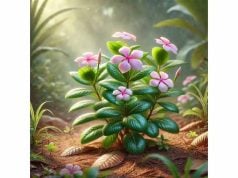
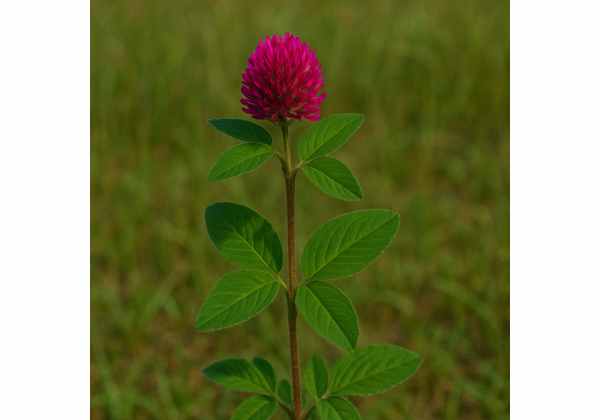
Red feather clover is the same plant more commonly called red clover, a perennial herb in the legume family with pink-red flower heads and distinctive three-part leaves. In agricultural life it has long been valued as forage and a soil-building crop, but in herbal practice the flowering tops became the most important part. These blossoms and upper leafy portions are the materials most often dried for tea or processed into extracts.
Its popularity in modern herbal medicine rests on two overlapping stories. The first is traditional. Red clover has been used for generations as a gentle “alterative” herb, a term older herbalists used for plants believed to support gradual systemic balance, especially in the skin, lymphatic system, and blood. In practice, that often meant using it for chronic skin irritation, general constitutional support, or slow recovery states rather than for acute disease. The second story is modern and more specific: researchers identified a meaningful concentration of isoflavones in red clover, and these phytoestrogen-like compounds made the plant a subject of interest for menopause-related symptoms and later for bone and cardiovascular markers.
That does not mean every use is equally well supported. In fact, red clover’s strongest evidence is far narrower than its traditional reputation. The most studied application is relief of hot flashes and related menopausal symptoms. There is also some interest in bone density, lipid balance, vascular function, and even skin aging during estrogen decline, but these areas remain secondary and less settled. Red clover is therefore most useful when readers understand what it is and what it is not.
It is:
- a classic flowering herbal medicine with a long traditional record
- a meaningful source of isoflavones with mild estrogen-like activity
- a reasonable option for selected menopausal symptoms
- better suited to supportive use than to disease treatment
It is not:
- a substitute for hormone therapy when medical treatment is needed
- a proven treatment for cancer, infertility, or major endocrine disease
- automatically safe for everyone because it is “natural”
- a herb that should be used carelessly in people with bleeding or hormone-sensitive concerns
Another point worth noting is terminology. “Red feather clover” is not the dominant name in research literature, which nearly always uses “red clover” or Trifolium pratense. Readers comparing products or studies should expect that wording. The part used also matters. Most clinically relevant supplements standardize the isoflavone content from flowers, herb tops, or leaves rather than relying on raw bulk herb alone.
For readers who enjoy comparing traditional legumes used in food and herbal practice, alfalfa as a nutritive herbal legume offers an interesting botanical contrast.
Key Ingredients and How They Work
Red clover’s reputation depends mostly on its phytochemistry, especially its isoflavones. These compounds are the reason the plant is discussed so often in connection with menopause and women’s health. While red clover contains a broad range of plant constituents, four compounds tend to lead the conversation: biochanin A, formononetin, genistein, and daidzein. The first two are especially characteristic because they can be converted in the body or in metabolism-related processes into the latter pair, which are better-known phytoestrogens.
Isoflavones matter because they can bind, at least weakly, to estrogen receptors. Their activity is not identical to human estrogen and should not be described that way, but they do have enough receptor affinity to create biologically relevant effects in some contexts. This is why red clover is often grouped with soy and flax in discussions of plant estrogens. The difference is that red clover is typically used as an herbal extract rather than as a staple food. That makes dose and standardization more important.
The main active categories are:
- isoflavones, especially biochanin A and formononetin
- flavonoids and related phenolic compounds
- minor volatile and antioxidant constituents
- minerals and plant nutrients in the whole herb, though these are less important in concentrated supplements
From a practical standpoint, three mechanisms are most relevant.
First, red clover’s isoflavones may modestly influence vasomotor symptoms such as hot flashes and night sweats by providing weak estrogen-like signaling during periods of lower endogenous estrogen. This is not the same as hormone replacement therapy, but it may explain why some women feel better on standardized extracts.
Second, these compounds may affect lipid metabolism and vascular function. Some trials and reviews suggest modest improvements in cholesterol patterns or arterial measures, though the evidence is still mixed and not strong enough to justify using red clover primarily as a cardiovascular herb.
Third, red clover isoflavones have been studied for bone-supportive potential. Estrogen decline is linked with bone loss, so any plant compound that partly interacts with estrogen pathways naturally attracts attention in postmenopausal bone research. Here again, the evidence is suggestive rather than definitive.
Two cautions belong in this section. The first is that whole herb and standardized extracts are not interchangeable. A tea made from red clover flowers does not automatically deliver the same amount, profile, or bioavailability as a concentrated capsule labeled by isoflavone content. The second is that “mild estrogenic activity” is not a trivial detail. It is the core reason red clover may help some people, and the core reason others need caution.
If you are interested in the broader category of plant compounds that influence hormonal balance, flax and its phytoestrogen profile offer a useful comparison because they work through a different but related phytochemical route.
Red Feather Clover Health Benefits and Where the Evidence Is Strongest
The strongest health claims for red feather clover revolve around menopause, and even there the evidence needs careful wording. The most consistent modern use is for hot flashes and night sweats in peri- and postmenopausal women. Systematic reviews and randomized trials suggest that standardized red clover isoflavone extracts may reduce the frequency or severity of vasomotor symptoms in some users, but the effect is not universal, and not every trial shows a clear advantage over placebo.
That pattern is important. Red clover is not imaginary or useless, yet it is also not one of those herbs where every study points the same way. This helps explain why real-world opinions vary so much. Some women report clear benefit after several weeks, while others notice little difference. Product quality, isoflavone dose, duration, symptom severity, and individual metabolism likely all matter.
The best-supported potential benefits include:
- Mild to moderate relief of hot flashes and night sweats
Standardized extracts appear most relevant here. The benefit may be more noticeable in women with more frequent vasomotor symptoms and when the product delivers an appropriate isoflavone amount. - Possible support for bone maintenance
Some studies suggest red clover may help attenuate postmenopausal bone loss, especially when combined with adequate calcium and vitamin D. This is promising but not strong enough to replace standard bone-health strategies. - Possible improvement in lipid markers
There are mixed but encouraging findings for total cholesterol, LDL cholesterol, triglycerides, and HDL cholesterol in selected postmenopausal groups. This is best seen as a possible secondary effect, not a primary reason to self-treat dyslipidemia. - Potential vascular and tissue support
Because estrogen decline affects vascular tone, skin, and connective tissue comfort, red clover has been explored in related quality-of-life areas. These data are interesting but remain less robust than the hot-flash literature.
Where the evidence is weaker:
- general detoxification claims
- cancer prevention claims
- broad anti-aging promises
- reliable mood or sleep improvement in the absence of vasomotor relief
- treatment of severe endocrine imbalance
That last category matters because online writing often turns red clover into an all-purpose women’s herb. A better summary is that it may be useful for a specific cluster of menopause-related symptoms and some associated markers, especially when chosen carefully and used consistently for several weeks to months.
It is also worth separating direct benefit from indirect benefit. A reduction in hot flashes may improve sleep, concentration, irritability, and overall quality of life, even if the herb is not directly acting on all those areas. This is one reason some studies report broader symptom improvement than one might expect from a single mechanism.
For readers exploring nonhormonal or plant-based support around reproductive transitions, chaste tree and hormonal support make an interesting contrast because the therapeutic target and physiology are quite different from red clover’s menopausal niche.
Medicinal Properties and Traditional Uses
Long before red clover became a supplement standardized for isoflavones, it was a classic folk herb. Traditional herbalists often described it as cooling, moistening, mildly cleansing, and supportive of gradual constitutional change rather than quick symptom suppression. In older European and North American practice, it was used for skin eruptions, chronic inflammatory states, cough formulas, and spring or convalescent blends. These uses reflected a very different way of thinking about herbs: not as isolated molecular tools, but as plants that gently shifted the body over time.
One of the most persistent traditional ideas around red clover is that it is an “alterative.” In modern language, that label is imprecise, but it usually pointed to herbs used when symptoms were chronic, vague, and systemic rather than acute and localized. Red clover was often combined with burdock, cleavers, nettle, or yellow dock in formulas aimed at skin clarity, lymphatic sluggishness, or recovery after illness. These older patterns are part of its identity, even if they are not the uses that modern clinical trials emphasize.
Common historical applications included:
- flowering-top teas for chronic skin irritation
- blended blood and lymph formulas
- mild expectorant or respiratory support in traditional use
- women’s formulas, especially where hormonal transition was suspected
- general nutritive or restorative spring tonics
The challenge is deciding how much of this tradition to carry forward today. Some parts still make sense. Red clover is gentle enough to belong in supportive tea blends, especially when the goal is a calm, long-range herbal approach. It also remains popular in folk herbalism for skin and constitutional formulas, though these uses are supported more by tradition than by modern trials.
Other traditional claims need more restraint. Historical references to red clover in cancer formulas, for example, should not be read as proof of anticancer action. That older reputation likely reflects the herb’s long use in chronic illness rather than validated oncology evidence. The same applies to broad blood-purifying language. It has cultural and historical meaning, but it does not translate neatly into current medical categories.
A practical way to interpret its medicinal properties today is to combine old and new frames:
- traditional use suggests it is gentle, systemic, and suited to longer courses
- modern evidence points most clearly toward menopause-related use
- topical or tea-based constitutional use remains part of folk practice
- bold disease-treatment claims are not warranted
In this way, red clover sits between two worlds. It is more than a folk memory, because it has credible modern phytochemistry and some human data. But it is also more than a standardized menopause capsule, because its deeper herbal history explains why it continues to be included in broader formulas.
For readers interested in other classic “slow and steady” herbs used in skin and constitutional support, burdock as a traditional cleansing herb offers a useful point of comparison.
How It Is Used in Teas, Extracts, and Supplements
Red feather clover can be used in several forms, but the form matters a great deal because not all preparations deliver the same amount of active compounds. The traditional herbal form is the dried flowering top, often brewed as an infusion. This remains useful for people who prefer a gentler, broader herbal approach. Tea is also the easiest way to use red clover in multi-herb blends, especially for general support. However, tea is not the same as a standardized isoflavone product, and this distinction becomes crucial when someone is using red clover specifically for menopausal symptoms.
The main forms include:
- dried flowering tops for tea
- tinctures or fluid extracts
- capsules or tablets made from standardized extracts
- liquid formulas that specify isoflavone content
Tea is usually chosen for traditional herbal goals rather than for research-style dosing. It works well in formulas aimed at long-term nourishment or constitutional support. Many herbalists still pair it with calming and mineral-rich herbs in women’s formulas. But if a person is trying to reproduce the dosage used in clinical studies on hot flashes, tea may be too variable.
Standardized extracts are more relevant for evidence-based use. These products often express the dose as total aglycone isoflavone equivalents, which is a more meaningful measure than raw herb weight. That is why two products can both say “red clover” yet differ greatly in likely effect. One may be a simple powdered herb capsule, while the other is a concentrated isoflavone extract designed for menopausal use.
A smart way to choose form depends on the goal:
- For traditional support and gentle daily use, tea or simple tincture may be enough.
- For menopause-related symptom trials, standardized extracts are more rational.
- For blended formulas, lower-dose multi-herb preparations may suit people seeking a softer approach.
- For self-experimentation on hot flashes, a clearly labeled standardized product is usually better than guessing with loose herb.
Consistency also matters. Red clover is not typically a one-dose herb. When it works, it usually works over time. People often judge it too quickly, especially if they expect an immediate change. Several weeks of steady use is more realistic than a few days.
One final point is often missed: because the active compounds have mild estrogen-like effects, red clover should not be chosen casually just because it seems gentle. “Gentle” and “biologically inactive” are not the same thing. It is precisely because it has a real hormonal profile that choice of form, dose, and product quality deserves care.
For those who enjoy milder infusion-based herbs but want a nonhormonal contrast, chamomile and its gentler tea-based actions provide a useful alternative reference.
Dosage, Timing, and How Long to Use It
Red clover dosage should be guided by the preparation, not by the plant name alone. For standardized isoflavone extracts, one of the clearest official reference ranges is 40 to 100 mg total aglycone isoflavone equivalents per day for menopausal and postmenopausal women. That range fits much of the clinical and regulatory discussion and is the most practical range to mention in a consumer-facing article.
Within research and product literature, common real-world patterns include:
- 40 mg total isoflavones once or twice daily in some trials
- about 40 to 100 mg total aglycone isoflavone equivalents per day in regulatory guidance
- use for several weeks before judging hot-flash response
- use for at least 6 months when the intended goal is bone support rather than symptom relief
For menopausal symptoms, the best expectation is gradual improvement. Some users notice changes within a few weeks, but many need longer. A useful decision framework looks like this:
- Start with a clearly labeled standardized product.
- Stay within a moderate evidence-based range.
- Use it consistently rather than intermittently.
- Reassess after several weeks for hot flashes and after longer periods for broader outcomes.
Timing is flexible. Red clover can usually be taken with or without food, though taking it with meals may improve comfort for people with sensitive digestion. Split dosing may make sense when the daily amount is higher or when a product label recommends twice-daily use.
Duration deserves more attention than most short supplement guides provide. Short-term use appears reasonably well tolerated in studies, and some clinical use has extended up to two years with apparent tolerability. Still, longer use should not be automatic. Regulatory guidance also advises consulting a clinician for use beyond one year. That is a sensible boundary, especially for anyone with hormone-sensitive concerns or a complex medical history.
Tea dosing is less standardized and should be treated as traditional rather than research-based. A tea may still have value, but it should not be assumed to match a clinically studied isoflavone capsule. This is why the phrase “dosage depends on preparation” is not a disclaimer. It is one of the most important practical truths about the herb.
A few common mistakes are worth avoiding:
- using a nonstandardized product and expecting trial-like results
- doubling the dose quickly when relief is not immediate
- combining multiple phytoestrogen supplements without a plan
- using red clover indefinitely without reassessing the reason for use
Used well, red clover is not a heroic-dose herb. It tends to work best when the dose is measured, the product is clear, and the reason for use is specific.
Safety, Side Effects, and Who Should Avoid It
Red feather clover has a relatively favorable short-term safety profile in many studies, but that should not be confused with universal safety. The same estrogen-like activity that makes it interesting for menopause is also the main reason caution is essential. The herb sits in a middle ground: often well tolerated, clearly active, and inappropriate for some groups without medical guidance.
The most important safety concerns fall into four areas.
First, hormone-sensitive conditions. Because red clover contains isoflavones with mild estrogenic activity, people with a history of breast cancer, suspected estrogen-sensitive disease, endometriosis, fibroids, or other gynecologic concerns should not self-prescribe it casually. Some regulatory guidance goes further and advises avoiding it entirely in people with current or previous breast cancer, predisposition to breast cancer, or relevant abnormal mammogram or biopsy findings.
Second, pregnancy and breastfeeding. Red clover supplements are generally not considered appropriate during pregnancy or lactation. The issue is not that ordinary dietary exposure is known to be acutely dangerous, but that concentrated supplemental use is not established as safe.
Third, bleeding and anticoagulant concerns. Although red clover is not simply “natural warfarin,” case reports and precautionary sources support real caution. People taking anticoagulants, those with bleeding disorders, or those preparing for surgery should be especially careful. Even if a severe interaction is uncommon, this is not an area for guesswork.
Fourth, monitoring of hormone-related symptoms. Any breast pain, tenderness, abnormal uterine bleeding, spotting, or return of menstruation after menopause deserves clinical attention rather than continued self-treatment.
Possible side effects may include:
- digestive upset
- headache
- mild rash or hypersensitivity
- breast tenderness
- spotting or abnormal bleeding in susceptible users
A sensible “who should avoid it” list includes:
- pregnant or breastfeeding people
- anyone with current or past breast cancer without specialist guidance
- those with strong hormone-sensitive conditions
- people on anticoagulants or with bleeding risk
- anyone already using hormone replacement therapy unless their clinician approves
- users who cannot obtain a clearly labeled standardized product
It is also wise to stay current with routine clinical screening if using red clover for menopause support. The herb does not replace mammograms, gynecologic evaluation, bone-density planning, or lipid management.
The most responsible way to summarize safety is this: red clover is often well tolerated in the right person, at the right dose, for the right reason. It is not a casual wellness herb for every adult, and it is not the best choice when medical history raises questions about hormones or bleeding. When that is understood, its risk profile becomes much easier to manage.
For readers comparing menopause herbs with different safety tradeoffs, black cohosh and its distinct risk-benefit profile are worth reviewing separately.
References
- Red Clover: Usefulness and Safety 2024
- Evaluation of Clinical Meaningfulness of Red Clover (Trifolium pratense L.) Extract to Relieve Hot Flushes and Menopausal Symptoms in Peri- and Post-Menopausal Women: A Systematic Review and Meta-Analysis of Randomized Controlled Trials 2021 (Systematic Review)
- Phytochemical Composition of Different Red Clover Genotypes Based on Plant Part and Genetic Traits 2024
- RED CLOVER ISOFLAVONE EXTRACT 2018 (Monograph)
- Coagulation Disorder following Red Clover (Trifolium Pratense) Misuse: a Case Report 2018 (Case Report)
Disclaimer
This article is for educational purposes only and is not a substitute for personal medical advice, diagnosis, or treatment. Red clover may interact with hormones, bleeding risk, and some medicines, and it is not appropriate for everyone. If you are pregnant, breastfeeding, have a history of breast or gynecologic disease, take hormone therapy or blood thinners, or are considering longer-term use, speak with a qualified healthcare professional before using red clover supplements.
If you found this article helpful, please consider sharing it on Facebook, X, or another platform you prefer.