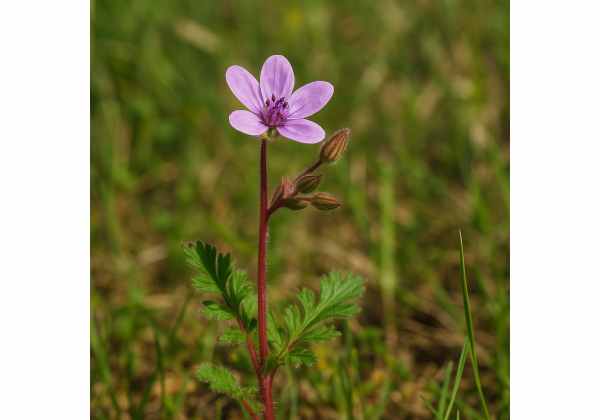
Red stem filaree, botanically known as Erodium cicutarium, is a small, finely divided herb that many people recognize as a common roadside or meadow plant before they ever think of it as medicine. Also called common stork’s-bill, it has a long folk history as a mild astringent herb used for digestive upset, urinary irritation, minor skin concerns, and simple topical applications. It has also been eaten as a spring wild green in some regions, which already tells you something important about its character: this is a food-and-folk herb first, not a heavily standardized modern remedy.
What makes red stem filaree interesting is its dense polyphenol profile. Research has identified tannins, flavonoids, gallic-acid derivatives, catechin-related compounds, and terpenoid diversity that help explain its antioxidant and antimicrobial potential. Still, the evidence needs careful framing. Most of the strongest findings come from phytochemical analysis, laboratory work, and ethnobotanical records rather than from human clinical trials.
This guide explains what red stem filaree contains, which traditional uses remain plausible, how it is best prepared, what dosage ranges make practical sense, and where caution matters most.
Top Highlights
- Red stem filaree may offer mild astringent support for loose stools, minor mouth irritation, and gentle topical use.
- Its tannins, flavonoids, and gallic-acid derivatives may contribute antioxidant and antimicrobial activity.
- A practical tea range is about 1 to 3 g dried aerial parts per cup, usually up to 2 times daily.
- People who are pregnant, chronically constipated, managing kidney disease, or considering concentrated extracts should be cautious.
Table of Contents
- What red stem filaree is and where it fits
- Key ingredients and active compounds in red stem filaree
- Health benefits and medicinal properties of red stem filaree
- Traditional, food, and topical uses
- Dosage, timing, and practical preparation
- Harvesting, identification, and common mistakes
- Safety, side effects, and who should avoid it
What red stem filaree is and where it fits
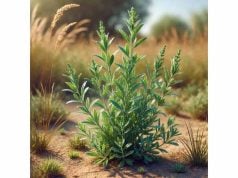
Red stem filaree is an annual or short-lived herb in the Geraniaceae family. It grows low to the ground, forms delicate rosettes, and has finely cut leaves that can resemble tiny carrot or fern-like leaflets. Its stems often show a reddish tint, which helps explain the common name. The seed heads are another clue: they form the distinctive beak-like structures that give the plant its other common name, stork’s-bill.
In herbal use, red stem filaree is best understood as a modest, astringent field herb rather than a dramatic therapeutic plant. Folk traditions in different regions have used the aerial parts for loose stools, mild urinary complaints, minor wounds, sore mouths, and general “cooling and drying” purposes. Some traditions also include it among edible spring greens, especially when the leaves are young and tender. That food history matters, because it places the plant closer to practical household herb use than to high-intensity botanical medicine.
This is also where a little perspective helps. Many lesser-known herbs accumulate a long list of claims simply because they belong to a genus with a colorful traditional past. Red stem filaree deserves a more careful reading. It has real ethnobotanical depth, and its chemistry is now much better described than it was a decade ago, but human clinical evidence is still thin. The strongest case for the plant is that it appears to be a chemically interesting, tannin-rich herb with plausible traditional uses, not that it has been proven in rigorous trials for major disease targets.
Its place in modern herbal thinking is therefore fairly specific. It fits best when someone wants:
- a mild astringent herb for occasional, non-serious issues
- a traditional whole-plant infusion rather than a high-tech extract
- a spring edible with a little medicinal overlap
- a topical wash or simple folk preparation for minor skin use
It is less convincing when people try to treat it like a primary remedy for infection, chronic bowel disease, kidney disease, or major inflammation. In that sense, red stem filaree behaves more like one of the smaller household weeds used alongside other spring edible weeds than like a flagship medicinal herb with standardized human dosing.
That does not reduce its value. In fact, it clarifies it. Plants like this are often at their best when used early, lightly, and appropriately. A balanced tea, a few young leaves, or a gentle wash can make sense. A strong extract taken because the plant seems obscure and therefore “powerful” is a much shakier idea.
Key ingredients and active compounds in red stem filaree
The medicinal interest in red stem filaree comes mainly from its phenolic richness. Modern phytochemical work on Erodium cicutarium has shown that the plant contains a broad range of polyphenols, including tannins, flavonol glycosides, catechin-related compounds, phenolic acids, and gallic-acid derivatives. These are exactly the kinds of compounds that often show up in plants with astringent taste, antioxidant potential, and antimicrobial interest.
One of the most useful features of current research is that it moves beyond vague phrases such as “rich in antioxidants” and gives a more detailed picture of what is actually present. Researchers have identified large numbers of phenolic constituents in the plant, including flavonol glycosides and galloyl-related compounds, with galloyl-shikimic acid drawing special attention in antimicrobial work. That matters because it helps explain why traditional uses centered on drying, tightening, and protecting tissues may have had a biochemical basis.
The most important compound groups include:
- tannins, which help explain the plant’s astringent feel
- catechin-related polyphenols, often associated with antioxidant activity
- gallic-acid derivatives and other phenolic acids
- flavonol glycosides, which contribute to the plant’s broader phenolic profile
- terpenoids, which vary by plant part and growing region
- nutritionally relevant minerals and fatty acids reported in edible-use studies
Tannins are especially central to how red stem filaree behaves. In practical herbal terms, a tannin-rich herb often feels drying, tightening, or binding. This is one reason such plants are traditionally used for loose stools, weepy minor skin conditions, and oral rinses. The same tannins that make an herb useful in those settings can also make it less comfortable if overused, especially in people who already lean toward constipation or dryness.
The plant also shows meaningful terpenoid diversity. A 2021 study highlighted considerable differences in terpenoid composition between plant parts such as leaves, blossoms, and fruits, and between different geographic populations. That does not automatically translate into a specific medicinal effect, but it does show that Erodium cicutarium is chemically dynamic rather than simple. In other words, two plants that look similar may not smell, taste, or function in exactly the same way.
A more recent food-focused study also found a noteworthy profile of fatty acids and minerals in Erodium cicutarium consumed as a vegetable. This is useful because it reinforces the idea that red stem filaree belongs partly to the edible-plant world, not just the pharmacology world. Still, its medicinal identity is driven much more by phenolics than by basic nutrients.
Taken together, the chemistry supports a cautious but interesting conclusion. Red stem filaree is not a one-compound herb with a single blockbuster mechanism. It is a multi-constituent plant in which tannins, phenolics, flavonoids, and related compounds likely work together. That makes its actions broader but also harder to standardize, which is one reason gentle traditional use makes more sense than heavy supplement-style dosing.
Health benefits and medicinal properties of red stem filaree
Red stem filaree’s most plausible benefits follow directly from its chemistry and its ethnobotanical record. The strongest case is not that it treats major disease, but that it may offer mild astringent, antioxidant, and antimicrobial support in traditional contexts. That distinction keeps the plant useful and honest at the same time.
A good starting point is digestive support. Herbs rich in tannins are often used for occasional loose stools, mild digestive irritation, and excessive secretions. This does not mean red stem filaree should be treated as a replacement for medical care in persistent diarrhea, fever, blood in the stool, or suspected infection. It means that in the older household-herb sense, it fits the profile of a plant used to “tighten and settle” when the gut feels overly loose.
Antioxidant activity is another reasonable benefit area. Studies on Erodium cicutarium extracts have repeatedly shown strong antioxidant potential tied to the plant’s polyphenol content. In practical language, this suggests the herb may help buffer oxidative stress in laboratory systems. It does not mean a cup of tea will act like a targeted therapy, but it supports the idea that the plant contains biologically active compounds worth respecting.
Antimicrobial activity is one of the most interesting modern research themes. In vitro work has shown meaningful activity against selected bacteria, including clinically relevant Staphylococcus aureus strains. This is promising, especially because some of the active fractions appear strongly linked with identified phenolic compounds. Still, this remains laboratory evidence. It should not be turned into the claim that red stem filaree can replace antibiotics or self-treat a serious infection.
More cautious, tradition-aligned benefit areas include:
- occasional support for loose stools
- mild astringent support for irritated mucous tissues
- gentle topical use where drying and protective action is desired
- modest antioxidant support from polyphenol-rich preparations
- limited folk use for urinary irritation, though not as a first-line herb today
That last point deserves care. Traditional descriptions sometimes place red stem filaree among herbs used for urinary complaints, but the evidence here is not nearly as clear as it is for its astringent and antimicrobial story. In modern practical use, it makes more sense to treat red stem filaree as a supportive folk herb in this area rather than as a focused urinary herb like corn silk.
Topical value is also plausible. Folk medicine has often paired tannin-rich herbs with washes, compresses, and poultices for minor skin concerns and small wounds. This may reflect the same drying and tightening tendency that makes the herb relevant to loose stools and mouth rinses. But again, the plant belongs in the category of minor supportive care, not emergency treatment.
The most useful overall conclusion is that red stem filaree appears best suited to mild digestive, topical, and general protective use. Its medicinal properties are real enough to merit respect, but they are not proven at the level of a modern clinical standard. That makes modest, traditional-style use its strongest form.
Traditional, food, and topical uses
One of the most interesting things about red stem filaree is that it crosses the line between weed, food, and herb with unusual ease. In some regions, young leaves, stems, and even tender fruits have been eaten raw or used as spring greens. In traditional medicine, the same plant has been prepared as infusions, decoctions, rinses, or poultices. This food-and-remedy overlap is a good clue to how the plant was historically understood: useful, familiar, and nearby.
As a food, red stem filaree works best when harvested young. The leaf texture becomes coarser with age, and the astringency becomes more pronounced. Tender leaves can be eaten raw in small amounts, blended into mixed greens, or added to rustic spring dishes. Its flavor is not as strongly bitter as some classic wild greens, but it does have a noticeable dry, slightly tart, slightly earthy edge. For that reason, it often works best as part of a mixture rather than as a stand-alone salad base.
Traditional preparation styles include:
- a light infusion of the aerial parts as a household tea
- stronger decoctions for short-term folk use
- cooled tea as a mouth rinse or external wash
- crushed fresh plant material in simple topical use
- mixed spring greens taken more as food than medicine
The topical angle is especially important. Red stem filaree has a long reputation as an herb for minor wounds, superficial skin irritation, and bleeding from small cuts. That kind of use fits a tannin-rich plant well. Still, modern readers should understand the difference between a gentle folk wash and wound care that needs proper cleaning or medical evaluation. The herb may be supportive, but it is not a substitute for appropriate care when infection risk is significant.
Internally, its traditional uses usually make most sense when they stay small and short-term. A mild tea for a day or two, a rinse, or a food use pattern fits the evidence far better than daily concentrated extracts for weeks. This is where red stem filaree differs from some better-studied herbs. It is not especially convincing as a long-term supplement.
There is also a helpful comparison to more familiar folk herbs. In the topical realm, it behaves more like a small astringent field herb used in the spirit of plantain than like a large, standardized medicinal product. In food use, it resembles other spring weeds that were valued because they were available, nourishing, and subtly corrective at the same time.
A practical modern approach might look like this:
- Use the young plant as a minor wild green if you are confident in identification.
- Prepare a simple infusion when you want a mild, traditional whole-herb form.
- Reserve topical use for minor situations only.
- Avoid turning folk use into exaggerated claims.
That last point is important. Red stem filaree has the kind of traditional record that invites overstatement. But the plant becomes more credible, and more useful, when it is treated as a restrained herbal ally rather than a hidden cure.
Dosage, timing, and practical preparation
Red stem filaree does not have a well-established clinical dosing framework in the way some modern herbal products do. There are no widely recognized monographs giving precise, evidence-based human doses for Erodium cicutarium aerial parts. Because of that, dosage has to be handled conservatively and practically, based on traditional infusion use, edible use, and the plant’s known astringent character.
For gentle internal use, the most reasonable form is a simple aerial-parts infusion. A cautious traditional range is about 1 to 3 g dried herb per cup of hot water, usually once or twice daily for short-term use. If using fresh plant material, a small loose handful is a sensible starting point, especially when the plant is young and tender. This is not a strongly standardized dose. It is a practical household-herb range, which should be understood very differently from a regulated medicinal product.
Useful real-world ranges include:
- dried aerial-parts infusion: 1 to 3 g per cup
- fresh herb tea: a small loose handful per cup
- mild mouth rinse or cooled wash: 1 stronger cup prepared and allowed to cool
- food use: a small handful of young leaves mixed into other greens
Timing depends on purpose. If the goal is digestive support for occasional looseness or irritation, tea is most logically used between meals or after symptoms begin, rather than taken as a tonic every day. If the goal is topical or oral use, the cooled infusion can be used as needed over a short period. If the herb is being eaten as food, it fits best into spring-style meals, mixed salads, or lightly cooked greens.
A good rule with red stem filaree is to favor short-term and specific use over long-term routine use. The plant’s tannins can be helpful in the right setting, but daily heavy intake can become drying and uncomfortable. This is one reason it is very different from a mild everyday herb tea such as chamomile. Chamomile often suits repeated daily use better. Red stem filaree is more situational.
Preparation choices matter too:
- infusion is best for mild, general use
- stronger decoctions may be more astringent but also harsher
- fresh plant use is gentlest when treated as food
- concentrated extracts make the least sense without professional guidance
Another important point is duration. Astringent herbs usually work best over a short window. If a symptom persists beyond a day or two, or keeps returning, that is a clue to reassess the problem rather than simply increasing the herb. Loose stools, urinary discomfort, or skin irritation that do not resolve can have causes that a tannin-rich field herb is not meant to solve.
In short, the practical dose of red stem filaree is the smallest amount that matches the purpose. This is an herb that rewards moderation. Its best use is precise, limited, and grounded in the form people have long used it in: as a simple whole plant preparation.
Harvesting, identification, and common mistakes
Red stem filaree is common enough that people can become casual with it, and that is often where mistakes begin. The plant is not especially difficult to identify once you know its finely divided leaves, reddish stems, small pink-purple flowers, and long beaked seed heads. But the stage of growth matters, and a young plant can be easier to confuse with other small geranium-family or roadside herbs if you harvest too quickly.
The first practical rule is to collect it young if you intend to eat it. Once the plant matures, the leaves become tougher, drier, and less appealing. The second rule is to harvest from clean places only. Because red stem filaree thrives in disturbed ground, it often grows exactly where you do not want to gather medicine or food: roadsides, construction edges, compacted fields, or places exposed to pet waste, herbicides, or runoff.
Good harvesting habits include:
- choose young, healthy plants
- avoid dusty roadsides and chemically treated ground
- rinse thoroughly before internal or topical use
- dry gently if preparing tea herb
- label dried material clearly, since it can look unremarkable once stored
A third mistake is assuming that “wild” means “stronger.” In many cases, wild herbs are simply more variable. Red stem filaree shows meaningful chemical variation by geography and plant part, so a plant gathered from one location may not behave exactly like one studied elsewhere. This is not a reason to avoid the herb. It is a reason not to overstate dose precision.
A fourth mistake is borrowing claims from the whole Erodium genus and applying them directly to Erodium cicutarium without any filter. Some genus-level reviews discuss anti-inflammatory, antimicrobial, antiviral, or metabolic activity across multiple species and extraction methods. That is scientifically useful, but not every claim belongs equally to red stem filaree tea. Whole-herb field use and laboratory extract studies are not the same thing.
There is also a food-use mistake worth naming: treating it like a salad green rather than like a wild herbaceous accent. Red stem filaree can be eaten, but it is more convincing in small amounts among other greens than as a large pile of leaves. It shares this “better young, better mixed” quality with other spring foraged plants, including other traditional wild greens that demand a little technique before they become truly pleasant.
Finally, many people make the mistake of expecting the herb to solve conditions that already need evaluation. Astringent field herbs are best for mild situations. If there is significant pain, persistent urinary symptoms, fever, spreading skin infection, or recurrent digestive trouble, the right next step is not a stronger tea. It is a clearer diagnosis.
Red stem filaree is a plant that rewards careful handling and realistic expectations. Harvest it well, use it lightly, and it tends to make more sense.
Safety, side effects, and who should avoid it
In small food amounts and short-term traditional use, red stem filaree appears to be a fairly manageable herb. The main caution comes not from obvious toxicity but from the fact that it is an astringent, chemically active plant with limited human safety research. That means reasonable use is likely fine for many adults, while concentrated or prolonged use deserves much more restraint.
The most likely side effects come from its tannin-rich nature. Large or repeated doses may feel drying, constipating, or slightly irritating to the stomach. This is a common pattern with strongly astringent herbs: they can be helpful in the right moment and uncomfortable when pushed too far. A person who already tends toward constipation, dry mouth, or sluggish digestion is more likely to dislike frequent use.
Another concern is the evidence gap. Red stem filaree has promising laboratory data and long traditional use, but it does not have strong modern safety trials in pregnancy, breastfeeding, or children. Because of that, it is safer to reserve medicinal use in those groups unless someone has qualified guidance. Food-level incidental use is one thing. Repeated tea or extract use is another.
People who should be especially cautious include:
- pregnant or breastfeeding individuals
- children using the herb internally
- people with chronic constipation or very dry digestion
- those with chronic kidney disease or significant urinary symptoms
- anyone considering concentrated extracts instead of whole-herb preparations
- people with plant allergies or very reactive skin
Topical use is usually gentler, but even then a patch test mindset makes sense. A cooled infusion or mild wash may be fine for many people, yet botanicals can still irritate broken or very sensitive skin. If redness, burning, or worsening irritation occurs, it is better to stop than to assume a stronger application will somehow work better.
A more subtle safety point is substitution. Red stem filaree should not be used as a stand-in for appropriate treatment when symptoms suggest infection or more serious disease. Examples include:
- fever with urinary symptoms
- blood in urine or stool
- severe diarrhea or dehydration
- spreading skin redness
- persistent bleeding
- unexplained abdominal pain
In those cases, the issue is not whether the herb is “safe.” It is whether it is the right tool at all. Often it is not.
There is also no good reason to use essential-oil style products or highly concentrated modern formulas made from this plant unless a qualified professional has a specific rationale. The herb’s strongest tradition is simple whole-plant use. Moving far beyond that adds complexity without much proof of added benefit.
Overall, the safety profile of red stem filaree is best described as moderate and context-dependent. Respect small doses, short time frames, and mild purposes. The farther you move from those boundaries, the weaker the evidence becomes and the stronger the caution should be.
References
- Ethnopharmacology, phytochemistry and biological activity of Erodium species: A review 2019 (Review)
- First Extensive Polyphenolic Profile of Erodium cicutarium with Novel Insights to Elemental Composition and Antioxidant Activity 2020
- Intra-Individual and Intraspecific Terpenoid Diversity in Erodium cicutarium 2021
- Antibacterial Fractions from Erodium cicutarium Exposed-Clinical Strains of Staphylococcus aureus in Focus 2022
- Phenolic profile, fatty acid and mineral composition with antioxidant, antibacterial, and enzyme inhibitor activities of different extracts from Erodium Cicutarium (L.) L’Hér. consumed as a vegetable in Kilis, Turkey 2024
Disclaimer
This article is for educational purposes only and does not replace medical advice, diagnosis, or treatment. Red stem filaree is a traditionally used herb with interesting phytochemical and laboratory evidence, but it is not supported by strong human clinical data for most medicinal claims. If you are pregnant, breastfeeding, treating a child, managing chronic digestive or kidney disease, or considering concentrated extracts, seek guidance from a qualified healthcare professional before using it medicinally.
If you found this article helpful, please share it on Facebook, X, or any other platform you prefer.