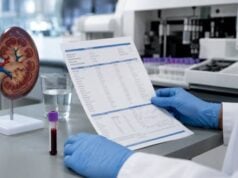
A renal function panel is a blood test panel that checks how well your kidneys are filtering waste, balancing minerals, and helping keep fluid and acid-base levels steady. It usually includes creatinine, blood urea nitrogen, estimated glomerular filtration rate, sodium, potassium, chloride, carbon dioxide or bicarbonate, calcium, phosphorus, albumin, and often glucose. The exact list can vary by laboratory, so the best interpretation starts with the markers shown on your own report.
This panel is often ordered when kidney disease is suspected, when a person has diabetes or high blood pressure, before or during treatment with kidney-affecting medicines, or to monitor known kidney problems. One abnormal number rarely tells the whole story. Creatinine, eGFR, electrolytes, albumin, symptoms, medications, hydration, and urine testing all help show whether the result is temporary, mild, urgent, or part of a longer-term kidney pattern.
- A renal function panel usually checks kidney filtration, waste products, electrolytes, albumin, phosphorus, calcium, and acid-base balance.
- A high creatinine with a low eGFR can suggest reduced kidney filtration, but dehydration, muscle mass, diet, and medications can affect results.
- Potassium, bicarbonate, sodium, calcium, and phosphorus changes can matter because they affect heart rhythm, nerves, muscles, bones, and acid-base balance.
- Albumin on this panel is a blood protein, not the same as urine albumin; low blood albumin can reflect inflammation, liver disease, kidney protein loss, or poor nutrition.
- Many renal function panel results are interpreted by trend, not by one value, especially in chronic kidney disease monitoring.
- Seek urgent care for severe weakness, chest pain, fainting, confusion, severe shortness of breath, very low urine output, or known dangerously high potassium.
Table of Contents
- What a Renal Function Panel Measures
- Normal Ranges and What Each Marker Means
- High and Low Results
- Renal Function Panel vs BMP, CMP, and eGFR
- When the Test Is Ordered and How to Prepare
- How to Read Your Results Without Overreacting
- Follow-Up Tests and When to Seek Care
What a Renal Function Panel Measures
A renal function panel measures several blood markers that reflect kidney filtration, waste removal, electrolyte balance, mineral balance, and blood protein status. “Renal” means kidney-related, so this test is sometimes called a renal panel, kidney function panel, kidney panel, or renal profile.
Most renal function panels include creatinine, blood urea nitrogen, eGFR, sodium, potassium, chloride, carbon dioxide or bicarbonate, calcium, phosphorus, albumin, and glucose. Some reports also include anion gap or a BUN/creatinine ratio. The exact markers depend on the laboratory and the clinician’s order.
The kidneys do much more than make urine. They filter waste from the blood, help regulate blood pressure, balance sodium and water, control potassium, help maintain acid-base balance, and activate vitamin D for calcium and phosphorus regulation. A renal function panel gives a practical snapshot of several of these jobs at once.
Creatinine and eGFR are the main filtration markers. Creatinine is a waste product from muscle activity, and the kidneys clear it from the blood. eGFR, or estimated glomerular filtration rate, uses creatinine and personal factors such as age and sex to estimate how much blood the kidneys filter each minute. A single creatinine result can be hard to judge by itself, which is why eGFR testing is often reported alongside it.
BUN, or blood urea nitrogen, is another waste marker. Urea forms when the body breaks down protein. The liver makes urea, and the kidneys remove it. BUN can rise when kidney filtration drops, but it is also sensitive to dehydration, high protein intake, gastrointestinal bleeding, steroid use, and other factors.
Electrolytes are minerals that carry an electrical charge in body fluids. Sodium helps regulate water balance and brain function. Potassium supports muscle and heart electrical activity. Chloride works with sodium and bicarbonate to maintain fluid and acid-base balance. Carbon dioxide on a chemistry panel usually reflects bicarbonate, the main blood buffer that helps prevent the blood from becoming too acidic.
Calcium, phosphorus, and albumin add important context. Calcium and phosphorus are tied to bone, muscle, nerve, and kidney-mineral balance. Albumin is the main protein in the blood and helps maintain fluid in the bloodstream. Because a large portion of calcium is bound to albumin, low albumin can make total calcium look low even when biologically active calcium is acceptable.
Normal Ranges and What Each Marker Means
Normal ranges vary by laboratory, age, sex, pregnancy status, altitude, hydration, medications, and the testing method. Always compare your result with the reference interval printed on your own lab report. The ranges below are common adult reference ranges, not universal cutoffs.
| Marker | Typical adult range | What it helps assess |
|---|---|---|
| Creatinine | About 0.6–1.3 mg/dL | Kidney filtration, muscle-related waste clearance |
| eGFR | Usually 90 or higher mL/min/1.73 m² is considered normal in adults | Estimated kidney filtration rate |
| BUN | About 7–20 mg/dL | Urea waste level, kidney clearance, hydration and protein balance |
| Sodium | About 135–145 mmol/L | Fluid balance, brain and nerve function |
| Potassium | About 3.5–5.0 mmol/L | Heart rhythm, muscle and nerve function |
| Chloride | About 96–106 mmol/L | Fluid balance and acid-base balance |
| Carbon dioxide / bicarbonate | About 22–29 mmol/L | Acid-base balance |
| Calcium, total | About 8.6–10.2 mg/dL | Bone, nerve, muscle, parathyroid, and albumin-related balance |
| Phosphorus | About 2.5–4.5 mg/dL | Kidney-mineral balance, bone health, energy metabolism |
| Albumin | About 3.5–5.0 g/dL | Blood protein level, fluid balance, nutrition and inflammation context |
| Glucose | About 70–99 mg/dL fasting | Blood sugar status, diabetes-related kidney risk context |
| Anion gap, if reported | Often about 3–11 or 8–16 mmol/L, depending on lab method | Acid-base pattern, unmeasured acids |
Creatinine is central, but it is not perfect. A muscular person may run a higher creatinine without having kidney disease. An older adult or someone with low muscle mass may have a “normal” creatinine even with reduced filtration. A recent large meat meal, creatine supplements, dehydration, heavy exercise, or certain medications can also influence creatinine. For that reason, creatinine blood test results are best interpreted with eGFR and the clinical situation.
eGFR is more useful for judging kidney filtration than creatinine alone. In general, eGFR of 90 or higher is usually considered normal in adults, while eGFR below 60 for at least three months can support a diagnosis of chronic kidney disease when other criteria fit. An eGFR of 60–89 may be normal for some older adults or may suggest early kidney disease if urine albumin, imaging, or other markers show kidney damage.
BUN is helpful but less specific than eGFR. BUN may rise with dehydration, high protein intake, gastrointestinal bleeding, steroids, reduced kidney blood flow, or kidney disease. Low BUN can occur with low protein intake, severe liver disease, overhydration, or pregnancy. The BUN normal range is only one part of the interpretation.
Sodium reflects water balance more than total body salt stores. Low sodium may occur when the body has too much water relative to sodium, as in some medication effects, heart failure, kidney problems, liver disease, hormonal disorders, or severe vomiting and diarrhea. High sodium often reflects water loss, limited water intake, excessive sweating, fever, or certain hormonal and kidney-related problems.
Potassium deserves special attention because abnormal potassium can affect heart rhythm. Mild changes are common, but very high or very low potassium can be dangerous. Kidney function, medications, acid-base status, blood draw technique, and cell breakdown all influence potassium. A blood sample affected by hemolysis, which means red blood cells broke during collection or handling, can falsely raise potassium on the report.
Bicarbonate, reported as carbon dioxide or CO2 on many panels, helps show acid-base balance. Low bicarbonate can occur with metabolic acidosis, kidney disease, diarrhea, lactic acidosis, ketoacidosis, or some medications. High bicarbonate can occur with vomiting, diuretic use, dehydration, chronic carbon dioxide retention from lung disease, or metabolic alkalosis.
Phosphorus becomes especially important when kidney function declines. Healthy kidneys remove extra phosphorus. In chronic kidney disease, phosphorus can rise and contribute to mineral and bone problems. Calcium, phosphorus, parathyroid hormone, vitamin D, and kidney function are closely linked, so an abnormal phosphorus result often leads to broader mineral testing.
Albumin is not a direct kidney filtration marker, but it changes how the rest of the panel is read. Low albumin can make total calcium appear low, worsen swelling, and suggest inflammation, liver disease, kidney protein loss, malnutrition, or serious illness. Blood albumin is different from urine albumin. Blood albumin measures protein circulating in the bloodstream. Urine albumin checks whether the kidneys are leaking protein into the urine.
High and Low Results
Abnormal renal function panel results can come from kidney disease, but they can also come from fluid shifts, diet, medications, temporary illness, lab handling, or recent activity. The pattern matters more than one isolated number.
High creatinine usually means the blood level of creatinine is above the expected range for that person. It may reflect reduced kidney filtration, acute kidney injury, chronic kidney disease, dehydration, urinary blockage, reduced blood flow to the kidneys, intense exercise, muscle injury, or higher muscle mass. Some medications can raise creatinine by affecting kidney blood flow or creatinine handling without always causing permanent damage.
Low creatinine is less often a kidney warning sign. It usually reflects low muscle mass, aging, frailty, pregnancy, malnutrition, or advanced liver disease. A low creatinine can make kidney function look better than it truly is in some people, because eGFR calculations depend partly on creatinine production.
High BUN with high creatinine can suggest reduced kidney filtration, dehydration, kidney injury, urinary obstruction, or chronic kidney disease. High BUN with only mild creatinine change often points toward dehydration, increased protein breakdown, high protein intake, gastrointestinal bleeding, or steroid use. Low BUN may be seen with low protein intake, liver dysfunction, overhydration, or pregnancy.
High potassium, called hyperkalemia, can occur when the kidneys cannot remove potassium well, when medications raise potassium, when cells release potassium into the blood, or when acidosis shifts potassium out of cells. Common medication contributors include ACE inhibitors, ARBs, potassium-sparing diuretics, some anti-inflammatory medicines, trimethoprim, and potassium supplements. Because potassium affects heart rhythm, a clearly high value may need prompt repeat testing, an electrocardiogram, or urgent treatment depending on the level and symptoms. For a deeper marker-by-marker explanation, see potassium blood test ranges.
Low potassium, called hypokalemia, often comes from vomiting, diarrhea, diuretics, poor intake, high aldosterone states, magnesium deficiency, or shifts of potassium into cells. Symptoms can include weakness, cramps, constipation, palpitations, or abnormal heart rhythm. Low magnesium can make low potassium harder to correct.
High sodium, or hypernatremia, usually means the body has too little water relative to sodium. It can happen with dehydration, fever, sweating, diarrhea, poor access to water, diabetes insipidus, or excess sodium intake in medical settings. Symptoms may include thirst, weakness, confusion, irritability, or seizures when severe.
Low sodium, or hyponatremia, means blood sodium concentration is too low. It may occur with certain diuretics, antidepressants, seizure medicines, heart failure, kidney disease, liver disease, adrenal problems, SIADH, vomiting, diarrhea, or drinking far more water than the body can excrete. Severe or rapidly falling sodium can cause headache, confusion, seizures, and coma.
High bicarbonate usually suggests metabolic alkalosis or compensation for chronic respiratory acidosis. Vomiting, stomach suction, diuretics, low potassium, dehydration, and some hormone disorders can raise bicarbonate. Low bicarbonate suggests metabolic acidosis or compensation for respiratory alkalosis. Kidney disease can lower bicarbonate because the kidneys help remove acid and regenerate bicarbonate.
High phosphorus can occur in chronic kidney disease, acute kidney injury, cell breakdown, excess intake from some enemas or supplements, vitamin D excess, or low parathyroid hormone states. Low phosphorus can occur with refeeding after malnutrition, alcohol use disorder, severe vitamin D deficiency, certain antacids, respiratory alkalosis, or hormonal shifts. Phosphorus is often interpreted with calcium and parathyroid hormone, especially in CKD; phosphorus blood test ranges can provide useful context.
High calcium can come from overactive parathyroid glands, cancer-related calcium release, vitamin D excess, certain medications, dehydration, granulomatous disease, or prolonged immobility. Low calcium can come from low albumin, vitamin D deficiency, kidney disease, low parathyroid hormone, low magnesium, pancreatitis, or certain medications. If albumin is low, clinicians may calculate corrected calcium or order ionized calcium.
Low albumin can be a sign of inflammation, infection, liver disease, kidney protein loss, protein-losing gut disease, poor intake, burns, or severe illness. High albumin is usually due to dehydration rather than the body making too much albumin. If albumin is low and swelling is present, urine protein testing is often important.
Renal Function Panel vs BMP, CMP, and eGFR
A renal function panel overlaps with other common chemistry panels, but it is not identical to a BMP or CMP. The difference is mainly which markers are included.
A basic metabolic panel, or BMP, commonly includes sodium, potassium, chloride, carbon dioxide, calcium, glucose, BUN, and creatinine. It checks kidney function, electrolytes, acid-base balance, calcium, and blood sugar. A renal function panel usually includes many of those same markers, but often adds phosphorus and albumin, which are especially useful for kidney-mineral and protein context. For a side-by-side comparison, basic metabolic panel testing is a helpful related topic.
A comprehensive metabolic panel, or CMP, includes the BMP markers plus liver-related markers such as albumin, total protein, bilirubin, alkaline phosphatase, ALT, and AST. A CMP includes albumin but usually does not include phosphorus. A renal panel often includes phosphorus but does not usually include the liver enzymes. This is why a renal panel may be preferred for kidney-mineral monitoring, while a CMP may be preferred when the clinician also wants liver and protein information. The difference between a kidney function panel and CMP often comes down to phosphorus versus liver enzymes.
An electrolyte panel is narrower. It usually includes sodium, potassium, chloride, and carbon dioxide or bicarbonate. It can detect fluid and acid-base patterns but does not fully assess kidney filtration because it does not necessarily include BUN, creatinine, or eGFR.
An eGFR result is not a panel by itself. It is a calculated estimate, usually based on creatinine. Many lab reports automatically include eGFR when creatinine is measured. eGFR is one of the most important kidney filtration numbers, but it does not show potassium, bicarbonate, phosphorus, albumin, or sodium status.
A urine albumin-to-creatinine ratio, or UACR, is also different from a renal function panel. UACR uses a urine sample to check for albumin leakage through the kidneys. A person can have a normal eGFR and still have abnormal urine albumin, especially early in diabetic kidney disease or high blood pressure-related kidney damage. For kidney disease screening, blood eGFR and urine albumin often work together.
When the Test Is Ordered and How to Prepare
Clinicians order a renal function panel to screen, diagnose, monitor, or check medication safety. The test is common because kidney-related changes may not cause symptoms until they are more advanced.
A renal function panel may be ordered for people with diabetes, high blood pressure, heart disease, autoimmune disease, a history of kidney stones, recurrent urinary tract problems, family history of kidney disease, older age, or prior abnormal kidney tests. It may also be ordered before imaging with contrast dye, before surgery, during hospitalization, after dehydration or severe infection, or while taking medicines that can affect kidney function.
Symptoms can also lead to testing. These may include swelling in the legs or around the eyes, foamy urine, blood in the urine, reduced urination, fatigue, nausea, vomiting, itching, muscle cramps, confusion, shortness of breath, or unexplained high blood pressure. These symptoms are not specific to kidney disease, but they make kidney and electrolyte testing reasonable.
Preparation depends on which markers are included and why the test is being done. Many renal function panels can be drawn without special preparation, but some clinicians ask for fasting for 8 to 12 hours, especially if glucose will be interpreted as a fasting value. Water is usually allowed unless you have been told to restrict fluids.
Before the test, tell your clinician about prescription medicines, over-the-counter drugs, supplements, protein powders, creatine, herbal products, and recent contrast imaging. Do not stop prescribed medication unless your clinician tells you to. Stopping blood pressure, heart, diabetes, transplant, or seizure medication on your own can be dangerous.
Recent diet and activity can affect some results. A large cooked meat meal can temporarily raise creatinine. Heavy exercise can raise creatinine and sometimes potassium or phosphorus. Dehydration can raise BUN, creatinine, albumin, sodium, or calcium. Very high water intake can lower sodium. These factors do not make the test useless, but they help explain surprising results.
The blood draw itself is routine. A healthcare professional collects blood from a vein, usually in the arm. The draw usually takes only a few minutes. Mild bruising or soreness can happen but usually fades quickly.
How to Read Your Results Without Overreacting
Start by looking at patterns, not flags alone. Lab reports often mark results as high or low when they fall outside the lab’s reference interval. A flag means the result deserves attention, not that it automatically means disease.
First, check creatinine and eGFR together. If creatinine is slightly high but eGFR is normal, the result may reflect muscle mass, diet, hydration, or normal variation. If creatinine is rising and eGFR is falling compared with prior tests, the trend is more concerning. If eGFR is below 60, clinicians usually look for persistence over at least three months, urine abnormalities, imaging findings, and possible causes before labeling it chronic kidney disease.
Second, compare BUN with creatinine. A high BUN with a much smaller creatinine change can fit dehydration, high protein intake, gastrointestinal bleeding, or medication effects. A rise in both BUN and creatinine can fit kidney filtration decline, but the timeline matters. A sudden rise over days is different from a stable mild abnormality over years.
Third, look at potassium, bicarbonate, and sodium for safety. These numbers can become urgent before creatinine becomes severely abnormal. A potassium value that is clearly high or low may need repeat testing or immediate care. A very low sodium or rapidly changing sodium can affect the brain. A low bicarbonate may point to acidosis, which can occur with kidney disease, diarrhea, ketoacidosis, lactic acidosis, or toxins.
Fourth, interpret calcium with albumin. Total calcium can look low when albumin is low because much of the calcium in blood is protein-bound. In that situation, corrected calcium or ionized calcium may be more informative. Calcium, phosphorus, vitamin D, and parathyroid hormone are often reviewed together in chronic kidney disease; calcium, phosphorus, and PTH patterns can clarify mineral balance.
Fifth, do not ignore urine testing. A renal function panel is a blood test. It can show filtration and electrolyte patterns, but it cannot show everything about kidney damage. Urine albumin, urine protein, urinalysis, urine sediment, and urine microscopy can reveal kidney stress that blood tests may miss.
A useful way to read the report is to ask four questions: Is kidney filtration normal, stable, or changing? Are any electrolytes in a dangerous range? Do albumin, calcium, and phosphorus change the interpretation? Is there a likely temporary explanation, such as dehydration, illness, diet, exercise, or medication?
Follow-Up Tests and When to Seek Care
Follow-up depends on the pattern and severity of the abnormal results. Mild abnormalities may only need repeat testing, medication review, hydration assessment, and comparison with past results. More concerning patterns may need urine tests, imaging, urgent treatment, or referral to a nephrologist.
Common follow-up tests include urinalysis, urine albumin-to-creatinine ratio, urine protein-to-creatinine ratio, repeat creatinine and eGFR, cystatin C, kidney ultrasound, magnesium, parathyroid hormone, vitamin D, ionized calcium, serum osmolality, urine sodium, urine osmolality, and blood gas testing when acid-base status is unclear.
Urine albumin-to-creatinine ratio is especially important for diabetes, high blood pressure, and suspected chronic kidney disease. Albumin in the urine can signal kidney damage even when eGFR is still preserved. Repeating an abnormal urine albumin result helps confirm whether it is persistent, because exercise, infection, fever, high blood sugar, high blood pressure, and temporary illness can raise urine albumin.
Cystatin C may be useful when creatinine-based eGFR may be misleading. This can happen in people with very high or very low muscle mass, frailty, amputation, unusually high protein intake, creatine supplement use, or certain chronic illnesses. Some clinicians use combined creatinine-cystatin C eGFR for a more accurate estimate.
Kidney ultrasound may be ordered if obstruction, kidney stones, structural problems, unequal kidney size, or chronic kidney changes are suspected. Imaging does not replace blood and urine tests, but it can reveal problems that chemistry results cannot.
Medication review is often part of follow-up. Blood pressure medicines, diuretics, NSAIDs such as ibuprofen and naproxen, certain antibiotics, lithium, tacrolimus, cyclosporine, chemotherapy drugs, contrast dye, potassium supplements, and many herbal products can affect kidney function or electrolytes. The response may be dose adjustment, closer monitoring, temporary holding during illness, or switching to a safer option.
Seek urgent medical care if you have chest pain, fainting, severe weakness, new confusion, seizures, severe shortness of breath, severe dehydration, very low urine output, severe swelling, vomiting that prevents fluids, or a clinician tells you that potassium is dangerously high. Also seek prompt care if creatinine rises quickly, eGFR drops sharply, sodium is severely abnormal, bicarbonate is very low with illness, or calcium is very high with confusion, dehydration, or abnormal heart rhythm symptoms.
For stable mild abnormalities, the next step is usually not panic. It is a careful review of the full panel, prior results, urine testing, medications, hydration, blood pressure, diabetes status, and symptoms. Kidney blood tests are most useful when they are interpreted as a story over time, not as isolated numbers.
References
- KDIGO 2024 Clinical Practice Guideline for the Evaluation and Management of Chronic Kidney Disease 2024 (Guideline)
- KDOQI US Commentary on the KDIGO 2024 Clinical Practice Guideline for the Evaluation and Management of CKD 2025 (Commentary)
- Basic Metabolic Panel (BMP): MedlinePlus Medical Test 2024 (Official Page)
- Creatinine Test: MedlinePlus Medical Test 2023 (Official Page)
- BUN (Blood Urea Nitrogen): MedlinePlus Medical Test 2023 (Official Page)
- Electrolyte Panel: MedlinePlus Medical Test 2024 (Official Page)
Disclaimer
A renal function panel can provide important information about kidney function, electrolytes, and mineral balance, but it cannot diagnose every kidney condition by itself. Results should be interpreted with your symptoms, medications, medical history, urine testing, and prior lab trends. Contact a qualified healthcare professional for personal guidance, especially if results are significantly abnormal or changing quickly.