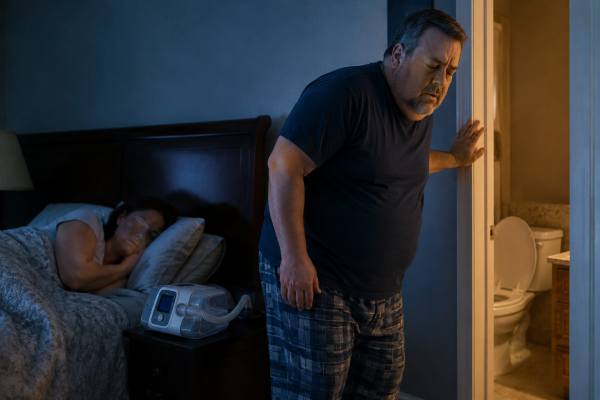
Waking up to pee once in a while is normal. Waking up two, three, or five times a night is different. It fragments sleep, raises fall risk in the dark, and leaves many people tired before the day even starts. When nighttime urination happens with loud snoring, gasping, choking, dry mouth, morning headaches, or daytime sleepiness, the bladder is not always the main problem. The trigger is often obstructive sleep apnea.
Obstructive sleep apnea happens when the upper airway repeatedly narrows or closes during sleep. Breathing pauses, oxygen drops, the brain jolts the body awake, and the heart and kidneys respond as if fluid balance has changed. That response produces more urine at night. In other words, snoring and nighttime peeing can be part of the same sleep-breathing problem.
This article explains how sleep apnea causes nocturia, what signs point toward apnea instead of a bladder condition, what to track before seeing a clinician, how testing works, and which treatments usually reduce bathroom trips when apnea is the cause.
Table of Contents
- Why Sleep Apnea Causes Nighttime Urination
- Signs Your Nocturia Is Linked to Sleep Apnea
- How to Tell Apnea Nocturia From Bladder or Prostate Problems
- What to Track Before Your Appointment
- How Doctors Test and Treat the Problem
- Practical Steps That Reduce Nighttime Trips
- When to Get Medical Help Sooner
Why Sleep Apnea Causes Nighttime Urination
Nocturia means waking from sleep because you need to urinate, then going back to sleep afterward. The first pee after waking for the day does not count. The key detail is that sleep is interrupted by the urge to pee.
Sleep apnea turns that simple bathroom trip into a body-wide process. During obstructive sleep apnea, the throat relaxes and blocks airflow again and again. The chest keeps trying to pull air in against the blocked airway. Oxygen levels drop. The brain briefly wakes the body to reopen the airway. These repeated events change pressure inside the chest and signal the heart to release hormones that tell the kidneys to make more urine.
One important hormone is atrial natriuretic peptide, often shortened to ANP. When apnea episodes create pressure changes in the chest, the heart senses extra stretch. It responds by releasing ANP. That hormone tells the kidneys to remove more salt and water. The result is nocturnal polyuria, which means the body produces too much urine during the sleeping hours.
This is why some people with sleep apnea pass a surprisingly large amount of urine at night even though they did not drink much before bed. Their bladder is filling because the kidneys are making extra urine during sleep.
Sleep apnea also causes frequent brief awakenings. A person who wakes repeatedly from breathing pauses notices bladder sensations that would normally be slept through. A half-full bladder feels urgent because the brain is already awake. This creates two overlapping problems: more urine production and a lower threshold for noticing the need to go.
The pattern often becomes frustrating. A person blames the bladder, cuts back fluids too much, still wakes up, then feels dehydrated during the day. The missing piece is that the nighttime urine is being driven by disordered breathing, not simply by evening water intake.
Nocturia from sleep apnea is especially easy to miss because people do not always remember gasping or choking. A bed partner often notices the breathing problem first. People who sleep alone often notice the indirect signs: morning dry mouth, headaches, unrefreshing sleep, daytime sleepiness, poor concentration, or needing the bathroom several times every night.
Signs Your Nocturia Is Linked to Sleep Apnea
Nighttime urination points more strongly toward sleep apnea when it travels with sleep-breathing clues. Loud snoring is the best-known sign, but it is not the only one. Some people with clinically important apnea do not describe themselves as heavy snorers, especially if they sleep alone or wake before anyone hears them.
The most useful clues are the whole pattern, not one symptom by itself. A typical apnea-related pattern looks like this: you fall asleep, snore heavily, stop breathing or gasp, wake partly or fully, then decide you need to pee. The bathroom trip feels like the reason you woke up, but the breathing event started the chain.
Common signs that nocturia is tied to sleep apnea include:
- Loud, regular snoring, especially with pauses, snorts, choking, or gasping
- Waking with a dry mouth, sore throat, headache, or pounding heart
- Feeling unrefreshed after a full night in bed
- Daytime sleepiness, dozing during quiet activities, or needing naps
- Trouble concentrating, irritability, or low morning energy
- High blood pressure, especially readings that stay high despite treatment
- Night sweats or restless tossing and turning
- Large urine volumes during nighttime bathroom trips
- Worse symptoms after alcohol, sedatives, heavy meals, or sleeping on the back
The size of the nighttime void matters. If each trip produces a strong stream and a large amount of urine, the kidneys are likely making too much urine at night. That fits sleep apnea, leg swelling with overnight fluid shifts, high evening salt intake, some medication schedules, diabetes, and heart or kidney conditions.
If each trip produces only a small amount, the issue leans more toward bladder irritation, overactive bladder, pain, anxiety-related waking, prostate obstruction, or incomplete emptying. There is overlap, so the pattern helps guide the next step rather than giving a final diagnosis.
Sleep apnea also looks different in different people. Men are often described as loud snorers who gasp and feel sleepy during the day. Women, especially after menopause, often report insomnia, fatigue, morning headaches, mood changes, or repeated nighttime urination without using the words “sleep apnea.” That difference leads to missed diagnoses.
Nocturia becomes a stronger clue when bladder treatments have not worked. If someone has tried cutting evening fluids, avoiding caffeine, treating overactive bladder, or managing prostate symptoms but still wakes several times a night with snoring or daytime tiredness, sleep apnea deserves a serious look. A general article on waking up to pee at night explains the wider list of causes, but the snoring-and-nocturia combination is its own important pattern.
How to Tell Apnea Nocturia From Bladder or Prostate Problems
The biggest mistake is assuming every nighttime bathroom trip starts in the bladder. Nocturia has several major pathways: the body makes too much urine at night, the bladder holds too little, sleep is fragmented for another reason, or a person has a mix of all three.
Sleep apnea mainly causes nighttime urine overproduction and repeated awakenings. Bladder and prostate problems usually change urgency, stream, emptying, or pain. Looking at the details helps you decide which clinician to start with and what to ask about.
| Pattern | What it suggests | What to notice |
|---|---|---|
| Large amounts of urine at night, loud snoring, dry mouth, daytime sleepiness | Sleep apnea with nocturnal urine overproduction | Breathing pauses, gasping, morning headaches, high blood pressure |
| Sudden urgency with small amounts of urine | Overactive bladder or bladder irritation | Daytime urgency, leaks, triggers such as coffee or acidic drinks |
| Burning, cloudy urine, pelvic pain, fever, or new strong odor | Possible urinary infection or inflammation | Pain with urination, worsening symptoms, flank pain, fever |
| Weak stream, hesitancy, dribbling, or feeling unable to empty | Prostate enlargement or urinary retention pattern | Straining, stop-start stream, frequent small voids |
| Swollen ankles by evening and more urine after lying down | Fluid shift from the legs during sleep | Leg swelling, shortness of breath, heart or kidney history |
| Extreme thirst, large daytime and nighttime urine volumes | Possible diabetes, medication effect, or global polyuria | Weight change, dry mouth, high blood sugar symptoms, new medicines |
A bladder diary gives the clearest separation. If nighttime urine makes up a large share of the total 24-hour urine volume, the problem is not simply a “small bladder.” If the total nighttime amount is modest but the person wakes repeatedly to pass tiny volumes, bladder storage, anxiety, insomnia, pelvic floor tension, or incomplete emptying moves higher on the list.
Daytime symptoms also matter. Someone who urinates normally during the day but wakes four times at night with loud snoring has a different pattern from someone with urgency every hour, leaks on the way to the bathroom, and small voids all day. The second pattern fits overactive bladder symptoms more strongly, though sleep disruption can still make it worse.
Men with nighttime urination often assume the prostate is the whole story. An enlarged prostate does cause weak stream, hesitancy, incomplete emptying, and frequent urination. But prostate treatment does not fix apnea-related urine production. A man with both a slow stream and loud snoring needs both issues considered. The same is true for people with bladder urgency plus sleep apnea symptoms; treating one part often leaves the other part behind. Men with stream changes can compare their symptoms with BPH urinary symptoms to see whether prostate evaluation also fits.
The practical takeaway is simple: large nighttime volumes plus snoring point toward sleep apnea or another urine-production problem. Small urgent voids point toward bladder storage or irritation. Weak stream and incomplete emptying point toward obstruction or retention. Mixed patterns are common, so bring the details instead of guessing.
What to Track Before Your Appointment
A three-day record often gives more useful information than a long symptom description. It shows whether the problem is urine volume, bladder urgency, sleep fragmentation, or a combination.
Use a notebook, phone note, or printed chart. Track at least two normal weekdays and one weekend day if your schedule changes. Do not change your habits during the diary unless a clinician told you to. The point is to capture your real pattern.
Record these details:
- Bedtime and final wake time
- Each nighttime bathroom trip and the time it happened
- Approximate urine amount, or measured amount if you have a collection container
- Whether the urge felt mild, moderate, or urgent
- Leaks, dribbling, burning, pain, or trouble starting
- Evening fluids, alcohol, caffeine, salty meals, and late snacks
- Medication timing, especially diuretics, blood pressure pills, sleep medicines, and decongestants
- Snoring, gasping, choking, witnessed pauses, or waking with dry mouth
- Morning tiredness, headache, and daytime sleepiness
- CPAP use, mask problems, or nights when treatment was skipped if you already use PAP therapy
Measuring urine sounds awkward, but it is useful for a short period. A plastic collection container or marked urinal lets you record volume in milliliters or ounces. If measuring is not realistic, write “small,” “medium,” or “large” consistently.
The diary also helps prevent a common error: blaming water alone. Someone who drinks a small glass of water after dinner and still produces large nighttime urine volumes needs evaluation beyond fluid restriction. On the other hand, someone drinking several large glasses of water, beer, or tea in the evening has an obvious starting point.
A bladder diary is also helpful if you later see a urologist, primary care clinician, sleep specialist, or pelvic floor therapist. It gives each professional the same baseline instead of forcing you to remember every detail during a rushed visit.
Ask a bed partner what they notice. Useful observations include pauses in breathing, loud snoring, gasping, restless legs, frequent position changes, and whether bathroom trips happen after snorting or choking sounds. If you sleep alone, phone recordings sometimes capture snoring, but they do not diagnose sleep apnea. They only add clues.
Also note safety issues. If you feel sleepy while driving, fall asleep unintentionally, or wake with chest pain, severe shortness of breath, or confusion, do not wait for a routine appointment. Sleep apnea and nocturia both affect nighttime safety, and repeated bathroom trips in the dark raise fall risk, especially for older adults.
How Doctors Test and Treat the Problem
Doctors do not diagnose sleep apnea from snoring alone. Snoring raises suspicion, but objective testing is needed. The usual options are a home sleep apnea test or an overnight sleep study in a lab.
A home sleep apnea test is often used for adults with a straightforward pattern of suspected moderate to severe obstructive sleep apnea. The device usually tracks breathing, airflow, oxygen level, heart rate, and breathing effort while you sleep at home. It is simpler than a lab study and works well for many uncomplicated cases.
An in-lab sleep study, called polysomnography, collects more information. It records sleep stages, breathing, oxygen levels, heart rhythm, leg movements, and awakenings. It is preferred when the situation is more complex, such as significant heart or lung disease, suspected low nighttime oxygen for another reason, neuromuscular disease, chronic opioid use, history of stroke, severe insomnia, unusual sleep behaviors, or a negative home test despite strong symptoms.
The test report usually includes an apnea-hypopnea index, or AHI. This number estimates how often breathing pauses or shallow breathing episodes happen per hour of sleep or recording time. The report also shows oxygen dips and sometimes how events change with body position or sleep stage. A person with many events while sleeping on the back might benefit from position changes, while someone with events in all positions needs a broader treatment plan.
Testing for nocturia often happens alongside sleep evaluation. A clinician might order a urine test, blood sugar testing, kidney function labs, medication review, blood pressure check, and evaluation for leg swelling. Men with stream symptoms often need prostate assessment. People with pain, burning, blood in urine, recurrent infections, or persistent urgency might need urology evaluation. Broad frequent urination causes should stay on the table until the pattern is clear.
Why CPAP or APAP often reduces nighttime urination
Positive airway pressure therapy is the main treatment for many adults with obstructive sleep apnea. CPAP delivers a steady pressure. APAP automatically adjusts pressure within a prescribed range. Both keep the airway open so breathing pauses, oxygen drops, and arousals decrease.
When the airway stays open, the chest pressure swings and oxygen dips that trigger nighttime urine production decrease. Sleep becomes deeper and less fragmented. The person wakes less often and the kidneys receive fewer signals to dump salt and water overnight. This is why successful PAP treatment often lowers nocturia episodes.
The details matter. PAP works only when used during sleep. Skipping the first half of the night, removing the mask after two hours, or leaving leaks unfixed reduces the benefit. People who still wake to pee while using PAP should check usage hours, mask leak, pressure comfort, nasal congestion, alcohol use, and whether other urinary causes are also present.
Good troubleshooting changes outcomes. A dry mouth might need a better mask fit, humidification, or attention to mouth breathing. A stuffy nose might need allergy treatment or a different mask style. Pressure discomfort might improve with ramp settings, expiratory pressure relief, or follow-up adjustment. The goal is not to “tough it out.” The goal is to make treatment wearable enough that it is used every night.
Other sleep apnea treatments
Not everyone uses CPAP successfully, and not every case requires the same approach. Oral appliance therapy, usually a custom mandibular advancement device from a qualified dental sleep provider, moves the lower jaw forward to reduce airway collapse. It is often considered for mild to moderate obstructive sleep apnea or for people who cannot tolerate PAP.
Positional therapy helps people whose apnea is much worse on the back. This ranges from simple side-sleeping supports to structured devices. It works best when sleep testing shows a clear position-related pattern.
Weight management helps when excess weight contributes to airway narrowing. Even modest weight loss improves apnea severity for some people, but weight loss is not an overnight fix for nocturia. People with moderate or severe symptoms still need testing and treatment while weight goals are addressed.
Surgery is considered for selected anatomy or when PAP and oral appliance options fail or are not acceptable. Surgical choices range from nasal procedures that improve breathing comfort to upper-airway surgeries or hypoglossal nerve stimulation in carefully selected patients. Surgery is not chosen just because a person snores; it requires proper evaluation.
Why bladder pills alone are not enough
Bladder medications have a role when urgency, small voids, or overactive bladder symptoms are present. They do not correct airway collapse, oxygen drops, or apnea-driven nighttime urine production. A person with untreated apnea might take bladder medication and still wake because the kidneys are producing extra urine.
Desmopressin, a medication that reduces urine production, requires special caution. It is not a simple sleep-apnea workaround. It can lower blood sodium, especially in older adults and in people with kidney disease, heart failure, certain medications, or higher baseline risk. It should be used only when the cause of nocturnal urine overproduction is clear and monitoring is appropriate.
The best treatment plan matches the cause. If apnea is driving the urine production, treating apnea is central. If prostate obstruction, overactive bladder, diabetes, fluid retention, or medication timing also contributes, those need their own plan.
Practical Steps That Reduce Nighttime Trips
The most effective step is treating confirmed sleep apnea consistently. Still, daily habits influence nighttime urine volume and sleep quality. These changes work best when they support medical treatment rather than replace it.
Start with evening fluid timing. Do not dehydrate yourself all day. Instead, move more of your fluids earlier. Many people do better when they drink steadily through the morning and afternoon, then taper in the last two to three hours before bed. A small sip for dry mouth or medication is fine. Large “catch-up” water intake late at night usually backfires.
Watch alcohol closely. Alcohol relaxes the upper airway, worsens snoring and apnea in many people, fragments sleep, and increases urine production. Even one or two drinks in the evening can turn a manageable night into multiple awakenings. If nocturia is a major problem, compare nights with alcohol against alcohol-free nights in your diary.
Caffeine deserves the same attention. Coffee, tea, energy drinks, and some sodas increase urgency in sensitive bladders and disrupt sleep when taken later in the day. People who have urgency or bladder pain can review caffeine and bladder urgency strategies, but apnea symptoms still need separate evaluation.
Reduce late salty meals. A high-sodium dinner, salty snacks, restaurant food, pizza, cured meats, instant noodles, and chips increase thirst and fluid retention. The body often deals with that extra salt and water overnight, especially after lying down. A lower-salt dinner is not a cure for sleep apnea, but it reduces one pressure on nighttime urine production.
If your ankles swell by evening, ask about fluid shifting. When you lie down, fluid that collected in the legs returns to the bloodstream and reaches the kidneys. Elevating legs in the late afternoon, walking earlier in the day, and using compression stockings when appropriate reduces nighttime urine in some people. Compression is not right for everyone, especially with certain circulation problems, so ask before starting it if you have vascular disease, severe swelling, or heart failure symptoms.
Review medication timing. Diuretics, often called water pills, are designed to increase urination. Taking them too late in the day causes predictable nighttime trips. Do not change prescribed medication on your own, but ask whether the timing can be moved earlier. Some blood pressure medicines, decongestants, antihistamines, and sleep aids also affect urination, sleep depth, or airway tone.
Make the bathroom path safer while the cause is being treated. Use a night light, remove loose rugs, keep glasses within reach if you need them, and avoid rushing. For older adults, this safety step is not minor. Falls during nighttime bathroom trips cause serious injuries.
If you already use CPAP or APAP, treat nocturia as feedback. More bathroom trips after a period of improvement often means something changed: mask leak, nasal congestion, weight change, alcohol use, pressure needs, or another medical condition. Check your machine data if available and contact your sleep clinic if symptoms return.
A simple evening routine helps:
- Finish most fluids earlier in the evening.
- Avoid alcohol close to bedtime.
- Keep dinner lower in salt.
- Urinate once before bed without straining.
- Put on PAP before you fall asleep, even for naps.
- Keep the mask on after nighttime bathroom trips.
- Track whether nocturia improves over two to four weeks of consistent treatment.
Do not judge treatment after one night. Sleep and urine patterns fluctuate. Look for a trend: fewer trips, longer first stretch of sleep, less morning headache, better daytime alertness, and lower nighttime urine volume.
When to Get Medical Help Sooner
Two or more bathroom trips most nights deserve a medical conversation, especially when sleep feels poor or daytime fatigue is affecting work, driving, mood, or safety. It is not just an aging nuisance. It is a symptom with treatable causes.
Make an appointment with a primary care clinician if nocturia is new, worsening, or paired with snoring, gasping, high blood pressure, morning headaches, or daytime sleepiness. Bring your diary and ask directly whether sleep apnea testing is appropriate. If you already see a urologist for bladder or prostate symptoms, mention snoring and sleep quality. If you already see a sleep specialist, mention urine volume and bathroom frequency.
Seek care promptly if nighttime urination comes with:
- Blood in the urine
- Fever, chills, back or flank pain, or feeling very ill
- Burning with urination that is worsening or not improving
- New inability to urinate or painful bladder fullness
- New confusion, fainting, or falls
- Extreme thirst, unexplained weight loss, or very large urine volumes day and night
- Chest pain, severe shortness of breath, or rapidly worsening leg swelling
- Sleepiness while driving or falling asleep during active situations
These symptoms point beyond routine nocturia and need faster evaluation.
Sleep apnea itself also has safety implications. Untreated obstructive sleep apnea is linked with poor sleep quality, daytime sleepiness, high blood pressure, and cardiovascular strain. The nighttime bathroom trips are often the symptom that finally gets attention, but the breathing disorder deserves treatment for broader health reasons as well.
The best next step is practical: track the pattern, connect the bladder symptoms to the sleep symptoms, and ask for the right evaluation. If apnea is confirmed, effective treatment often improves both breathing and nighttime urination. If testing shows another cause, the diary still guides the next decision. Either way, repeated trips to the bathroom are worth taking seriously.
References
- Nocturia and obstructive sleep apnea syndrome: A systematic review 2023 (Systematic Review)
- Association of Sleep Disorders with Nocturia: A Systematic Review and Nominal Group Technique Consensus on Primary Care Assessment and Treatment 2022 (Systematic Review and Consensus)
- Nocturia 2024 (Clinical Review)
- International Consensus Statement on Obstructive Sleep Apnea 2023 (Consensus Statement)
- Clinical Practice Guideline for Diagnostic Testing for Adult Obstructive Sleep Apnea: An American Academy of Sleep Medicine Clinical Practice Guideline 2017 (Guideline)
- Treatment of Adult Obstructive Sleep Apnea with Positive Airway Pressure: An American Academy of Sleep Medicine Clinical Practice Guideline 2019 (Guideline)
Disclaimer
This article is for education and does not diagnose the cause of nocturia, snoring, or suspected sleep apnea. Repeated nighttime urination can come from sleep apnea, bladder conditions, prostate problems, diabetes, medication timing, heart or kidney conditions, and other causes. A qualified clinician can review your symptoms, medications, urine pattern, and sleep history to decide whether urine testing, blood work, urology evaluation, or a sleep study is needed.