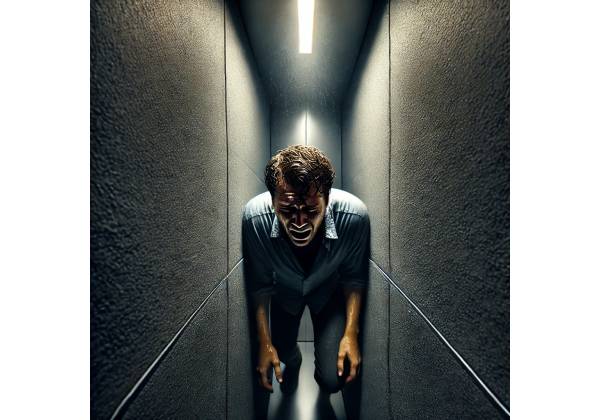
Claustrophobia is more than a simple dislike of tight spaces. It is a specific phobia in which enclosed or hard-to-escape places trigger intense fear, physical distress, and a strong urge to get out. For some people, the problem appears only in clear situations such as elevators, tunnels, or MRI scanners. For others, it quietly shapes daily life through avoidance, careful planning, and constant scanning for exits. What often makes claustrophobia so disruptive is not the size of the space itself, but the feeling of being trapped, unable to breathe freely, or unable to leave quickly. The good news is that it is treatable. With the right approach, many people reduce symptoms, regain confidence, and return to activities they have been avoiding for years.
Table of Contents
- What Claustrophobia Is
- Signs and Symptoms
- Causes, Triggers and Risk Factors
- How Diagnosis Works
- Daily Life and Complications
- Treatment Options
- Coping and Self-Management
- When to Seek Help and Outlook
What Claustrophobia Is
Claustrophobia is a type of specific phobia centered on enclosed, crowded, or hard-to-exit spaces. A person with claustrophobia does not simply feel uncomfortable in small places. The fear is intense, out of proportion to the actual danger, and strong enough to cause avoidance, distress, or disruption in daily life.
Many people picture claustrophobia as fear of a tiny room, but the experience is broader than that. Common examples include:
- Elevators.
- Airplanes.
- Tunnels.
- Subway cars.
- Car washes.
- Windowless rooms.
- Crowded lines or packed venues.
- MRI scanners.
The core fear often involves one or more of these thoughts:
- “I will be trapped.”
- “I will not be able to breathe.”
- “I will lose control.”
- “I will panic and embarrass myself.”
- “No one will be able to help me quickly.”
That is why two spaces of the same size can feel very different. A small office with an open door may feel tolerable, while a larger subway car with no easy exit may trigger severe panic. The mind reads the situation as unsafe because escape feels limited.
Claustrophobia can range from mild to severe. Mild cases may show up only in a few situations, such as taking an elevator alone. More severe cases can spill into work, travel, medical care, parenting, and relationships. Some people begin arranging their lives around avoidance without realizing how much space the fear is taking up.
It is also important to separate claustrophobia from a normal stress response. Many people feel uneasy in a cramped, hot, noisy room. Claustrophobia is different because the fear is persistent, recurrent, and powerful enough to shape behavior over time. It can exist even when the person knows, logically, that the setting is likely safe.
In short, claustrophobia is not weakness, drama, or a lack of willpower. It is a real anxiety condition, and it responds best to informed, structured treatment rather than repeated avoidance.
Signs and Symptoms
Claustrophobia symptoms can begin before a person enters an enclosed space, the moment they step inside, or even when they imagine the situation ahead of time. In some cases, symptoms build gradually. In others, they arrive like a surge and feel very much like a panic attack.
Common physical symptoms include:
- Rapid heartbeat or pounding chest.
- Sweating.
- Shortness of breath.
- Chest tightness.
- Shaking or trembling.
- Dizziness or lightheadedness.
- Nausea.
- Tingling sensations.
- Feeling hot or chilled.
- Dry mouth.
Emotional and mental symptoms often include:
- Sudden fear or dread.
- A powerful urge to escape.
- Fear of suffocation.
- Fear of losing control.
- Feeling detached or unreal.
- A sense that something terrible is about to happen.
Behavioral signs are just as important as the distress itself. A person may:
- Avoid elevators and always take the stairs.
- Refuse window seats, tunnels, or certain train cars.
- Leave doors open whenever possible.
- Sit near exits in theaters, meetings, or classrooms.
- Cancel imaging tests or travel plans.
- Need another person nearby to feel safe.
For many people, the most disabling symptom is anticipatory anxiety. The body reacts before the event happens. Someone may start feeling panicky the night before an MRI, or become tense while simply thinking about traffic in a tunnel. This anticipation can make avoidance more likely and can gradually expand the list of feared situations.
Symptoms may also vary by trigger. In an MRI scanner, the distress may focus on being still in a narrow tube. In a crowded elevator, the fear may center on being trapped with no air or no exit. On an airplane, the worry may be less about size and more about being unable to leave.
A useful clue is pattern. If the same kind of fear appears repeatedly in enclosed or hard-to-exit settings, and the reaction is stronger than the actual risk, claustrophobia becomes more likely. The symptoms are real, even when the danger is not. That is why reassurance alone often does not solve the problem. The nervous system has learned to treat certain spaces as threats, and it reacts accordingly.
Causes, Triggers and Risk Factors
Claustrophobia usually does not come from one single cause. It is better understood as the result of several factors working together: biology, learning, stress, personality, and life experience. Different people arrive at the same fear through different paths.
A direct upsetting experience is one common route. Examples include:
- Being trapped in an elevator.
- Getting stuck in a small room or confined ride.
- Having a frightening MRI or medical procedure.
- Being restrained during a medical, dental, or emergency event.
- Experiencing a panic attack in an enclosed place and then fearing a repeat.
Claustrophobia can also develop without a clear trauma. A person may learn the fear indirectly by watching someone else panic, hearing repeated warnings, or becoming unusually sensitive to body sensations such as breathlessness. If a child grows up around very anxious reactions to crowds, tight spaces, or escape-related worries, those cues can become meaningful later.
Risk factors may include:
- A personal or family history of anxiety disorders.
- High sensitivity to physical anxiety symptoms.
- A tendency to imagine worst-case outcomes.
- Past panic attacks.
- Chronic stress.
- Early overprotective or highly critical environments.
- Other phobias or anxiety conditions.
Triggers are often more specific than people expect. The reaction may be driven not just by space, but by combinations of sensory cues such as:
- Closed doors.
- Poor ventilation.
- Crowding.
- Lack of windows.
- Heat.
- Noise.
- Darkness.
- Restriction of movement.
- Not knowing how long the situation will last.
This helps explain why one elevator may feel manageable while another feels impossible. Perception matters. The brain may read one setting as “temporary and controllable” and another as “trapped and in danger.”
Claustrophobia is also closely tied to the idea of entrapment. For some people, the fear of suffocation is central. For others, the main fear is not being able to leave, get help, or stop a panic attack in public. That distinction matters because treatment works best when it targets the person’s actual fear, not just the location.
Finally, avoidance can become part of the cause-and-effect loop. Each time a person escapes a feared space, they feel immediate relief. That relief teaches the brain that escape was necessary. Over time, the fear grows more convincing, not less. This is one reason claustrophobia can deepen quietly over months or years if it is never addressed.
How Diagnosis Works
Diagnosis is usually based on a careful clinical conversation, not a blood test or brain scan. A primary care clinician, psychologist, psychiatrist, or other qualified mental health professional can evaluate symptoms and decide whether they fit claustrophobia as a specific phobia.
The assessment usually explores:
- Which places trigger fear.
- What thoughts show up in those moments.
- How intense the symptoms become.
- How often avoidance happens.
- Whether the problem is affecting work, school, travel, medical care, or relationships.
- How long the pattern has been present.
In general, clinicians look for several key features:
- Marked fear or anxiety about a specific situation, such as enclosed spaces.
- Symptoms that appear almost every time the trigger is present.
- Active avoidance, or enduring the situation with intense distress.
- Fear that is out of proportion to the actual risk.
- Persistence over time, often for six months or longer.
- Meaningful interference with daily life.
A good evaluation also checks whether something else may explain the symptoms better. Conditions that may overlap include:
- Panic disorder.
- Agoraphobia.
- Post-traumatic stress disorder.
- Social anxiety disorder.
- Generalized anxiety disorder.
- Certain heart, lung, thyroid, or vestibular problems that can mimic panic symptoms.
This matters because a person may say, “I am claustrophobic,” when the main issue is actually panic attacks in many settings, or trauma linked to confinement, or fear of being unable to get help in public. The treatment approach may need to shift depending on the true driver.
The clinician may also ask about depression, alcohol or drug use, sleep, medical history, and prior treatment. For some people, the fear comes to attention only because an important task is being blocked, such as completing an MRI, taking a flight, or working in a required environment.
Diagnosis does not require the person to fail a test in real time. If the history is clear, that is usually enough. In fact, many people are diagnosed after years of quiet avoidance rather than dramatic public episodes.
A thorough diagnosis is valuable because it turns a vague fear into a defined, treatable problem. Once the trigger pattern, thought pattern, and avoidance pattern are clear, treatment can be tailored much more effectively.
Daily Life and Complications
Claustrophobia can look small from the outside and still be highly disruptive. Many people become skilled at hiding it. They take stairs, skip certain routes, avoid packed events, and build routines that reduce the chance of feeling trapped. Because these workarounds can seem practical, the condition may go unrecognized for years.
Daily life may be affected in ways such as:
- Arriving late because elevators are avoided.
- Turning down travel, promotions, or training.
- Missing medical imaging or delaying important tests.
- Refusing tunnels, subways, or certain seats.
- Needing elaborate exit plans in public places.
- Feeling exhausted by constant monitoring of space and escape routes.
Medical settings are a major example. MRI scanners are a well-known trigger, and even a relatively low rate of interrupted scans matters because a delayed test can postpone diagnosis and treatment. For the individual patient, one incomplete scan can mean another appointment, more anxiety, added cost, and prolonged uncertainty.
The emotional burden can spread beyond the trigger itself. A person may feel shame, frustration, or anger at needing special accommodations. They may worry that others will not understand, especially if they can function well in most other areas of life. Children and teens may appear oppositional when they are actually terrified. Adults may be mislabeled as difficult when they are struggling to stay regulated.
Complications can include:
- Broader avoidance over time.
- Reduced independence.
- Strain in relationships.
- Problems at work or school.
- Sleep disruption before feared events.
- Increased risk of depression.
- Reliance on alcohol, sedatives, or reassurance.
- Lower confidence and poorer quality of life.
Another complication is the false belief that avoidance is the only safe option. In the short term, leaving a trigger brings relief. In the long term, it teaches the brain that the fear was correct. This can make the threshold for panic lower and the list of feared situations longer.
The condition becomes especially important when it blocks necessary care, such as MRI, CT, dental work, surgery preparation, or emergency transport. At that point, claustrophobia is no longer just a preference about personal space. It is a health issue that deserves direct treatment.
Treatment Options
The most effective treatment for claustrophobia is usually exposure-based therapy, often delivered within cognitive behavioral therapy, or CBT. The goal is not to force someone into distress. It is to retrain the brain, step by step, so enclosed spaces stop being read as immediate danger.
A typical treatment plan may include:
- Education about how fear and avoidance reinforce each other.
- Identification of specific triggers and feared outcomes.
- Building an exposure ladder from easier tasks to harder ones.
- Practicing repeated exposure until anxiety drops and confidence rises.
- Learning how to stay in the situation long enough for the alarm response to settle.
Exposure can be highly practical. For example, a person may progress from looking at elevator pictures, to standing near an elevator, to stepping in with the door open, to taking one short ride, and then to longer rides in busier buildings. The same logic can be adapted for tunnels, trains, planes, or medical scanners.
CBT often adds tools that make exposure more effective, such as:
- Challenging catastrophic thoughts.
- Reducing safety behaviors that keep fear alive.
- Reframing body sensations.
- Building tolerance for uncertainty and discomfort.
Virtual reality exposure is another option in some settings. It can be helpful when real-world practice is hard to arrange or when a person needs a more controlled first step. It is not always superior to real-life exposure, but it can be a useful bridge, especially where access is limited.
Medication is usually not the main long-term treatment for specific phobias. In some cases, a clinician may use medication briefly to help with severe anxiety in narrow situations, such as an unavoidable MRI or flight. Options may include short-acting anti-anxiety medication or, less commonly, other medicines aimed at panic symptoms. These decisions should be individualized because medicines can cause side effects, interact with other conditions, and may reinforce dependence on a “rescue” solution if used too broadly.
For MRI-related claustrophobia, practical accommodations can also help, such as:
- Clear explanation of the procedure in advance.
- Shorter wait times.
- Mirror systems or visual aids.
- Music or communication through headphones.
- A support person when allowed.
- Open or more spacious scanner designs when available.
- Planned breaks or clinician-guided sedation when appropriate.
Treatment works best when the plan matches the fear. Someone whose main worry is suffocation may need different coaching from someone whose main worry is public panic or loss of control. That is why individualized treatment is better than generic reassurance. With proper care, many people improve substantially and recover functions they had quietly given up.
Coping and Self-Management
Self-help strategies do not replace treatment when claustrophobia is severe, but they can reduce distress and make formal therapy more successful. The key is to use coping skills to stay engaged, not to turn them into rituals that prevent recovery.
A practical self-management plan often starts with preparation. Before a predictable trigger, try to answer three questions:
- What exactly am I afraid will happen?
- What signs tell me I am starting to panic?
- What is my plan for staying in the situation safely?
Helpful day-to-day strategies include:
- Naming the trigger clearly instead of using vague language like “I just hate it.”
- Practicing slow, steady breathing rather than gasping for a deep breath.
- Relaxing shoulders, jaw, and hands to interrupt body tension.
- Using brief grounding statements such as “This is fear, not danger.”
- Reducing caffeine if it makes physical anxiety worse.
- Getting enough sleep before challenging events.
- Practicing gradual exposure instead of total avoidance.
A simple exposure ladder can be powerful. For example:
- Watch videos of enclosed spaces.
- Stand in a small room with the door open.
- Close the door for 10 seconds.
- Repeat until the anxiety begins to soften.
- Increase the time slowly.
- Move to harder settings, such as elevators or train cars.
The pace matters. Exposure should be challenging enough to teach the brain something new, but not so overwhelming that the person bails out every time. Repetition is more important than bravery in a single moment.
For planned medical procedures, preparation can make a major difference. Ask ahead about timing, communication, positioning, scanner type, breaks, and available supports. Knowing the sequence of events often lowers uncertainty, which is one of the strongest fuels for panic.
It also helps to track progress in concrete terms. Instead of asking, “Was I totally calm?” ask:
- Did I stay longer than last time?
- Did I use fewer safety behaviors?
- Did I recover faster afterward?
- Did I avoid less this week?
These are meaningful signs of improvement. Recovery from claustrophobia is often less about making fear vanish and more about expanding freedom. When people stop organizing life around escape, that is real progress.
When to Seek Help and Outlook
Professional help is a good idea when claustrophobia is beginning to narrow your life, even if the fear still seems manageable from the outside. Waiting until a crisis, such as a canceled MRI or failed flight, often makes treatment harder because the fear has had more time to grow.
Consider seeking help if:
- You routinely avoid elevators, tunnels, trains, planes, or crowded rooms.
- Panic symptoms are intense or frequent.
- You are delaying medical tests or treatment.
- The fear is affecting work, school, caregiving, or relationships.
- You depend heavily on alcohol, sedatives, or another person to cope.
- The problem has lasted months and is not getting better.
Seek urgent medical or emergency help right away if you have chest pain, trouble breathing, fainting, or other symptoms that could reflect a medical emergency rather than anxiety. Also seek immediate help if fear is occurring alongside suicidal thoughts, self-harm urges, or severe depression.
The outlook for claustrophobia is generally good, especially when the person receives targeted therapy and practices exposure consistently. Progress is not always perfectly smooth. People often improve in steps, with occasional setbacks during high-stress periods or major life changes. That does not mean treatment failed. It usually means the skills need to be used again and refreshed.
A realistic recovery goal is not to love enclosed spaces. It is to be able to enter them, stay in them, and leave without feeling ruled by panic. Many people reach that point. They complete scans, take flights, ride elevators, and move through daily life with far less effort.
Claustrophobia can feel intensely physical and deeply personal, but it is also highly workable. Once the fear is understood and treated directly, the space around life often gets bigger very quickly.
References
- Claustrophobia – StatPearls – NCBI Bookshelf 2023
- Specific Phobia – StatPearls – NCBI Bookshelf 2024
- Virtual Reality Exposure Treatment in Phobias: a Systematic Review – PubMed 2021 (Systematic Review)
- Review of claustrophobia incidence in MRI: A service evaluation of current rates across a multi-centre service – PubMed 2022
- Specific phobias – Diagnosis and treatment – Mayo Clinic 2023
Disclaimer
This article is for general educational purposes only and does not diagnose, treat, or replace care from a qualified medical or mental health professional. Claustrophobia can overlap with panic disorder, trauma-related conditions, and medical problems that need proper evaluation. Seek professional care if symptoms are persistent, worsening, or interfering with daily life, and seek urgent help immediately if you have emergency symptoms or thoughts of self-harm.
If you found this article helpful, please consider sharing it on Facebook, X, or your preferred social platform.