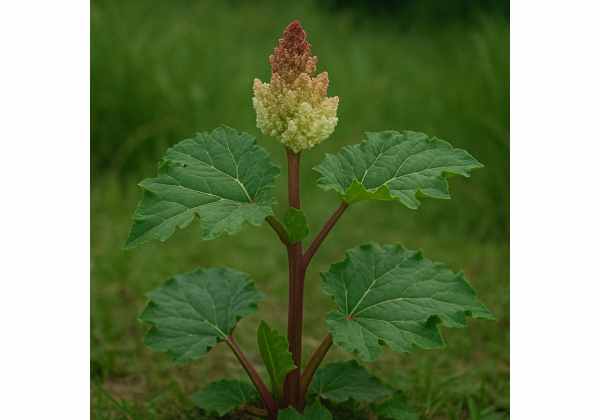
Turkey rhubarb, Rheum palmatum, is a medicinal root with a long history in Chinese, Middle Eastern, and European herbal practice. It is not the tart red stalk rhubarb eaten in pies and compotes. Instead, the medicinal part is the dried root or rhizome, prized for its anthraquinone compounds, its bitter and astringent constituents, and its strong effects on bowel movement. In modern herbal use, its best-supported role is short-term relief of occasional constipation. Traditional systems also used it in broader ways for digestive stagnation, “heat,” and liver or spleen complaints, while modern laboratory research continues to explore anti-inflammatory, antimicrobial, gut-modulating, and organ-protective effects.
That broader profile makes Turkey rhubarb genuinely interesting, but it also makes precision essential. This is not a daily wellness herb, and it is not a casual detox ingredient. The same anthraquinone compounds that give it therapeutic power also explain its safety limits. The most helpful way to understand Turkey rhubarb is to separate what is well established, what remains traditional or experimental, and what should be avoided.
Quick Facts
- Turkey rhubarb’s strongest accepted use is short-term relief of occasional constipation.
- Its root also contains tannins and polyphenols that help explain older digestive and astringent uses.
- A common adult range is 20 to 30 mg hydroxyanthracene derivatives, calculated as rhein, once daily at night for up to 1 week.
- Pregnant or breastfeeding people, children under 12, and anyone with bowel obstruction, inflammatory bowel disease, or severe dehydration should avoid it.
Table of Contents
- What Turkey rhubarb is and how it differs from culinary rhubarb
- Key ingredients and medicinal properties
- Potential health benefits and where the evidence is strongest
- Traditional and modern uses of Turkey rhubarb
- Dosage and how to use it carefully
- Safety, side effects, and interactions
- How to set realistic expectations and choose better options when needed
What Turkey rhubarb is and how it differs from culinary rhubarb
Turkey rhubarb is the dried root or rhizome of Rheum palmatum, often used interchangeably in medicinal literature with closely related species such as Rheum officinale and their hybrids. Historically, it was an important trade herb, moving from Asia into the Middle East and Europe, where it became known as a potent purgative and digestive remedy. The name “Turkey rhubarb” reflects trade routes rather than modern botany, and that old name still appears in herbal writing even though the plant is better known in traditional Chinese medicine as a form of medicinal rhubarb.
The first distinction readers need is simple but essential: medicinal rhubarb is not the same as culinary rhubarb. The stalks of food rhubarb are used as a sour ingredient in cooking, while Turkey rhubarb refers to the dried underground part of a medicinal species. The root contains hydroxyanthracene derivatives and related compounds that act strongly on the colon. That makes it pharmacologically active in a way that culinary rhubarb stalks are not.
A second distinction matters just as much: Turkey rhubarb is a stimulant laxative, not a gentle fiber herb. It belongs to the same general therapeutic neighborhood as senna and other anthraquinone-containing plants, although many herbal sources describe rhubarb as somewhat milder because its tannins partly moderate the laxative effect. This is one reason small amounts were historically described as more astringent, while larger or repeated amounts produced clearer purgative action. That old dose-dependent duality is interesting, but it should not be confused with a license for casual experimentation.
Today, the clearest accepted medicinal role for rhubarb root in European herbal regulation is short-term treatment of occasional constipation. That is the lane where the evidence, tradition, and standardized use line up most clearly. Beyond that, Turkey rhubarb has a much larger reputation in traditional medicine than it does in modern clinical practice. Historical texts describe uses for poor appetite, gastrointestinal catarrh, liver and spleen complaints, and even certain diarrheal states at low doses. Modern lab studies also explore kidney, liver, inflammatory, microbial, and metabolic pathways. But those broader claims are not the same thing as a well-established everyday indication.
This is why Turkey rhubarb deserves respect. It is not merely “an old-fashioned laxative,” but it also is not a catch-all tonic. It is a root with real pharmacologic power, real historical depth, and real limitations. The most responsible way to approach it is to start with the best-established use and treat the rest as background, not certainty.
A practical comparison is senna as another anthraquinone laxative herb. Both plants act on bowel motility and fluid handling, but Turkey rhubarb has a broader traditional identity and a slightly more complex balance between astringency and purgation. Even so, both demand short-term use and careful dosing.
Key ingredients and medicinal properties
Turkey rhubarb’s medicinal identity begins with its anthraquinones and related hydroxyanthracene derivatives. These are the compounds most closely associated with its accepted laxative effect and with many of its safety questions. The best-known names include rhein, emodin, aloe-emodin, chrysophanol, and physcion, along with anthrone and dianthrone-related compounds that help drive the root’s activity in the colon. In practical herbal terms, these are the constituents that make Turkey rhubarb powerful rather than merely bitter.
Yet the root is not chemically simple. It also contains tannins, stilbenes, polysaccharides, and other phenolic constituents. This broader chemistry helps explain why older herbalists described different effects at different doses. The tannins lend an astringent quality, which historically supported the idea that low doses could be drying or binding, while larger doses brought out the root’s more dominant purgative action. This does not mean people should self-dose for opposite effects. It does, however, explain why the herb has a more complicated historical reputation than a single-purpose laxative.
The most important medicinal properties linked to Turkey rhubarb include:
- Stimulant laxative action
- Stool-softening support through effects on water and electrolyte movement
- Bitter digestive activity
- Mild astringency linked to tannins
- Broad preclinical anti-inflammatory and antimicrobial interest
- Organ-protective and microbiome-modulating effects in experimental settings
Of these, the laxative effect is by far the best established. In the colon, anthraquinone-related compounds are metabolized into active forms that stimulate bowel movement and reduce reabsorption of water and electrolytes. This increases colonic fluid content and helps produce a softer stool. The effect is delayed, usually appearing after several hours rather than immediately, because the plant compounds need time to reach the large intestine and be converted into their active metabolites.
The delay is clinically useful because it explains why the root is typically taken at night. It is also one reason standardized dosing matters. Too little may do very little. Too much may cause griping pain, loose stools, dehydration, or electrolyte loss.
Modern pharmacology gives the plant an even broader profile. Anthraquinones from rhubarb species have been studied for anti-inflammatory, antifibrotic, antimicrobial, nephroprotective, hepatoprotective, antidiabetic, and microbiome-related effects. These signals are real enough to justify scientific interest. At the same time, the same review literature that highlights these benefits also points to toxicity concerns, especially with repeated exposure and multi-organ risk tied to anthraquinones. That duality is one of the central truths about Turkey rhubarb: its active chemistry drives both benefit and risk.
This is why the herb should never be described as a harmless “natural cleanser.” It is pharmacologically meaningful. Readers used to gentler digestive botanicals may find it helpful to compare it with other multi-compound digestive herbs such as ginger. Ginger supports digestion too, but it does so through warming, anti-nausea, and motility-related actions with a much wider safety margin for routine use. Turkey rhubarb is a different kind of digestive herb altogether.
Potential health benefits and where the evidence is strongest
Turkey rhubarb has a much longer list of proposed benefits than most people realize, but the evidence is not equally strong across all of them. The clearest way to understand the root is to separate its accepted short-term use from its broader traditional and preclinical profile.
1. Occasional constipation relief
This is the strongest and most defensible benefit. Regulatory bodies in Europe recognize rhubarb root for short-term use in occasional constipation, and this recommendation is based on long-standing documented use, pharmacologic understanding, and standardization to hydroxyanthracene derivatives. The effect is mechanistically clear: bowel movement is stimulated, water remains in the stool, and a softer bowel movement is produced. This is the use that aligns best with modern evidence, standardization, and real-world product guidance.
2. Improved stool frequency and consistency
A modern placebo-controlled trial in middle-aged adults found that rhubarb extract improved stool frequency and stool consistency in a dose-dependent way, with the higher tested dose showing faster and stronger effects. Some participants also reported better evacuation satisfaction. These findings are valuable because they move rhubarb beyond purely historical use. Even so, the study size was modest, and it does not erase the need for short-term caution.
3. Gut microbiome modulation
The same trial and broader preclinical work suggest that rhubarb may influence gut bacteria and short-chain fatty acid patterns. This is a meaningful area of interest because it suggests the root may do more than simply stimulate transit. It may also shape the microbial environment in ways that contribute to stool softness and bowel regularity. Still, this remains a developing area rather than an established clinical reason to take the herb daily.
4. Anti-inflammatory and antimicrobial potential
Reviews of rhubarb species consistently describe anti-inflammatory and antimicrobial activity, largely attributed to anthraquinones and related compounds. These effects may help explain some traditional uses for digestive or inflammatory conditions. But for Turkey rhubarb itself, these are still research-level findings, not a basis for home treatment of infection or chronic inflammatory disease.
5. Organ-protective and metabolic effects
Modern studies also explore rhubarb in liver, kidney, fibrosis, metabolic, and oxidative-stress models. These results are intriguing, especially in traditional Chinese medicine contexts where rhubarb has long been used as part of complex formulas. However, the evidence here is far less settled than the constipation data. The same compounds associated with protective effects may also contribute to toxicity depending on dose, duration, and preparation.
This creates a very practical conclusion: the root’s most reliable benefit is still short-term help for occasional constipation. Everything beyond that is more exploratory. That does not make the broader findings irrelevant, but it does mean they belong in the “promising” column rather than the “proven” one.
For readers with constipation who want a gentler starting point, psyllium as a fiber-first option for constipation is often more appropriate for routine use. Turkey rhubarb tends to fit better as a short-term stimulant option when fiber, fluid, and other mild measures have not been enough.
Traditional and modern uses of Turkey rhubarb
Turkey rhubarb has always had a larger reputation than its modern regulatory indication alone would suggest. In traditional Chinese medicine, rhubarb was used in formulas not only for bowel stagnation, but also for conditions framed as excess heat, accumulation, blood stasis, or toxicity. In older European herbalism, it was used as a laxative, a purgative, a stomachic, an appetite aid, and, in certain dose ranges, as an astringent digestive herb. Historical writers also associated it with liver and spleen complaints.
That history helps explain why the root continues to attract attention in modern research. It is not a newly fashionable plant being forced into relevance. It is an old medicine with a large therapeutic tradition. The problem is that tradition and modern evidence do not always align cleanly.
In practical terms, the traditional and modern uses can be grouped into four categories.
1. Short-term bowel support
This is the most modern and best-regulated use. Today, rhubarb root is primarily positioned as a short-term stimulant laxative for occasional constipation.
2. Historical low-dose digestive use
Older herbal traditions sometimes used smaller amounts for sluggish digestion, poor appetite, loose stool patterns, or gastrointestinal catarrh. This part of the tradition reflects the herb’s bitter and tannic qualities as much as its anthraquinones. It is historically interesting, but not a well-standardized self-care use today.
3. Traditional formula use
In Chinese medicine, Turkey rhubarb was rarely viewed as a one-note herb. It often appeared in formulas with other botanicals, where its effects were shaped by the rest of the prescription and by the patient’s overall pattern. This is important because many broader claims about rhubarb come from formula traditions, not from isolated root self-use.
4. Experimental modern applications
Recent research explores rhubarb for inflammatory conditions, kidney disease, liver injury, metabolic disorders, gut microbiome balance, and even fibrosis-related mechanisms. This is one reason the root still seems relevant in pharmacologic literature. But for readers outside specialized practice, these uses remain experimental.
This gap between historical breadth and modern evidence is where many articles go wrong. They present the whole traditional list as if it were a menu of proven uses. A more responsible approach is to say that Turkey rhubarb’s broader uses are historically meaningful and scientifically suggestive, but only the laxative use is well enough defined for modern short-term self-care.
That also means Turkey rhubarb should not be casually framed as a liver detox herb, even though historical and preclinical literature mentions liver-related actions. Readers who are mainly looking for a gentler and more familiar herb in that category would be better served by milk thistle for better-known liver support rather than by stimulant rhubarb root.
Used thoughtfully, Turkey rhubarb is best seen as a powerful traditional root with a narrow modern self-care role and a wider research footprint. That is a more helpful and more honest conclusion than pretending all of its old uses are equally ready for home use today.
Dosage and how to use it carefully
Turkey rhubarb dosing is one of the areas where modern guidance is actually more precise than many people expect. For adults, elderly individuals, and adolescents over 12 years, a commonly accepted standardized dose is 20 to 30 mg hydroxyanthracene derivatives, calculated as rhein, taken once daily at night. The goal is not to “take as much as needed.” The goal is to use the smallest amount required to produce a comfortable soft-formed stool.
For herbal tea preparations, the relevant guidance is based on an amount of comminuted herbal substance equivalent to not more than 30 mg hydroxyanthracene derivatives in about 150 ml of boiling water. The product form should also allow lower doses, because sensitivity varies, and some people develop cramping or loose stools even in the accepted range.
Duration matters as much as dose. Turkey rhubarb should not be used for more than 1 week. In fact, guidance often notes that it is usually sufficient to take it only two to three times during that week. If constipation continues, worsens, or requires daily laxative use, the right response is not to keep increasing rhubarb. The right response is to investigate the cause.
This is where an important nuance enters. A placebo-controlled trial in middle-aged adults used rhubarb extract at 12.5 mg and 25 mg hydroxyanthracene derivatives per day for one month and found dose-dependent improvements in bowel habits without major laboratory safety changes over that period. That is useful evidence, but it should not be treated as permission to ignore the short-term regulatory guidance. The trial was modest, focused on a specific population, and does not settle the broader safety questions around repeated anthraquinone exposure.
In practical use, several rules help keep dosing sensible:
- Use it only when fiber, fluid, and routine measures have not been enough.
- Take the lowest effective dose.
- Expect a delayed effect, usually by the next morning.
- Stop if strong cramping or diarrhoea develops.
- Do not turn a rescue laxative into a daily habit.
Another dosing mistake is assuming that “natural extract” and “standardized medicinal dose” are interchangeable. They are not. Some products may be powders, some teas, some liquid extracts, and not all provide a clear amount of hydroxyanthracene derivatives. Without that clarity, the product is harder to use responsibly.
This is one reason daily bowel support is often better approached first through lifestyle and bulk-forming measures rather than stimulant herbs. Turkey rhubarb may be effective, but it is not the best first-line choice for long-term constipation management.
Safety, side effects, and interactions
Turkey rhubarb’s safety profile is inseparable from its anthraquinones. These compounds explain both its therapeutic effect and most of its important risks. In the short term, adverse effects often reflect simple overuse: abdominal pain, griping, spasm, loose stool, or diarrhoea. With longer or repeated use, the concerns become more serious and include electrolyte loss, dependency on laxatives, and impaired bowel function.
The most commonly discussed side effects include:
- Abdominal pain or cramping
- Loose stools or diarrhoea
- Yellow to red-brown discoloration of urine
- Hypersensitivity reactions such as itching or rash
- Water and electrolyte imbalance with chronic use
- Albumin in urine or blood in urine with long-term abuse
- Pigmentation of the intestinal lining with prolonged use
The groups who should avoid Turkey rhubarb are especially important:
- Children under 12
- Pregnant individuals
- Breastfeeding individuals
- People with bowel obstruction or stenosis
- People with intestinal atony
- People with appendicitis
- People with inflammatory bowel disease such as Crohn’s disease or ulcerative colitis
- People with unexplained abdominal pain
- People with severe dehydration or electrolyte loss
Kidney disease deserves extra caution because electrolyte shifts are more likely to matter. Long-term laxative abuse can also worsen potassium depletion, which has consequences far beyond the gut.
Interactions are another reason this root is not casual. Rhubarb root should be used carefully or avoided with:
- Cardiac glycosides
- Antiarrhythmic drugs
- Medicines associated with QT prolongation
- Diuretics
- Adrenocorticosteroids
- Liquorice root
The reason is straightforward: chronic laxative-induced hypokalaemia can intensify the effects or risks of these medicines. This is not theoretical. It is one of the main ways seemingly simple herbal laxatives can become medically significant.
A newer and even more serious concern comes from European food-safety evaluation of hydroxyanthracene derivative-containing preparations. In that context, the safety of preparations containing these compounds from rhubarb root could not be established, largely because of ongoing concern around genotoxic anthraquinone-type constituents and the lack of a safe threshold for long-term food-supplement style exposure. This does not cancel traditional medicinal use outright, but it strongly supports caution, especially with chronic or supplement-style use.
If a reader needs gentler digestive support rather than a stimulant laxative, peppermint for gentler digestive support is often a much better fit. Turkey rhubarb is useful, but its usefulness depends on treating it as a short-term tool, not a daily digestive tonic.
How to set realistic expectations and choose better options when needed
Turkey rhubarb is one of those herbs that becomes safer and more useful the moment expectations become narrower. It is not a daily gut-health supplement. It is not an all-purpose “liver cleanser.” It is not a broad detox herb for long-term use. Its strongest modern role is much simpler: short-term help for occasional constipation when softer measures have not worked well enough.
That may sound modest, but modesty is what makes the herb practical. A root with a defined, limited purpose is easier to use safely than a root advertised as a solution for everything. In real life, Turkey rhubarb is usually best reserved for situations like these:
- Short-term occasional constipation
- Need for a stronger bowel-moving effect than fiber alone has provided
- Situations where the user can clearly stop after a few doses
It is a poor choice when the situation looks like this:
- Daily reliance on laxatives
- Ongoing abdominal pain without diagnosis
- Suspected bowel obstruction
- Chronic inflammatory bowel disease
- Pregnancy or breastfeeding
- Desire for a vague “cleanse” or routine detox plan
A good practical rule is to ask what you really want the herb to do. If the answer is “help me have a bowel movement in the short term,” Turkey rhubarb may fit. If the answer is “support my digestion every day,” “improve my liver,” or “keep me regular long term,” there are usually better options.
This is where gentler alternatives deserve attention. Bulk-forming fiber, hydration, movement, meal rhythm, and softer herbs are often better first steps. A plant such as dandelion as a milder traditional digestive bitter works in a very different way and may fit better when the real issue is sluggish digestion rather than true constipation. Likewise, psyllium, fruit, magnesium, and bowel habits often matter more than a stimulant herb when the goal is long-term regularity.
Another realistic expectation concerns broader benefits. Turkey rhubarb’s preclinical anti-inflammatory, renal, hepatic, metabolic, and microbiome-related effects are scientifically interesting. But if a reader buys a supplement for those reasons alone, they may end up taking a compound-rich laxative root more often than is wise. That is the kind of mismatch good herbal practice tries to avoid.
The herb’s strongest future may actually lie in more specialized, better-characterized formulations or in formula-based practice rather than in broad self-directed supplement use. Until then, its safest modern identity remains narrow and clear.
That is the final lesson of Turkey rhubarb: it is a serious root, not a casual health food. Used briefly and appropriately, it can be effective. Used chronically or vaguely, it becomes much harder to justify.
References
- Rhubarb: Traditional Uses, Phytochemistry, Multiomics-Based Novel Pharmacological and Toxicological Mechanisms 2025 (Review)
- Scientific Opinion on additional scientific data related to the safety of preparations of Rheum palmatum L., Rheum officinale Baill. and their hybrids, Rhamnus purshiana DC., Rhamnus frangula L. and Cassia senna L., submitted pursuant to Article 8(4) of Regulation (EC) No 1925/2006 2024 (Scientific Opinion)
- Constipation Mitigation by Rhubarb Extract in Middle-Aged Adults Is Linked to Gut Microbiome Modulation: A Double-Blind Randomized Placebo-Controlled Trial 2022 (RCT)
- Rhubarb root 2020 (EMA Summary)
- Assessment report on Rheum palmatum L. and Rheum officinale Baillon, radix 2019 (EMA Assessment Report)
Disclaimer
This article is for educational purposes only and is not medical advice, diagnosis, or treatment. Turkey rhubarb is a stimulant laxative root with meaningful pharmacologic activity and meaningful risks. It should not be used as a substitute for medical care for persistent constipation, abdominal pain, inflammatory bowel disease, dehydration, or suspected bowel obstruction. Because of concerns tied to hydroxyanthracene derivatives, long-term or unsupervised use is not appropriate. Pregnant or breastfeeding people, children under 12, and anyone with kidney disease or complex medication use should seek professional guidance before use.
If this article was useful, please share it on Facebook, X, or any other platform where careful herbal information can help others.