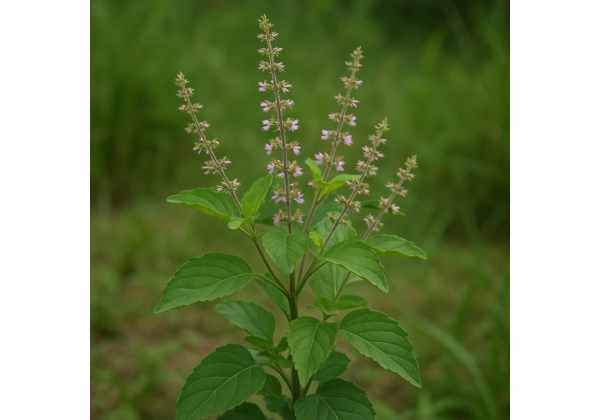
Tulsi, widely known as holy basil, is one of the most respected herbs in Ayurvedic tradition and one of the most studied sacred plants in modern herbal medicine. Although many people still use the name Ocimum sanctum, current botanical literature often identifies tulsi as Ocimum tenuiflorum. In practice, both names are commonly used for the same revered herb. What makes tulsi especially compelling is its unusual range: it is used as a daily tea, a ritual plant, a culinary herb, and a medicinal botanical associated with stress resilience, metabolic balance, immune support, and respiratory comfort.
Its growing scientific appeal comes from the fact that tulsi is not built around a single famous compound. Instead, it contains a diverse phytochemical profile that includes eugenol, ursolic acid, rosmarinic acid, and many volatile oils and polyphenols that appear to work together. The evidence is promising, especially for stress-related outcomes and broader cardiometabolic support, but product quality and dosage still matter. A useful guide therefore needs both appreciation and caution, which is exactly the balance this article aims to provide.
Key Takeaways
- Tulsi may help support stress resilience, mood steadiness, and sleep quality in adults under everyday stress.
- The herb also shows promise for metabolic and cardiometabolic support, especially in glucose and lipid-related research.
- A practical supplement range in studied products is often about 250 to 500 mg of standardized extract daily, though teas and powders vary widely.
- Avoid unsupervised use during pregnancy, when trying to conceive, with bleeding disorders, or when taking diabetes medicines, blood thinners, or multiple prescription drugs.
Table of Contents
- What Tulsi Is and Why the Name Can Be Confusing
- Key Ingredients in Holy Basil
- Tulsi Health Benefits and Medicinal Properties
- Traditional Uses and Modern Practical Applications
- How Tulsi Is Prepared and Used
- Dosage Timing and How Much Tulsi to Take
- Safety Side Effects Interactions and Who Should Avoid It
What Tulsi Is and Why the Name Can Be Confusing
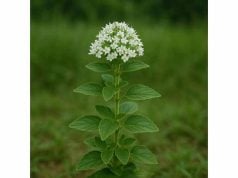
Tulsi is an aromatic member of the mint family, native to the Indian subcontinent and deeply woven into Ayurvedic, spiritual, and household life. It is often grown near homes and temples, brewed as a daily infusion, and used for a wide range of traditional purposes that span body, mind, and ritual practice. As a plant, it is recognizable by its fragrant leaves, branching stems, small flowers, and distinctly spicy, clove-like, peppery aroma.
One point that often confuses readers is the botanical naming. Many books, supplement labels, and older clinical papers refer to holy basil as Ocimum sanctum. More recent botanical sources often use Ocimum tenuiflorum. In ordinary consumer use, these names usually refer to the same tulsi herb, though exact chemotypes and cultivars can differ. That matters because one tulsi tea or extract may not be chemically identical to another, even when the common name is the same.
Traditional systems also distinguish between forms such as Rama Tulsi, Krishna Tulsi, and Vana Tulsi. These are not just poetic names. They may differ in appearance, aroma, and phytochemical emphasis. Some are greener and milder, some darker and more pungent, and some are treated more like wild or forest-associated forms. For most consumers, however, these differences matter less than product quality, preparation, and intended use.
Tulsi is often described as an adaptogen, but that word is sometimes used too casually. In practical terms, it means the herb is thought to help the body respond more gracefully to stress rather than merely stimulating or sedating it. That is one reason tulsi attracts so much attention from modern users who are looking for an herb that feels supportive without being heavy or overly stimulating. In this respect, it is often compared with ashwagandha for stress support, though the two plants have different chemistry, sensory character, and traditional framing.
Tulsi is also unusual because it sits comfortably between food and medicine. It can be sipped as tea, taken as an extract, added to herbal formulas, inhaled as aromatic steam, or used in fresh leaf preparations. That broad versatility is part of its appeal, but it also creates confusion. People sometimes assume that because tulsi is widely drunk as tea, every extract is equally gentle. That is not always true.
The best way to understand tulsi is as a traditional daily-use herb with meaningful modern research interest, especially in stress, cognition, glucose balance, and cardiometabolic support. It is gentler than many people expect, but active enough that its forms, doses, and safety boundaries still matter.
Key Ingredients in Holy Basil
Tulsi’s medicinal reputation rests on a complex phytochemical profile rather than on a single superstar compound. This is one reason it has remained so important in traditional medicine and so intriguing in modern research. The plant contains volatile oils, phenolic compounds, flavonoids, triterpenes, and other secondary metabolites that appear to act together across stress, inflammatory, metabolic, and microbial pathways.
Among the best-known compounds is eugenol, a fragrant phenolic constituent also found in clove. Eugenol helps explain some of tulsi’s aromatic sharpness and may contribute to anti-inflammatory, antioxidant, and antimicrobial effects. Tulsi also contains ursolic acid, which is often discussed in relation to inflammation, metabolic signaling, and tissue protection. Another important compound is rosmarinic acid, a polyphenol associated with antioxidant and calming plant profiles.
Other frequently discussed constituents include:
- Linalool, which contributes aroma and may support calming effects
- Caryophyllene, a sesquiterpene with anti-inflammatory interest
- Apigenin and luteolin, flavonoids with antioxidant and signaling roles
- Oleanolic acid, a triterpene connected with metabolic and hepatic research
- Various tannins and polyphenols, which broaden the plant’s antioxidant profile
Tulsi’s volatile oils deserve special attention because they vary by cultivar, growing conditions, drying method, and plant part. A fresh leaf chewed from a garden plant does not behave exactly like a capsule made from dried leaf extract or like a distilled essential oil. This is why it is more helpful to think of tulsi as a family of preparations rather than a single identical product.
The herb’s chemical complexity also helps explain why it has such a broad traditional reach. A plant containing aromatic oils, phenolics, and triterpenes can affect sensory pathways, digestion, inflammatory tone, microbial balance, and stress physiology all at once. That does not mean tulsi is a cure-all. It means its chemistry is broad enough to support several plausible mechanisms without having to rely on one narrow explanation.
For readers used to more sharply defined herbal actives, tulsi can seem diffuse. It is not as simple as matching one herb to one compound. A better analogy is the way layered polyphenol-rich botanicals work in general. For instance, some people appreciate green tea for its polyphenol complexity; tulsi operates with a different chemistry, but with a similarly broad-spectrum botanical logic.
What matters most in practice is that tulsi’s effects likely arise from synergy. The plant’s volatile oils, polyphenols, and triterpenes all contribute to its medicinal identity. That is also why full-spectrum extracts may feel different from isolated compounds. Tulsi is one of those herbs where the whole phytochemical orchestra matters more than any single instrument.
Tulsi Health Benefits and Medicinal Properties
Tulsi has one of the broader evidence profiles among traditional herbs, but its benefits are best understood in layers. Some are supported by human trials, some are supported mostly by preclinical work, and some are traditional uses still waiting for stronger confirmation. The strongest modern case for tulsi is not that it cures everything. It is that it may offer steady, moderate support across stress physiology, metabolic balance, inflammation, and resilience.
The clearest and most modernly relevant benefit is stress support. Tulsi is often described as an adaptogen because studies suggest it may help reduce subjective stress, improve mood-related measures, and in some cases improve sleep quality in stressed adults. This does not mean it functions as a sedative. In fact, many people find tulsi clarifying rather than drowsy. The better description is that it may help soften the physiological edge of chronic stress.
A second important area is metabolic support. Human and preclinical research suggests tulsi may help with glucose handling, lipid markers, and certain cardiometabolic risk factors. These effects are not dramatic enough to replace diet, exercise, or prescribed care, but they are strong enough to keep the herb relevant in integrative discussions. That is especially useful for people who want a daily herb that aligns with broader metabolic goals rather than offering only one narrow symptom effect.
A third key area is anti-inflammatory and antioxidant activity. Tulsi’s phenolics, flavonoids, and triterpenes give it a biologically plausible role in reducing oxidative burden and calming inflammatory signaling. This may help explain why the plant appears in such a wide range of traditional contexts, from respiratory support to recovery after strain.
A fourth area is cognitive and mood-related support. Some clinical and traditional evidence suggests tulsi may help with attention, mental clarity, and stress-related cognitive dullness. This is not the same as using a stimulant. Tulsi tends to be valued more for steadiness than for intensity. People looking for sharper nervous-system tonics sometimes compare it with bacopa for cognitive support, but tulsi is usually gentler, more aromatic, and more stress-centered in feel.
A fifth area is immune and microbial relevance. Tulsi has a long history in respiratory and seasonal wellness traditions, and its aromatic, antimicrobial, and immunomodulatory profile helps explain why. While it should not be marketed as a stand-alone infection treatment, it fits well into the category of herbs traditionally used to support the body during periods of heightened exposure or seasonal stress.
Taken together, tulsi’s medicinal properties are best understood as follows:
- moderate adaptogenic and anti-stress support
- useful broad metabolic and cardiometabolic relevance
- meaningful antioxidant and anti-inflammatory activity
- mild cognitive, respiratory, and immune-support potential
That combination is why tulsi remains so attractive. It is not a single-problem herb. It is a multi-system supportive plant whose strongest value comes from regular, well-matched use rather than from dramatic short-term effects.
Traditional Uses and Modern Practical Applications
Tulsi has one of the richest traditional identities of any commonly used herb. In Ayurveda, it is not just a medicine but a revered household plant associated with purification, resilience, and wellbeing. Traditionally, it has been used for cough, cold, digestion, mood, fatigue, skin issues, and spiritual ritual. It has also been used as a daily tonic, which is one reason modern consumers often encounter it first as tea rather than as a capsule.
The respiratory tradition is especially prominent. Tulsi has long been used in warm infusions, often with ginger, black pepper, or honey, when the weather changes or when the chest and throat feel strained. This does not make it a replacement for medical treatment of respiratory illness, but it does explain why it remains one of the most familiar herbs in household wellness practice.
Tulsi has also been used traditionally for digestive comfort. Aromatic herbs often help by encouraging digestive secretions, easing heaviness, and providing a sense of warmth and movement. Tulsi fits naturally into that category. Its taste is pungent, slightly bitter, and enlivening, which is often a clue that a plant can support digestion in subtle but useful ways. For readers interested in this broader digestive-aromatic style, ginger offers a comparable warming digestive logic, though tulsi is generally lighter and more aromatic.
Modern practical use tends to fall into a few categories:
- daily tea for general calm, warmth, and ritual support
- standardized extracts for stress or metabolic goals
- seasonal respiratory formulas
- culinary and fresh-leaf use
- adjunctive wellness support as part of a broader routine
One of tulsi’s most practical advantages is that it bridges the gap between gentle daily use and more targeted therapeutic use. A person may drink tulsi tea simply because it feels centering. Another may use a standardized extract for a defined period during a stressful season. Both uses can make sense, but they are not interchangeable.
This is where modern application diverges from tradition. Traditional use often emphasized fresh leaves, decoctions, and context-specific combinations. Modern use more often involves capsules with stated extract ratios, branded adaptogenic products, or wellness blends. Neither approach is automatically better, but each creates different expectations. Tea use is generally gentler and less concentrated. Extract use is more likely to produce measurable effects, but also deserves more care around dosing and interactions.
Tulsi works best when its application matches the goal. As a tea, it excels in repetition and ritual. As an extract, it is better suited for people who want a more defined intervention. As a culinary herb, it adds fragrant complexity and botanical value without pretending to be a drug. This flexibility is one reason tulsi remains so enduring: it can be sacred, practical, and medicinal without having to be extreme.
How Tulsi Is Prepared and Used
Tulsi can be used in more forms than most herbs, and the chosen form changes both its feel and its intensity. The simplest and most traditional preparation is tea. Fresh or dried leaves are steeped in hot water to create a pungent, aromatic infusion that is often taken once or several times daily. This is how many people first meet the herb, and for general support it remains one of the best formats.
The herb is also used as:
- fresh leaf
- dried leaf tea
- powder
- capsules and tablets
- standardized extracts
- tinctures
- essential oil for aromatic use
- multi-herb formulas
Tea is the gentlest entry point. It suits people who want tulsi as a daily ritual herb rather than as a concentrated intervention. Fresh leaves can be chewed or added to infusions, though their potency and flavor vary by cultivar and freshness. Powders are more common in traditional-style practice, especially where the whole leaf or whole herb is preferred.
Capsules and extracts are more convenient for people who want consistency. This is especially relevant for stress-related use, since modern trials often investigate defined extracts rather than casual tea drinking. Still, extracts are not interchangeable. One product may be standardized to certain marker compounds, while another is just powdered leaf in a capsule. That difference is important and often underappreciated.
Tinctures offer a middle ground between tea and capsules. They are easy to dose, easy to combine with other herbs, and often felt more quickly than a tea. However, they still vary widely in strength depending on extraction method and herb-to-solvent ratio.
Tulsi is also frequently combined with other herbs. In tea blends it often appears with ginger, cinnamon, chamomile, licorice, or lemongrass. In supplement products it may be paired with other adaptogens or calming plants. These combinations can be helpful, but they also make it harder to understand what tulsi itself is doing. For evening routines, for example, a person might find lemon balm for calming tea support a useful companion when tulsi is being used more for balance than for intensity.
Aromatically, tulsi essential oil is much more concentrated than tea or leaf products and should not be treated as equivalent. Essential oil use belongs mainly to diffuser or topical aromatherapy settings and requires more caution than ordinary tulsi tea.
The broad rule is simple: choose the mildest form that fits the goal. For daily centering, tea is often enough. For defined stress-support goals, a reputable extract may make more sense. For culinary use, fresh leaves bring a fragrant lift without overcomplicating the dose. Tulsi is highly adaptable, but the smartest use is usually the one that respects the difference between a daily herb and a concentrated botanical extract.
Dosage Timing and How Much Tulsi to Take
Tulsi dosage depends heavily on the form. A cup of tea, a teaspoon of dried leaf, a tincture dropper, and a branded extract cannot be treated as if they are equivalent. That is why the best dosing advice begins with the product category, not with one fixed number.
For tea, many adults do well with 1 to 3 cups daily, using roughly 2 to 4 g of dried leaf per cup depending on strength and tolerance. This is a practical daily-use range rather than a strict clinical formula. It suits people who want tulsi as part of a regular calming or restorative routine.
For standardized extracts, a practical range in studied or commercial products is often around 250 to 500 mg daily, though some trials use specific proprietary preparations and durations. One reason readers should not copy trial doses blindly is that branded extracts can differ significantly in concentration and phytochemical profile. The label matters.
For powders, dosing can fall into gram-level territory, but this varies widely by tradition and product quality. Whole-herb powders are often less concentrated than extracts, which is why a larger numeric dose does not necessarily mean a stronger effect.
Timing also matters. Tulsi is usually flexible. Because it is not strongly sedating or strongly stimulating for most people, it can be used in the morning, afternoon, or early evening. That said, patterns differ:
- morning use often suits people taking tulsi for stress steadiness through the day
- afternoon use can fit people who want a calmer, non-caffeinated reset
- evening tea may suit some, though highly aromatic or strongly brewed forms may feel activating in sensitive individuals
A useful rule is to match timing to the reason for use. If the main goal is daytime resilience, earlier use makes more sense. If the goal is a calming ritual, later tea use may work well. Tulsi is gentler than caffeine, but people with very delicate sleep may still want to test it earlier first.
Duration is another area where moderation helps. Tulsi can be used as a daily tea herb for extended periods by many adults, but concentrated extracts are often better used in defined blocks, such as several weeks to a few months, followed by reassessment. This is especially true when the herb is being used for stress, glucose balance, or cardiometabolic goals rather than simple tea enjoyment.
If a person wants a more clearly sedating herb for nighttime use, valerian for sleep support is a more direct choice than trying to make tulsi act like a sleep drug.
In the end, the best tulsi dose is not the highest tolerated one. It is the lowest amount that consistently supports the goal, whether that means one gentle cup of tea or a carefully chosen standardized extract.
Safety Side Effects Interactions and Who Should Avoid It
Tulsi is generally considered well tolerated in tea and moderate supplement use, but that should not be mistaken for universal safety in every situation. Like many active herbs, it is gentle for many people and still important enough to warrant caution in those with specific conditions, medications, or reproductive concerns.
Most side effects are mild when they occur. They can include:
- stomach discomfort
- nausea
- lightheadedness
- changes in appetite
- excessive relaxation or, less commonly, feeling a little activated
- allergic reaction in people sensitive to basil-family plants
The bigger issue is not ordinary side effects. It is interaction risk and context. Tulsi may influence blood sugar, stress physiology, platelet activity, and certain metabolic pathways, which means it deserves more care in people taking medications for diabetes, coagulation, or multiple chronic conditions.
The groups most often advised to use caution or avoid tulsi without professional guidance include:
- pregnant people
- people trying to conceive
- breastfeeding people
- those with bleeding disorders
- people scheduled for surgery
- those taking blood thinners or antiplatelet drugs
- people using diabetes medicines
- those on complex multi-drug regimens
The fertility-related caution is especially worth noting because it is less widely known than tulsi’s stress benefits. Some traditional and preclinical data have led to caution around reproductive use, especially in concentrated supplemental forms. That does not mean a single cup of tea is proven harmful, but it is enough to justify avoiding casual high-dose use when conception or pregnancy is relevant.
Tulsi also deserves common-sense caution in people who assume “natural” means infinitely stackable. It is easy to combine tulsi with other stress herbs, sleep blends, glucose-support supplements, and aromatic formulas. But the more herbs and supplements a person layers, the harder it becomes to predict effects. Someone already using multiple adaptogens, metabolic products, or calming herbs should step back and simplify before adding more. A similar caution applies when combining it with herbs such as cinnamon in metabolic support routines, where the goal may overlap and create unintended stacking.
Another practical safety point is that tulsi tea and tulsi extract are not the same risk category. Tea is usually the gentler choice. Concentrated extracts deserve more careful label reading, dosing discipline, and medical awareness.
The bottom line is reassuring but not casual. Tulsi is one of the more versatile and approachable medicinal herbs, yet it still deserves respect. Used thoughtfully, it can be a valuable daily or seasonal support herb. Used impulsively, especially in concentrated form alongside medications, it can create avoidable problems.
References
- The Clinical Efficacy and Safety of Tulsi in Humans: A Systematic Review of the Literature 2017 (Systematic Review)
- A randomized, double-blind, placebo-controlled trial investigating the effects of an Ocimum tenuiflorum (Holy Basil) extract (HolixerTM) on stress, mood, and sleep in adults experiencing stress 2022 (RCT)
- Harnessing the Antibacterial, Anti-Diabetic and Anti-Carcinogenic Properties of Ocimum sanctum Linn (Tulsi) 2024 (Review)
- Ocimum tenuiflorum L. (Holy basil) in modern medicine 2024 (Review)
Disclaimer
This article is for educational purposes only and is not a substitute for medical advice, diagnosis, or treatment. Tulsi may affect blood sugar, bleeding risk, medication response, and reproductive considerations, especially in concentrated supplemental forms. Speak with a qualified healthcare professional before using tulsi medicinally if you are pregnant, breastfeeding, trying to conceive, preparing for surgery, living with a chronic condition, or taking prescription medicines.
If you found this article helpful, please share it on Facebook, X, or your preferred platform so others can learn about tulsi with a more balanced and evidence-aware perspective.