Udumbar, also known as Ficus racemosa or cluster fig, is a traditional medicinal tree valued across Ayurveda and related herbal systems for its bark, fruit, latex, and leaves. In practice, the bark is the part most often used when the goal is to calm irritated tissue, support bowel balance, and provide astringent, cooling support for the mouth, skin, and digestive tract. Modern research has added useful context to that old reputation. Udumbar contains tannins, flavonoids, sterols, and other phytochemicals that help explain its antioxidant, anti-inflammatory, antimicrobial, and glucose-supporting potential.
At the same time, this is not a miracle herb with strong modern clinical proof for every traditional claim. Most of the evidence remains preclinical, and the human data are still limited. That makes a practical, safety-first approach essential. The most helpful way to understand udumbar is to ask a few grounded questions: what it is, what compounds it contains, what benefits are most plausible, how it is commonly used, how much is reasonable, and when it is better avoided.
Quick Overview
- Udumbar is best known for astringent support in loose stools, irritated mucous membranes, and minor topical tissue irritation.
- Its bark and fruit contain tannins, flavonoids, and plant sterols that may support antioxidant and anti-inflammatory balance.
- Traditional internal use often falls around 3 to 6 g/day of bark powder or 50 to 100 mL/day of decoction.
- People who are pregnant, breastfeeding, or taking diabetes medicines should not self-prescribe concentrated udumbar extracts.
Table of Contents
- What is udumbar
- Key ingredients and medicinal properties
- Udumbar health benefits and what the evidence suggests
- Traditional and modern uses
- How to use udumbar in practice
- Dosage, timing, and duration
- Safety, side effects, and interactions
What is udumbar
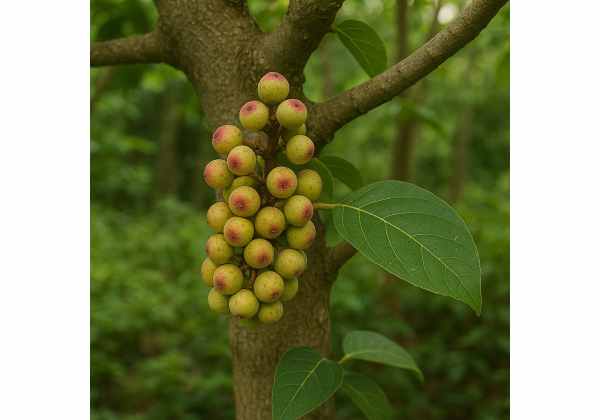
Udumbar is the Sanskrit and Ayurvedic name commonly used for Ficus racemosa, a medium to large tree in the Moraceae family. It is also called cluster fig because its reddish figs grow in dense clusters along the trunk and older branches rather than only at the tips. Across South Asia, the tree is familiar not only as a medicinal species but also as a food, shade, and ecological plant. In herbal medicine, however, the emphasis is less on the ripe fruit as a snack and more on the bark and related preparations.
The herb’s traditional character is strongly astringent. That matters because astringent herbs are usually chosen when tissue feels overly “loose,” wet, inflamed, or irritated. In practical terms, that often means loose stools, gum irritation, superficial skin ooze, mild bleeding-prone tissues, or a feeling of excessive heat and soreness in the mouth or gut. This is one reason udumbar is quite different from broader tonic herbs. It is usually selected for a more focused job: toning, cooling, and calming irritated surfaces.
Different parts of the plant have different uses:
- Stem bark is the main medicinal part for decoctions, powders, and capsules.
- Fruit is used both as a food and in some traditional preparations.
- Latex is mostly used externally and requires more caution.
- Leaves and roots appear in older ethnomedicinal use, but they are less standardized in modern products.
Plant part matters because udumbar is not one uniform substance. A bark decoction behaves differently from a fruit powder, and both differ from a concentrated extract. That is one reason the herb can seem inconsistent from one product to another.
In classical-style use, udumbar is often grouped with other cooling, astringent botanicals and fruits, including amalaki, especially when the goal is mucosal support, digestive balance, or restoring irritated tissues. Still, udumbar occupies its own niche. Compared with more sour antioxidant fruits or more bitter cleansing herbs, it tends to be thought of as steadier, drier, and more tissue-tightening.
For modern readers, the most useful translation is simple: udumbar is a bark-centered herbal remedy with traditional roles in digestive, oral, skin, and metabolic support, but it should be matched carefully to the problem rather than used as a general cure-all. That distinction helps keep expectations realistic from the start.
Key ingredients and medicinal properties
Udumbar’s medicinal profile comes from a layered mix of phytochemicals rather than one dominant active compound. That is common in traditional botanicals, but with Ficus racemosa the astringent character is especially important because it connects chemistry to real-world use. When people say udumbar “tones” tissue or helps calm irritated surfaces, they are usually talking about the functional effects of tannins and related phenolic compounds.
Reported constituents in different parts of the plant include:
- Tannins and phenolic acids, including gallic acid and ellagic acid
- Flavonoids such as catechin, quercetin, kaempferol, myricetin, and related compounds
- Plant sterols such as beta-sitosterol and stigmasterol
- Triterpenoid-type compounds
- Glycosides and coumarin-related constituents, including psoralen in some analyses
This chemistry helps explain why udumbar is repeatedly studied for several broad actions.
First, it has strong antioxidant potential. That does not mean it works like a vitamin pill. It means its polyphenols may help buffer oxidative stress and protect tissues from inflammatory wear. This is one reason the herb keeps appearing in research on metabolic, inflammatory, and tissue-protective pathways.
Second, it shows anti-inflammatory promise. The most believable mechanism is not that it “switches off” inflammation completely, but that its polyphenols and related compounds may moderate inflammatory signaling and reduce tissue irritation. This fits traditional use surprisingly well, especially for bark washes, mouth applications, and bowel complaints marked by soreness.
Third, the bark appears to have antimicrobial relevance in laboratory settings. That does not make udumbar an herbal antibiotic, but it does help explain why it has a long history of use in oral care, wound washes, and topical preparations for irritated skin.
Fourth, some compounds may influence glucose and lipid handling. This is where plant sterols and polyphenols become especially interesting. The evidence is still far from definitive, but it provides a plausible biochemical basis for the herb’s traditional use in diabetes-support formulas.
A practical point often gets missed: the chemistry changes with the plant part and preparation. Whole bark powder carries a different matrix than a hydroalcoholic extract. A decoction favors water-soluble constituents. A capsule made from whole powdered bark may feel gentler but less concentrated than a standardized extract.
This also explains why udumbar is not interchangeable with other tree-based medicinal herbs. Compared with neem, for example, udumbar is usually chosen less for strongly bitter cleansing action and more for soothing, astringent, tissue-calming work. The overlap exists, but the personality of the herb is different.
The bottom line is that udumbar’s medicinal properties are best understood as a combination of astringent, antioxidant, anti-inflammatory, and mild antimicrobial effects, with some early metabolic promise. That mix makes it versatile, but also easy to oversell unless the intended use is kept specific.
Udumbar health benefits and what the evidence suggests
Udumbar has a long list of traditional benefits, but the strongest article should separate plausible support from proven outcomes. The modern evidence base is still developing, and most of it comes from laboratory, animal, or mechanistic studies. That does not make the herb useless. It simply means the level of confidence differs by claim.
The most plausible benefit areas are these.
Digestive support
This is one of the most traditional and believable uses. Because the bark is strongly astringent, it makes sense for short-term support in loose stools, irritated bowel states, and excessive mucosal secretions. Preclinical work also supports antidiarrheal and anti-inflammatory activity. In real-life use, udumbar is often a better fit for “too loose, too raw, too irritated” than for constipation-prone digestion.
Blood sugar support
This is the most clinically interesting area, even though the human evidence is still thin. Animal work suggests glucose-lowering potential, and there is a small human study in which bark extract was given alongside oral hypoglycemic medication for 15 days. The findings were encouraging but modest, and the study was too small and short to establish udumbar as a stand-alone diabetes treatment. The practical takeaway is that the signal is worth respecting, but not strong enough to justify replacing standard care.
Anti-inflammatory and antioxidant support
These are broad categories, but they likely sit near the center of what the plant does. Multiple analyses of bark, fruit, and other parts show polyphenol-rich chemistry consistent with antioxidant activity. This may help explain traditional use for sore mucosa, inflamed tissues, and topical calming preparations.
Wound and oral tissue support
Udumbar has a reasonable traditional and experimental basis for mouth rinses, gargles, and external applications. The bark’s astringency can help tighten superficial tissue, while laboratory findings suggest antimicrobial and wound-supporting properties. This is one of the most sensible modern uses, especially when the condition is mild and not a substitute for proper dental or wound care.
Emerging neuroprotective and broader metabolic interest
Recent reviews have explored Ficus racemosa phytochemicals in relation to neurodegenerative disease pathways. This is scientifically interesting, but it remains early-stage and should not be confused with proven clinical benefit. The same caution applies to broader claims around lipids, liver support, and cardiovascular benefits. If a reader’s primary interest is heart-focused herbal support, arjuna is usually the more directly targeted tradition.
What should readers conclude from all of this? Udumbar looks most credible for digestive, tissue-calming, oral, topical, and adjunct metabolic support. It looks least credible when marketed as a universal herb for chronic disease reversal. That is the right balance: respectful of tradition, interested in the science, and honest about the evidence gaps.
Traditional and modern uses
Traditional systems rarely use udumbar in an abstract way. They use it for patterns. That makes the herb easier to understand. It is usually chosen when tissue needs calming, drying, cooling, or gentle tightening. Once translated into modern language, that helps explain where the herb fits best.
Common traditional and modern-use categories include:
- Loose stools and bowel irritation
- Mouth ulcers, inflamed gums, and sore throat gargles
- Mild hemorrhoid-related tissue irritation
- Superficial skin or wound washing
- Supportive use in glucose-management formulas
- Irritated mucous membranes in the oral or digestive tract
The bark is the center of most internal use. When simmered as a decoction, it is often used as a gargle or wash and sometimes taken internally for short digestive courses. Powdered bark is more common in capsules and traditional churna-style preparations. The fruit is milder and more food-like, while the latex is more specialized and generally better left to experienced guidance.
A practical way to think about udumbar is by setting.
For mouth and throat care
A bark decoction may be used as a rinse or gargle when the tissue feels sore, inflamed, tender, or too “wet.” This is one of the clearest translations of its astringent action. It is not a substitute for treatment of severe infection, but it can make sense for short supportive use.
For bowel complaints
Udumbar is typically used when stools are loose, frequent, irritating, or accompanied by that raw, overly sensitive feeling that astringent herbs often address well. It is not the right first choice for a dry, sluggish bowel pattern.
For skin and superficial tissue support
Short-term external washing or compress use appears in traditional practice, especially when the tissue is irritated or lightly weeping. The herb’s value here is more local than systemic.
For metabolic support
This is where modern interest is rising. Some practitioners use bark preparations as part of broader glucose-support routines, but the herb is still best viewed as an adjunct rather than a primary intervention.
A useful comparison is with haritaki. Haritaki is often chosen when bowel tone needs stimulation or rebalancing across a broader digestive pattern. Udumbar, by contrast, is more often selected when the job is to calm, cool, and tighten irritated tissue.
That distinction helps prevent a common mistake: using udumbar for too long in someone who is already dry, constipated, or depleted. In those cases, its astringency can become counterproductive. Used well, however, the herb has a clear practical niche that still makes sense today.
How to use udumbar in practice
Using udumbar well is less about finding the “strongest” product and more about matching the form to the goal. Because the bark is the most medicinally relevant part in common use, most practical decisions start there.
The main forms you will encounter are:
- Bark powder
Best for traditional-style internal use when you want the whole bark matrix rather than a concentrated extract. This can be taken in divided doses and is often the simplest starting form. - Bark decoction
Best when you want a gargle, rinse, wash, or a short digestive course. Decoctions make the herb feel more traditional and often more appropriate for tissue-soothing and astringent applications. - Capsules or tablets
Convenient for people who do not want to prepare a decoction or tolerate the bark’s taste. Quality matters because labels vary widely in what “extract” actually means. - Topical preparations
These may include washes, compresses, or classical external uses. They make the most sense for minor superficial support, not deep wounds or serious skin disease. - Fruit-based use
The fruit is more food-adjacent and usually milder. It may support general nutrition or traditional formulations, but it is not always the part used when a strong bark-style astringent effect is desired.
A sensible product checklist helps:
- Confirm the botanical name is Ficus racemosa.
- Check which plant part is used.
- Prefer brands that disclose whether the product is whole powder or extract.
- Look for basic quality assurance, especially contaminant testing.
- Avoid stacking multiple new herbs at once.
For matching form to purpose, these rules work well:
- Use decoction for mouth, throat, and short-term wash applications.
- Use bark powder or simple capsules for short internal digestive use.
- Use concentrated extracts only when the dose is clear and there is a good reason to prefer a standardized product.
- Do not use latex casually without experienced guidance.
The most common practical mistake is overusing udumbar because it feels gentle. Astringent herbs can be helpful, but they can also make dryness, constipation, or tissue tightness worse when used beyond the right setting. Another mistake is treating a chronic symptom with a short-term herb instead of getting the cause evaluated.
In other words, udumbar works best when used like a precise tool, not a daily default herb for everyone.
Dosage, timing, and duration
Udumbar does not yet have a modern, well-standardized human dosing framework backed by large clinical trials. That means dosage has to be understood in layers: traditional use, limited human data, product form, and individual tolerance. The safest approach is to keep expectations and dosing conservative.
Traditional ranges commonly used for bark preparations include:
- Bark powder: about 3 to 6 g/day, usually divided into 1 or 2 doses
- Decoction: about 50 to 100 mL/day of a prepared bark decoction
- Short-term topical rinse or gargle: enough prepared decoction for 1 to 2 daily uses, without swallowing large volumes unless the preparation is intended for internal use
Modern extract products are harder to compare because labels may show raw-herb equivalents, extraction ratios, or capsule weights that are not directly interchangeable. For that reason, concentrated extracts should generally be used according to the manufacturer’s directions unless a qualified clinician suggests otherwise.
One small human study used a bark extract at about 100 mg twice daily for 15 days alongside oral hypoglycemic medication in people with diabetes. That is interesting, but it should not be treated as a universal dose recommendation because the study was short and narrow in scope.
Timing matters too.
- Take internal bark preparations with food if you have a sensitive stomach.
- Use the shortest effective duration for acute complaints.
- For oral rinses, consistent short courses usually make more sense than indefinite use.
- For metabolic goals, a longer trial may be reasonable, but only with monitoring.
Reasonable duration depends on the purpose:
- Acute oral or digestive irritation: often a few days to 2 weeks
- Adjunct metabolic support: sometimes 8 to 12 weeks, with glucose or other markers tracked
- Topical support: short and practical, with reassessment if tissue is not improving
Stop or reduce the herb if you notice:
- increasing constipation
- abdominal tightness or nausea
- dry mouth or excessive dryness
- symptoms of low blood sugar, especially if you also use diabetes medication
The key dosing principle is not to push upward just because the herb is plant-based. With udumbar, more is not automatically better. Matching the amount, timing, and duration to the exact use is what makes the herb safer and more effective.
Safety, side effects, and interactions
Udumbar appears reasonably well tolerated in limited short-term research and traditional use, but the safety data are still much thinner than many supplement labels imply. That matters most with concentrated extracts, long-term use, and self-treatment of chronic disease.
The most likely side effects follow directly from the herb’s astringent nature:
- constipation or reduced bowel ease
- stomach tightness or mild nausea
- dry mouth or an overly drying effect
- local irritation if a topical preparation is too strong
- possible sensitivity to latex-containing preparations
Because its chemistry may influence glucose handling, the most important interaction concern is with diabetes medication. The herb may add to glucose-lowering effects in some people, which means blood sugar could drift lower than expected if it is introduced carelessly. That does not mean no one with diabetes can use it. It means the herb should be treated as pharmacologically active, not casually “natural.”
Use extra caution if you are:
- pregnant or breastfeeding
- planning surgery or managing an unstable medical condition
- already prone to constipation or dryness
- using multiple herbal products with metabolic effects
- considering internal use for a child, older adult, or someone with complex chronic disease
There are also several situations where udumbar is the wrong move because the symptom needs diagnosis rather than herbal experimentation. Do not rely on it alone for:
- persistent diarrhea
- blood in the stool
- unexplained weight loss
- nonhealing mouth ulcers
- severe gum infection
- worsening diabetic symptoms
- deep or infected wounds
That last point is especially important. Udumbar may be useful for support, but it is not a replacement for dental care, wound care, or medical evaluation.
A practical safety checklist looks like this:
- Start with the simplest form, usually bark powder or a mild decoction.
- Use a short trial rather than a long open-ended course.
- Avoid combining it with other new herbs at the same time.
- Monitor glucose if you take diabetes medicine.
- Stop if you become constipated, overly dry, or feel unwell.
The most honest conclusion is that udumbar is promising and often sensible when used in the right context, but it still belongs in the category of herbs that require judgment. It is better understood as a targeted adjunct than as a free-floating wellness tonic.
References
- A review of Ficus L. genus (Moraceae): a source of bioactive compounds for health and disease. Part 1 2024 (Review)
- Molecular interplay between phytoconstituents of Ficus Racemosa and neurodegenerative diseases 2024 (Review)
- Comprehensive study on pharmacognostic, pharmacological, and toxicological features of Ficus racemosa in Alzheimer’s disease using GC–MS and molecular docking analyses 2024 (Experimental Study)
- Phytochemistry, pharmacology, toxicology, and clinical trial of Ficus racemosa 2015 (Review)
- Hypoglycemic activity of Ficus racemosa bark in combination with oral hypoglycemic drug in diabetic human 2013 (Clinical Trial)
Disclaimer
This article is for educational purposes only and does not replace medical advice, diagnosis, or treatment. Udumbar may affect blood sugar and may not be appropriate during pregnancy, breastfeeding, or alongside certain medications. Herbal products also vary in strength, purity, and plant part used. If you have diabetes, chronic digestive symptoms, persistent mouth or skin problems, or any unexplained bleeding or weight loss, speak with a qualified clinician before using udumbar therapeutically.
If this guide was helpful, please share it on Facebook, X, or your preferred platform so others looking up udumbar can find a clearer and safer overview.