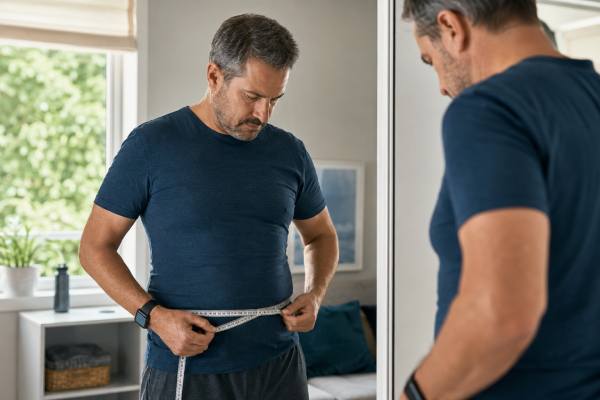
A man can have a “normal” body weight and still carry too much fat around the middle. That is why waist circumference can reveal health risk that the scale or body mass index may miss. A larger waist often points to more visceral fat, the deep belly fat stored around organs such as the liver, pancreas, and intestines. This fat is more active than the softer fat under the skin and is closely tied to insulin resistance, high blood pressure, abnormal cholesterol, fatty liver disease, sleep apnea, and heart disease.
For men, a waist measurement above 40 inches is commonly used in the United States as a warning point for higher cardiometabolic risk. That number is not a diagnosis by itself, but it is a strong reason to check the rest of your health picture: blood pressure, blood sugar, cholesterol, liver health, sleep, activity level, and family history.
Table of Contents
- Why Waist Size Matters More Than Pants Size
- How to Measure Your Waist Correctly
- What Your Waist Number Means
- Why Belly Fat Raises Health Risk
- Waist Size, BMI, and Height: How to Use Them Together
- What to Check if Your Waist Is High
- How to Lower Risk Without Chasing a Perfect Waist
- When to See a Doctor About Waist-Related Risk
Why Waist Size Matters More Than Pants Size
A larger waist is not just a clothing issue. It can be a sign that fat is collecting deep inside the abdomen, where it affects metabolism, blood vessels, liver function, and hormone signaling.
Pants size is a poor health measure because brands vary, waistbands stretch, and many men wear pants below the belly rather than around the true waist. A man who buys 36-inch jeans may measure 40 inches or more at the abdomen. The tape measure gives a clearer number.
Waist circumference matters because it reflects fat distribution. Two men can weigh the same and have the same BMI, but the man with more fat around the middle often has higher metabolic risk. That is especially important for men because men are more likely than women to store excess fat in the abdominal area.
The concern is not the visible shape alone. Some belly size comes from subcutaneous fat, which sits under the skin. The deeper issue is visceral fat, which surrounds internal organs. Visceral fat is linked with inflammation, insulin resistance, blood pressure changes, and abnormal blood fats. A deeper look at visceral belly fat in men can help explain why the location of fat matters as much as the amount.
Waist size also helps catch risk earlier. A man may not feel sick, may not look severely overweight, and may still have rising blood pressure, triglycerides, fasting glucose, or liver enzymes. The waist measurement can be the simple clue that prompts testing before symptoms appear.
It is also useful for tracking progress. Weight can stall when a man starts strength training because muscle gain and fat loss may happen at the same time. The scale may barely move, while the waist slowly shrinks. That change often reflects a real improvement in body composition and health risk.
How to Measure Your Waist Correctly
A waist measurement is only useful if you take it the same way each time. A loose tape, measuring over thick clothing, sucking in the stomach, or measuring at the narrowest point can make the number look better than it really is.
Use a flexible tape measure. Stand upright with your feet about hip-width apart. Keep your abdomen relaxed. Do not hold your breath, brace your abs, or pull the tape tight enough to press into the skin.
A simple method for home tracking is:
- Remove bulky clothing or measure directly against the skin.
- Find the top of your hip bones on both sides.
- Wrap the tape around your abdomen just above those hip bones.
- Keep the tape level all the way around your body.
- Breathe out normally.
- Read the number without tightening the tape.
Some clinical guidelines use a slightly different site, such as the midpoint between the lowest rib and the top of the hip bone. That can be useful, too. The most important rule for tracking is consistency. Pick one method, write it down, and repeat it the same way.
Measure in the morning if possible, before a large meal. Food, fluid, gas, and posture can change the number slightly during the day. A single reading is less important than the pattern over weeks and months.
Do not measure after a hard workout if your abdomen is pumped or bloated. Do not measure while pulling the stomach in. Do not use your belt hole as a substitute. Belts stretch, leather changes, and many men tighten or loosen them based on comfort.
For a more reliable trend, measure two times and use the average if the readings differ. Track the date, waist number, body weight, and anything that may explain a change, such as travel, alcohol intake, new medication, illness, or a change in training.
What Your Waist Number Means
For many adult men in the United States, a waist circumference over 40 inches, or 102 cm, is considered a higher-risk measurement. It does not prove that a man has heart disease, diabetes, or fatty liver disease. It does mean the odds of weight-related health problems are higher and that follow-up checks are worth taking seriously.
The table below gives a general way to interpret waist size. It is not a diagnosis and does not replace personal medical advice.
| Waist measurement in men | General meaning | What to do next |
|---|---|---|
| Under 37 inches | Often lower risk, especially if blood pressure, blood sugar, and cholesterol are normal | Keep tracking during routine health checks |
| 37 to 40 inches | Possible increase in central fat and early metabolic risk | Review lifestyle, family history, and recent lab results |
| Over 40 inches | Higher risk for type 2 diabetes, high blood pressure, abnormal cholesterol, fatty liver, and heart disease | Ask about blood pressure, A1C or fasting glucose, cholesterol, liver enzymes, and sleep apnea risk |
Cutoffs are not the same for every man. Ethnic background, height, age, muscle mass, and personal medical history can shift risk. Some Asian, South Asian, Middle Eastern, and other populations may develop metabolic problems at lower waist measurements than the standard 40-inch cutoff. A shorter man with a 38-inch waist may have more central fat relative to his frame than a much taller man with the same measurement.
Age matters, but it should not be used as an excuse. Many men gain waist size in their 30s, 40s, and 50s because of lower activity, less muscle, more sitting, poorer sleep, more alcohol, higher stress, and gradual weight gain. Hormones can play a role, but most waist gain is not caused by testosterone alone. Sleep, food patterns, alcohol, medications, mood, training, and medical conditions often matter more.
A low waist number is not a guarantee of perfect health, either. Men with normal waist size can still have high blood pressure, high LDL cholesterol, diabetes, smoking-related risk, or strong family history of early heart disease. The waist measurement is one useful signal, not the whole dashboard.
Why Belly Fat Raises Health Risk
Belly fat becomes more concerning when it reflects visceral fat inside the abdomen. This fat is metabolically active, meaning it releases signals that can affect inflammation, insulin function, blood fats, and blood vessel health.
Insulin resistance is one of the main problems. Insulin helps move glucose from the blood into cells. When the body becomes resistant to insulin, the pancreas has to produce more of it to keep blood sugar controlled. Over time, fasting glucose and A1C may rise. This can lead to prediabetes or type 2 diabetes.
Blood pressure can rise, too. Abdominal obesity is linked with changes in blood vessel function, kidney signaling, inflammation, and sleep quality. A man may feel fine while blood pressure stays high for years. That is why waist size and blood pressure are often checked together.
Cholesterol and triglycerides often shift in an unhealthy direction. A common pattern is high triglycerides, low HDL cholesterol, and more atherogenic LDL particles. This pattern increases cardiovascular risk even when total cholesterol does not look alarming.
Several risk factors can cluster together. When belly fat, blood pressure, blood sugar, triglycerides, and HDL cholesterol are abnormal in a certain pattern, doctors may call it metabolic syndrome. The label matters because the combination raises the chance of heart disease and type 2 diabetes more than any one number alone.
The liver is also affected. Excess abdominal fat often travels with fat buildup in the liver, now commonly called metabolic dysfunction–associated steatotic liver disease. Many men have no symptoms at first. Mildly abnormal liver enzymes may be the first clue. Over time, some men can develop liver inflammation, scarring, or more serious liver disease. Men with a larger waist and abnormal labs may need evaluation for fatty liver disease, especially if they also drink alcohol, have diabetes, or have high triglycerides.
Belly fat can also worsen sleep apnea. Extra tissue around the neck and abdomen can affect breathing during sleep. Poor sleep then worsens hunger, cravings, insulin resistance, blood pressure, and fatigue. This creates a loop where poor sleep and waist gain feed each other.
Waist Size, BMI, and Height: How to Use Them Together
BMI is useful for broad screening, but it does not show where fat is stored. It also cannot tell the difference between muscle and fat. A muscular man may have a high BMI but a low waist size. Another man may have a “normal” BMI but a larger belly and higher metabolic risk.
Waist circumference adds missing information. It helps answer a different question: how much of your size is concentrated around the abdomen?
Waist-to-height ratio adds another layer. The common rule is simple: try to keep your waist under half your height. For example, a man who is 5 feet 10 inches tall is 70 inches tall. Half of that is 35 inches. A 40-inch waist on that frame gives a waist-to-height ratio of 0.57, which suggests increased central adiposity.
To calculate it:
waist measurement ÷ height = waist-to-height ratio
Examples:
- 34-inch waist ÷ 70-inch height = 0.49
- 38-inch waist ÷ 70-inch height = 0.54
- 42-inch waist ÷ 70-inch height = 0.60
A ratio below 0.5 is generally considered a better range. A ratio from 0.5 to 0.59 suggests increased risk. A ratio of 0.6 or higher suggests a higher level of central adiposity.
This can be helpful for shorter or taller men. A 39-inch waist may not mean the same thing in a man who is 5 feet 5 inches as it does in a man who is 6 feet 4 inches. Waist-to-height ratio gives the number more context.
BMI still has value. It is linked with many health outcomes and is easy to calculate. But it should not be the only measure used to judge risk in an individual man. A better snapshot includes waist size, waist-to-height ratio, blood pressure, glucose, cholesterol, fitness, medications, smoking, alcohol intake, sleep, and family history.
Men with high muscle mass should pay special attention to waist rather than assuming BMI tells the whole story. Athletes, lifters, military personnel, and physically demanding workers can have higher body weight because of muscle. If their waist is low and labs are healthy, their risk profile may differ from someone with the same BMI and a much larger abdomen.
The reverse is also true. A man who looks “not that heavy” but has a growing belly should not ignore it. Central fat can raise risk even when the scale does not look dramatic.
What to Check if Your Waist Is High
A high waist measurement should lead to a health check, not panic. The goal is to find out whether the waist number is already showing up in blood pressure, blood sugar, cholesterol, liver health, sleep, or fitness.
Start with blood pressure. High blood pressure often has no symptoms, but it is one of the most important heart and stroke risk factors. A man with a waist over 40 inches should know his recent readings, not just whether he “feels fine.” Home readings can be useful when taken with a validated cuff and proper technique. A guide to blood pressure in men can help make sense of when and how often to check it.
Next, review blood sugar. Common tests include fasting glucose and A1C. A1C estimates average blood sugar over the past few months. Men with a larger waist, family history of diabetes, high triglycerides, or high blood pressure should be especially careful about missing early prediabetes. Early action can make a major difference before diabetes develops.
Cholesterol testing matters as well. A standard lipid panel usually includes total cholesterol, LDL cholesterol, HDL cholesterol, and triglycerides. Men with central fat often have high triglycerides and low HDL, even when LDL is not extremely high. Understanding high cholesterol in men can help connect the lab numbers to heart risk.
Liver enzymes may be useful, especially ALT and AST. Normal liver enzymes do not completely rule out fatty liver, but abnormal results can point to the need for further evaluation. Men with diabetes, obesity, high triglycerides, or regular alcohol use should be more alert.
Sleep should be part of the checkup. Loud snoring, witnessed pauses in breathing, morning headaches, dry mouth, nighttime urination, and daytime sleepiness can suggest sleep apnea. Men often blame fatigue on age or work, but untreated sleep apnea can worsen blood pressure, blood sugar, mood, and testosterone levels.
Medication review is also important. Some drugs can promote weight gain or increase appetite. These may include certain antidepressants, antipsychotics, seizure medications, steroids, some diabetes medications, and others. Do not stop a prescribed medicine on your own, but ask whether weight-neutral alternatives exist.
A high waist measurement is also a good reason to review alcohol intake. Alcohol adds calories, worsens sleep, increases appetite for salty or high-calorie foods, and can raise triglycerides. Beer is not the only issue. Wine, cocktails, and spirits can all contribute depending on amount and pattern.
How to Lower Risk Without Chasing a Perfect Waist
A smaller waist can lower health risk, but the goal is not to reach a magazine-cover body. The goal is to reduce visceral fat, improve blood pressure, improve blood sugar, improve cholesterol, protect the liver, sleep better, and build a body that functions well.
A 5% to 10% weight loss can improve several risk markers for many men. For a 230-pound man, that is about 12 to 23 pounds. The waist may shrink before or after the scale changes, depending on training, water retention, and diet changes.
Food changes work best when they are specific. “Eat healthier” is too vague. Better targets include:
- Build meals around lean protein, high-fiber carbohydrates, vegetables, fruit, beans, lentils, and unsaturated fats.
- Reduce sugary drinks, frequent desserts, fried foods, and highly processed snacks.
- Limit large late-night meals if they worsen reflux, sleep, or snacking.
- Use alcohol-free days and set a weekly limit if drinking has become routine.
- Choose portions you can repeat, not a crash diet you can tolerate for only two weeks.
Protein helps with fullness and muscle maintenance. Fiber helps with appetite, cholesterol, blood sugar control, and gut health. A simple plate pattern works for many men: half the plate vegetables or fruit, one quarter protein, one quarter higher-fiber starch, with a modest amount of fat for flavor.
Training should include both cardio and resistance work. Cardio improves heart fitness, insulin sensitivity, blood pressure, and energy use. Brisk walking counts when it raises breathing and is done consistently. Cycling, swimming, rowing, jogging, hiking, and sports can all work.
Resistance training helps preserve or build muscle while losing fat. Muscle matters because it supports glucose control, strength, joint health, and long-term weight maintenance. Men over 40 may need more attention to recovery, warmups, and progressive loading; strength training after 40 should be challenging enough to work but not so aggressive that injuries derail consistency.
Sitting time matters even if you exercise. A man who trains for 45 minutes but sits for 10 hours may still benefit from walking breaks, standing calls, stairs, or short after-meal walks. Walking for 10 to 15 minutes after meals can be especially helpful for blood sugar control.
Sleep is not optional. Short sleep can increase hunger, cravings, late-night eating, insulin resistance, and fatigue. Men trying to reduce waist size should protect a regular sleep window, limit alcohol near bedtime, keep the room cool and dark, and get evaluated if snoring or daytime sleepiness suggests sleep apnea.
Stress management is not about pretending life is calm. Chronic stress can push men toward alcohol, skipped workouts, takeout meals, poor sleep, and emotional eating. The fix may be practical: a 20-minute walk after work, fewer late-night work emails, therapy, a standing gym appointment, or preparing two reliable meals that do not require willpower every night.
Men with obesity-related complications may need more than lifestyle changes. Anti-obesity medications, diabetes medications that support weight loss, sleep apnea treatment, nutrition counseling, and structured programs can be appropriate for some men. For severe obesity or major weight-related disease, bariatric surgery may be considered. These options are not failures; they are medical tools for a chronic condition. A broader look at obesity and men’s health can help connect waist size with hormones, fertility, heart risk, and long-term care.
When to See a Doctor About Waist-Related Risk
A waist over 40 inches is a good reason to schedule a routine health visit, especially if you have not had labs in the past year. You do not need to wait for chest pain, severe fatigue, erectile dysfunction, or abnormal blood sugar symptoms.
Make an appointment sooner if a growing waist comes with:
- Blood pressure readings at or above 130/80 on repeated checks
- Increased thirst, frequent urination, blurry vision, or unexplained fatigue
- Chest pressure, shortness of breath, or reduced exercise tolerance
- Loud snoring, choking during sleep, or daytime sleepiness
- Right upper abdominal discomfort or abnormal liver tests
- Rapid weight gain without a clear change in eating or activity
- Swelling in the legs, new weakness, or major changes in mood
Men should also seek medical guidance if waist gain began after starting a new medication. The answer may be dose adjustment, a different medication, or a plan to manage appetite and weight while staying treated for the original condition.
Sleep apnea deserves special attention. A man with a larger waist, loud snoring, morning headaches, and daytime fatigue should not simply buy more caffeine. Untreated sleep apnea in men can raise blood pressure and worsen metabolic health.
A doctor may check blood pressure, weight, waist size, heart risk, medication list, A1C, fasting glucose, lipid panel, liver enzymes, kidney function, thyroid function when appropriate, and sometimes testosterone if symptoms fit. Testing should be based on the full picture, not waist size alone.
It is also worth getting help when weight loss efforts repeatedly lead to extreme dieting, binge eating, shame, or injury. A plan that damages mental health or causes repeated setbacks is not a good plan. Men with a history of eating disorders, depression, heavy alcohol use, or major stress may need a different approach than a generic diet.
A waist measurement is a signal, not a verdict. It can be uncomfortable to face, but it is also one of the easiest health risks to track. When waist size starts moving down and blood pressure, blood sugar, triglycerides, sleep, and fitness improve, the benefit is larger than the number on the tape.
References
- Heart-Healthy Living – Aim for a Healthy Weight 2025 (Official Resource)
- Overweight and obesity management 2026 (Guideline)
- Obesity definition, diagnosis, bias, standard operating procedures (SOPs), and telehealth: An Obesity Medicine Association (OMA) Clinical Practice Statement (CPS) 2022 2022 (Clinical Practice Statement)
- Waist to height ratio as a simple tool for predicting mortality: a systematic review and meta-analysis 2023 (Systematic Review)
- Associations of obesity indices change with cardiovascular outcomes: a dose-response meta-analysis 2024 (Systematic Review)
- Diagnostic Accuracy of Waist-to-Height Ratio, Waist Circumference, and Body Mass Index in Identifying Metabolic Syndrome and Its Components in Older Adults: A Systematic Review and Meta-Analysis 2024 (Systematic Review)
Disclaimer
This information is educational and should not replace care from a qualified healthcare professional. Waist circumference can help estimate health risk, but diagnosis and treatment decisions should be based on a full medical evaluation, including symptoms, personal history, medications, physical exam, and lab results. Seek prompt medical care for chest pain, severe shortness of breath, fainting, sudden weakness, or other urgent symptoms.