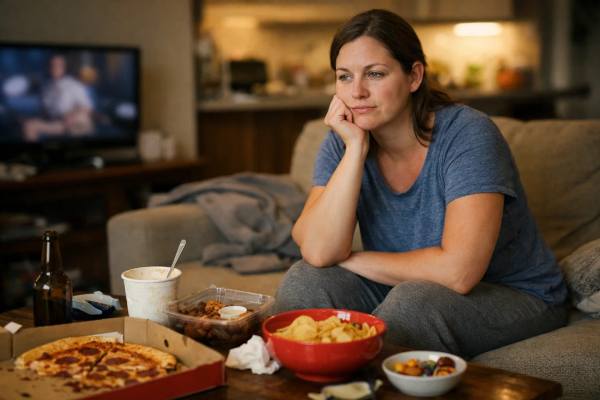
Weekend overeating usually is not caused by one big mistake. It tends to come from a predictable mix of loosened routines, social eating, delayed meals, extra alcohol, poorer sleep, and the feeling that the weekend is a break from structure. That combination can turn a normal Saturday into constant grazing, oversized restaurant meals, and a Sunday night reset vow that repeats every week.
The encouraging part is that weekend overeating is usually very preventable once you understand the pattern behind it. The goal is not to make weekends rigid or joyless. It is to keep them flexible without letting two days undo the habits you worked hard to build during the week.
Table of Contents
- Why Weekend Overeating Happens
- The Weekend Triggers Most People Miss
- How Weekdays Set Up Weekends
- Sleep, Alcohol, and Schedule Drift
- A Weekend Plan That Feels Normal
- What to Do in the Moment
- How to Recover After an Overeating Weekend
Why Weekend Overeating Happens
Weekend overeating often feels mysterious because it happens in a setting that is supposed to feel easier than the workweek. You have more freedom, more time, and sometimes less stress from work demands. But that freedom can remove the structure that quietly kept your eating steadier from Monday to Friday.
During the week, many people eat within a rough routine. They wake up at similar times, commute or start work on schedule, eat lunch at a predictable point, and stop eating earlier because the next day starts early. Weekends loosen all of that. Breakfast shifts later, snacks stretch across the afternoon, social plans add food opportunities, and dinner may start much later than usual. By the end of the day, it can feel like you never really stopped eating.
There is also a strong mental factor. Weekends often trigger “I deserve this” thinking. After a strict or stressful week, food can start to feel like a reward, a release, or proof that you are finally off duty. This is especially common if you tend toward all-or-nothing thinking around eating. In that pattern, weekdays become the time to be “good,” and weekends become the time to let go. The problem is that once eating shifts into reward mode, it is easy to overshoot what actually feels enjoyable or satisfying.
Another reason weekends are tricky is that overeating is rarely one big event. More often, it is a chain reaction. A late breakfast leads to being overly hungry by lunch. Lunch turns into a restaurant meal with drinks. The afternoon includes grazing because you are home, traveling, shopping, or socializing. Then dinner happens late, dessert feels automatic, and nighttime snacking follows because your day is still going. Each decision seems small on its own, but the total adds up quickly.
That is why weekend overeating is better understood as a habit pattern than a willpower problem. It usually reflects looser cues, extra opportunities to eat, and less deliberate planning. Once you see the weekend as a different environment rather than a personal failure, it becomes much easier to manage without becoming rigid.
The Weekend Triggers Most People Miss
Most people notice the obvious triggers first: parties, takeout, restaurant portions, desserts, and drinks. But the real drivers of weekend overeating often start earlier and feel more subtle.
A common one is unstructured time. When your day has fewer fixed anchors, eating can become the thing that fills the gaps. Food shows up while running errands, watching sports, visiting family, finishing chores, or relaxing at home. You may not feel strong hunger at any one moment, but the repeated exposure creates a steady stream of small eating decisions.
Another trigger is social momentum. If everyone else is ordering appetizers, sharing dessert, or opening a second round of drinks, it takes effort to step out of the current. This is one reason social pressure around food choices can quietly change how much you eat even when you begin with good intentions. The same goes for eating out. Restaurant meals are often more energy-dense, more rewarding, and easier to overconsume, especially when you are distracted or lingering at the table. Many people who struggle on weekends also run into the same pattern with restaurant habit traps and overeating.
Home environments matter too. People often stock “fun” weekend foods, leave snacks visible, or spend more time near the kitchen. At home, eating can blur into entertainment, comfort, and routine. A few bites while cooking, a handful of chips during a show, something sweet after dinner, and one more snack before bed can feel casual while still being significant overall.
| Trigger | What it often looks like | Why it leads to overeating |
|---|---|---|
| Unstructured schedule | Late first meal, random grazing, late dinner | Fewer meal anchors make eating more reactive |
| Social plans | Apps, drinks, dessert, second meal out | Food becomes part of the event, not just the meal |
| Visible snack foods | Picking at chips, baked goods, leftovers | Easy access lowers awareness and portion control |
| Reward mindset | “I was good all week, so it is fine” | Permission eating can turn into overshooting |
| Late nights | Extra drinks, dessert, post-event snacking | Fatigue and lowered inhibition make stopping harder |
The most useful question is not “Why do I always ruin my weekends?” It is “What usually happens right before I start drifting?” When you can identify your three most common triggers, prevention becomes much more practical.
How Weekdays Set Up Weekends
A lot of weekend overeating starts on Monday.
If your weekdays are built on restriction, skipped meals, constant food rules, or trying to “save calories,” the weekend can feel like a pressure release valve. You may tell yourself you are being disciplined during the week, but what you are really doing is building hunger, mental fatigue, and a sense of deprivation. By Friday night, the urge to eat more can feel almost automatic.
This pattern is especially common when people skip breakfast, eat tiny lunches, or stay too busy to notice they are under-fueling. Then the weekend arrives, routines loosen, and appetite catches up fast. That is one reason breakfast skipping and later cravings can matter more than people think. The issue is not that every person must eat breakfast. It is that long gaps and inconsistent fueling tend to make later eating more reactive.
Another weekday setup problem is relying on structure without learning skills that transfer. Workdays can keep eating in line simply because you are busy and distracted. Then the weekend exposes the fact that you were never truly managing hunger, cravings, or food cues. You were just occupied. Once the structure drops, the overeating pattern becomes obvious.
There is also the emotional setup. If weekdays feel unpleasant, overeating can become tied to relief. Friday night food starts to represent freedom, comfort, celebration, or escape. That can quickly create a weekly cycle where overeating is part of the transition into the weekend.
A better approach is to make weekdays slightly less extreme so weekends do not feel like a rebellion. That usually means:
- Eating enough during the week
- Keeping meal timing reasonably steady
- Avoiding “cheat day” language
- Making room for satisfying foods before you feel deprived
- Treating consistency as more important than perfection
This is where meal routine consistency for appetite control can help. When your body expects food at reasonably regular times, hunger becomes easier to manage. You are less likely to hit Saturday with a mix of rebound appetite and mental exhaustion.
The key insight is simple: the more rigid your weekdays, the more chaotic your weekends may become. The goal is not tighter control. It is a steadier baseline that does not require a blowout to feel normal.
Sleep, Alcohol, and Schedule Drift
Weekend overeating is not just about food choices. Sleep patterns, alcohol, and schedule shifts can change appetite and decision-making in ways that make overeating much more likely.
Sleep is a major one. Many people stay up later on Fridays and Saturdays, sleep in, or get less consistent sleep overall. That can affect hunger, cravings, energy, and impulse control the next day. If you notice stronger urges for high-calorie foods after a short night, that is not random. It fits with the broader pattern behind why poor sleep makes you hungrier. Fatigue also makes planning feel harder, which pushes people toward convenient, rewarding foods.
Weekend schedule drift matters too. Even if you sleep longer, shifting your bedtime and wake time later can change when you feel hungry and how your meals line up. A later start often compresses the day into fewer but larger eating windows, or it delays eating until you are already ravenous. This is closely related to social jet lag and weight loss, where your weekend schedule starts to feel like it belongs to a different week entirely.
Alcohol adds another layer. It lowers inhibition, increases food reward, and often extends the eating occasion. A dinner that might have ended after one entrée can turn into appetizers, extra bites, dessert, and late-night snacking once drinks enter the picture. Alcohol also tends to disrupt sleep quality, which can carry the appetite problem into the next day.
A typical weekend chain might look like this:
- Stay up late Friday.
- Sleep in Saturday and delay the first meal.
- Get overly hungry by midday.
- Eat a large restaurant lunch or snack through the afternoon.
- Have drinks that lower restraint at dinner.
- Snack later because the night is longer and hunger cues are off.
That does not mean you need perfect sleep and zero alcohol to manage weekends well. It does mean these factors deserve more attention than they usually get. If you keep treating weekend overeating as just a food problem, you may miss the schedule pattern driving it.
A Weekend Plan That Feels Normal
The most effective weekend strategy is not a strict meal plan. It is a light structure that protects you from the usual problem spots without making the weekend feel controlled.
Start by deciding on three anchors before the weekend begins: your first meal, your main social eating situation, and your nighttime cutoff or wind-down plan. Those anchors create enough predictability to prevent drift.
A practical weekend framework looks like this:
- Keep your first meal within a reasonable range.
You do not need to eat at the exact weekday time, but avoiding a huge delay usually helps prevent overeating later. - Plan for the highest-risk event.
If dinner out is the main challenge, do not waste all your attention on breakfast. Save your decision-making for the place it matters most. - Aim for real meals, not grazing.
Proper meals tend to be more satisfying than dozens of small bites that never fully register. - Pre-decide the flexible part.
For example: “I will have dessert at dinner, not random sweets all afternoon,” or “I will have two drinks, not undefined drinks.” - Keep basic food quality visible.
Protein, fruit, vegetables, and filling staples should still be easy options on weekends, not only weekday foods.
This is where pre-commitment strategies are useful. You are not trying to predict every bite. You are making a few decisions ahead of time so the hardest moments require less negotiation. It can also help to build weekend routines that support weight loss without turning the weekend into a second workweek.
A simple example:
- Saturday breakfast by 9 or 10
- Planned lunch instead of random snacks while out
- One treat or one drink category gets priority
- Walk or non-food activity between lunch and dinner
- Late-night food only if physically hungry, not just because the day is still going
The point is not creating a perfect script. The point is removing the blank space where overeating usually grows. Structure works best when it feels calm, realistic, and easy enough to repeat next weekend.
What to Do in the Moment
Even with a good plan, there will be moments when you can feel the slide starting. Maybe you are circling appetizers at a gathering, continuing to snack after you are full, or telling yourself the day is already off track. This is the point where a short interruption can help more than a harsh rule.
Use this sequence when you notice weekend overeating starting:
- Pause long enough to notice the pattern.
Ask, “Am I hungry, still enjoying this, or just continuing?” - Identify the driver.
Common answers are social pressure, tiredness, alcohol, boredom, reward, or the feeling that you have already overdone it. - Shrink the next decision.
Do not think about the whole weekend. Think about the next ten minutes. That might mean putting food on a plate, stepping away from the snack table, ordering one main instead of multiple extras, or deciding not to continue picking at leftovers. - Choose a replacement action if the urge is emotional.
Refill water, take a short walk, join a conversation away from food, or shift to coffee or tea after the meal. - Drop the “start over Monday” mentality.
One overeating moment does not require a bigger one.
This is where mindful eating becomes practical rather than abstract. You do not need a long meditation. You just need enough awareness to stop automatic momentum. Sometimes one question is enough: “If nobody else were here and this food were not in front of me, would I still want it?”
Social situations can also require a script. If you are full and people keep offering food, having a neutral response ready helps. A simple, polite approach from saying no to food pushers can prevent the awkwardness that leads people to keep eating just to avoid explaining themselves.
A few in-the-moment resets that work well are:
- Put the next portion on a plate instead of eating from shared food
- Sit down and slow the pace for a few minutes
- Switch from grazing foods to the actual meal
- Decide what is most worth having instead of sampling everything
- End the eating occasion with a clear action, such as brushing teeth, changing locations, or leaving the kitchen
Weekend overeating often grows through inertia. Breaking that inertia early matters more than trying to be flawless later.
How to Recover After an Overeating Weekend
A lot of damage from weekend overeating comes from what happens next, not just from the weekend itself. People often respond with guilt, extreme restriction, extra cardio, skipped meals, or a harsh promise to be “perfect” all week. That usually sets up the next rebound.
The best recovery is boring on purpose. You return to your normal routine as quickly as possible.
That means:
- Eat your usual next meal
- Drink water and rehydrate normally
- Get back to your regular sleep schedule
- Move in a way that feels supportive, not punishing
- Avoid weighing every feeling or trying to “erase” the weekend in a day
It helps to remember that a heavier scale reading after a high-sodium, high-carb, late-night, or alcohol-heavy weekend is often not a clean reflection of body fat. Food volume, water retention, glycogen replenishment, and digestive slowdown can all make the next one to three days look worse than the underlying reality.
A useful recovery review is short and specific:
- What was the first point where the weekend started drifting?
- Was I overly hungry, overly tired, overly unstructured, or overly permissive?
- What one change would make next weekend easier?
That last question matters most. Do not try to fix everything at once. You may only need one adjustment, such as eating a real lunch before social plans, keeping a consistent wake time, limiting alcohol at one event, or not buying the foods you always graze on at home.
If weekends have become a recurring struggle, it may be worth building a simple prevention checklist and using it every Friday. That is often more useful than relying on motivation. Over time, this kind of review supports habit relapse prevention because it treats slip-ups as information instead of proof that you failed.
The goal is not a “clean” weekend. It is a weekend you can enjoy without falling into a repeat cycle of overeating, guilt, restriction, and rebound. That is a much more durable standard, and it is the one that actually supports long-term progress.
References
- Self-reported weekend temporal eating patterns of American adults differ from weekday: National Health and Nutrition Examination Surveys: 2015–2020 prepandemic 2025 (Observational Study)
- Gender and age differences in weekend eating habits 2025 (Observational Study)
- Social jetlag and dietary intake: A systematic review 2023 (Systematic Review)
- A Narrative Review on Sleep and Eating Behavior 2025 (Review)
- Effects of mindfulness-based interventions on food craving in adults: a systematic review and meta-analysis of controlled clinical trials 2025 (Systematic Review and Meta-Analysis)
Disclaimer
This article is for general educational purposes only and is not a substitute for medical advice, diagnosis, or treatment. If overeating feels frequent, distressing, or hard to control, or if it is tied to binge eating, mood symptoms, or a health condition, speak with a qualified healthcare professional.
If this article was helpful, please share it on Facebook, X, or any platform where it might help someone build calmer, more consistent weekends.