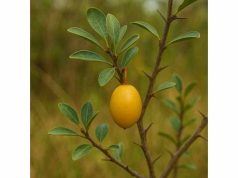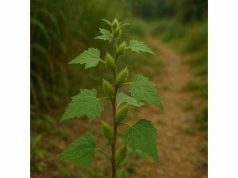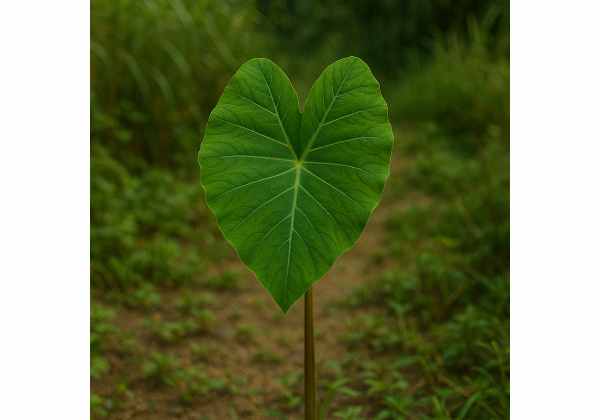
Xanthosoma sagittifolium is a tropical food plant in the aroid family, grown for its starchy underground corms and, in some regions, for its edible leaves. Depending on where you live, you may know it as malanga, tannia, cocoyam, yautia, or taioba. It is often grouped with taro because the two crops look similar in the kitchen and share some cooking rules, yet they are botanically distinct plants with different textures, varieties, and local traditions.
What makes Xanthosoma interesting is not a single miracle compound. Its value comes from a practical combination of starch for energy, fiber for fullness and bowel regularity, and a useful mix of minerals and plant pigments, especially when the leaves are eaten. Traditional medicine has also used it for digestive comfort, nourishment during recovery, and general strengthening. Still, the modern evidence is more convincing for its role as a nutritious staple food than as a proven medicinal remedy. The most important caution is simple: it must be prepared properly, because raw or undercooked parts can irritate the mouth and digestive tract due to naturally occurring oxalates.
Quick Overview
- Properly cooked Xanthosoma can support fullness, digestion, and steady meal satisfaction because it provides starch and fiber.
- The leaves can add notable vitamin A precursors, vitamin C, potassium, and other minerals when they are thoroughly cooked.
- A practical serving is about 75 to 150 g of cooked corm, or about 1/2 to 1 cup of cooked leaves.
- People with recurrent calcium oxalate kidney stones, advanced kidney disease, or a history of reacting to undercooked aroids should use extra caution or avoid it.
Table of Contents
- What Xanthosoma is and why it matters
- Key ingredients and nutrition profile
- Health benefits that make the most sense
- Medicinal properties and traditional uses
- Culinary uses and how to prepare it well
- Dosage, serving sizes, and practical use
- Safety, side effects, and who should avoid it
What Xanthosoma is and why it matters
Xanthosoma sagittifolium is a perennial tropical plant in the Araceae family, the same broad family that includes taro and several ornamental elephant-ear plants. The edible part most people know best is the corm or cormel, a dense underground storage organ that cooks into a creamy, hearty starch. In some traditions, the leaves and petioles are also eaten after careful cooking. This dual use makes the plant unusually flexible: it can serve as a staple starch, a leafy green, or both.
Its many regional names can be confusing. In the Caribbean and parts of Latin America, it is often sold as malanga or yautia. In West Africa, it may be called cocoyam or tannia. In Brazil, the leafy form is often associated with taioba. These names do not always refer to exactly the same cultivar, so appearance, flavor, and cooking behavior can vary. That is one reason nutrition values are best treated as ranges rather than rigid numbers.
Xanthosoma matters because it sits at the meeting point of food security, traditional agriculture, and practical nutrition. It grows well in humid tropical climates, stores energy efficiently in its corms, and can help diversify diets that lean too heavily on a small number of staples. In places where wheat, potatoes, or rice are expensive or less adapted to local conditions, Xanthosoma can play a useful role as an accessible carbohydrate source with more mineral and leaf-value potential than people sometimes assume.
It is also a plant with a split identity. In everyday life, it is mostly a food. In traditional practice, it is sometimes spoken of as a medicinal plant because it is easy to digest when cooked properly, nourishing during recovery, and useful in soft diets. Both views contain some truth. The mistake is assuming that “medicinal” means it has been proven to treat disease like a drug. The evidence is much stronger for its value as a nourishing, functional food.
Another reason the plant deserves a careful introduction is that it can be mistaken for non-edible or irritating aroids. Not every elephant-ear-looking plant belongs on the plate. Proper identification matters, especially if someone is foraging or relying on local common names alone. If you already understand how taro compares as a related aroid staple, you will recognize the broad pattern here: a useful starchy crop, edible leaves in some traditions, and a strong need for correct preparation.
Seen that way, Xanthosoma is not obscure at all. It is a culturally important, underappreciated plant food whose real strengths are nourishment, versatility, and resilience rather than flashy claims.
Key ingredients and nutrition profile
The key ingredients in Xanthosoma depend on which part you eat. The corm is mainly a starch-rich food, while the leaves are more like a dark leafy vegetable with a different balance of vitamins, minerals, pigments, and fiber. That difference matters, because many broad descriptions of the plant blur these two parts together.
In the corm, the dominant component is carbohydrate, most of it stored as starch. Fresh corm values vary by region and cultivar, but a useful general picture is that they provide roughly 20 to 31 g carbohydrate per 100 g, modest protein, very little fat, and a small but meaningful amount of fiber. This makes Xanthosoma a true staple food rather than a low-calorie vegetable. It is best understood as an alternative to potato, yam, cassava, or taro, not as a tiny garnish with medicinal prestige.
The corm also carries minerals such as potassium, phosphorus, magnesium, and smaller amounts of calcium and iron. Some varieties add carotenoid pigments or colored streaks, which suggest differences in antioxidant compounds between cultivars. Starch quality is also important. Xanthosoma starch is valued for its texture, and food science research has explored it for flours, porridges, thickened foods, and specialty starch applications. That does not make it a supplement, but it does explain why people often describe it as gentle, smooth, and useful in soft diets.
The leaves are nutritionally different and, in many ways, more concentrated. Properly cooked leaves can provide vitamin A precursors, vitamin C, potassium, magnesium, calcium, iron, fiber, chlorophyll, and phenolic compounds. Reviews of taioba leaves also describe carotenoids, flavonoids, and phenolic acids, which help explain why the leaves are often praised more strongly than the corm when people talk about antioxidant potential.
A practical way to think about the plant is this:
- Corms are mainly for energy, starch, satiety, and texture.
- Leaves are mainly for micronutrients, pigments, and leafy-green value.
- Both can contribute fiber and plant compounds when prepared correctly.
The term “key ingredients” in articles like this can sound more medicinal than it needs to. In reality, Xanthosoma does not owe its value to a single star molecule. Its important components include starch, dietary fiber, potassium, vitamin C, carotenoids, phenolic compounds, and small amounts of protein and minerals that vary by cultivar and processing method.
This is also why Xanthosoma can fit more than one nutritional role. A bowl of boiled corm is not nutritionally equivalent to a serving of cooked leaves. One gives you staple-food energy; the other behaves more like a mineral-rich green. That distinction can be useful for meal planning. If your goal is a filling starch, the corm is the main player. If your goal is to broaden plant micronutrient intake, the leaves deserve attention as much as the root.
Nutritionally, the leaves can be compared to dark leafy greens that are prized for carotenoids and minerals, while the corm belongs in the category of traditional starch staples. Understanding that split gives a much clearer picture than calling the whole plant simply a “superfood.”
Health benefits that make the most sense
The most believable health benefits of Xanthosoma come from food logic first and laboratory research second. That means the strongest claims are usually the simplest ones: it can help nourish the body, support fullness, diversify starch intake, and, when leaves are included, raise the micronutrient quality of meals. Claims beyond that should be described with more caution.
One likely benefit is satiety and digestive regularity. Cooked Xanthosoma corm provides starch and some fiber, which can make meals feel satisfying and steady rather than light and fleeting. The leaves add more fiber and bulk. This does not mean the plant acts like a formal fiber supplement, but regular intake as part of meals may support bowel routine and fuller, more balanced eating patterns.
A second likely benefit is better overall micronutrient density, especially if the leaves are eaten. The corm contributes potassium and other minerals, while the leaves can bring vitamin C, carotenoids, calcium, magnesium, and iron into the plate. In communities where diets rely heavily on refined starches with few greens, that shift can matter more than any isolated pharmacological effect.
A third plausible benefit is metabolic steadiness through food structure. Xanthosoma is still a carbohydrate-rich food, so it can raise blood sugar, but its starch behavior, meal context, and fiber content may make it gentler than highly refined starch products. Research on aroids as a group suggests potential prebiotic and glycemic-support effects, especially from starch fractions and whole-food forms, but the human evidence is not yet strong enough to turn this into a disease-treatment claim.
The leaves and corm also contain antioxidant-related plant compounds. That matters because diets rich in polyphenols and carotenoids are generally associated with healthier long-term eating patterns. Here, though, it is important to stay grounded. Antioxidant activity measured in a lab does not automatically translate into a clear, measurable clinical benefit in people. It tells us that the plant contains interesting compounds, not that the plant cures inflammation or blocks disease on command.
For many readers, the best way to summarize the benefits is this:
- It can be a satisfying, nourishing staple food.
- Its leaves can improve the nutrient quality of meals.
- Its fiber and starch structure may support digestive comfort and fullness.
- Its pigments and phenolics add functional food value, even though human medicinal data remain limited.
This perspective is more useful than overstating dramatic effects. Xanthosoma is not a shortcut around good dietary habits. It works best as part of a pattern that includes legumes, vegetables, and other minimally processed foods. That is also why comparisons with more concentrated fiber-focused options such as psyllium should be handled carefully. Xanthosoma is a food first. It can support digestive wellness, but it does so more gently and less intensely than a purified fiber product.
That modest, realistic framing is actually one of its strengths. Many traditional foods are valuable because they help people eat well consistently, not because they act like potent herbal medicines. Xanthosoma fits that category very well.
Medicinal properties and traditional uses
Traditional uses of Xanthosoma tend to reflect what people noticed over generations in real kitchens and households: it is filling, soothing when cooked well, useful in recovery foods, and versatile enough to support both energy needs and vegetable intake. In that sense, its medicinal reputation is closely tied to nourishment.
Common traditional themes include use for digestive comfort, convalescent meals, infant and child feeding in soft or mashed forms, and general strengthening. In some regions, the leaves have also been valued as a protective, nutrient-rich green. These uses make sense because a cooked, soft starch is often easier to tolerate than coarse, heavily seasoned, or fried foods, and because nutrient-rich greens can help improve the quality of staple-heavy diets.
Modern research adds a few interesting clues. Reviews and experimental studies suggest that Xanthosoma contains phenolic compounds, carotenoids, flavonoids, and fibrous fractions that may contribute antioxidant, anti-inflammatory, or microbiome-related effects. There is also research interest in its starch, including how its structure influences digestibility, texture, and food applications. Leaf studies have suggested effects on bile-acid patterns and fecal output in animals, which supports the idea that the leaf fiber may have functional digestive properties.
Still, there are clear limits to what should be said. At present, there is not strong human clinical evidence proving that Xanthosoma treats diabetes, hypertension, cancer, infections, or chronic inflammatory diseases. Some lab and animal findings are promising, and some reviews of aroids mention possible antihyperglycemic, antihypertensive, or prebiotic effects. But these are early signals, not settled therapeutic conclusions.
That makes “medicinal properties” the right phrase only if it is used honestly. For Xanthosoma, the most defensible medicinal-style properties are:
- Nourishing when cooked as a staple food.
- Digestive-supportive because of fiber, meal texture, and food tolerability.
- Antioxidant-related because of phenolics and carotenoids.
- Potentially prebiotic or metabolically supportive in ways that still need better human confirmation.
It is also worth noting that traditional use and modern research are not always looking at the same thing. Traditional use often relies on cooked whole foods. Modern studies may use dried leaf material, flour, isolated starch, or extracts. Those are not interchangeable. A household dish made from boiled corm is not the same as a concentrated extract tested in a lab. This distinction matters because it keeps expectations realistic.
In practical terms, Xanthosoma’s medicinal story is most credible when it is treated as a functional traditional food rather than a stand-alone remedy. It can support recovery meals, broaden plant diversity, and contribute useful compounds to the diet. It may have broader biological effects that deserve research. But the current evidence supports a food-first interpretation much more strongly than a supplement-style one.
That is not a weakness. Many of the most valuable traditional plants earn their place precisely because they nourish reliably, fit daily life, and offer gentle long-term benefits rather than dramatic short-term pharmacology.
Culinary uses and how to prepare it well
Xanthosoma is most useful when you know how to prepare it well. Good preparation improves taste, texture, and safety at the same time. The corm can be boiled, steamed, baked, roasted, mashed, turned into flour, or added to soups and stews. The leaves can be cooked like a robust green, usually in dishes where longer simmering softens texture and reduces irritants.
The corm is often compared with potato or taro in use, but its texture is distinct. Depending on the variety, it may cook up drier, creamier, or slightly more elastic. That makes it useful for purées, fritters, soups, dumplings, thick porridges, and flour blends. In some food traditions, it is chosen specifically because it behaves well in soft foods and weaning foods.
The most important rule is simple: do not eat it raw. Like other edible aroids, Xanthosoma contains oxalates that can cause mouth and throat irritation and may reduce mineral availability. Cooking, soaking, drying, and other processing methods lower this burden. In one boiling study on Xanthosoma corms, soluble oxalate content dropped substantially with heat, falling from over 143 mg per 100 g in fresh corm to under about 35.6 mg per 100 g after extended boiling. That is a strong reminder that cooking is not optional background advice. It is central to safe use.
A practical preparation approach looks like this:
- Peel carefully, especially if the outer surface irritates your skin.
- Cut into evenly sized pieces.
- Boil or steam until fully tender, not just warmed through.
- Discard cooking water if bitterness or irritation is a concern.
- For leaves, cook thoroughly rather than merely wilting them.
People who use the leaves often pair them with aromatics, legumes, coconut milk, onions, garlic, tomatoes, or palm-based sauces, depending on the cuisine. The corm works well in mashed dishes, stews, baked casseroles, fried patties, or flour-based thickened preparations. Xanthosoma flour can also be used in gluten-free cooking, soups, porridges, and composite flours where a smooth, starchy thickening effect is wanted. In that sense, it overlaps with other starch-rich ingredients used for thickening and gentle digestibility, though the flavor and texture are not the same.
Cooking choices also affect how healthy the final dish feels. Boiled or steamed corm will usually be easier to fit into a balanced meal than deep-fried slices or heavily salted snack forms. Pairing it with beans, fish, eggs, or leafy vegetables can help round out protein and micronutrients. Pairing leaves with fat sources such as olive oil, coconut milk, or nuts may also help the body use fat-soluble carotenoids more effectively.
Culinary success with Xanthosoma is not complicated, but it does depend on respect for the plant’s nature: cook it thoroughly, season it thoughtfully, and treat it as a serious staple food rather than an exotic novelty.
Dosage, serving sizes, and practical use
Because Xanthosoma is primarily a food, not a standardized extract, the best “dosage” is a serving-size discussion rather than a medicinal prescription. There is no universally accepted therapeutic dose for the corm, leaves, starch, or flour. Practical use depends on your goal: energy, meal variety, gentler digestion, or micronutrient intake from the leaves.
For the corm, a reasonable adult serving is usually about 75 to 150 g cooked. That is enough to function as a side dish or part of a main starch portion without becoming excessive for most people. Larger servings are common in traditional meals, especially where it serves as the main carbohydrate, but people managing total carbohydrate intake may want to stay closer to the lower end or pair it with more non-starchy vegetables and protein.
For the leaves, a useful serving is about 1/2 to 1 cup cooked. Since the leaves cook down considerably, that often starts as a larger raw volume. This amount gives nutritional value without assuming they should be eaten in huge quantities. Thorough cooking matters more than sheer amount.
For flour or starch forms, practical home use often falls in the 20 to 40 g range per serving when used in porridge, thickened soups, dumplings, or baking blends. These forms are convenient, but they shift the food away from the whole-plant pattern, especially if the leaf component is absent.
In day-to-day eating, Xanthosoma works well:
- Two to four times per week as part of mixed meals.
- After illness or during recovery, when soft, well-cooked foods are easier to tolerate.
- As a rotation starch, instead of relying only on potato, rice, wheat, or cassava.
- Alongside protein and vegetables, so the meal stays nutritionally balanced.
Timing is straightforward. Most people tolerate it best with meals, not as an isolated large starch load. The corm is especially useful in lunch or dinner dishes, while flour forms fit porridges or soups. The leaves can be included anywhere a cooked green makes sense.
For children, older adults, or people with sensitive digestion, it often makes sense to start small, such as 1/4 to 1/2 cup cooked corm, and increase only if the texture and tolerance are good. Since undercooking is a bigger problem than modest portion size, thorough preparation should always come first.
The most honest dosage advice is this: use Xanthosoma as a food with deliberate portion awareness, not as a concentrated remedy. It is valuable because it can fit real meals consistently, which is often more helpful than chasing a pseudo-medicinal dose that has never been clearly established.
Safety, side effects, and who should avoid it
The main safety issue with Xanthosoma is raw or undercooked exposure. Like many edible aroids, it contains oxalates that can cause immediate irritation in the mouth, throat, and digestive tract. People often describe this as burning, scratching, tingling, or itching. Proper cooking greatly reduces this problem, which is why traditional preparation methods are so consistent across regions.
A second concern is kidney stone risk in susceptible people, especially those with a history of calcium oxalate stones. Xanthosoma does not need to be universally avoided by everyone, but people who form stones repeatedly, have been told to follow a low-oxalate diet, or have advanced kidney disease should be more cautious. Portion size, cooking method, hydration, and overall dietary pattern all matter.
Another point is that ornamental look-alikes should not be assumed edible. Some elephant-ear-type plants are not prepared for food use, and even edible species can cause trouble if identification is poor or cooking is inadequate. If the source is uncertain, it is better not to experiment.
Digestive tolerance varies. Even properly cooked Xanthosoma is still a starch-rich food, so a very large serving may feel heavy for some people. Fried preparations can add another layer of digestive burden. Leaves, while nutritionally valuable, may be harder to tolerate if they are old, fibrous, or undercooked. Starting with moderate portions is sensible, especially for people who have never eaten the plant before.
Medication interactions are not well documented for normal food amounts. There is no strong evidence that ordinary culinary use creates major herb-drug problems. The main clinical cautions are indirect:
- People with diabetes may need to count it as part of their carbohydrate intake.
- People with kidney stone history or kidney disease may need individualized advice.
- People on very restrictive therapeutic diets should discuss it with a clinician or dietitian before using it frequently.
Who should avoid it, or at least use extra caution?
- Anyone planning to eat it raw or only lightly cooked.
- People with recurrent calcium oxalate kidney stones.
- People with advanced kidney disease or a medically prescribed low-oxalate plan.
- Anyone who has previously had clear mouth, throat, or skin irritation from edible aroids.
- People who cannot confirm they are handling an edible cultivated Xanthosoma, not a decorative look-alike.
Pregnancy and breastfeeding are generally less concerning when Xanthosoma is eaten as a normal, well-cooked food, but concentrated medicinal-style use is not well studied. In those situations, the food form is the more reasonable choice.
Overall, Xanthosoma is not a dangerous plant when it is correctly identified and thoroughly cooked. Its safety problems are real, but they are also manageable. Most trouble comes from improper preparation, excessive confidence, or confusion with other plants. Respect those limits, and it can be a valuable, nourishing part of the diet.
References
- Utilizing cocoyam (Xanthosoma sagittifolium) for food and nutrition security: A review 2018 (Review)
- Aroids as underexplored tubers with potential health benefits 2021 (Review)
- Effect of heat treatment on oxalate and hydrocyanic acid levels of malanga corms of two cultivars (Xanthosoma sagittifolium and Colocasia esculenta) in a murine model 2021 (Preclinical Study)
- Valorization of Taioba Products and By-Products: Focusing on Starch 2024 (Systematic Review and Meta-analysis)
- Unconventional Edible Plants of the Amazon: Bioactive Compounds, Health Benefits, Challenges, and Future Trends 2024 (Review)
Disclaimer
This article is for educational purposes only and is not medical advice. Xanthosoma sagittifolium is best understood as a food plant with traditional uses and emerging research interest, not as a proven treatment for disease. Nutrient content, oxalate levels, and tolerability vary by cultivar, plant part, and preparation method. People with kidney disease, a history of calcium oxalate stones, diabetes requiring carbohydrate management, or special dietary restrictions should seek individualized guidance from a qualified clinician or registered dietitian before using it regularly.
If you found this guide useful, please share it on Facebook, X, or your preferred platform to help more readers find reliable, practical information.