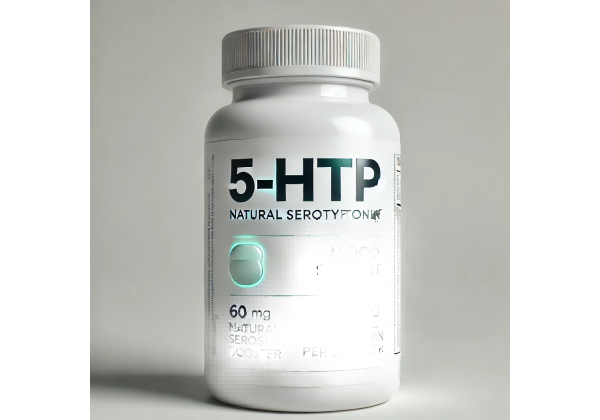
5-HTP sits at an interesting crossroads between nutrition, brain chemistry, and mental wellness. It is a naturally occurring amino acid-like compound made from tryptophan and then converted into serotonin, a signaling chemical involved in mood, sleep, appetite, and emotional regulation. Because of that role, 5-HTP is often marketed for low mood, anxious tension, poor sleep, and even “brain health.” The appeal is easy to understand: it sounds simple, direct, and natural. The reality is more nuanced. Some research is promising, especially for sleep and selected mood symptoms, but the evidence is still uneven, and the safety questions matter just as much as the potential benefits. This guide explains how 5-HTP works, where it may help, how it is commonly used, what dose ranges are typical, and when it may be risky or inappropriate.
Table of Contents
- What 5-HTP Does in the Brain
- Where the Benefits Look Most Promising
- Common Uses and Who It May Fit
- Dosage, Timing, and Supplement Forms
- Safety, Side Effects, and Interactions
- Smart Use and Realistic Expectations
What 5-HTP Does in the Brain
5-HTP is the intermediate step between the amino acid tryptophan and serotonin. In practical terms, that means it sits one step closer to serotonin than dietary protein or ordinary tryptophan. That biology is the main reason people use it. The body can turn tryptophan from food into 5-HTP, and then turn 5-HTP into serotonin. Some serotonin-related pathways also feed into melatonin production, which helps explain why 5-HTP is used for both mood and sleep.
This does not mean that taking 5-HTP gives a predictable serotonin boost in every person. Brain chemistry is tightly regulated. Absorption, dose, other medications, stress, sleep, diet, and baseline health all affect what happens next. Even so, 5-HTP has two features that make it more pharmacologically active than many supplements: it can cross the blood-brain barrier, and it bypasses an earlier rate-limiting step in serotonin synthesis. That is one reason it often feels less like a basic vitamin and more like a supplement with drug-like effects.
For brain health, that distinction matters. When people say 5-HTP helps “the brain,” they usually mean one of four things:
- better mood balance
- easier sleep onset or more restful sleep
- less emotional reactivity or rumination
- possible support for selected cognitive functions that depend on sleep and mood
That is a narrower claim than saying 5-HTP protects the brain from aging or prevents dementia. At this point, the best evidence is not for broad neuroprotection. It is for symptom-level effects in areas linked to serotonin signaling, especially sleep quality and mood.
5-HTP is commonly derived from Griffonia simplicifolia seeds, although what matters most to the user is the actual milligram amount of 5-HTP in the product, not just the plant source. Some labels emphasize “natural” sourcing, but natural origin does not guarantee better effect, cleaner manufacturing, or lower risk.
A useful comparison is tryptophan and serotonin pathways. Tryptophan comes from food and is handled more slowly and indirectly. 5-HTP is closer to the active pathway, which may make it feel more potent, but also raises the importance of dosing, interactions, and caution.
The key takeaway is simple: 5-HTP is not a casual wellness add-on. It is a serotonergic supplement with plausible brain and mood effects, but it should be approached with the same respect people give to any substance that meaningfully alters sleep, mood, or nervous system signaling.
Where the Benefits Look Most Promising
The strongest case for 5-HTP is not that it works for everything. It is that it may help in a few targeted areas, with sleep and mood leading the list. That distinction matters because 5-HTP is often sold with very broad promises about emotional wellness, appetite, focus, and resilience. The current evidence is more selective than that.
Sleep is one of the most plausible uses. Because serotonin is involved in sleep regulation and melatonin production, 5-HTP has a clear biological rationale. Human studies suggest that some people, especially poor sleepers, may see improvement in certain sleep-quality measures rather than a dramatic sedative effect. In other words, 5-HTP is not best understood as a knockout sleep aid. It is better seen as a supplement that may improve the conditions that support sleep, particularly when low mood and restless sleep overlap. That makes it different from fast-acting sedatives and also different from direct circadian tools such as melatonin timing and dosage.
Mood is the second area of interest. There is older clinical literature and a systematic review suggesting possible antidepressant effects, but the evidence base is limited by small trials, inconsistent designs, variable doses, and uneven quality. That means the signal is interesting, but not strong enough to treat 5-HTP as a proven stand-alone intervention for depression. The most balanced summary is that 5-HTP may help some people with low mood symptoms, but the research is not yet robust enough to make it a first-line option.
Cognition is more preliminary. A newer trial in older adults suggests potential improvement in selected cognitive measures alongside mood changes, but this is still early-stage evidence. It does not justify sweeping claims that 5-HTP improves memory in the general population or prevents cognitive decline. At most, it supports a cautious idea: when sleep and depressive symptoms improve, some aspects of attention, clarity, or test performance may improve as well. That is a meaningful difference. Better sleep can improve mental sharpness without the supplement being a true nootropic.
The evidence for anxiety is less consistent. Some users report feeling calmer, but that effect may reflect better sleep or reduced emotional volatility rather than a direct anti-anxiety action. Anxiety is biologically complex, and serotonin is only one part of the picture.
Overall, the benefits that look most credible are:
- modest support for sleep quality in some adults
- possible improvement in depressive symptoms
- possible indirect support for concentration and mental clarity when sleep or mood improve
- limited evidence for broader cognitive benefits, still too early for strong claims
That means 5-HTP may have a place in a brain-health conversation, but mostly through mood regulation and sleep support, not through proven long-term neuroprotection.
Common Uses and Who It May Fit
In real-world use, 5-HTP is usually chosen by people trying to solve a practical problem rather than chase a theory about neurotransmitters. They may be dealing with poor sleep, emotionally flat days, stress-linked eating, or a sense that their mood is dragging down their focus. That practical lens is helpful, because the best use cases for 5-HTP are usually narrow and specific.
A reasonable candidate for 5-HTP is an adult who is not taking serotonergic medication, wants a cautious trial for sleep quality or mild low mood, and is willing to start low, watch for side effects, and stop if there is no clear benefit. It may be a better fit when symptoms cluster together, such as:
- low mood with difficulty falling asleep
- restless sleep with early waking
- emotional stress with carbohydrate cravings
- feeling mentally dull because sleep and mood are both off
What 5-HTP is less suited for is severe psychiatric illness, urgent mood symptoms, or situations where professional assessment is already clearly needed. Someone with persistent depression, suicidal thoughts, panic attacks, bipolar symptoms, psychosis, or major functional decline should not self-manage with a supplement alone. In those settings, 5-HTP can delay care, muddy the clinical picture, or create interaction risks.
It is also important to separate “mild low mood” from a depressive disorder. If a person is reading about 5-HTP because they recognize signs of depression symptoms and coping needs, that is a sign to think beyond supplements. A supplement may be part of a broader plan, but it should not replace evaluation, therapy, medication review, sleep assessment, or substance-use review when those are indicated.
Some people are drawn to 5-HTP because they want something that feels more direct than diet and less intense than prescription treatment. That instinct is understandable, but it can be misleading. 5-HTP is not simply “gentle because it is natural.” It may still cause nausea, sedation, agitation, vivid dreams, or risky interactions.
People who may be better candidates for a short, cautious trial include:
- adults with mild sleep disturbance tied to mood imbalance
- adults with mild depressive symptoms who are not using antidepressants
- adults who want a time-limited experiment with clear stop rules
- adults who can review current medications and supplements before starting
People who are poor candidates include pregnant or breastfeeding individuals, children unless specifically guided by a clinician, people with bipolar disorder or a history of mania, and anyone taking medicines or supplements that raise serotonin.
The more complex a person’s mental health picture is, the less suitable it is to experiment with 5-HTP without clinical guidance.
Dosage, Timing, and Supplement Forms
The most important rule with 5-HTP dosing is to start lower than the marketing suggests. Because it can affect serotonin signaling and sometimes causes stomach upset or drowsiness, a cautious ramp-up makes more sense than jumping straight to a full daily amount.
For general mood support, common supplemental ranges are often around 100 to 300 mg per day. For sleep-focused use, lower amounts such as 100 to 200 mg per day are commonly used, often in the evening. Some studies in older adults used 100 mg daily. Higher doses have appeared in older research for non-mental-health uses, but that does not make higher dosing a good self-directed strategy.
A practical approach often looks like this:
- Start with 50 to 100 mg once daily.
- Take it with food if nausea is an issue.
- If using it for sleep, take it in the evening or before bed.
- If using it for mood, some people divide the dose, but only after confirming they tolerate it well.
- Reassess after 2 to 4 weeks rather than drifting upward indefinitely.
The goal is not to find the highest tolerable dose. The goal is to find the lowest dose that produces a clear benefit without side effects.
Form matters less than people think, but label quality matters a lot. Look for:
- a clear amount of 5-HTP per capsule or tablet
- a short ingredient list without large proprietary blends
- third-party testing or basic quality assurance from a reputable manufacturer
- directions that do not make aggressive claims or encourage stacking with multiple serotonergic products
Capsules are the most common form. Gummies and blends can be harder to judge because they often combine 5-HTP with melatonin, magnesium, herbs, or other sedating ingredients. That can make it difficult to tell what is helping and what is causing side effects.
Timing should match the goal. For sleep, evening use is more logical. For mood, earlier in the day may suit some people better if bedtime dosing causes vivid dreams or morning grogginess. There is no universal “best time,” but there is a best principle: align the dose with the symptom you are trying to change.
People sometimes ask whether 5-HTP should be taken alone or alongside other calming supplements. In general, simpler is safer at first. If a person also wants support for sleep or tension, it is better to understand one supplement clearly before combining it with another product such as L-theanine for anxiety and sleep.
If there is no clear benefit after a fair trial at a sensible dose, increasing endlessly is rarely the answer.
Safety, Side Effects, and Interactions
This is the section many people skim, but with 5-HTP it should be the section they read first. The most common side effects are gastrointestinal. Nausea, stomach discomfort, loose stools, and reduced appetite are all well-known reasons people stop using it. Drowsiness, vivid dreams, lightheadedness, and a slightly “wired but tired” feeling can also occur. These problems are more likely when the starting dose is too high or when the supplement is combined with other active products.
The major safety issue is serotonin excess. Because 5-HTP feeds into serotonin production, combining it with other serotonergic substances can raise the risk of serotonin toxicity, also called serotonin syndrome. That risk is the main reason 5-HTP should not be treated like a harmless add-on.
Higher-risk combinations can include:
- SSRIs and SNRIs
- MAO inhibitors
- certain migraine medicines such as triptans
- tramadol and some other pain medicines
- dextromethorphan-containing cough products
- linezolid and some anti-nausea medicines
- St. John’s wort and other serotonergic supplements
That medication review matters even more for people already trying to understand SSRI side effects and when to talk to a clinician. Adding 5-HTP on top of a prescription antidepressant without medical guidance is not a low-stakes experiment.
Warning signs of serotonin excess can include:
- agitation or unusual restlessness
- tremor, shivering, or muscle twitching
- sweating, fast heart rate, or rising body temperature
- diarrhea and nausea that are sudden or severe
- confusion, clonus, or marked overstimulation
If these occur after starting or combining serotonergic substances, the supplement should be stopped and urgent medical advice sought.
There are other caution points as well. People with bipolar disorder or a history of hypomania should be especially careful, because serotonergic interventions can destabilize mood. People with scleroderma are generally advised to avoid 5-HTP. Pregnancy and breastfeeding are also situations where self-directed use is not a good idea because safety data are too limited. Anyone with a complex medical or psychiatric history should treat 5-HTP as something that deserves clinician review, not just casual curiosity.
One more subtle risk is misattribution. If someone feels more anxious, groggy, nauseated, or emotionally activated after starting 5-HTP, it is easy to blame life stress and keep taking it. A better approach is to assume the supplement may be contributing until proven otherwise.
In short, 5-HTP is not inherently dangerous when used appropriately, but it is also not benign. The safer the context, the simpler the medication list, and the lower the starting dose, the better the odds of a clean trial.
Smart Use and Realistic Expectations
The smartest way to use 5-HTP is to treat it as one small part of a larger picture, not as the whole plan. That means deciding in advance what success would actually look like. Is the goal falling asleep faster, waking less often, feeling less emotionally flat, or having fewer stress-driven cravings? A vague goal usually leads to vague results.
A realistic trial should be structured. Pick one target symptom, choose one dose, and define a time frame. For example, an adult might try 50 to 100 mg nightly for two weeks for sleep quality, while keeping bedtime, alcohol intake, and caffeine reasonably stable. That gives the supplement a fair chance while reducing noise.
Good questions to ask during a trial include:
- Am I sleeping better, or just feeling more sedated?
- Is my mood clearly improved, or am I mostly noticing side effects?
- Am I more functional during the day?
- Is the benefit consistent enough to justify continuing?
This approach matters because 5-HTP is easy to oversell. It may help, but it is not a replacement for sleep habits, therapy, medication management, exercise, morning light exposure, or reducing alcohol and stimulant excess. For many people, those basics move the needle more than any supplement.
The same is true for brain health. Better sleep, steadier mood, and fewer stress swings can absolutely support attention and clarity. That does not make 5-HTP a proven cognitive enhancer. People looking for sharper thinking should be especially careful not to confuse relief of sleep-related mental fog with true neurocognitive improvement. If poor sleep is driving the problem, broader work on sleep, memory, focus, and mood may matter more than the supplement itself.
Stop rules are just as important as start rules. It makes sense to stop if:
- side effects appear early and do not settle
- mood worsens or becomes agitated
- there is no meaningful benefit after a reasonable trial
- another medication is started that creates interaction concerns
The best mindset is curious but unsentimental. 5-HTP may be useful for some adults, particularly where sleep and mood overlap. It is less convincing as a general brain-health fix, and it becomes a poor choice when the symptom picture is severe, the medication list is complex, or expectations are unrealistic.
Used thoughtfully, it can be a targeted experiment. Used casually, it can create confusion, side effects, or avoidable risk.
References
- The Impact of 5-Hydroxytryptophan Supplementation on Cognitive Function and Mood in Singapore Older Adults: A Randomized Controlled Trial 2025 (RCT)
- The impact of 5-hydroxytryptophan supplementation on sleep quality and gut microbiota composition in older adults: A randomized controlled trial 2024 (RCT)
- Effects of 5-hydroxytryptophan on distinct types of depression: a systematic review and meta-analysis 2020 (Systematic Review and Meta-Analysis)
- Serotonin syndrome—A focused review 2023 (Focused Review)
- 5-HTP 2024 (Official Monograph)
Disclaimer
This article is for educational purposes only and is not medical advice. 5-HTP can affect serotonin signaling and may interact with prescription medicines, over-the-counter products, and other supplements. Do not use it as a substitute for professional care for depression, anxiety, insomnia, bipolar disorder, or any urgent mental health concern. Speak with a qualified clinician before using 5-HTP if you take antidepressants or other serotonergic drugs, are pregnant or breastfeeding, have a chronic medical condition, or have a history of mania, medication reactions, or complex psychiatric symptoms.
If you found this article useful, please share it on Facebook, X, or any platform where it may help someone make a safer, more informed decision.