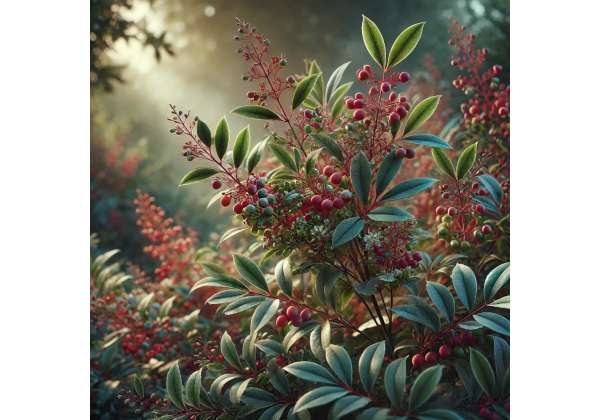
Heavenly bamboo, or Nandina domestica, is an evergreen shrub best known as an ornamental plant, but it also has a long record in traditional East Asian medicine. Different parts of the plant—especially the fruits, leaves, roots, and stems—have been used for cough, wheezing, chronic bronchitis, feverish conditions, and certain inflammatory complaints. Modern research adds some plausible reasons for that history: heavenly bamboo contains isoquinoline alkaloids, flavonoids, lignans, and related compounds with bronchodilating, anti-inflammatory, antimicrobial, and antioxidant activity in lab and animal studies. At the same time, this is not a casual home remedy. The raw fruit is considered poisonous, the whole plant has toxic potential, and high-quality human trials are still lacking. That makes heavenly bamboo a herb where balance matters more than hype. It may be pharmacologically interesting, but it also demands respect, careful dosing, and medical judgment. For most readers, the most useful question is not “Is it powerful?” but “Is it appropriate, evidence-based, and safe for me?”
Essential Insights
- Traditionally used for cough, wheezing, and thick phlegm support, but modern human evidence remains limited.
- Key compounds include isoquinoline alkaloids and flavonoids with respiratory, antimicrobial, and anti-inflammatory signals in preclinical research.
- Traditional dose ranges are fruits 6–15 g, roots 9–15 g, and leaves 9–15 g, usually as processed preparations rather than raw plant material.
- Avoid self-use in pregnancy, breastfeeding, childhood, and in anyone with significant heart, neurologic, or medication-interaction concerns.
Table of Contents
- What is heavenly bamboo
- Key compounds and actions
- What can heavenly bamboo help with
- How to use it
- How much heavenly bamboo per day
- Safety, interactions, and avoidance
- What the evidence says
What is heavenly bamboo
Heavenly bamboo is not a true bamboo. It is an evergreen shrub in the Berberidaceae family, the same broader plant family that includes several alkaloid-rich medicinal species. In the garden, it is valued for feathery foliage, white flowers, and clusters of red berries. In traditional Chinese and Japanese practice, though, it has been more than decorative. The roots, stems, leaves, and fruits have all been used, with each part assigned a somewhat different role. The fruits were classically used for cough, wheezing, and chronic respiratory complaints. The roots and stems were used more broadly for “heat,” damp conditions, toxin-clearing, and inflammatory complaints. The leaves were also used for cough-related conditions and certain skin or eye complaints.
That history matters, but so does context. Heavenly bamboo sits in a category of herbs that are pharmacologically active enough to earn traditional use, yet risky enough that old systems rarely treated them as kitchen herbs. In other words, it was not typically something to snack on, toss casually into tea, or use without preparation. It is better understood as a potent medicinal plant with both therapeutic interest and real toxicity concerns.
The main modern reason people search for heavenly bamboo is usually one of three things. First, they want to know whether it really has medicinal value beyond folklore. Second, they want to understand its active compounds. Third, they want a straight answer about whether the berries are safe. The fair answer is yes, it has genuine medicinal interest; yes, it contains bioactive compounds; and no, raw fruit should not be treated as safe food. The fruit has documented toxic potential, and the whole plant deserves caution.
A helpful way to think about heavenly bamboo is as a traditional respiratory and inflammatory herb with a narrow margin for careless use. That puts it in a very different category from gentle everyday herbs. If your goal is mild, low-risk airway comfort, many people are better served by more familiar options such as garden thyme or licorice-based throat formulas. Heavenly bamboo is more specialized, less studied in humans, and less forgiving when misused. That does not make it useless. It means it should be discussed with the same seriousness you would give any potent botanical with both historical value and toxicology concerns.
Key compounds and actions
The most important key ingredients in heavenly bamboo are its alkaloids, especially isoquinoline alkaloids. Modern review work has identified hundreds of compounds from different parts of the plant, including alkaloids, flavonoids, lignans, terpenoids, phenolic acids, and fatty-acid-related compounds. Among these, the isoquinoline alkaloids are considered the characteristic chemical markers. That is a major clue to how the plant works, because alkaloids are often the most pharmacologically active molecules in traditional medicinal plants.
Several individual compounds stand out. Nantenine is one of the best known and has attracted interest for effects on smooth muscle tone, serotonin-related signaling, vascular response, and other receptor-level actions. Higenamine is another notable constituent and is linked to rapid tracheal relaxation through beta-adrenergic activity. Berberine-type and protoberberine-related alkaloids are also part of the plant’s chemistry, which helps explain why heavenly bamboo sometimes gets discussed alongside alkaloid-rich relatives such as Oregon grape root. The comparison is useful chemically, but not identical clinically; heavenly bamboo’s safety profile is more complicated because cyanogenic compounds and toxic fruit exposure are part of the story.
The flavonoid side of the plant also matters. Amentoflavone and related flavonoids have shown antioxidant and antimicrobial activity in experimental work. These compounds likely contribute to the plant’s broader anti-inflammatory and tissue-protective reputation, especially when whole extracts are used instead of single isolated compounds. This is an important nuance: heavenly bamboo may not work through one magic ingredient. It may behave more like many traditional botanicals, where several classes of compounds produce a layered effect. One compound may relax airways, another may influence inflammatory signaling, and another may contribute antimicrobial action.
Mechanistically, the plant seems to show four main patterns in preclinical research:
- smooth-muscle relaxation in the airways,
- anti-inflammatory signaling,
- antimicrobial activity,
- antioxidant activity.
That makes the traditional respiratory use biologically plausible. It also explains why some older preparations were aimed at chronic bronchitis, cough, wheezing, and throat irritation rather than broad wellness use. Still, plausibility is not proof. A compound can look impressive in a cell study and still fail to become a reliable human therapy. Heavenly bamboo’s chemistry is rich, but rich chemistry and proven clinical outcomes are not the same thing.
One last practical point: the plant’s chemistry varies by part used. Fruits, leaves, stems, and roots are not interchangeable. A label or traditional formula that does not specify the plant part leaves out information that directly affects both expected benefit and expected risk. With heavenly bamboo, that detail is essential, not optional.
What can heavenly bamboo help with
The most realistic answer is that heavenly bamboo may help most with respiratory complaints, and even there the strongest support is traditional use plus preclinical evidence, not modern human trials. In Chinese and Japanese practice, the plant was used for prolonged cough, wheezing, whooping cough, asthma-like symptoms, and chronic bronchitis. That history lines up fairly well with modern mechanistic findings showing airway smooth-muscle relaxation and anti-inflammatory activity. Leaf and fruit extracts have shown activity in experimental settings that suggests a possible role in chronic bronchitis-type complaints where infection, inflammation, and airway reactivity overlap.
So what benefits should a modern reader expect? The most grounded possibilities are:
- easing cough tendency in certain traditional-style formulas,
- helping wheeze or airway tightness in preclinical models,
- supporting inflammatory control in respiratory tissues,
- providing antimicrobial assistance at least in laboratory settings.
That is very different from claiming it is a proven asthma treatment or a substitute for inhalers, antibiotics, or evidence-based pulmonary care. It is not. If someone has active asthma, shortness of breath, or chronic cough, heavenly bamboo is not first-line self-care. It is better viewed as a historically important herb with promising but incomplete support.
There is also some experimental support for anti-inflammatory and skin-related activity. Animal research suggests that leaf extracts may influence inflammatory markers in dermatitis models. That does not mean the plant is ready for routine eczema treatment, but it does show that the older heat-clearing and skin-soothing claims may have a biochemical basis. Likewise, cytotoxic and antitumor signals have been described for certain constituents, yet those findings are far from enough to justify cancer-related self-treatment.
Another interesting area is throat support. Modern consumer products in Japan have used controlled fruit extract in throat lozenges, which suggests that low-dose, processed, purpose-built preparations have been explored for upper-airway comfort. That is a very different scenario from chewing berries from a landscape shrub. It highlights an important principle: the benefit question cannot be separated from the form question. The same plant can be helpful in a controlled preparation and harmful in a raw, casual one.
If you want a practical summary, heavenly bamboo’s most believable benefit cluster is respiratory support with possible anti-inflammatory and antimicrobial backup. If you want gentler, more everyday respiratory herbs, a better starting point is often licorice or thyme. If you want heavenly bamboo specifically, the right mindset is cautious optimism: interesting herb, plausible uses, but not enough human evidence to justify casual or unsupervised experimentation.
How to use it
Traditional use gives the clearest picture of how heavenly bamboo is actually used. It has usually been prepared as a decoction or incorporated into a multi-herb formula rather than consumed raw. The fruits, leaves, roots, and stems each appear in older materia medica traditions, but they were not treated as interchangeable. In clinical-style use, the fruit was generally chosen when cough, wheezing, or prolonged respiratory irritation was the main target. Leaves and roots were more often linked to heat-clearing, dampness, inflammatory complaints, and toxin-related indications.
For modern readers, there are really four practical use categories:
- Processed traditional decoctions
This is the most historically grounded route. A trained practitioner selects the plant part, dose, and companion herbs. - Standardized research or lab extracts
These are mostly relevant to researchers, not home users. - Commercial products using controlled amounts
The clearest example is the Japanese throat-lozenge tradition using fruit extract. - Raw plant material from ornamental shrubs
This is the least advisable route and the one most likely to cause trouble.
The safest principle is simple: medicinal use should involve processed preparations, not direct consumption from a yard plant.
Preparation style also changes the expected effect. An aqueous extract may emphasize different constituents than an alcohol extract or whole-powder product. Some respiratory findings in the literature come from aqueous fruit extracts or leaf extracts, which matters because people sometimes assume that any form of the plant will behave the same way. It will not. Even in the research, one isolated compound rarely explains the whole effect. Whole extracts sometimes relax tracheal tissue or suppress inflammatory signaling better than a single purified ingredient.
Who might reasonably consider it? In practice, heavenly bamboo makes the most sense when someone is already working with a qualified herbal or integrative practitioner and the aim is narrow: stubborn cough, wheezy bronchitic symptoms, or a traditional formula where this herb has a defined role. It makes much less sense as a trendy immune booster, a daily tonic, or a DIY berry remedy.
A practical decision rule is this: if your goal is broad wellness, skip it. If your goal is symptom-targeted respiratory support, use only a reputable, purpose-made preparation and treat it like a medicine. If your main issue is mild nausea, cold-season tea use, or digestive comfort, herbs such as ginger have a much clearer real-world safety and dosing culture. Heavenly bamboo belongs in the specialized herb category, not the general-use category.
How much heavenly bamboo per day
Heavenly bamboo is one of those herbs where dosage should be discussed in terms of traditional ranges, not modern self-prescribing confidence. The clearest accessible dose guidance from official toxicology references lists the following traditional amounts:
- fruits: 6–15 g,
- roots: 9–15 g,
- leaves: 9–15 g.
These are traditional medicinal ranges, generally referring to prepared herbal use rather than raw snacking, casual tea-making, or unsupervised long-term supplementation. They are not an invitation to start at the top end, and they do not mean the herb is safe for everyone within that range.
A useful way to interpret those numbers is by asking four questions.
First, which plant part is being used? Fruit, leaf, and root are chemically different enough that dose should never be discussed as though heavenly bamboo were one uniform substance.
Second, what is the form? Decoction, extract, powder, lozenge, and isolated constituent do not map neatly onto one another. A 10 g traditional crude-herb dose does not translate directly into an extract capsule without knowing extraction ratio and standardization.
Third, what is the goal? Occasional throat support is not the same as repeated use in chronic cough formulas. Duration matters.
Fourth, who is the user? Age, body size, pregnancy status, medication use, cardiovascular status, neurologic history, and liver function all change the risk-benefit equation.
For that reason, the safest dosing advice is conservative:
- do not use raw berries as a dose,
- do not guess based on internet folklore,
- do not assume more is better,
- do not convert crude-herb gram ranges into extracts without product-specific data.
If a practitioner does prescribe it, a low-end, clearly defined, time-limited plan is usually the most rational approach. The goal should be to assess response, not to chase stronger effects. Heavenly bamboo is not the kind of herb where escalating the dose casually makes sense.
Timing is also practical. Traditional respiratory herbs are often taken in divided doses rather than a single large amount, especially when the aim is cough or wheeze relief over the day. But again, that pattern belongs under professional guidance. If you are looking for something you can confidently dose on your own for common everyday symptoms, heavenly bamboo is usually the wrong choice. More familiar herbs, such as peppermint for mild upper-airway comfort or ginger for digestive symptoms, have a much wider margin for ordinary use.
Safety, interactions, and avoidance
Safety is the section that matters most with heavenly bamboo. The fruit is considered poisonous when eaten raw, and the plant contains cyanogenic compounds as well as alkaloids with meaningful biological effects. Toxicity is not just a theoretical concern. Toxicology guidance lists hydrocyanic acid, nandinine, and nantenine among the relevant toxic constituents and notes poisoning features such as numbness, convulsion, pulmonary hemorrhage, and even death. The broader toxicology literature explains that cyanogenic glycosides can release hydrogen cyanide after plant tissues are chewed and metabolized, disrupting mitochondrial respiration and cellular oxygen use.
In people, the most commonly reported reactions after ingestion are more often gastrointestinal than dramatic: nausea, vomiting, abdominal pain, and diarrhea. That does not make the plant mild. It means early toxicity may look like ordinary stomach upset before more serious issues become a concern in susceptible exposures. Pets and birds are also at risk, which is one reason the berries are widely discussed in poison-control and veterinary contexts.
Who should avoid heavenly bamboo altogether?
- pregnant or breastfeeding people,
- children,
- anyone tempted to use raw berries or home-harvested ornamental plant parts,
- people with seizure disorders or significant neurologic vulnerability,
- people with serious liver, heart, or respiratory disease unless a clinician specifically recommends it,
- people taking multiple prescription medicines, especially those affecting the nervous system or cardiovascular system.
There is also a smart gray-zone group: athletes in tested competition, because heavenly bamboo contains higenamine-related chemistry and product interpretation can get complicated. That is not the same as saying every product will trigger a doping problem, but it is enough reason for extra caution and label scrutiny.
Interaction-wise, the main concern is not one single proven drug interaction chart but the plant’s overall pharmacology. Anything with adrenergic, serotonergic, smooth-muscle, or CNS activity deserves caution when combined with medicines affecting similar systems. Add to that the toxicity risk of raw fruit, and the conclusion is clear: heavenly bamboo is not appropriate for self-directed polyherbal stacking or try-it-and-see supplement routines.
The practical safety rule is blunt: never treat heavenly bamboo like an edible berry, never assume ornamental equals safe, and never use it long term without expert input. If accidental ingestion causes vomiting, diarrhea, neurologic symptoms, breathing difficulty, or unusual weakness, seek urgent medical help.
What the evidence says
The evidence for heavenly bamboo is intriguing but incomplete. Modern review work supports the idea that heavenly bamboo is a real medicinal plant with a substantial chemical profile and multiple plausible actions. It also makes the central limitation explicit: more work is needed on mechanisms, pharmacokinetics, safety, and especially efficacy in humans. That last point matters most. Human data remain thin compared with the amount of historical use and preclinical enthusiasm.
What does the research support reasonably well?
- the plant contains many active compounds,
- respiratory effects are biologically plausible,
- some extracts show anti-inflammatory and antimicrobial activity,
- certain compounds such as higenamine and nantenine have defined pharmacologic actions,
- toxicity concerns are real and must shape any benefit discussion.
What does the research not yet support strongly enough?
- confident clinical recommendations for asthma,
- established modern dosing standards for extracts,
- routine self-treatment for chronic bronchitis,
- broad claims about cancer, skin disease, or general wellness.
That means heavenly bamboo is best described as a promising traditional herb with genuine pharmacology and insufficient human validation. It is more than folklore, but not yet a well-proven mainstream botanical.
For readers trying to make a practical decision, the answer is straightforward. If you want a gentle herb for everyday use, heavenly bamboo is usually not a smart first choice. If you want a targeted herb with traditional respiratory credibility and you have access to professional guidance, it may deserve consideration in carefully prepared formulas. If your standard is strong human evidence, the plant is not there yet.
In other words, heavenly bamboo earns respect, not casual enthusiasm. Its best current role is as a specialist herb: historically important, chemically rich, potentially useful, but still limited by sparse human research and meaningful safety concerns. That combination should lead to measured interest, not impulse use.
References
- Nandina domestica Thunb.: a review of traditional uses, phytochemistry, pharmacology, and toxicology 2024 (Review)
- Therapeutic Potential and Pharmacological Activities of (+)-Nantenine in Medicine: An Aporphine Class Phytocomponent of Nandina domestica Thunberg 2024 (Review)
- Emerging Plant Intoxications in Domestic Animals: A European Perspective 2023 (Review)
- Atlas of Poisonous Plants in Hong Kong – A Clinical Toxicology Perspective 香港有毒植物圖鑑 – 臨床毒理學透視 2018 (Official toxicology reference)
Disclaimer
This article is for educational purposes only and should not be used to diagnose, treat, or replace medical care. Heavenly bamboo is a potentially toxic plant, and raw fruit should not be eaten. Any medicinal use should be guided by a qualified healthcare professional or a properly trained herbal practitioner, especially for children, pregnancy, chronic illness, breathing problems, or concurrent prescription-drug use.
Please share this article on Facebook, X, or your preferred platform if you think it could help someone make a safer, more informed decision about herbal medicine.