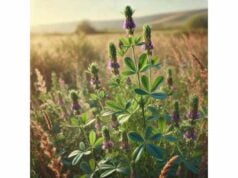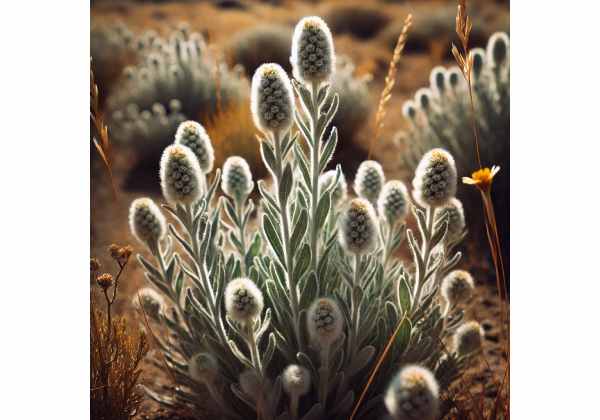
Lamb’s tails, more widely known as pearly everlasting, is a silver-leaved, white-flowered herb in the daisy family that has long been valued in North American folk medicine. Botanically, it is Anaphalis margaritacea, a hardy perennial recognized for its papery flower clusters, woolly leaves, and light aromatic scent. Traditional healers used it in teas, steam preparations, poultices, and washes for coughs, colds, swollen tissues, skin irritation, burns, diarrhea, and general inflammatory discomfort.
What makes this herb especially interesting is the gap between tradition and modern science. Lamb’s tails clearly has a strong ethnobotanical record, and newer phytochemical work suggests it contains flavonoids, triterpenoids, essential-oil compounds, and other biologically active constituents. At the same time, it remains lightly studied in human medicine, so many of its modern claims are still best treated as plausible rather than proven.
That makes a balanced approach essential. Lamb’s tails is best understood as a traditional respiratory and topical support herb with emerging chemical interest, modest evidence, and a need for cautious, practical use rather than exaggerated expectations.
Quick Overview
- Lamb’s tails is traditionally used for coughs, throat irritation, and chesty colds.
- It has also been used externally for burns, bruises, sores, and swollen skin.
- A light traditional infusion is often made with about 1 to 2 teaspoons dried herb per 240 mL hot water.
- Avoid internal use during pregnancy and breastfeeding, and use extra caution if you have a daisy-family allergy.
- Its strongest modern support is ethnobotanical and laboratory-based, not clinical.
Table of Contents
- What Is Lamb’s Tails
- Key Ingredients and Medicinal Properties
- Does Lamb’s Tails Help with Coughs and Skin Irritation
- How It Is Used in Practice
- How Much Lamb’s Tails Per Day
- Safety, Interactions, and Who Should Avoid It
- What the Evidence Really Shows
What Is Lamb’s Tails
Lamb’s tails is a folk-style common name for Anaphalis margaritacea, a perennial herb in the Asteraceae family. In most field guides and herbal references, the plant is called pearly everlasting or western pearly everlasting. The nickname “lamb’s tails” likely comes from its soft, woolly foliage and pale, fuzzy flower clusters, which can look silky and animal-like when the plant moves in dry wind. Because the more standard common name is pearly everlasting, it helps to know both names when identifying or buying the herb.
This plant is native across large parts of North America and also occurs in Asia. It thrives in sunny, open places such as meadows, roadsides, old fields, forest edges, gravelly soils, and disturbed ground. It is not a lush, juicy herb. It is a dry-land survivor, upright and fibrous, with narrow leaves that are green above and distinctly white-woolly below. The flower heads are not showy in the soft-petal sense. Instead, they are crisp and papery, which is why the stems dry so well and keep their shape in arrangements.
Historically, the whole aerial plant or its leaves and flowering tops were used. Indigenous and settler traditions described internal use for colds, coughs, diarrhea, dysentery, and chest complaints, and external use for burns, sores, bruises, swelling, and inflammatory skin problems. Some groups also used the herb in steam baths, smoked it for respiratory complaints, or applied poultices to sore areas. That range may sound broad, but it follows a familiar pattern seen with many aromatic, mildly astringent field herbs: part respiratory, part topical, part digestive.
What makes Lamb’s tails especially useful to understand is that it is not a high-profile commercial supplement. It sits closer to regional herbal practice than to modern capsule culture. You are more likely to encounter it in ethnobotanical records, wildcrafting circles, and North American herbal traditions than in mainstream pharmacy shelves.
That also means identification matters. Anaphalis margaritacea can be confused with other gray-green members of the daisy family, especially cudweeds and related everlastings. The plant’s bright white, pearly bracts and the felted undersides of the leaves are part of what separate it from look-alikes.
So before talking about benefits, the best framing is simple: Lamb’s tails is a traditional North American medicinal herb, best known for respiratory and topical use, and more firmly rooted in heritage practice than in modern standardized herbal medicine.
Key Ingredients and Medicinal Properties
Lamb’s tails has a more interesting chemical profile than many readers expect, but it is still not a thoroughly standardized herb. Modern research points to several useful classes of compounds, while older herbal records describe the plant more generally as aromatic, bitter, and astringent. Together, those two perspectives give a fair picture of why the herb has been used the way it has.
Recent phytochemical work on Anaphalis margaritacea essential oil identified a mixture of volatile compounds, including isocaryophyllene, caryophyllene oxide, geranyl-alpha-terpinene, alpha-pinene, gamma-muurolene, delta-cadinene, humulene, and copaene. These constituents are not proof of clinical benefit, but they matter because many are associated in plant chemistry with aromatic, antimicrobial, antioxidant, or anti-inflammatory actions. That aligns well with the herb’s traditional use for irritated airways and inflamed skin.
Beyond the essential-oil fraction, earlier phytochemical studies found flavonoids and triterpenoids in the plant, and another study reported hydroxylactones. Those names may sound technical, but their practical meaning is fairly straightforward. Flavonoids are often linked with antioxidant and capillary-protective activity. Triterpenoids commonly show up in plants with soothing, anti-inflammatory, or tissue-supportive roles. Lactone-type compounds can also contribute to bioactivity, though in daisy-family plants they may sometimes be linked with sensitivity reactions in susceptible people.
From a practical herbal point of view, Lamb’s tails appears to have five main medicinal properties:
- Mild anti-inflammatory action
- Astringent activity that may help tighten irritated tissues
- Respiratory-soothing effects in tea, steam, or warm infusion
- Topical support for minor skin irritation and swelling
- Possible antimicrobial activity in laboratory settings
These actions help explain why the herb was used for both wet and irritated conditions. For example, astringent and aromatic herbs often appear in formulas for diarrhea, damp coughs, and inflamed mucous membranes. That does not mean one herb solves everything. It means the plant’s chemistry makes its traditional uses feel internally consistent.
It is also worth noticing what Lamb’s tails does not appear to be. It is not a powerhouse bitter like gentian, not a mucilage-rich demulcent like marshmallow, and not a deeply proven respiratory herb on the level many people expect from modern evidence-based herbal guides. Its profile is gentler, drier, and more old-fashioned. In that sense, it sits closer to field herbs historically used for practical first aid than to polished commercial extracts.
Readers familiar with compounds in flavonoid-rich chamomile will recognize part of the pattern here: a plant can earn a soothing reputation through a blend of aromatic and polyphenolic compounds rather than through one dominant active ingredient.
The best summary is that Lamb’s tails contains a credible mix of volatile and nonvolatile compounds that support its traditional use for inflammation, irritated membranes, and minor topical problems. Chemistry gives the herb real interest, but not yet a fully mapped pharmacologic identity.
Does Lamb’s Tails Help with Coughs and Skin Irritation
This is the question most readers really want answered, and the most honest response is a measured one. Lamb’s tails appears most believable as a traditional herb for mild respiratory irritation and external skin support. That does not mean it has been clinically proven to treat disease. It means its historical uses, ethnobotanical records, and early lab findings line up in a way that makes those uses plausible.
For coughs and airway irritation, the herb’s traditional role is surprisingly consistent. Different sources describe it as a tea, steam herb, or even a smoked plant for colds, coughs, pulmonary complaints, and thick mucus states. Modern readers should treat the smoking history as ethnobotanical information, not as a recommendation. But the broader respiratory pattern still matters. Aromatic, mildly astringent herbs often help when tissues feel damp, swollen, or irritated rather than dry and raw. Lamb’s tails seems to fit that profile well.
In practice, that suggests the herb may be most useful for:
- Early cold-season throat irritation
- Damp, chesty coughs with mild congestion
- Irritated upper airways where warmth and steam feel helpful
- Temporary respiratory discomfort rather than chronic lung disease
For that purpose, it is often easier to understand by comparison. If someone wants a more established herb for loosening mucus and soothing bronchial irritation, mullein for respiratory support is usually the clearer modern choice. Lamb’s tails is more of a traditional secondary option than a first-line mainstream herb.
Its topical uses may be even easier to justify historically. Ethnobotanical sources and later reviews repeatedly mention it for burns, sores, swelling, bruises, and sun-related skin irritation. This does not prove it speeds wound healing in a controlled clinical sense, but it strongly suggests people found it helpful as a wash or poultice for inflamed, superficial skin problems. Astringent, aromatic herbs often feel cooling and tightening on irritated tissue, especially when used fresh or as a warm compress.
Realistic topical expectations would include:
- Minor burns or sun-irritated skin
- Bruised or swollen areas
- Mild inflammatory skin discomfort
- Small sore spots where a wash or poultice is traditionally appropriate
It is less suited to:
- Deep wounds
- Severe infections
- Serious burns
- Any skin problem that needs prompt medical care
Digestive use is also part of the record. Historical texts describe decoctions for diarrhea and dysentery, and some newer ethnomedicinal surveys still report digestive use. That said, modern self-treatment for diarrhea has to be approached with more caution, because persistent gastrointestinal symptoms can have many causes.
So yes, Lamb’s tails may help in mild cough and skin-support settings, especially when used traditionally and conservatively. But “may help” is the right level of confidence. It is a plausible, heritage-based herb, not a proven clinical therapy.
How It Is Used in Practice
Lamb’s tails has traditionally been used in flexible, hands-on ways rather than in highly standardized supplement forms. That makes sense for a field herb with strong regional roots. Most uses involve the aerial parts, especially the leaves and flowering tops, prepared as tea, steam, poultice, or wash.
The most common practical forms include:
- Infusion or tea
- Dried aerial parts are steeped in hot water.
- Used mainly for coughs, sore throats, mild digestive upset, or general inflammatory discomfort.
- Usually taken warm, not iced, because warmth is part of the traditional effect.
- Steam
- The herb is steeped strongly in hot water and the vapor is inhaled.
- Traditionally used for congested airways, head colds, and thick mucus states.
- This is often a more appealing modern adaptation than smoking.
- Poultice or compress
- Fresh or softened herb is applied externally.
- Traditionally used for bruises, swellings, burns, and sore spots.
- Warm compresses may be gentler and more practical than direct plant application.
- Wash
- A strained infusion can be used externally on irritated skin.
- Better suited to minor surface irritation than to open or deep wounds.
Historically, smoking the herb was also reported, either alone or as a tobacco substitute. That is important from a documentation standpoint, but it is not a wise modern wellness practice. Even if a plant has respiratory folklore, inhaling smoke is not the same as supporting lung health. For most readers, steam is the safer and more sensible adaptation.
The herb also works best when the use matches the plant’s character. Lamb’s tails is a dry, aromatic, slightly tightening herb. It feels most at home in problems that are damp, swollen, or mildly inflamed. It is less convincing when used for deep depletion, chronic disease, or situations that clearly call for stronger, better-studied therapies.
For external skin support, people who want a more familiar modern botanical often reach first for calendula for soothing skin care. That does not make Lamb’s tails irrelevant. It simply shows where it fits: as a traditional, situational herb rather than the default choice for every cabinet.
A few practical tips matter:
- Harvest only from clean areas, never from polluted roadsides.
- Dry thoroughly before storage.
- Strain teas well, especially if fine plant hairs are present.
- Start with short-term use, not indefinite daily use.
- Treat it as supportive, not curative.
Used this way, Lamb’s tails remains true to its history. It is a herb of steam, warmth, compresses, and modest tea preparations rather than a precision pharmaceutical. That is not a weakness. It is part of its identity.
How Much Lamb’s Tails Per Day
There is no clinically standardized modern dose for Lamb’s tails. That is the single most important dosage fact to keep in mind. Most dosage guidance comes from traditional practice, historical texts, and contemporary herbal use rather than from controlled human trials.
For a mild traditional infusion, a practical range is often:
- 1 to 2 teaspoons dried aerial parts per 240 mL hot water
- Steep for about 10 to 15 minutes
- Use up to 2 to 3 cups daily for short periods
That is a conservative, everyday herbal range, not a formally validated medical dose. It makes sense because the plant is usually used as a support herb rather than as a strong extract-driven remedy.
Historical sources describe stronger preparations. One classic dispensatory describes a decoction made from roughly 1 ounce of leaves to 1 pint of water, taken freely. Translated into modern kitchen terms, that is a much heavier preparation than most people would use now. It also comes from a time when herbal dosing was less standardized and often less cautious. For modern readers, that historical formula is best understood as context, not as a routine recommendation.
Topical use is less dose-sensitive. In practice:
- A stronger infusion may be made for compresses or washes.
- A moistened poultice may be applied to minor irritated areas.
- Use should be brief and skin should be monitored for irritation.
Timing depends on the goal:
- For cough or throat irritation, many people take it warm between meals or in the evening.
- For digestive discomfort, it may be taken after symptoms begin rather than as a daily tonic.
- For external use, it is generally applied as needed.
Duration also matters. Lamb’s tails is not well studied as a long-term daily herb. The safest approach is short-course use:
- A few days during a cold
- Brief external use for a minor irritated area
- Temporary use rather than habitual dosing
A good way to think about dosage is to match confidence to evidence:
- Traditional use: yes
- Reasonable short-term mild dosing: yes
- Long-term standardized therapeutic dosing: no
If someone wants a more familiar herbal tea for cold-season support with easier daily use, elderflower for seasonal respiratory care is often a simpler first choice.
So how much Lamb’s tails per day? Enough to stay in the traditional, gentle range, not enough to pretend this herb has a modern evidence-based dosing protocol. Mild infusion, short duration, clear purpose, and careful observation remain the best rules.
Safety, Interactions, and Who Should Avoid It
Lamb’s tails is generally discussed as a mild traditional herb, but mild does not mean risk-free. The biggest safety issue is not dramatic toxicity. It is uncertainty. Human safety data are limited, product quality varies, and common-name confusion can lead people to use a plant based on folklore rather than careful identification.
The first and most practical caution involves plant-family sensitivity. Anaphalis margaritacea belongs to the daisy family, Asteraceae. People who react to ragweed, chamomile, yarrow, arnica, or other daisy-family plants may also react to this herb. That could show up as skin irritation, mouth irritation, or a generalized allergy-type response. Topical use should always begin cautiously, especially in sensitive skin.
The second concern is lack of pregnancy and breastfeeding safety data. Because the herb is not well studied in these groups, internal use is best avoided. The same conservative rule applies to young children unless a qualified clinician specifically advises otherwise.
A third issue is self-treatment limits. Herbs traditionally used for coughs, burns, or diarrhea can sound reassuring, but those symptoms can also signal problems that need medical care. Lamb’s tails should not delay attention for:
- Persistent fever
- Shortness of breath
- Severe or worsening cough
- Large or deep burns
- Infected wounds
- Bloody diarrhea or prolonged dehydration
As for drug interactions, there are no well-established clinically confirmed interaction profiles for Lamb’s tails. That sounds comforting, but it mostly reflects lack of study rather than proven compatibility. Caution is sensible if you take multiple prescription medicines, especially when trying internal use for the first time.
Other practical safety points include:
- Avoid smoking the herb as a modern health practice.
- Do not collect from polluted roadsides, sprayed fields, or contaminated soils.
- Confirm identity carefully before wildcrafting.
- Stop use if rash, nausea, throat irritation, or unusual symptoms develop.
- Use external preparations only on minor skin issues unless instructed otherwise by a clinician.
For people mainly seeking astringent skin support with a clearer topical identity, witch hazel for topical use may be a more familiar and lower-ambiguity option.
Who should avoid Lamb’s tails or get advice first:
- Pregnant people
- Breastfeeding people
- Children
- Anyone with known Asteraceae allergy
- Anyone with serious lung, digestive, or skin symptoms
- Anyone taking multiple medicines and wanting internal use
So the safety profile is best described as modestly reassuring but incomplete. Used in light, traditional ways, the herb appears relatively gentle. Used casually, vaguely identified, or in place of proper care, it becomes much less trustworthy.
What the Evidence Really Shows
The evidence for Lamb’s tails is strongest in three areas: traditional use, ethnobotanical documentation, and early-stage phytochemistry. It is weakest where modern readers often want the most reassurance, namely controlled human clinical trials.
The traditional record is solid. Across North American herbal and Indigenous-use sources, Anaphalis margaritacea shows up repeatedly for burns, bruises, sores, swelling, colds, coughs, diarrhea, dysentery, and inflammatory complaints. That repetition matters. It suggests the herb had consistent practical value in communities that knew the plant well.
Ethnomedicinal literature from other regions also reports the species for diarrhea, pulmonary infection, burns, headache, asthma, and topical applications. That does not prove all those uses in a modern biomedical sense, but it does show the plant has maintained medicinal relevance across settings rather than existing as a one-note folk curiosity.
Phytochemical work adds another meaningful layer. The plant contains flavonoids, triterpenoids, hydroxylactones, and volatile oil compounds that plausibly support anti-inflammatory, antioxidant, and mild antimicrobial activity. Newer essential-oil studies and older compound-isolation papers both reinforce the idea that this is a genuinely bioactive herb.
Laboratory evidence also gives the plant some credibility. Extracts of Anaphalis margaritacea have shown antibacterial activity in vitro, and topical-use reviews continue to cite it for burns and skin inflammation. These findings are helpful, but they must be kept in proportion. Petri-dish activity is not the same as clinical effectiveness, and molecular docking is not the same as treatment proof.
What is missing is the key step from promising tradition to confident recommendation:
- No robust human trials
- No standardized clinical dosing protocol
- No strong long-term safety studies
- No clear evidence ranking it above better-known herbs for the same complaints
That gap shapes the responsible conclusion. Lamb’s tails is not a made-up remedy. It has real heritage, real chemistry, and real preclinical interest. But it is still a traditional support herb, not a clinically proven first-line treatment.
This is where readers benefit from honest positioning. If your interest is in herbal history, regional medicine, or carefully chosen short-term traditional use, Lamb’s tails is worth knowing. If your goal is the most evidence-backed herb for everyday respiratory or topical support, you may get further with more studied plants such as yarrow in broader traditional first-aid practice or other better-characterized herbs.
So what does the evidence really show? Enough to respect the plant, not enough to oversell it. That is often the most useful conclusion a good herbal article can offer.
References
- Ethnomedicinal Plants and Herbal Preparations Used by Rural Communities in Tehsil Hajira (Poonch District of Azad Kashmir, Pakistan) 2024
- Phytochemical profiling, molecular docking, and ADMET evaluation of essential oils from Anaphalis busua and Anaphalis margaritacea in Uttarakhand’s Himalayan Terrain 2024
- Herbal Arsenal against Skin Ailments: A Review Supported by In Silico Molecular Docking Studies 2022 (Review)
- Nor-ent-kaurane diterpenes and hydroxylactones from Antennaria geyeri and Anaphalis margaritacea 2004
- Flavonoids and triterpenoids from Anaphalis margaritacea 2009
Disclaimer
This article is for educational purposes only and is not medical advice, diagnosis, or treatment. Lamb’s tails is a traditionally used herb with limited modern human research, so its benefits, dosing, and long-term safety are not firmly established. Do not use it as a substitute for medical care for serious cough, breathing difficulty, infected wounds, severe burns, or persistent digestive symptoms. Speak with a qualified healthcare professional before internal use if you are pregnant, breastfeeding, have allergies to daisy-family plants, take prescription medicines, or plan to give any herbal preparation to a child.
If you found this article useful, please share it on Facebook, X, or your preferred platform so others can discover it.