Lucerne, better known in many countries as alfalfa, is a nutrient-dense legume that has moved from the field and feed bin into salads, supplement shelves, and herbal medicine traditions. Its leaves and sprouts are rich in protein, chlorophyll, carotenoids, minerals, vitamins, flavonoids, and saponins, which is why the plant is often described as both a food and a gentle medicinal herb. Traditionally, lucerne has been used to support digestion, appetite, vitality, and urinary comfort, while modern interest often focuses on cholesterol balance, antioxidant activity, blood sugar support, and its broad nutritional profile.
What makes lucerne especially worth understanding is that it sits at the intersection of nutrition and phytotherapy. It offers real value as a green food, but it also comes with safety questions that many simple wellness articles skip, particularly around vitamin K, raw sprouts, immune effects, and the amino acid L-canavanine in seeds and sprouts. A useful guide to lucerne needs both sides: its benefits, its chemistry, its practical uses, and the reasons some people should be cautious.
Quick Overview
- Lucerne is valued for dense nutrition and may support cholesterol balance and antioxidant defense.
- Its saponins, flavonoids, and phytoestrogenic compounds help explain many of its traditional and researched effects.
- A customary dried-herb range is about 5 to 10 g per dose, though medicinal dosing is not strongly standardized by modern clinical trials.
- Culinary use through leaves and cooked foods is generally more predictable than heavy supplement use.
- People taking warfarin, those with lupus or autoimmune risk, and anyone vulnerable to foodborne illness should avoid unsupervised use of lucerne supplements or raw sprouts.
Table of Contents
- What Lucerne Is and How It Is Used
- Key Ingredients and Medicinal Properties
- Lucerne Benefits and What the Research Suggests
- Traditional and Modern Uses of Lucerne
- Dosage, Forms, and Practical Use
- Safety, Side Effects, and Interactions
- What Lucerne Can and Cannot Realistically Do
What Lucerne Is and How It Is Used
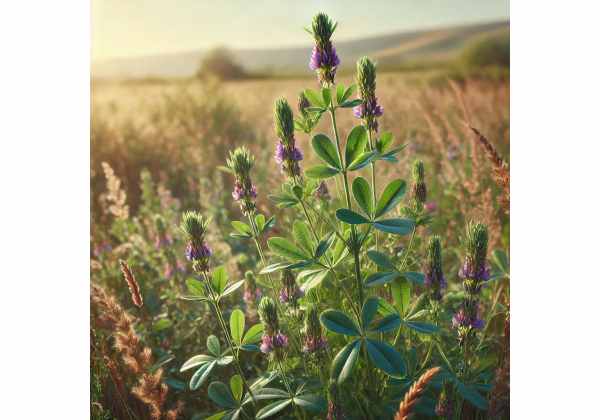
Lucerne, Medicago sativa, is a perennial legume best known worldwide as a forage crop, but its human uses are older and broader than many people realize. The name lucerne is common in Europe, Australia, and parts of Africa, while alfalfa is more common in North America and much of the supplement industry. Both names refer to the same plant. It belongs to the pea family, Fabaceae, and is recognizable by its trifoliate leaves, purple flowers, deep root system, and remarkable ability to thrive in difficult conditions.
As a food, lucerne appears most often as sprouts, young leaves, green powders, juices, teas, tablets, and dried leaf preparations. As a medicinal plant, it is usually described as a nutritive tonic rather than a dramatic fast-acting herb. That framing matters. Lucerne is not usually taken because it delivers a single powerful effect. It is used because it combines nourishment with a set of mild to moderate phytochemical actions that may support metabolism, digestion, and overall resilience.
The plant’s reputation partly comes from its composition. Lucerne contains notable amounts of protein, fiber, chlorophyll, carotenoids, vitamins A, C, E, and K, and minerals such as calcium, magnesium, potassium, manganese, and iron. It also contains secondary plant compounds including saponins, flavonoids, coumarins, phenolic acids, and phytoestrogenic molecules. This is why it is often positioned somewhere between a green superfood and a medicinal herb.
At the same time, lucerne is not equally safe in every form. Mature leaves used in food or tea are not the same as concentrated seed products or raw sprouts. Seeds and sprouts contain more L-canavanine, a nonprotein amino acid associated with immune stimulation and lupus-like reactions in susceptible individuals. Raw sprouts also carry a familiar food safety problem: they are vulnerable to bacterial contamination during sprouting. So while lucerne looks gentle, its form matters almost as much as its identity.
In practical terms, lucerne is best understood as a food-first herb. It can be helpful to compare it with nutrient-rich nettle greens, another plant valued for dense nutrition as much as for direct medicinal action. Like nettle, lucerne is often most useful when it supports the body gradually rather than when it is pushed into strong-dose supplement territory. That perspective helps keep the rest of the discussion grounded.
Key Ingredients and Medicinal Properties
Lucerne’s medicinal profile starts with its saponins, flavonoids, phytoestrogenic compounds, vitamins, minerals, and amino acid derivatives. Together, these help explain why the herb is associated with cholesterol support, antioxidant activity, metabolic effects, and broad nutritive value. But they also help explain the plant’s limits and risks.
The most discussed compounds are the triterpenoid saponins. These are important because they are thought to bind cholesterol and bile acids in the digestive tract, which may help explain lucerne’s long-standing association with lipid balance. Saponins are also the reason many authors describe the plant as mildly detergent-like in its action on fats and membranes. In practice, that does not mean lucerne is a drug-like cholesterol reducer. It means it has one plausible mechanism that supports why cholesterol became one of its best-known supplement uses.
Lucerne also contains a diverse flavonoid and polyphenol profile. These compounds contribute antioxidant and anti-inflammatory potential, especially in extracts and concentrated leaf preparations. Phenolic acids, flavones, and isoflavonoids are commonly identified, and they help explain why lucerne repeatedly appears in preclinical studies related to oxidative stress, inflammation, and metabolic health. The plant’s green pigments and carotenoids add another layer of antioxidant interest.
A separate category includes phytoestrogenic compounds such as coumestrol, daidzein, and genistein-like molecules. These are part of the reason lucerne is sometimes discussed in relation to menopause, hormones, and bone support. That said, phytoestrogenic presence is not the same as a clinically reliable hormone therapy. Readers who want a better-known comparison may find it helpful to think of red clover’s isoflavone-rich profile, which is much more clearly associated with phytoestrogen discussions. Lucerne belongs in the same broad conversation, but it is not the leading herb in that space.
Then there is L-canavanine, which is central to lucerne safety. This nonprotein amino acid is found especially in seeds and sprouts and is the main reason autoimmune caution surrounds the plant. It is not a desired tonic nutrient. It is a biologically active compound with a downside, especially for people with lupus or related immune vulnerability.
Lucerne’s medicinal properties can therefore be summarized in a balanced way:
- Nutritive and mineral-rich
- Potentially cholesterol-supportive
- Antioxidant and mildly anti-inflammatory
- Modestly phytoestrogenic
- Immune-active enough to warrant caution in some people
That profile is both impressive and mixed. Lucerne is chemically rich, but its benefits are not cleanly separated from its cautions. This is why it works best as a carefully understood herb, not as a vague “green powder” taken without context.
Lucerne Benefits and What the Research Suggests
The best way to discuss lucerne benefits is to separate nutritional value, plausible mechanisms, and proven clinical outcomes. The plant scores strongly on the first two. The third is more limited. That does not make lucerne unhelpful. It simply means its most realistic role is supportive rather than curative.
The most credible benefit is nutritional support. Lucerne is dense in protein, chlorophyll, vitamins, minerals, and antioxidant compounds. For people using it as a food or a modest supplement, that alone may be the main benefit. A plant does not need to function like a medicine to matter. Sometimes its value lies in supporting a better nutrient profile, especially when it is part of a generally balanced diet.
The second likely benefit is support for cholesterol balance. Small trials, older clinical observations, and mechanistic work suggest that lucerne may help lower cholesterol, likely through its fiber and saponin content. This is probably the best-known modern supplement use for the plant. Even here, the evidence is not strong enough to replace standard lipid management. Lucerne is more accurately described as a possible adjunct than a primary therapy. In this respect, it is useful to compare it with soluble fiber and cholesterol support from psyllium, which is much better established.
A third area of interest is blood sugar and metabolic support. Preclinical studies suggest lucerne extracts may influence glucose handling, enzyme inhibition, and insulin-related pathways. These findings are promising, especially for a plant already used in traditional medicine, but they remain preliminary. Human evidence is still thin, and this is not a reason for someone with diabetes to self-treat.
Antioxidant and anti-inflammatory effects are also well supported at the laboratory level. Lucerne extracts have shown the ability to reduce oxidative stress markers and influence inflammatory pathways in animal and cell-based models. This helps explain why the plant is often marketed for whole-body resilience, but it also highlights the familiar gap in herbal science: mechanistic promise does not automatically become a clinically proven health outcome.
Some people also look to lucerne for menopausal or bone-related support because of its phytoestrogenic content. This is a more speculative use. The idea is understandable, but the evidence is not robust enough to make it a headline benefit. It is better described as a possible secondary area of interest than a main indication.
So what does the research really suggest?
- Lucerne is a strong nutritive green food.
- Cholesterol support is plausible and somewhat supported.
- Antioxidant and anti-inflammatory effects are convincing in preclinical work.
- Blood sugar and hormone-related effects remain promising but underconfirmed.
- Human clinical evidence is still limited overall.
That pattern makes lucerne valuable, but not magical. It has real strengths, especially as a food-centered herb, yet it should not be sold as a substitute for evidence-based treatment.
Traditional and Modern Uses of Lucerne
Lucerne’s traditional uses reflect its dual identity as both a nourishing plant and a practical household remedy. Historically, it was used less like a sharply targeted medicinal herb and more like a restorative green. Older herbal systems often described it as strengthening, cleansing, appetite-supportive, or useful for convalescence. These descriptions may sound vague by modern standards, but they fit the plant’s chemistry and nutritional profile surprisingly well.
One traditional use was as a digestive and appetite herb. Lucerne leaf preparations were given for poor appetite, sluggish digestion, and low vitality. This makes practical sense for a green, mildly bitter, mineral-rich plant that can stimulate intake while adding nutrients. In some traditions, lucerne was also used to support urinary comfort and fluid balance, though that use has much weaker evidence behind it than its nutritive role.
Another recurring use was as a tonic during weakness or recovery. Because lucerne was seen as strengthening rather than dramatic, it fit into recovery diets, restorative teas, and vegetable-like preparations. In that sense, it behaves more like a green food herb than a classic intense botanical extract. That is still the most realistic way to use it today.
Modern uses expand this pattern. Lucerne is now found in:
- Sprouts for salads and sandwiches
- Green powders for smoothies
- Dried leaf tablets and capsules
- Teas and infusions
- Mixed nutritional formulas
- Cholesterol or metabolic supplements
The popularity of sprouts deserves special attention. Sprouts are probably the form many people know best, but they are also the form with the biggest food safety drawback. Warm, humid sprouting conditions can support bacterial growth, which is why raw lucerne sprouts are not ideal for pregnant people, older adults, immunocompromised individuals, or anyone with heightened infection risk. That caution is practical, not theoretical.
Culinary use remains the most balanced modern approach. Lucerne leaf powders and young green forms fit into soups, broths, smoothies, and blended green preparations far more comfortably than seed-heavy concentrated products. Readers who enjoy food-based herbalism may think of it alongside dandelion as a food-medicine green, though lucerne is gentler in taste and less distinctly bitter.
Modern supplement use is where perspective matters. Lucerne capsules and powders are often taken for cholesterol, blood sugar, menopausal symptoms, or “alkalizing” effects. Some of these uses have partial logic, but the marketing usually outruns the evidence. The herb is strongest when treated as a nutritive support with some secondary metabolic benefits, not as a broad-spectrum disease solution.
In short, traditional and modern uses overlap most successfully when lucerne stays close to food, moderate herbal preparations, and realistic expectations.
Dosage, Forms, and Practical Use
Dosage is one of the more difficult sections for lucerne because the plant is used both as a food and as a supplement. Foods and herbs are not dosed the same way, and lucerne sits between those categories. That means the most honest dosing advice begins with a simple rule: food use is the safest starting point, and supplement use should be more deliberate.
In practice, lucerne appears in several forms. Fresh leaves and cooked greens are the gentlest. Powders and tablets are more concentrated but still generally straightforward. Raw sprouts are popular but carry the greatest food safety concerns. Seed-based products and concentrated extracts deserve the most caution because they can amplify the compounds that create adverse effects.
A customary dried-herb range often cited in professional monographs is about 5 to 10 g of dried herb taken up to 3 times daily. This is best understood as a traditional or practical range rather than a firmly established evidence-based prescription. It tells us that lucerne is generally used in gram-level quantities, more like a bulk herb than a micro-dosed extract.
A sensible use framework looks like this:
- Use leaf-based forms before seed-based forms.
- Prefer food, tea, or modest powder use over high-dose supplementation.
- Avoid raw sprouts if you are in a higher-risk group for foodborne illness.
- Do not assume more is better just because the plant is nutritious.
- Treat long-term high-dose use as something that deserves professional review.
Tea is one of the simpler medicinal forms. A leaf infusion is usually mild and better aligned with the plant’s nutritive identity than aggressive extraction is. Powders are practical for people who want to add lucerne to smoothies or blended greens, but again, moderation matters. Lucerne is not improved by forcing it into large-dose routines without a clear reason.
Seeds are a different matter. While seed products have been studied for cholesterol, they also bring more concern around L-canavanine. This is why many people are better off focusing on leaves and mature herb rather than seeds or seed-heavy sprout products.
Timing also matters. Lucerne is usually better viewed as a steady food-like herb than a fast symptom herb. It makes the most sense with meals, in green powders, or as part of daily nutritional support. It is less like peppermint after a heavy meal and more like an ongoing supportive green. For readers who want a more immediately digestive herb, peppermint’s faster digestive profile is often a better fit.
So the practical takeaway is clear: lucerne works best in moderate, food-adjacent forms. Dried herb in gram-level amounts may be customary, but strong-dose seed supplementation is not where the herb is at its safest or most convincing.
Safety, Side Effects, and Interactions
Safety is the section where lucerne becomes much more nuanced. Many articles present it as a simple green superfood, but that is incomplete. Lucerne can be very useful, yet it has several specific risks that matter in real life: vitamin K interactions, autoimmune concerns, raw sprout contamination, possible uterine stimulation, and occasional gastrointestinal or photosensitivity-related side effects.
The first issue is vitamin K. Lucerne is rich in vitamin K, which means it can interfere with warfarin therapy. This is not a minor footnote. For someone taking warfarin, even a healthy green herb can become clinically relevant. Lucerne may also complicate supplement routines for people already using multiple products that affect clotting or platelet activity.
The second issue is L-canavanine. This amino acid is found especially in seeds and sprouts and is strongly linked to lupus-like reactions and flares of systemic lupus erythematosus in susceptible individuals. People with lupus, a family history of lupus, or broader autoimmune vulnerability should be especially cautious. This is one of the strongest reasons to avoid heavy seed-based lucerne supplementation.
The third issue is sprouts. Raw lucerne sprouts are a recurrent food safety problem because sprouting conditions also favor bacterial growth. This makes raw sprouts a poor choice for pregnant people, small children, older adults, and anyone with weakened immunity. In this respect, the problem is not the plant itself but the form in which it is consumed.
Other possible side effects include:
- Gas, loose stools, or digestive upset
- Photosensitivity in some people
- Rare blood-count changes at very high intake
- Possible hyperkalemia risk in susceptible individuals
- Hormone-sensitive concerns because of phytoestrogenic activity
Pregnancy and breastfeeding also deserve caution. Lucerne has been used traditionally as a galactagogue, but reliable clinical evidence is lacking, and some sources advise against medicinal use during pregnancy because of possible uterine stimulation. That makes “food is one thing, supplements are another” the safest rule here as well.
Interaction evidence beyond warfarin is less robust, but immune-active and hormone-active plants should not be treated casually in people using immunosuppressive drugs, endocrine therapies, or complex medication regimens. The absence of a long interaction list is not proof of harmlessness.
Who should avoid unsupervised lucerne supplementation?
- People taking warfarin
- Anyone with lupus or autoimmune sensitivity
- Pregnant people using medicinal doses
- Immunocompromised people considering raw sprouts
- Those taking multiple medications for chronic illness
Lucerne can still be a useful herb, but it is a classic example of why “natural” and “risk-free” are not the same. Its safest role remains moderate, food-centered, and informed.
What Lucerne Can and Cannot Realistically Do
Lucerne is easiest to respect when it is kept in proportion. It can do quite a lot as a nutrient-dense plant. It can probably support cholesterol balance modestly, contribute antioxidants, add minerals and vitamins, and function as a useful food-herb in digestive and restorative routines. It cannot, however, carry the weight of the exaggerated claims often attached to it.
What lucerne can realistically do is support a health pattern. It fits well into a broader plan that includes a fiber-rich diet, thoughtful blood sugar management, varied green foods, and measured herbal use. It can be part of that pattern because it brings protein, phytonutrients, chlorophyll, and saponin-rich leaf material to the table. Used this way, it is quite appealing.
What it cannot realistically do is replace medication for cholesterol, diabetes, autoimmune disease, or hormone-related conditions. It cannot overcome poor diet through supplementation alone. It cannot be treated as a universally safe raw sprout food. And it should not be marketed as if every promising animal or in vitro study has already become a human therapeutic fact.
That distinction is actually good news. When an herb is kept within its true range, it tends to become more useful, not less. Lucerne becomes most practical when it is seen as:
- A green nutritive herb
- A modest cholesterol-supportive botanical
- A source of antioxidant and metabolic interest
- A food and tea herb before it is a high-dose supplement
It becomes least useful when it is framed as a cure-all or a benign supplement everyone should take. That framing ignores the warfarin issue, the raw sprout issue, and the lupus issue, all of which are too important to brush aside.
In modern herbal practice, lucerne belongs among supportive plants rather than central therapies. Its best value is often cumulative and quiet. For some people, it may be as simple as using it in a green powder, rotating it with other nutritive herbs, or keeping it in a food-focused routine rather than chasing dramatic outcomes.
That is the most balanced conclusion: lucerne is genuinely helpful, chemically interesting, and nutritionally rich, but it works best when used with realism. It deserves appreciation, not hype. When readers understand both its benefits and its boundaries, they are much more likely to use it well.
References
- Alfalfa | Memorial Sloan Kettering Cancer Center 2023 (Official Monograph)
- Alfalfa – Drugs and Lactation Database (LactMed®) – NCBI Bookshelf 2021 (Official Database Monograph)
- Alfalfa as a nutritional and functional food resource: Applications and health benefits 2025 (Review)
- Evaluating the Antioxidant and Antidiabetic Properties of Medicago sativa and Solidago virgaurea Polyphenolic-Rich Extracts 2024 (Experimental Study)
- Alfalfa Uses, Benefits & Dosage 2025 (Professional Monograph)
Disclaimer
This article is for educational purposes only and is not medical advice. Lucerne is widely used as a food and supplement, but medicinal evidence remains limited for many of its promoted uses, and important safety issues apply to warfarin users, people with lupus or other autoimmune concerns, and those at higher risk from raw sprouts. Do not use lucerne to self-treat high cholesterol, diabetes, hormone-related symptoms, or chronic illness without appropriate medical guidance. Speak with a qualified healthcare professional before using medicinal amounts of lucerne if you are pregnant, breastfeeding, taking prescription medicines, or managing an autoimmune or clotting-related condition.
If this article helped you, please share it on Facebook, X, or your preferred platform so others can find balanced and practical herbal information.