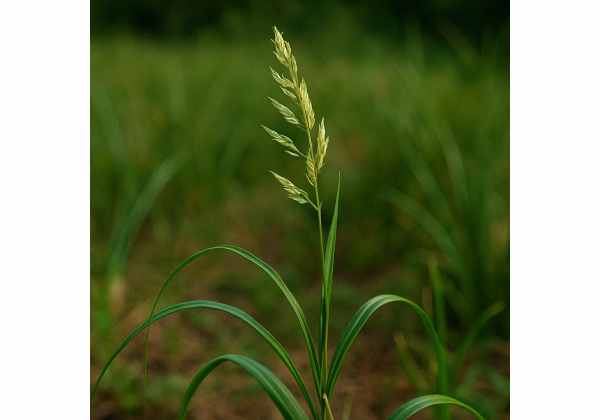
Onion couch, better known botanically as Arrhenatherum elatius var. bulbosum or the bulbous form of false oat-grass, is one of those plants whose name creates more expectations than the evidence can comfortably support. Despite the word “onion,” it is not related to culinary onion, and despite occasional mentions in plant databases and scattered ethnobotanical records, it is not a well-established medicinal herb in modern practice. What makes it interesting is something else: its swollen basal internodes, sometimes described as bulb-like structures, its long history as a grass of meadows and cultivated land, and its scattered appearance in archaeobotanical, folk, and forage records. Some evidence suggests that the broader species or closely related bulbous forms were at times gathered as food, used in fermentation traditions, or involved in folk veterinary practice. However, there are no modern clinical trials establishing onion couch as a validated remedy for digestion, inflammation, circulation, or any other major health claim. The most useful way to approach it today is with accuracy: as a botanically interesting grass with limited ethnobotanical relevance, uncertain medicinal value, and clear reasons for caution if anyone considers using it beyond identification or ornamental interest.
Essential Insights
- Onion couch is a bulbous grass, not a true onion, and it has no well-established modern herbal use.
- The strongest historical interest lies in its bulb-like storage organs and scattered records of food or folk use rather than proven clinical benefits.
- No validated medicinal dosage range in g, mg, or mL has been established for this plant.
- People with grass pollen allergy, uncertain plant identification, or plans for self-treatment should avoid medicinal experimentation with onion couch.
- Its most evidence-based health relevance today may be caution around allergy and misidentification, not treatment.
Table of Contents
- What onion couch is and why the name is misleading
- Key ingredients and what is actually known about the plant
- Possible health benefits and where the evidence is thin
- Traditional uses food context and ethnobotanical notes
- Dosage practical use and why no standard dose exists
- Safety risks and who should avoid it
- What current research really supports
What onion couch is and why the name is misleading
Onion couch is the bulbous form of Arrhenatherum elatius, a perennial grass in the Poaceae family. In current taxonomy, the accepted name is usually given as Arrhenatherum elatius subsp. bulbosum, though many horticultural and older references still use the varietal form, Arrhenatherum elatius var. bulbosum. The plant is native across parts of Europe, northwestern Africa, and western Asia, and it is recognized as a perennial or tuberous geophyte. That means it survives and spreads partly through swollen structures at the base of the stems, which is the feature behind its common name.
The phrase “onion couch” can easily send readers in the wrong direction. This plant is not an onion, does not belong to the allium family, and should not be confused with culinary onion in either food value or medicinal tradition. The “onion” part of the name refers to the swollen, bulb-like basal internodes, which can look onion-like when the plant is lifted from the soil. Botanically, though, these are not true onion bulbs. They are storage structures formed at the base of a grass.
That distinction matters because true onions come with a well-documented history of culinary, nutritional, and medicinal use. Onion couch does not. It is better known in agronomy, meadow ecology, archaeobotany, and pollen studies than in modern herbal medicine. In some farming contexts, the bulbous form is regarded as a weed of cultivated land because tillage can spread the bulb-like propagules rather than control them. In horticulture, a variegated form is sometimes grown as an ornamental grass. In ecology and field botany, it is appreciated mainly as a recognizable and somewhat unusual grass.
Another reason the name can mislead is that “couch” grasses are often associated with folk medicine, especially around roots, urinary support, or traditional cleansing herbs. Onion couch should not be assumed to share those uses automatically. Its medicinal profile is not comparable to established herbal grasses or rhizomes with strong monograph support. The broader species Arrhenatherum elatius appears in scattered ethnobotanical records, but those records are sparse and varied, and they do not create a modern clinical tradition for the bulbous taxon itself.
The most helpful starting point, then, is not to ask what onion couch “cures,” but to ask what kind of plant it really is. The answer is a perennial bulbous grass with historical and ethnobotanical interest, weak direct medicinal evidence, and a name that encourages more certainty than the literature can justify. That sober framing makes the rest of the article easier to understand.
Key ingredients and what is actually known about the plant
One of the hardest parts of writing responsibly about onion couch is that the phrase “key ingredients” suggests a well-mapped medicinal chemistry. For this plant, that map is incomplete. Unlike widely studied herbs with identified marker compounds, standardized extracts, and repeated pharmacological studies, onion couch does not have a robust modern phytochemical profile specific to its bulbous form. That does not mean it contains nothing of interest. It means the literature is not developed enough to support confident claims about signature actives, validated extract ratios, or clinically meaningful constituent levels.
What is clearly known is structural rather than pharmacological. The plant forms swollen basal internodes that act as storage organs. These bulb-like structures help the grass survive, regenerate, and spread. In archaeobotanical discussions, these organs are the center of interest because they are the plant part most often recovered, identified, and debated in relation to prehistoric plant use. Their importance suggests stored carbohydrates and survival value to the plant, but the health significance of that storage for modern human use remains mostly speculative.
At the level of the broader species, one can reasonably assume the presence of common grass constituents such as structural fiber, carbohydrates, proteins in green tissue, and various low-level phenolic compounds typical of grasses. That, however, is still not the same as having defined medicinal ingredients. The problem in many low-quality herb profiles is that they take general properties of grasses, or even of all green plants, and present them as if they were a unique medicinal signature. That would be misleading here.
The more careful position is this:
- onion couch has identifiable storage structures
- the wider species has been recorded in food, forage, and ethnobotanical contexts
- the medicinal chemistry of the bulbous taxon has not been characterized well enough to support a modern herbal profile
This matters because readers often equate a plant’s survival strategy with a health effect. A bulbous or tuberous form may suggest energy storage, resilience, or nourishment, but none of those automatically translate into human therapeutic action. Likewise, the fact that a plant belongs to the grass family does not make it similar in use to cereal grains, medicinal roots, or aromatic herbs.
There is also a second layer of uncertainty: much of the limited ethnobotanical information applies to Arrhenatherum elatius at the species level, not specifically to var. bulbosum. That means even when a traditional use is recorded, it may not be safe to assume it applies equally to the bulbous form. This taxonomic gap is one of the biggest reasons not to overstate the plant’s medicinal properties.
So, when discussing onion couch ingredients, the most accurate answer is that its morphology is well known, its ecology is well known, and its specific medicinal chemistry is poorly defined. That may sound less exciting than a list of miracle compounds, but it is far more useful. In herbal writing, knowing the limits of the evidence is often more valuable than repeating attractive but unsupported claims.
Possible health benefits and where the evidence is thin
If a reader searches for onion couch health benefits, the honest answer is not a long list. There are no modern clinical trials showing that Arrhenatherum elatius var. bulbosum reliably improves digestion, reduces inflammation, lowers blood sugar, supports the kidneys, or treats infections. There is also no official herbal monograph that puts the plant in the same category as recognized medicinal species with defined indications and dosing. For that reason, any discussion of benefits has to stay modest and clearly tied to the kind of evidence that actually exists.
The first possible benefit is best described as historical food usefulness rather than medicine. Archaeobotanical work suggests that the swollen basal internodes of the bulbous form were sometimes present in contexts that may reflect gathering or domestic use, depending on time period and archaeological setting. That does not prove a consistent medicinal role, but it does suggest that the plant’s storage organs were at least noteworthy as a human resource. In practical terms, that points to subsistence value, not validated therapy.
The second possible benefit is species-level ethnobotanical utility. The broader species Arrhenatherum elatius appears in limited ethnobotanical records, including use in fermentation-related plant mixtures and a folk veterinary practice involving bedding weak calves. These are interesting records because they show that the species was not culturally invisible. Still, neither record provides strong evidence for direct human medicinal benefit from onion couch bulbs, teas, or extracts.
A third possible benefit, though indirect, is ecological and forage value. The broader species is used as animal food and forage in some contexts. That matters in traditional landscapes because a plant that supports livestock, pasture systems, or fodder availability may have indirect value for human health and livelihood. Yet this is still far from saying onion couch is a medicinal herb.
Importantly, the most evidence-backed modern health relevance of Arrhenatherum elatius may actually be allergy risk rather than therapeutic value. False oat-grass is one of the grass species implicated in grass pollen exposure and pollinosis in aerobiological research. In other words, for many people the plant is more relevant as a seasonal allergen source than as a remedy.
This leads to a very practical conclusion. The strongest claims that can be made are these:
- Onion couch may have had occasional food or subsistence relevance in the past.
- The broader species appears in a few scattered ethnobotanical contexts.
- No clinically established medicinal benefit has been demonstrated for the bulbous taxon.
- Grass pollen sensitivity is a more concrete modern health issue than herbal use.
That is not a disappointing conclusion. It is a useful one. Many people encounter obscure plant names online and assume rarity implies hidden potency. In reality, many plants are simply botanically interesting without being clinically meaningful. If a person is actually looking for better-supported plant approaches to digestion or gentle bowel support, better-studied fiber herbs such as psyllium are far more practical. Onion couch, by contrast, remains a plant of limited evidence and narrow cultural traces rather than established health benefit.
Traditional uses food context and ethnobotanical notes
The most interesting part of onion couch is not a polished medicinal tradition, but a scattered and somewhat fragmentary record of how people may have interacted with it. Those records fall into three broad areas: prehistoric gathered use, species-level ethnobotany, and non-medicinal practical use.
The archaeobotanical record is especially important because it is one of the few places where the bulbous form itself is directly discussed. Studies of charred remains from prehistoric contexts in northwestern and central Europe show that the swollen basal internodes of Arrhenatherum elatius var. bulbosum appeared in different kinds of sites, including graves and domestic settings, depending on the period. Researchers do not treat these finds as simple proof of routine food use in every case. Instead, they emphasize that interpretation depends on context. Sometimes the material may reflect natural vegetation or ritual deposition. In other settings, gathered food use cannot be ruled out. That cautious wording is important. It suggests human interaction with the plant, but not a settled medicinal tradition.
At the broader species level, ethnobotanical records add a little more texture. In one modern ethnobotanical survey from the Alps, Arrhenatherum elatius was recorded in a veterinary folk practice, where leaves and flowers were used to make a bed intended to reinforce weak calves. In another 2024 ethnobotanical study from China, the species was listed among plants used in traditional fermentation starters, with the stem as the recorded part. These uses are real enough to note, but they are not the same as saying onion couch is a recognized herbal medicine for humans.
This distinction helps prevent a common mistake. Ethnobotanical presence does not automatically equal therapeutic proof. A plant can be used in ritual, fermentation, fodder, bedding, household practice, or seasonal gathering without becoming a clinically meaningful herb. Onion couch seems to belong mainly in that category. It is part of human-plant history, but only at the margins of medicine.
Modern practical use is even less medicinal. Today the bulbous form is often discussed as:
- an arable weed that spreads through bulb-like stem bases
- an ornamental grass in variegated cultivated forms
- a forage-related grass at the broader species level
- a field botanical curiosity because of its swollen basal structures
For readers used to strong herbal lineages such as chamomile, nettle, or marshmallow, this may feel unsatisfying. But it is also clarifying. Onion couch is not a forgotten superstar that modern science neglected. It appears instead to be a plant with scattered practical roles, some localized cultural memory, and limited direct evidence of medicinal use.
That makes it useful in a different way. It reminds us that many plants exist at the boundary between ecology, subsistence, symbolism, and household use. Onion couch is better understood through that lens than through the framework of a modern supplement profile. If what you want is a clear diuretic or urinary grass tradition, corn silk has a much stronger herbal identity. Onion couch remains more ambiguous, which is exactly why careful wording matters.
Dosage practical use and why no standard dose exists
There is no validated medicinal dose for onion couch. That is the most important line in this section, and it should come before any attempt to discuss preparation. No standard oral dose in grams, no extract range in milligrams, and no officially recognized tea, tincture, or decoction schedule has been established for Arrhenatherum elatius var. bulbosum in modern herbal medicine.
That absence is not a technicality. It changes the entire practical picture. With established herbs, dosage guidance exists because the plant has a recognized medicinal part, a documented tradition, or clinical studies that allow at least a cautious range. Onion couch lacks that foundation. The literature that does exist is mostly botanical, archaeobotanical, ecological, aerobiological, or ethnographic. Those sources help explain what the plant is and how people may have interacted with it, but they do not justify self-prescribing it.
This means that “uses” and “dosage” should be separated.
For medicinal self-use, the correct dose is essentially undefined. That means there is no evidence-based recommendation for:
- tea made from the bulb-like structures
- fresh or dried grass preparations
- powders, capsules, or extracts
- topical application
- long-term use for any health condition
For historical or ethnobotanical discussion, the situation is different. Archaeobotanical evidence suggests gathered use of the bulbous structures may have occurred in some settings, and species-level ethnobotanical records suggest limited use of aerial parts in special cultural contexts. But those are not dosing instructions. They are records of human contact with the plant.
For modern practical use, onion couch is better approached as a plant to identify rather than a plant to ingest. Gardeners may grow variegated cultivars ornamentally. Field botanists may examine the swollen stem bases for identification. Agricultural readers may notice it as a weed or meadow grass. None of those uses require medicinal dosing.
A useful rule is this: when the evidence does not support therapeutic dosing, do not improvise one from internet folklore. That is especially important with grasses, because people sometimes assume anything with a root, rhizome, or bulb-like structure can be turned into a cleansing tea or survival food. In reality, the step from “edible in some historical context” to “safe and worthwhile medicinal dose today” is much larger than it looks.
If a person is strongly interested in wild-plant experimentation, professional identification and local ecological knowledge become essential. Even then, medicinal expectations should remain low. A plant can be edible or historically gathered without deserving routine use as a health remedy.
So the best dosage advice for onion couch is unusually simple: there is no standardized medicinal dose, no validated therapeutic timing, and no evidence-based reason to treat it like a mainstream herbal product. That may be less exciting than a numbered protocol, but it is the safest and most accurate guidance available.
Safety risks and who should avoid it
When the benefits of a plant are uncertain, safety becomes even more important. Onion couch is not known as a highly toxic species, but that does not make it suitable for casual self-treatment. In fact, the lack of dosing data, the limited medicinal tradition, and the risk of confusion with other grasses make caution especially important.
The first major issue is misidentification. Grasses are notoriously difficult for non-specialists to identify, and many species look similar at a glance. Onion couch is distinguished by its bulb-like basal internodes, but not every person gathering a wild grass will inspect the plant carefully enough to confirm what it is. That alone is a strong reason not to recommend unsupervised medicinal use. Misidentification can lead to ineffective use at best and unsafe use at worst.
The second issue is allergy. Arrhenatherum elatius is part of the wider grass-pollen picture that contributes to seasonal allergic rhinitis and related symptoms. For people with hay fever, grass pollen sensitivity, or asthma triggered by pollen exposure, onion couch is more plausibly a source of symptoms than a source of relief. Handling flowering grass, collecting pollen-bearing material, or growing it near sensitive individuals may matter more clinically than any hoped-for herbal effect.
The third issue is contamination. Because onion couch often grows in roadsides, fields, margins, or disturbed ground, harvested material may be exposed to herbicides, agricultural residues, heavy metals, animal contamination, or roadside pollutants. That makes wild harvesting more complicated than it first appears. A plant with weak medicinal value does not justify taking on those extra risks.
The fourth issue is uncertain digestive tolerance. Even if the bulb-like structures were historically gathered in some settings, that does not tell us how modern people would tolerate them raw, cooked, dried, or extracted. There is no standardized safety dataset for oral use, and no reason to assume that all parts or preparations are equally benign. This uncertainty matters even more for pregnant or breastfeeding individuals, children, older adults with frailty, or people with chronic illness.
People who should clearly avoid medicinal experimentation with onion couch include:
- anyone with known grass pollen allergy
- anyone unable to identify the plant confidently
- pregnant or breastfeeding individuals because safety data are lacking
- children, because there is no established medicinal tradition or dose
- people taking herbs or drugs for serious conditions who may be tempted to substitute a poorly studied plant
- anyone harvesting from sprayed, polluted, or unknown sites
Interactions are also unknown. That does not mean none exist. It means the evidence base is too thin to map them responsibly. In herbal practice, unknown interaction potential combined with uncertain benefit is a strong reason to avoid casual use.
If a person wants a plant for soothing mucosa, better-supported choices exist. If they want a grass-related folk remedy, more clearly documented species exist. Onion couch sits in the uncomfortable middle ground where intrigue exceeds evidence. In safety terms, that usually means step back rather than lean in.
What current research really supports
Current research supports three things about onion couch quite well: its botanical identity, its ecological behavior, and its cultural trace in scattered ethnobotanical or archaeobotanical settings. It does not yet support a modern medicinal profile.
The botanical side is clear. Plants of the World Online recognizes the bulbous taxon as an accepted infraspecific form of Arrhenatherum elatius, and botanical sources consistently describe it as a perennial or tuberous geophyte with swollen basal internodes. That gives us confidence about what the plant is.
The ecological and aerobiological side is also clearer than the medicinal side. Research on grass phenology and pollen seasons confirms that Arrhenatherum elatius is relevant in the broader landscape of grass pollen exposure. In some European and temperate settings, false oat-grass contributes meaningfully to airborne pollen and allergy symptom patterns. That is one of the most practical modern health connections the plant has.
The cultural side is suggestive rather than decisive. Archaeobotanical work indicates that Arrhenatherum elatius var. bulbosum appeared in prehistoric contexts in ways that may reflect gathering, deposition, or local vegetation, depending on the site. Ethnobotanical surveys of the broader species show occasional use in folk veterinary practice or fermentation traditions. These findings matter because they show the plant was not entirely outside human use. But they do not add up to a consistent medical doctrine, let alone a clinically tested one.
What is missing is just as important as what exists. There are no modern randomized controlled trials on onion couch as a herbal treatment. There are no dosage-finding studies for teas, extracts, or powders. There are no recognized clinical guidelines recommending it for urinary symptoms, digestive irritation, metabolic support, respiratory care, or inflammatory conditions. There is also no widely used commercial herbal standardization for the bulbous taxon.
This means the present evidence supports a narrow set of conclusions:
- Onion couch is a real, accepted botanical taxon with a distinctive bulbous base.
- Its broader species has limited ethnobotanical visibility.
- The bulbous form may have had gathered or contextual human use in the past.
- The plant’s most concrete current health relevance may be grass pollen exposure.
- Claims of strong medicinal benefit remain unproven.
That is not a failure of the plant. It is simply the current state of knowledge. Some plants become medicines because they accumulate layered evidence across tradition, chemistry, pharmacology, and clinical study. Onion couch has not made that journey. At present, it belongs more to the worlds of plant history, meadow ecology, and ethnobotanical footnotes than to evidence-based herbal medicine.
For most readers, that is the most helpful answer of all. The responsible way to use current research is not to inflate onion couch into a hidden remedy, but to understand exactly where the evidence ends. That kind of restraint protects both accuracy and safety.
References
- Arrhenatherum elatius subsp. bulbosum (Willd.) Schübl. & G.Martens | Plants of the World Online | Kew Science 2026 (Database)
- Arrhenatherum elatius (L.) P.Beauv. ex J.Presl & C.Presl | Plants of the World Online | Kew Science 2026 (Database)
- Phenological Analysis of Grasses (Poaceae) in Comparison with Aerobiological Data in Moscow (Russia) 2024 (Open Study)
- Ethnomedicinal and Ethnobotanical Survey in the Aosta Valley Side of the Gran Paradiso National Park (Western Alps, Italy) 2022 (Ethnobotanical Survey)
- Evaluating prehistoric finds of Arrhenatherum elatius var. bulbosum in north-western and central Europe with an emphasis on the first Neolithic finds in Northern Germany 2013 (Archaeobotanical Review)
Disclaimer
This article is for educational purposes only and is not medical advice. Onion couch is not a well-established medicinal herb, and there is no validated modern therapeutic dosage for self-treatment. Do not use it as a substitute for professional care, and do not harvest or ingest wild grasses unless identification is certain and local safety conditions are known.
Share this article on Facebook, X, or your preferred platform if you know someone who wants a careful, evidence-aware explanation of onion couch.