American persimmon, Diospyros virginiana, is one of those native North American plants that sits between food and medicine in a very old-fashioned way. Its ripe fruit is sweet, soft, and deeply flavorful, while its unripe fruit and bark have a long history of astringent medicinal use. That contrast is the key to understanding the plant. American persimmon is not simply a dessert fruit, and it is not a standardized modern herb either. It is a food-first traditional plant whose benefits seem to come mainly from polyphenols, tannins, and other phenolic compounds, alongside its historical role as a soothing, astringent remedy in Indigenous and regional medicine.
Today, the strongest case for Diospyros virginiana is practical rather than dramatic. The ripe fruit offers antioxidant-rich nutrition and culinary value, while traditional uses of the bark and unripe fruit point to styptic, throat-soothing, and digestive applications. At the same time, it is important to stay precise. Most evidence is nutritional, ethnobotanical, or preclinical, and safety questions center less on ordinary ripe fruit than on excessive intake of unripe tannin-rich fruit and improvised medicinal preparations.
Key Facts
- Ripe American persimmon is best understood as a food-first plant with antioxidant and polyphenol value.
- Traditional uses centered on the bark and unripe fruit as astringent remedies for sore mouth, throat irritation, and bowel complaints.
- A practical food serving is about 1/2 to 1 cup of ripe pulp or 1 to 2 fully ripe fruits, depending on size and tolerance.
- People with slow gastric emptying, prior stomach surgery, or a history of bezoars should avoid large amounts of unripe or very astringent persimmon.
Table of Contents
- What American Persimmon Is and How It Differs from Other Persimmons
- Key Ingredients and Medicinal Properties
- Potential Health Benefits and What the Evidence Suggests
- Traditional Uses of Persimmon Bark, Fruit, and Astringent Preparations
- How American Persimmon Is Used in Food and Home Practice
- Dosage, Serving Size, and When to Use It
- Safety, Side Effects, and Who Should Avoid It
What American Persimmon Is and How It Differs from Other Persimmons
American persimmon, Diospyros virginiana, is a native tree of the eastern and central United States. It belongs to the ebony family and is valued for its late-season fruit, wildlife importance, and long regional history as an underused food plant. In practical terms, it is very different from the larger Japanese persimmon, Diospyros kaki, that most shoppers know from produce aisles. That distinction matters because many articles about “persimmon health benefits” quietly rely on research, culinary patterns, or commercial traits from Diospyros kaki and then apply them broadly to every persimmon species. For readers interested in Diospyros virginiana specifically, that shortcut creates confusion.
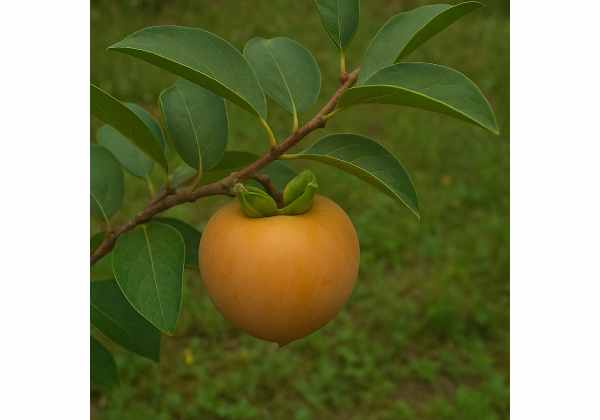
American persimmon fruit is usually smaller and more intensely astringent before it ripens. Fully ripe fruit becomes very sweet, soft, and almost custard-like, which is why it has traditionally been used in puddings, breads, preserves, and fermented drinks rather than eaten firm like some Asian cultivars. That transition from harshly astringent to richly sweet explains much of the plant’s medicinal reputation. Unripe fruit behaves like a tannin-heavy, mouth-drying botanical. Ripe fruit behaves like a rich seasonal food.
This difference between ripe and unripe states is central to the plant’s identity. Historically, people did not value only one part of the species. Ripe fruit was eaten and preserved. Unripe fruit and bark were used more medicinally, especially for their astringent action. That kind of split use is common among older food-medicine plants. It also explains why modern readers can make mistakes if they assume every preparation of American persimmon serves the same purpose.
The tree itself is adaptable, hardy, and increasingly appreciated as a native edible crop. It grows across a broad region, tolerates varied soils, and supports wildlife as well as local food traditions. Yet it remains underutilized in mainstream nutrition compared with blueberries, apples, or citrus. That underuse partly explains why the scientific literature is thinner than many readers expect. American persimmon has real value, but it has not attracted the same level of commercial or clinical study as more global fruit crops.
For health purposes, the most useful mindset is to treat American persimmon as a native functional fruit with traditional medicinal edges. It is not a standardized herbal extract with a clear therapeutic protocol. It is also not just an old-fashioned sweet fruit. It sits in the middle: nutritionally interesting, historically medicinal, and best understood through the lens of ripeness, tannin content, and traditional use. That perspective makes it easier to separate the strongest evidence from the broadest folklore and to appreciate the plant without exaggerating what it can do.
Key Ingredients and Medicinal Properties
The chemistry of Diospyros virginiana helps explain why the plant can taste intensely puckering when unripe yet richly sweet when fully mature. The most important compounds in that story are tannins and other phenolic compounds. In fruit studies on American persimmon genotypes, researchers found strong antioxidant activity that correlated closely with total phenolic content. That finding matters because it supports the idea that American persimmon is more than a sweet regional fruit. It is also a notable source of polyphenol-like compounds that may contribute to oxidative balance and broader health-promoting potential.
Phenolics are the core of the plant’s medicinal character. They help explain both the fruit’s astringency and much of its traditional use. Astringency is not just a flavor problem. In older herbal thinking, it was a functional clue. Plants that feel drying and tightening in the mouth were often used for loose tissues, minor bleeding, mouth irritation, or certain bowel complaints. American persimmon fits that pattern well. Historical accounts describe the bark and unripe fruit as styptic, tonic, and antiseptic, with use in sore mouth, throat, bowel complaints, and catarrhal states.
The fruit also appears to contain condensed tannins, sometimes discussed as proanthocyanidins, especially in the unripe stage. These compounds likely play a role in the fruit’s strong defensive chemistry and in the bezoar risk associated with excessive intake of very astringent persimmons. At the same time, condensed tannins are also part of what makes many plant foods biologically interesting. They may contribute to antioxidant behavior, interactions with gut proteins, and the characteristic mouthfeel that signals astringency.
Beyond tannins, persimmon fruit chemistry includes sugars, pectin-like materials, and a range of secondary metabolites that change during ripening. This changing chemistry is one reason the fruit’s culinary and medicinal roles are so different at different stages. When ripe, the fruit becomes softer, sweeter, and food-like. When unripe, it behaves much more like an astringent botanical material. That dual identity is not unusual among traditional fruit medicines, but American persimmon shows it very clearly.
There is also some laboratory interest in antimicrobial and antifungal properties from Diospyros virginiana, especially in fruit phenolics and root-derived compounds. These findings are useful, but they should be interpreted carefully. They suggest that the species contains biologically active molecules worth studying, not that home use of bark or unripe fruit is automatically an antimicrobial remedy. That distinction matters. Laboratory activity is often the beginning of a medicinal story, not the end of it.
For readers, the key point is that American persimmon’s properties are rooted in food chemistry as much as in herbal tradition. Its phenolics help explain antioxidant interest. Its tannins help explain astringency and traditional medicinal use. Its ripening-driven sugar and pectin changes help explain its culinary value. In that sense, it belongs near other food-first polyphenol plants, including cranberry and its fruit-based polyphenols, though its flavor, ripening pattern, and astringency are very much its own.
Potential Health Benefits and What the Evidence Suggests
The most defensible health case for American persimmon is that it is a nutrient-bearing, polyphenol-rich fruit with additional traditional medicinal uses, rather than a clinically established herbal treatment. That distinction keeps expectations realistic. When the evidence is read carefully, the clearest benefits cluster around antioxidant potential, gentle food-based support, and plausible astringent effects rather than around modern disease-treatment claims.
The strongest species-specific evidence comes from fruit composition research. Different American persimmon genotypes show substantial antioxidant activity and phenolic content, and the positive relationship between those two measures suggests that the fruit’s phenolics are biologically meaningful. This does not mean eating persimmons will produce a measurable clinical antioxidant effect in the way supplement marketing sometimes implies. It does mean the fruit belongs in the category of biologically active whole foods rather than empty-calorie sweets.
A second likely benefit comes from the fruit’s seasonal role as a soft, energy-dense, ripe food. Fully ripened American persimmon is easy to eat, naturally sweet, and well suited to puddings, mashed preparations, sauces, and baking. That makes it practical for people who prefer whole-fruit functional foods over capsules or extracts. The fruit’s appeal is especially strong when used in place of more refined sweet ingredients, because it can add flavor, body, and plant compounds at the same time.
Traditional medicinal benefits are more complicated. Historical records describe American persimmon bark and unripe fruit as astringent, styptic, antiseptic, and tonic. This suggests possible value in sore mouth, throat irritation, mild bowel looseness, and some catarrhal conditions. From a modern perspective, these uses are plausible because tannin-rich plants do often show local astringent effects. But plausibility is not the same as strong clinical evidence. There are no modern large-scale trials establishing American persimmon bark or unripe fruit as standard therapies for these complaints.
There is also early experimental support for antimicrobial or antifungal activity from Diospyros virginiana extracts and compounds. Again, the right conclusion is measured. These studies support medicinal interest in the species and help explain why the plant was historically respected. They do not justify improvised treatment of infections.
What about blood sugar, lipids, immunity, or anticancer claims? This is where caution matters most. Broader persimmon and Diospyros research certainly discusses these areas, but a great deal of it comes from other species, isolated compounds, or preclinical work. It is not wise to turn that into a headline claim for American persimmon fruit. A stronger, more honest conclusion is that Diospyros virginiana offers meaningful food-based antioxidant value, historically credible astringent uses, and research signals worth following, but it remains a traditional food-medicine plant rather than a clinically proven nutraceutical.
That still leaves it highly useful. Many people benefit more from understanding how to use a plant well than from hearing inflated claims. American persimmon may not be a dramatic medicine, but as a ripe whole fruit and as a historically important astringent botanical, it offers a thoughtful kind of value that is easy to miss in more commercialized health discussions.
Traditional Uses of Persimmon Bark, Fruit, and Astringent Preparations
American persimmon has a richer traditional medicinal record than many people realize. Historical and ethnobotanical sources describe the plant as food, astringent, styptic, tonic, and sometimes antiseptic, with different parts used for different purposes. The most important feature of that history is that it is not centered mainly on the sweet ripe fruit. Instead, many medicinal uses focused on the bark and the unripe fruit, which makes sense given their stronger astringent profile.
Indigenous and regional uses included bark infusions for sore throat, sore mouth, toothache, hemorrhoids, heartburn, and bowel-related complaints. Some accounts describe syrup-like preparations for oral thrush or bloody bowel discharge, while others refer to bark infusions as an astringent for venereal complaints or as a bitter tonic. These are older uses, and they should be read carefully. They show how the plant was perceived, especially for tissue-tightening and drying actions, but they do not automatically translate into modern self-treatment advice.
Unripe fruit was also valued for its astringency. Historical records describe it as styptic, tonic, and useful in catarrhal or hemorrhagic settings. In practical herbal language, that suggests a plant chosen when excessive looseness, dampness, or tissue irritation seemed to call for an astringent approach. The same strong tannin content that makes unripe persimmon almost unpleasant to eat is what likely drove that medicinal interest.
Ripe fruit played a very different role. It was primarily food. Indigenous communities and later rural traditions used ripe fruits fresh, dried, or processed into pastes, drinks, and fermented preparations. This food use is important because it shows that the plant’s health role was never limited to medicinal decoctions or bark infusions. Like many traditional fruits, persimmon supported health partly by being nourishing, seasonal, and storable.
Modern readers should notice something else in this history: old uses were highly contextual. People did not treat all persimmon preparations as interchangeable. The plant was understood through part, stage, and purpose. Bark was not the same as fruit. Unripe fruit was not the same as ripe fruit. That kind of practical distinction is often missing from internet herbal summaries, but it is exactly what makes older plant knowledge useful.
There is also a broader lesson here about astringent plants. Their value often lies in targeted use, not in daily supplementation. American persimmon fits that model well. It was not a plant traditionally used like a multivitamin. It was more often selected for specific conditions or consumed as food when ripe. That older logic makes more sense than trying to turn the species into a modern cure-all.
In the world of traditional herbal categories, American persimmon stands closest to other astringent plant remedies, including witch hazel and other classic astringent botanicals. But unlike witch hazel, it also has a deeply edible side. That combination is what makes the species distinctive: a food when ripe, an astringent remedy when unripe or used as bark, and a plant whose history is clearest when those roles remain separate.
How American Persimmon Is Used in Food and Home Practice
In real life, American persimmon is most useful as a food. Fully ripe fruit can be eaten fresh, scooped from the skin, mashed into pulp, baked into breads and puddings, stirred into sauces, dehydrated, or frozen for later use. The fruit is usually too soft and messy for standard sliced-fruit eating by the time it becomes truly sweet, which is why it has such a strong tradition in spoonable or baked preparations. That soft texture is not a flaw. It is part of how the fruit works best.
The biggest practical rule is simple: do not treat unripe fruit as if it were merely “less sweet.” Unripe American persimmon is heavily astringent, drying, and hard to enjoy, and it behaves very differently in the body from a ripe fruit. In culinary use, patience is part of safety and quality. Fruit should be allowed to soften fully before generous consumption. This is one of those plants where ripeness is not only about flavor. It changes the whole experience.
For home use, ripe pulp is the most reasonable form to emphasize. It can replace part of the sugar and fat in baked goods, add thickness to smoothies, or serve as a seasonal fruit base for sauces and preserves. Because the fruit is naturally rich and sweet, modest quantities often go a long way. This makes American persimmon well suited to people who want functional foods that still feel traditional and pleasurable rather than medicinal.
What about medicinal home practice? Here the answer should be more restrained. Historical bark and unripe fruit preparations existed, but that does not mean they are the best modern first choice. Most people seeking mild throat soothing, digestive steadiness, or bowel-binding effects have safer and better-defined options. American persimmon bark belongs more to historical herbal knowledge than to everyday unsupervised home remedy use.
Leaves are sometimes discussed in broader persimmon literature, especially for tea and antioxidant applications, but most of that work focuses on other Diospyros species rather than on Diospyros virginiana specifically. That means readers should be careful not to import general “persimmon leaf tea” claims and assume they apply directly to American persimmon without qualification.
There is also a practical reason to keep American persimmon in the food-first category: that is where its strengths are clearest. The fruit offers seasonal enjoyment, culinary depth, and plausible health value without requiring concentrated preparations. It is a good example of how a plant can support well-being simply by being a well-chosen food. For digestive regularity or bulk-forming purposes, it still should not be confused with a fiber-focused tool such as psyllium for targeted digestive support. Persimmon is fruit first, remedy second, and best used accordingly.
Dosage, Serving Size, and When to Use It
American persimmon does not have an established standardized medicinal dose in the modern clinical sense. That is the first point readers need. The plant has a historical medicinal record, but it is not a supplement with a well-defined research-backed daily intake for bark, unripe fruit, ripe fruit, or leaf preparations. Because of that, “dosage” should be separated into food use and traditional medicinal use.
For ripe fruit as food, a reasonable serving is about 1/2 to 1 cup of ripe pulp or roughly 1 to 2 fully ripe fruits, depending on size. That range is practical rather than pharmaceutical. It gives readers a sensible idea of how much fruit fits into a meal, dessert, or snack without pretending the fruit has a prescription-style dose. People new to American persimmon often do best starting smaller, because the fruit is rich, very sweet, and texturally dense.
Timing matters less than ripeness. The fruit can be used whenever it is fully mature and soft. In practice, it fits especially well in breakfast bowls, baked goods, puddings, or as a soft evening fruit. It may also work well for people who prefer cooked fruit textures to raw crisp fruit. Since the fruit is soft and strongly flavored, smaller servings are often satisfying.
Traditional medicinal use is harder to standardize. Historical bark infusions and unripe fruit preparations were used astringently, but dosage varied by tradition and the literature is not strong enough to justify modern casual replication. That is especially true because astringent plant materials are easy to misuse when people assume “more tightening equals more benefit.” With American persimmon, stronger is not necessarily better.
There are also two timing-related cautions. First, avoid large amounts of astringent unripe fruit, particularly on an empty stomach. Second, people with impaired gastric motility, prior gastric surgery, or known bezoar risk should be especially cautious even with ripe fruit if intake becomes excessive. The issue is not that ripe American persimmon is inherently dangerous. It is that persimmon tannin and fiber can become problematic under the wrong circumstances.
For most readers, the smartest dosage framework looks like this:
- Use ripe fruit as food, not as a medicinal concentrate.
- Keep servings moderate and let tolerance guide you.
- Avoid regular use of unripe fruit for self-treatment.
- Treat bark and other medicinal preparations as historical or practitioner-level tools rather than casual wellness habits.
That may sound conservative, but it is exactly the kind of conservatism that makes traditional plants useful in modern life. American persimmon is at its best when its role is clear. A soft, ripe serving of fruit is often all the dosage most people need to appreciate its benefits without drifting into unnecessary risk or exaggerated expectations.
Safety, Side Effects, and Who Should Avoid It
For most healthy people, fully ripe American persimmon eaten in normal food amounts is a low-risk fruit. The main safety issues arise from three situations: eating fruit before it is properly ripe, consuming too much very astringent persimmon, or using medicinal-style bark or unripe fruit preparations casually without clear reason. These are not trivial distinctions. With American persimmon, stage and form matter almost as much as the plant itself.
The best-known safety concern is bezoar formation, especially with tannin-rich persimmon material. Most published diospyrobezoar reports involve Asian persimmons, but the underlying mechanism is still relevant to American persimmon because the issue is persimmon tannin reacting in the stomach and forming hard masses with plant fibers and proteins. Unripe fruit is the main concern because tannin levels are highest then. This is why traditional advice to wait for full ripeness is more than culinary wisdom. It is also practical safety guidance.
Risk is higher in people with previous stomach surgery, slowed gastric emptying, diabetes with gastroparesis, advanced age, or a history of bezoars. In these settings, even food plants can behave badly if consumed in large amounts or in the wrong form. Readers in these groups should be particularly cautious with astringent persimmons and should avoid treating them like harmless bulk fruit.
A second safety issue is overinterpreting traditional medicinal use. Bark and unripe fruit were historically used as astringents, but that does not make them ideal first-choice remedies now. Astringent plant materials can cause gastrointestinal discomfort, dryness, nausea, or simply an unpleasantly intense reaction when used too strongly. People with constipation-prone digestion, ulcer disease, or very sensitive stomachs are better off being conservative.
There is also the basic issue of species confusion. Articles about persimmon often slide between Diospyros virginiana and Diospyros kaki without warning. That matters because fruit texture, ripening behavior, tannin expression, and common food uses can differ. Good safety advice for one species may not translate neatly into the other.
Who should be most cautious? People with prior gastric surgery, known motility disorders, a history of bezoars, and those tempted to use unripe fruit or bark as self-treatment should be first on the list. Children should simply be given ripe fruit in normal food amounts, not strong astringent preparations. Pregnant and breastfeeding people do not need special concern with ordinary ripe fruit as food, but medicinal-style bark or unripe fruit use is better avoided unless there is a specific professional reason.
The safest summary is straightforward. Ripe American persimmon is mostly a food. Unripe American persimmon is mostly astringent. Excessive intake of tannin-rich persimmon can create real digestive problems in the wrong person. That is why the plant works best when readers respect its old lesson: wait for ripeness, keep medicinal ambition modest, and let the fruit be a fruit before trying to make it a remedy.
References
- Antioxidant activities and phenolic compounds in fruits of various genotypes of American persimmon (Diospyros virginiana L.) 2018
- Plants of the USA: recordings on native North American useful species by Alexander von Humboldt 2024
- Common Persimmon | NTFPs from Trees 2020
- Review of the diagnosis and management of gastrointestinal bezoars 2015 (Review)
- Diospyrobezoar (Persimmon Bezoar)-Induced Intestinal Obstruction in an Older Patient: A Case Report 2025
Disclaimer
This article is for educational purposes only and is not medical advice. American persimmon is primarily a food plant with a traditional medicinal history, but it is not a standardized treatment for digestive, throat, or bleeding-related conditions. Seek medical guidance for ongoing symptoms, swallowing trouble, abdominal pain, vomiting, bowel obstruction concerns, or before using bark or unripe fruit medicinally.
If you found this article useful, please share it on Facebook, X, or your preferred platform to help more readers discover clear, evidence-aware plant information.