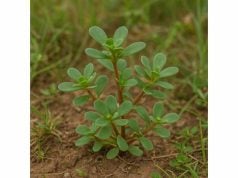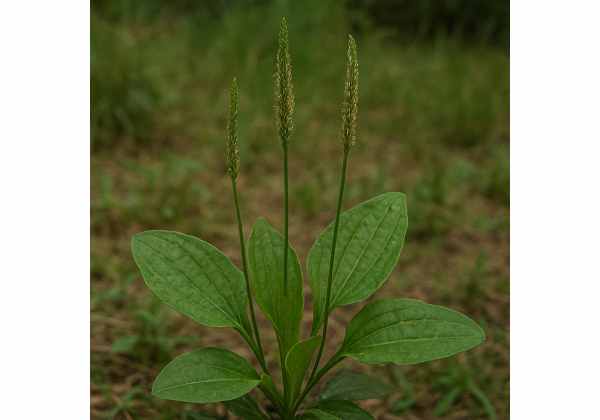
Plantain in this article refers to the medicinal herb, not the starchy cooking banana. The two species most often discussed are Plantago major and Plantago lanceolata. Both have a long history in traditional herbal practice for soothing irritated tissues, supporting minor wound care, and easing dry coughs or throat discomfort. Their leaves contain mucilage, polyphenols, iridoids, and flavonoids, which help explain why plantain is usually described as demulcent, mildly anti-inflammatory, and tissue-supportive rather than sharply stimulating or sedating. Modern research is promising, especially for upper respiratory symptoms and topical care, but the strongest uses still sit in the “supportive” category rather than the “curative” one. That makes plantain especially relevant for readers who want practical answers: which form to choose, what benefits are realistic, how much to use, and when to avoid it. This guide brings those points together in a clear, balanced way so the herb can be understood on its actual strengths instead of exaggerated claims.
Key Takeaways
- Plantain leaf may help soothe dry cough, throat irritation, and mild upper respiratory discomfort.
- Topical plantain preparations may support minor wound and burn care as a calming adjunct.
- A common adult tea range is 1.4 to 2 g dried leaf in 150 to 250 mL hot water, 2 to 3 times daily.
- People who are pregnant, breastfeeding, allergic to Plantago species, or treating serious breathing or skin symptoms should avoid self-treating with medicinal doses.
Table of Contents
- What plantain is and how it is used
- Key ingredients and medicinal properties
- Plantain benefits for cough, throat, and airway comfort
- Plantain for skin, wounds, and topical care
- How to use plantain, forms, preparation, and dosage
- Safety, side effects, interactions, and who should avoid plantain
What plantain is and how it is used
Plantain is a hardy herb in the Plantaginaceae family that grows widely across Europe, Asia, and many other temperate regions. In herbal medicine, the name usually refers to Plantago major, often called great plantain, and Plantago lanceolata, often called ribwort plantain. Great plantain has broader leaves that spread low to the ground, while ribwort plantain has narrower, lance-shaped leaves. Both species have a long record of use in traditional medicine for irritated mucous membranes, minor wounds, and inflamed skin.
What makes plantain interesting is not that it performs one dramatic medicinal action. It is that it fits several “irritated tissue” situations at once. Historically, it has been used for scratchy throats, dry coughs, small cuts, inflamed skin, compresses for superficial injuries, and gentle support for tissue recovery. In modern herbal language, plantain is best described as a demulcent, meaning it helps soothe and coat irritated tissues, while also offering mild anti-inflammatory and protective effects. This combination helps explain why the herb appears in respiratory syrups, throat lozenges, topical salves, and soothing herbal teas.
Plantain is especially valued because it feels practical. It is not usually approached as a powerful stimulant, sedative, or hormone-active herb. Instead, it is used where calm, protection, and comfort are the main goals. A dry throat, a cough that feels scratchy rather than deeply congested, or a patch of irritated skin may all fit the traditional profile for plantain. This is part of why the herb remains popular in home herbalism and in commercial multi-herb formulas.
It is also important to separate plantain leaf from other Plantago products. Many people hear the genus name and think of psyllium, but psyllium comes mainly from the seeds or husks of other Plantago species and is used as bulk-forming fiber. Plantain leaf is different. It is not primarily used as a bowel-regulating fiber product. Its best-known role is tissue soothing, especially for the mouth, throat, skin, and upper airways. Understanding that distinction helps prevent confusion when reading labels or comparing products.
The main reason plantain still matters today is that it occupies a useful middle ground. It is gentle enough for many mild, everyday complaints, yet distinctive enough to deserve more than a passing mention. Its value becomes clearest when expectations stay realistic. Plantain is a supportive herb for selected symptoms, not a replacement for diagnosis or urgent care. Used in the right context, it can be one of the more versatile soothing herbs in a home herbal toolkit.
Key ingredients and medicinal properties
Plantain’s medicinal effects come from a combination of natural compounds rather than one single “active ingredient.” This matters because the herb is valued for broad tissue support, and that kind of support often comes from several overlapping plant chemicals working together. The most important groups include mucilage-like polysaccharides, iridoid glycosides, flavonoids, phenolic acids, and phenylethanoid glycosides.
One of the most relevant properties is its demulcent action. Plantain leaf contains soothing compounds that can help form a protective layer over irritated mucous membranes. That is why it is often used for a dry throat, an irritated mouth, or a nonproductive cough. Rather than forcing the body into a strong response, plantain tends to calm surfaces that are already inflamed or overexposed. This makes it a good match for symptoms that feel raw, scratchy, or overused.
Among the named compounds often discussed in Plantago major and Plantago lanceolata are aucubin, catalpol, acteoside, and plantamajoside. These are studied for antioxidant, inflammation-modulating, and antimicrobial effects. Flavonoids such as luteolin- and apigenin-related compounds also contribute to the plant’s biochemical profile. In practical terms, these ingredients help explain why plantain has been studied for tissue recovery, inflammatory regulation, and support in mild respiratory and skin complaints.
Plantain is also often described as mildly anti-inflammatory. Experimental work suggests that extracts from the leaves may influence inflammatory signaling and support cellular repair processes. That does not mean a cup of tea will act like a prescription anti-inflammatory drug. Instead, it suggests that the herb has a reasonable scientific basis for the traditional observation that it can calm irritated tissues and support more comfortable healing.
Another property that attracts attention is antioxidant and antimicrobial potential. In laboratory research, plantain extracts have shown the ability to reduce oxidative stress markers and inhibit some microorganisms. These findings are interesting, but they need careful interpretation. Antimicrobial activity in a lab dish does not automatically mean the herb can reliably treat an infection in a person. The better way to understand this is that plantain seems to offer a favorable environment for healing by combining soothing, protective, and mildly defense-supportive effects.
This is why plantain is often grouped with other gentle tissue herbs rather than with dramatic “strong” remedies. Readers interested in similar soothing herb categories may also find overlap with marshmallow root support for irritated tissues, though plantain has its own distinct chemistry and history. Overall, its medicinal properties are best viewed as a coordinated pattern: calming, coating, mildly anti-inflammatory, antioxidant-rich, and supportive for minor tissue recovery.
Plantain benefits for cough, throat, and airway comfort
The best-known modern use for plantain leaf is probably support for dry cough, throat irritation, and upper airway discomfort. This fits both traditional herbal practice and the direction of current research. Plantain is especially appropriate when symptoms feel dry, scratchy, or irritating rather than heavy, hot, and deeply infected. It is often chosen for people who talk a lot, sing, recover from a cold, or notice lingering throat roughness after irritation.
The herb’s soothing effect is central here. A warm tea, syrup, or lozenge can help by coating the throat and reducing the sensation of dryness. This type of action may ease the cycle in which irritation triggers coughing, and coughing then worsens the irritation. In that sense, plantain is not simply “for cough.” It is more specifically for coughs linked with tissue irritation. That distinction matters because not every cough has the same cause or the same best remedy.
Plantain may also support general comfort in mild bronchial irritation. Clinical and review literature suggests that plantain-based preparations can reduce symptom burden in some people with acute bronchitic complaints, particularly where coughing is persistent and quality of life is affected. That makes plantain a practical herb in formulas meant for recovery from uncomplicated upper respiratory irritation. It is often combined with honey, thyme, or other soothing botanicals in syrups.
In daily use, the form matters. Tea is useful when warmth and hydration are welcome. Syrup is useful because it stays in contact with the throat longer and can be easier to take when repeated soothing is needed. Lozenges are especially practical when the throat is the main target, since they slowly release the herbal compounds across the mouth and throat. For many people, the best option is simply the form they will actually use consistently for a few days.
Plantain’s airway role should still be kept in perspective. It is not a substitute for asthma treatment, not a replacement for urgent evaluation, and not the right herb for severe shortness of breath or chest pain. A mild, irritating cough is one thing; fever, wheezing, blood in sputum, or breathing difficulty is another. The herb works best when symptoms fit the classic “irritated tissue” picture.
For readers comparing respiratory herbs, one helpful related topic is peppermint for respiratory and soothing support, although peppermint works through a different profile and often feels more cooling than plantain. Plantain remains one of the gentler choices for people who want support without a strong stimulating or drying effect. That makes it especially appealing during the later, scratchy stages of a cough or when the throat simply needs relief and protection.
Plantain for skin, wounds, and topical care
Plantain also has a strong reputation as a topical herb. Traditional uses include fresh-leaf poultices, herbal compresses, rinses, salves, and ointments for minor cuts, bites, abrasions, irritated skin, and superficial burns. While not every historical use has modern clinical proof behind it, the general pattern is believable and supported by experimental and some human research. Plantain appears to help in ways that suit minor skin recovery: calming inflammation, helping protect the tissue surface, and supporting a healthier local healing environment.
A major reason plantain is valued topically is that it seems to combine several useful actions at once. It may reduce the sensation of irritation, provide antioxidant support to stressed tissues, and contribute mild antimicrobial effects. Some studies and reviews also suggest that plantain may support fibroblast activity and other processes involved in wound repair. In plain language, it is a reasonable herb for helping the body recover from minor skin stress when the goal is to soothe and support rather than aggressively medicate.
For everyday use, plantain works well in several forms:
- a cooled infusion used as a wash
- a warm or cool compress applied to irritated skin
- a salve or ointment on superficial dry or inflamed areas
- a mouth rinse or gargle when the tissue involved is inside the mouth or throat
A fresh-leaf poultice is a classic folk remedy, but it should be used with common sense. The leaf must be clean, and this type of application is better suited to intact or only slightly broken skin than to a deep or contaminated wound. Prepared products are often more hygienic and consistent than improvised field use.
Topical plantain is most appealing in mild situations: a small scrape, a superficial patch of irritation, a minor burn already cleaned and assessed, or a bug bite that feels inflamed but not dangerous. It is less appropriate when redness is spreading, pain is increasing, drainage is present, or the wound is deep, punctured, or clearly infected. Those situations need proper medical care, not just a soothing herb.
Readers interested in related skin-supportive herbs may find useful comparisons in witch hazel for topical care, though plantain is generally more mucilaginous and soothing, while witch hazel is more astringent. That difference matters. Plantain often feels better when the tissue is dry, irritated, or tender and needs comfort more than tightening. This gentle profile is one reason plantain remains a trusted ingredient in herbal skin formulas.
How to use plantain, forms, preparation, and dosage
Plantain can be used in several forms, and choosing the right one is often more important than choosing the most concentrated one. For throat irritation and dry cough, the best forms are usually tea, syrup, and lozenges. For minor skin or wound support, compresses, rinses, creams, gels, and ointments are usually more practical. The herb is available fresh, dried, extracted, or combined with other herbs depending on the product.
A common adult tea range is 1.4 to 2 g of dried leaf in 150 to 250 mL of hot water, taken 2 to 3 times daily. Another practical adult approach is about 2 g in 150 mL, also used 2 to 3 times daily, for a total daily amount of 4 to 6 g. The tea is best steeped long enough to extract the soothing compounds, then sipped slowly. When the throat is the target, quick drinking is less helpful than repeated, slower exposure.
For syrups, dosing depends on the formula, since the concentration can vary considerably between products. One clinical example used 30 mL daily for 10 days in adults. That is useful as a reference point, but it should not replace product-specific directions. A syrup with honey, glycerin, or additional herbs may behave differently from a plain extract. Reading the label is essential.
For dry extracts, adults may encounter doses around 233 mg three times daily, though this varies with extraction ratio and formulation. Lozenges and tablets are also common for mouth and throat use, but each product can differ substantially in strength. This is why plantain should not be dosed by guesswork across all forms. Tea grams, syrup milliliters, and extract milligrams are not interchangeable.
For topical use, dosage is less about numbers and more about application method. A cooled infusion can be used as a wash or compress several times per day. Ointments are generally applied in a thin layer to clean skin according to product instructions. If the skin is broken, it should be gently cleaned first, and the wound should be minor enough to be appropriate for home care.
A few practical rules make plantain easier to use well:
- Match the form to the symptom.
- Use tea, syrup, or lozenges for throat and cough support.
- Use compresses or ointments for minor topical care.
- Keep self-treatment short for acute symptoms.
- Reassess if symptoms are not improving within about a week.
People comparing plantain with more fiber-related Plantago products should not confuse it with psyllium for digestive bulk support. Plantain leaf and psyllium husk come from related plants but serve very different purposes. That distinction can prevent one of the most common label-reading mistakes.
Safety, side effects, interactions, and who should avoid plantain
Plantain leaf is generally considered a well-tolerated herb when used appropriately, but that does not mean it is suitable for everyone or for every symptom. The clearest contraindication is hypersensitivity to Plantago species. Anyone who notices itching, rash, mouth irritation, swelling, or worsening symptoms after using plantain should stop using it and seek advice if the reaction is significant.
For pregnancy and breastfeeding, medicinal use is usually approached cautiously because safety data are limited. That does not prove harm, but it does mean there is not enough strong evidence to recommend routine medicinal dosing during these periods without professional guidance. Occasional food-level exposure is different from repeated therapeutic use in teas, syrups, or extracts.
For children, extra care is appropriate. Very young children with cough or breathing-related symptoms should not simply be treated at home with herbs without considering whether a proper medical evaluation is needed. What seems like a mild throat irritation can sometimes be a more significant illness, and children can worsen more quickly than adults. Herbal products also vary in strength and suitability across age groups.
As for side effects, plantain is not known for a high rate of adverse reactions, but mild digestive upset or allergy-like symptoms are possible in some individuals. Topical products may also contain added ingredients such as preservatives, essential oils, or fragrance compounds that create irritation independently of the plantain itself. When a person reacts to a cream or syrup, the whole formula needs to be considered, not just the herb.
Known drug interactions are not strongly established, but a practical precaution is still wise. Because mucilage-rich herbs can theoretically influence how quickly some oral medicines are absorbed, many practitioners suggest separating plantain from medications by 1 to 2 hours. This is a reasonable spacing rule, especially for people taking several prescription medicines. It is not a sign that plantain is highly dangerous, only that thoughtful timing is sensible.
Plantain is not the right tool for these situations:
- shortness of breath, chest pain, or worsening wheeze
- fever with persistent cough
- blood in sputum
- deep wounds, punctures, bites, or heavily infected skin
- expanding redness, pus, or severe burn injury
- known allergy to Plantago species
- pregnancy or breastfeeding without professional guidance
Those who want a broader perspective on gentle inflammation-supportive herbs may also compare calendula for topical soothing, though the safety profile and preferred uses differ. The main principle is simple: plantain is a supportive herb for selected mild complaints. It should not delay medical care when the pattern suggests something serious, progressive, or medically complex.
References
- Community herbal monograph on Plantago lanceolata L., folium 2014 (Guideline)
- The therapeutic effects of Plantago major and its main constituents on respiratory diseases: a narrative review – PubMed 2025 (Review)
- Antimicrobial and Other Biomedical Properties of Extracts from Plantago major, Plantaginaceae – PMC 2023 (Review)
- Effect of Plantago major on cough severity in acute bronchitis: A double-blind randomized clinical trial – PMC 2024 (RCT)
- Therapeutic Efficacy of Great Plantain (Plantago major L.) in the Treatment of Second-Degree Burn Wounds: A Case-Control Study – PMC 2022 (Clinical Study)
Disclaimer
This article is for educational purposes only and is not medical advice, diagnosis, or treatment. Plantain may be helpful for mild cough, throat irritation, and minor topical support, but herbal products can vary in strength, purity, and suitability. Seek professional medical care for breathing difficulty, persistent fever, worsening cough, infected or deep wounds, significant burns, pregnancy-related questions, or any symptom that does not improve as expected. If you take prescription medicines or manage a chronic condition, check with a qualified clinician before using medicinal doses of plantain.
Please share this article on Facebook, X, or your preferred platform if you found it useful.