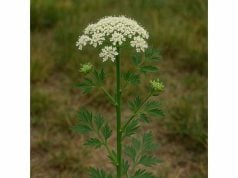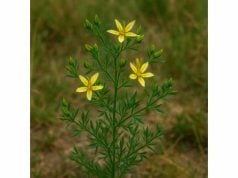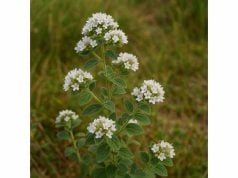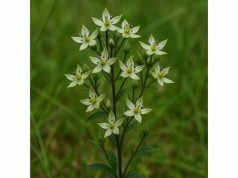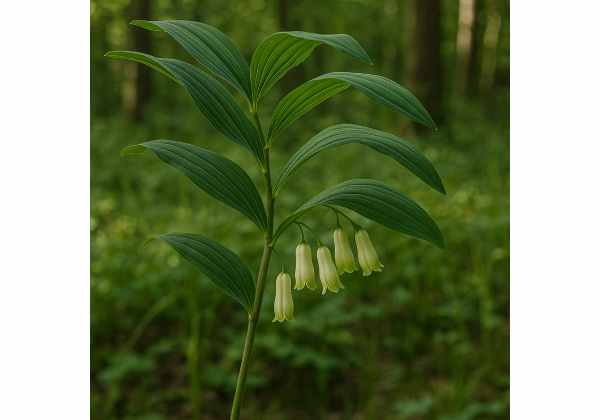
Solomon’s seal, Polygonatum multiflorum, is a woodland herb with a long reputation in European and Asian herbal traditions. Its arching stems and dangling bell-shaped flowers make it easy to admire in gardens, but the real medicinal interest centers on the rhizome. Traditionally, the plant has been used for soothing dry or irritated tissues, supporting recovery after strain, and serving as a gentle tonic for the lungs, digestion, and connective tissues. Modern research adds another layer by pointing to steroidal saponins, flavonoids, polysaccharides, and lectin-like compounds that may help explain antioxidant, anti-inflammatory, and tissue-supportive effects.
Still, Solomon’s seal needs careful framing. Research on the broader Polygonatum genus is much richer than research on Polygonatum multiflorum alone, and human clinical evidence remains limited. That means the herb is best understood as a traditional remedy with plausible medicinal properties rather than a proven modern treatment. Used thoughtfully, it may offer targeted support in the right context. Used casually, especially in concentrated or poorly identified forms, it can be misunderstood, overpromised, or used more boldly than the evidence supports.
Essential Insights
- Solomon’s seal is most often valued for traditional support of dry tissues, mild irritation, and recovery after strain.
- Its rhizome contains polysaccharides, steroidal saponins, and flavonoids linked to antioxidant and anti-inflammatory activity.
- A cautious traditional infusion may use about 2 g powdered rhizome in 100 mL water, taken in small divided portions.
- Avoid self-directed use during pregnancy, breastfeeding, or when using glucose-lowering medicine without guidance.
Table of Contents
- What Solomon’s Seal Is and Why Species Identity Matters
- Key Ingredients and Medicinal Properties
- Health Benefits and Where the Evidence Is Strongest
- Traditional Uses and How Solomon’s Seal Is Used in Practice
- Dosage, Forms, Timing, and Practical Use
- Safety, Side Effects, and Who Should Avoid It
- How to Choose, Prepare, and Store Solomon’s Seal
What Solomon’s Seal Is and Why Species Identity Matters
Solomon’s seal is the common name used for several species in the Polygonatum genus, and that is the first thing readers need to know. In herbal writing, “Solomon’s seal” can refer to Polygonatum multiflorum, Polygonatum odoratum, Polygonatum biflorum, and other related species depending on region and tradition. This article is specifically about Polygonatum multiflorum, a European species with arching stems, alternate leaves, and hanging tubular flowers that later form dark berries. It belongs to the Asparagaceae family and is a perennial plant that grows from a rhizome, the underground stem traditionally used in herbal medicine.
That species detail matters because modern research is uneven. A great deal of pharmacologic work on the wider Polygonatum genus focuses on Asian species such as P. sibiricum, P. cyrtonema, and P. odoratum. These studies are useful for understanding the chemistry and the kinds of biologic actions this genus may have, but they are not the same as direct clinical proof for P. multiflorum. In other words, readers should be careful not to treat all Solomon’s seal research as interchangeable.
There is also a second point of confusion: Polygonatum multiflorum is not the same as Polygonum multiflorum, the plant better known as fo-ti or he shou wu. Those are different genera with very different safety profiles and traditional uses. Because the names look similar, mix-ups are common in casual online writing. For a medicinal herb, that kind of confusion is more than academic. It affects expectations, product selection, and safety.
Traditional use of Polygonatum species often centers on the rhizome. The plant has been described as softening, moistening, restorative, and useful in dry, irritated, or overworked tissues. Some traditions associate it with lungs, throat, digestion, tendons, ligaments, and joints. Others emphasize a more nourishing tonic role. Modern scientific language is less poetic, but the general idea still holds: this is not a sharply stimulating herb. It is better understood as a plant associated with tissue support, recovery, and moderation.
That is why some herbalists loosely compare its broad style to gentler, coating plants such as marshmallow root for irritated tissues, even though the chemistry is not the same. Solomon’s seal is not mainly a mucilage herb, but it shares the idea of softening and protecting rather than driving the body aggressively.
The best starting point, then, is clarity. Polygonatum multiflorum is a specific Solomon’s seal species with a rhizome-centered traditional use. It belongs to a promising genus, but its direct evidence base is still relatively limited. Anyone approaching it seriously should begin with the right plant name, the right part, and the right expectations.
Key Ingredients and Medicinal Properties
The medicinal interest in Polygonatum multiflorum comes largely from the rhizome, which contains several classes of bioactive compounds. Research on this species and on the wider Polygonatum genus points especially to polysaccharides, steroidal saponins, flavonoids, and lectin-related compounds. Smaller amounts of alkaloids, coumarins, lignans, and other secondary metabolites have also been reported across the genus.
Polysaccharides are especially important when people talk about Solomon’s seal as a tissue-supportive herb. In the broader Polygonatum literature, these compounds are repeatedly linked with antioxidant, immunomodulatory, glucose-related, and restorative actions. In P. multiflorum specifically, recent work has identified a novel β-fructan with notable α-amylase inhibitory activity and some antioxidant activity, which supports the idea that this species has chemically meaningful carbohydrate fractions rather than being merely a folk remedy with no plausible mechanism.
Steroidal saponins are another major class. These are widely discussed in Polygonatum research because they may contribute to anti-inflammatory, metabolic, and cell-signaling effects. Their presence also helps explain why the genus is often described as pharmacologically active rather than simply nutritive. In practical terms, saponin-rich plants often sit in an interesting middle ground: they are not inert foods, but they are not straightforward stimulants either.
Flavonoids add a third layer. Across the genus, flavonoids are associated with antioxidant, anti-inflammatory, hypoglycemic, antibacterial, and sometimes antitumor activity in preclinical research. Some classic flavonoids were identified in Polygonatum multiflorum decades ago, and newer reviews continue to emphasize flavonoids as one of the genus’s core active groups. This makes sense of the herb’s long association with recovery, slowing irritation, and supporting resilience in stressed tissues.
A fourth noteworthy group is lectins and lectin-related proteins. These are not relevant for everyday household herbalism in the same way that polysaccharides or flavonoids are, but they do matter scientifically because species-specific work on P. multiflorum has identified lectin activity with biological effects in cell research. This is one reason the herb should not be thought of as a chemically trivial woodland plant.
Taken together, these compounds suggest several medicinal properties:
- antioxidant activity
- anti-inflammatory potential
- possible tissue-protective effects
- mild metabolic effects, especially around carbohydrate handling
- traditional restorative or tonic qualities
- possible throat or mucosal softening effects, though this is more traditional than clinically proven
It is also worth noting that traditional processing appears to matter in the genus. Reviews of Polygonatum note that raw material can be more irritating to the throat, and processing methods such as steaming and drying have historically been used to reduce harshness and alter the herb’s profile. That matters because the medicinal identity of Solomon’s seal is not just about what compounds it contains, but also about how the plant is prepared.
So the chemistry supports cautious respect. Solomon’s seal is best understood as a polysaccharide-, saponin-, and flavonoid-containing rhizome herb with plausible antioxidant and anti-inflammatory actions. The compounds are real. What remains limited is the degree of direct human evidence for all the benefits traditionally claimed.
Health Benefits and Where the Evidence Is Strongest
The most honest way to discuss Solomon’s seal benefits is to separate traditional confidence from modern proof. This herb has a wide reputation, but its strongest evidence is not clinical. Most of the more impressive findings come from laboratory studies, animal work, and broader Polygonatum genus reviews rather than from robust human trials on Polygonatum multiflorum itself.
The most plausible benefit area is antioxidant and anti-inflammatory support. This is where the chemistry and the preclinical evidence line up most clearly. Polysaccharides, flavonoids, and saponins from the Polygonatum genus repeatedly show the ability to influence oxidative stress, inflammatory pathways, and tissue resilience. That does not mean a cup of Solomon’s seal tea will behave like a drug, but it does mean the old language of “soothing” and “restorative” is not entirely mysterious.
A second likely benefit area is support for dry, irritated, or overworked tissues. Traditional herbalists have long used Solomon’s seal for strained tendons, ligaments, sore joints, irritated throats, and tissues that feel depleted rather than acutely infected. Modern science has not fully confirmed these uses in humans, yet the herb’s anti-inflammatory and tissue-supportive reputation makes them plausible. Still, these uses remain more tradition-based than trial-based.
A third area of interest is metabolic support. Genus-level research suggests Polygonatum constituents may influence blood sugar handling, lipid metabolism, and digestive enzymes. The recent P. multiflorum fructan paper is relevant here because its α-amylase inhibition suggests one route by which the species might affect carbohydrate digestion. Even so, this is still far from evidence that Solomon’s seal should be used as a self-treatment for diabetes or insulin resistance.
A fourth area is cell and immune research. Some species-specific findings involving lectins and other compounds show biologic activity in cancer-related cell models. These results are scientifically interesting and help establish that P. multiflorum is an active medicinal species. They do not justify claims that the herb treats cancer. At most, they show that the plant contains molecules worth studying further.
What benefits are often overstated? Quite a few:
- rapid joint repair
- collagen rebuilding
- guaranteed tendon healing
- hormone balancing
- broad anti-aging effects
- diabetes treatment
- cancer treatment
Those claims may borrow loosely from tradition or from genus-wide phytochemistry, but they go beyond what P. multiflorum can currently support as a consumer-facing health claim.
In practical herbal language, Solomon’s seal sits closer to the world of supportive inflammation-modulating herbs than to heavily proven condition-specific remedies like licorice for better-defined throat and digestive use. That comparison is helpful because it keeps expectations grounded. Solomon’s seal is likely best used as a thoughtful adjunct in recovery and tissue support, not as a stand-alone answer for major disease.
So where is the evidence strongest? In broad biologic plausibility, not in definitive clinical proof. The herb may support tissue comfort, inflammatory balance, and metabolic resilience, but it still needs more species-specific human research before stronger claims become justified.
Traditional Uses and How Solomon’s Seal Is Used in Practice
Solomon’s seal has been used in several traditional systems, but its practical identity is remarkably consistent: it is a rhizome herb associated with softening, nourishing, restoring, and helping the body recover after irritation or strain. Unlike harsh bitters or warming stimulants, it is usually described as a plant that works by moderation and support.
Traditional uses commonly include:
- dry cough and throat irritation
- digestive weakness or poor appetite
- fatigue and recovery after illness
- mild inflammatory discomfort
- joint, tendon, and ligament strain in folk practice
- topical use for bruises, minor wounds, or irritated skin in some traditions
One reason Solomon’s seal developed such a reputation is that it fits a familiar herbal pattern. Some plants are chosen because they strongly move something: bile, mucus, stool, sweat, or circulation. Solomon’s seal was more often chosen when the problem seemed to be depletion, friction, or dryness. That made it attractive for people who felt overused, scraped down, or slow to recover.
In Western folk herbalism, the plant became especially associated with tendons, ligaments, and joint support. That reputation remains popular today. Yet this is exactly where caution is needed. The old use is real, but modern evidence is not strong enough to claim that P. multiflorum specifically repairs connective tissue in a predictable or clinically proven way. It is fair to say that this is a classic traditional use. It is not fair to market it as guaranteed tissue regeneration.
Internal use and external use were historically both important. A decoction or infusion of the rhizome might be taken internally, while poultices, washes, or ointment-style preparations might be used for external discomfort. In that sense, Solomon’s seal resembles other herbs with both internal and topical traditions, though its modern popularity is often far stronger among people interested in musculoskeletal folklore than among conventional herbal practitioners.
The respiratory and digestive uses are easier to understand from a practical standpoint. A gently prepared rhizome decoction or infusion may have been valued when the throat felt dry, the chest felt irritated, or the stomach felt weak rather than acutely inflamed. This softer, moistening reputation is part of why the herb is sometimes mentioned in the same breath as more demulcent or soothing plants, though it is less overtly mucilaginous than those classics.
Topically, the traditional logic overlaps more closely with plantain as a gentle external herb than with more aggressive topical botanicals. The goal is usually comfort, moderation, and tissue support rather than strong antiseptic action.
The best modern use of tradition is not blind imitation. It is translation. Solomon’s seal’s old uses tell us it may fit situations defined by strain, mild dryness, recovery, and irritation. They do not automatically prove that every historic claim still deserves direct repetition. In practice, the herb is most credible when it is used as a careful traditional support rather than a dramatic modern fix.
Dosage, Forms, Timing, and Practical Use
Dosage is one of the trickiest parts of a Solomon’s seal article because there is no broadly accepted modern clinical dosing standard for Polygonatum multiflorum. That is important to state plainly. Most precise dosing language in popular herbal writing comes either from traditional experience, ethnobotanical reports, or modern commercial practice rather than from high-quality human trials.
The rhizome is the main medicinal part used. It may be prepared as:
- infusion
- decoction
- tincture
- powder
- capsule
- topical wash, poultice, or salve
A useful starting point comes from traditional ethnopharmacologic reporting rather than from formal clinical guidance. One documented preparation used 2 g of powdered rhizome steeped in 100 mL water for several hours, with 20 mL taken orally three times daily. That should not be mistaken for a universal prescription, but it does offer a concrete example of how modest traditional use can look.
For practical adult self-care, a conservative approach would be:
- Start with a small, weak infusion or decoction rather than a strong extract.
- Use short-term and with a clear purpose.
- Avoid taking large doses simply because the herb sounds gentle.
- Reassess quickly if there is throat irritation, digestive upset, or no clear benefit.
Timing depends on the goal. If used for throat or respiratory comfort, small warm portions may make more sense than a single large serving. If used for digestive comfort, taking it after food may reduce the chance of irritation from a stronger preparation. For topical use, a diluted preparation is usually more sensible than a concentrated homemade extract unless there is a clear traditional method being followed.
Product form matters. Powders and capsules can be convenient, but they also make it easier to forget that this is a pharmacologically active rhizome with limited clinical standardization. Teas and decoctions are more traditional and often easier to dose gently. Tinctures vary widely in strength and should be used exactly as labeled by a reputable source.
A second dosage issue is processing. Genus-level reviews note that raw Polygonatum material can be more irritating, especially to the throat, and traditional processing methods were used to reduce this. That means crude, unprocessed, or poorly prepared material is not automatically the better choice.
This is one of those herbs where less is often wiser. Solomon’s seal is not an herb that benefits from “more is more” thinking. A mild, measured, short-term use aligns far better with the evidence than aggressive daily dosing for long periods.
Readers looking for a firm, evidence-based standard dose may find that frustrating, but it is actually useful honesty. The right way to use Solomon’s seal is modestly, with a specific reason, and with attention to preparation. The wrong way is to treat it like a universally safe tonic that can be taken indefinitely just because it has a traditional reputation.
Safety, Side Effects, and Who Should Avoid It
Solomon’s seal is often described in gentle language, but that should not be confused with proof of universal safety. The herb’s safety profile is not fully mapped by modern clinical research, and the wider Polygonatum literature suggests that preparation methods matter. This means the safest posture is informed caution rather than assumption.
The first concern is irritation. Reviews of the genus note that unprocessed raw rhizomes may irritate the throat, which is one reason traditional processing methods developed. Anyone preparing the herb casually from wild or raw material should take that seriously. A plant traditionally regarded as softening can still be harsh when handled badly.
The second concern is limited human evidence. There are promising studies on phytochemistry, antioxidant activity, cell models, and traditional use, but these do not replace direct safety studies in pregnant people, breastfeeding people, children, or those with complex medical conditions. In the absence of good data, those groups should avoid self-directed use.
The third concern is possible metabolic interaction. Because Polygonatum compounds are studied for glucose-related effects, people using insulin, sulfonylureas, or other glucose-lowering medicines should be careful. The evidence is not strong enough to call this a confirmed interaction in everyday practice, but it is strong enough to justify caution and monitoring rather than casual combination.
The fourth concern is the gap between folklore and proof. Some modern marketing presents Solomon’s seal as a remedy for severe joint problems, tendon tears, major inflammation, or chronic disease. That is not a safety issue only because of side effects. It is also a safety issue because it can delay proper diagnosis and treatment.
People who should generally avoid unsupervised internal use include:
- pregnant people
- breastfeeding people
- children
- people with poorly controlled diabetes
- people using multiple medications for chronic disease
- anyone with a history of strong plant allergies
- anyone relying on the herb instead of evaluation for persistent pain, bleeding, or severe inflammation
Potential side effects are not well characterized, but the most plausible problems include:
- throat irritation from poorly processed material
- digestive upset
- nausea from overly strong preparations
- unpredictable responses to concentrated extracts
Topical use is usually thought of as lower risk, but even there a patch test is wise. A soothing reputation does not guarantee that every skin type will tolerate a homemade preparation.
The safest way to think about Solomon’s seal is that it is a traditional herb with real pharmacologic activity and incomplete safety mapping. That combination calls for moderation. Short-term, clearly targeted use with properly prepared material is one thing. Long-term, experimental, or substitute-for-medical-care use is another. Most problems with this herb are likely to come not from a dramatic toxic effect, but from overconfidence.
How to Choose, Prepare, and Store Solomon’s Seal
Choosing Solomon’s seal well begins with the same principle that shapes the whole herb: species clarity matters. Products sold simply as “Solomon’s seal” may not always identify the species clearly, and that matters because Polygonatum biflorum, P. odoratum, and P. multiflorum are not interchangeable in a strict scientific sense. A good label should name Polygonatum multiflorum specifically if that is the herb you want.
The rhizome should be the stated medicinal part. Dried cut rhizome, powder, tincture, or capsule forms are all possible, but the label should make clear what part was used and ideally how it was processed. Because genus reviews suggest raw material can be more irritating, a reputable prepared product is usually safer than improvised wild processing unless the harvester is very experienced.
When buying, look for:
- the full botanical name
- the plant part used
- a reputable supplier
- clean storage and batch information
- directions that are modest rather than exaggerated
- no sweeping promises about tendon repair, hormone balance, or chronic disease cures
For preparation, a light decoction or long infusion is usually more realistic than a highly concentrated brew. The goal is not to extract everything possible at maximum strength. It is to prepare the herb gently enough that it remains tolerable and consistent. If using powder, smaller amounts are better than heaped spoonfuls. If using tincture, follow label guidance exactly rather than trying to improvise equivalence between drops, capsules, and tea.
Storage is straightforward. Keep dried rhizome or powder in a sealed container away from moisture, heat, and direct light. Tinctures should be stored according to label directions. Because this is a rhizome herb rather than a fragrant volatile-oil herb, quality loss may not show up first as disappearing aroma. It may show up as dull color, mustiness, clumping, or inconsistency in preparation.
Wild harvesting deserves special caution. Solomon’s seal species can be confused, and overharvesting rhizomatous woodland plants can damage local populations. For most people, reputable cultivation or professional sourcing is more ethical and safer than digging up wild plants.
A final practical point is to match form to purpose. If you want a mild internal trial, a careful decoction or infusion makes sense. If you want external use, a diluted wash or professionally made topical is usually safer than a strong homemade concentrate. Readers familiar with classic gentle external herbs may find that Solomon’s seal is better approached with the same respect given to traditional plantain preparations for skin support: simple, cautious, and matched to modest goals.
In the end, good Solomon’s seal use is less about finding the strongest product and more about finding the most appropriate one. Correct species, prepared rhizome, modest dosage, clean sourcing, and realistic expectations do more for safety and usefulness than any marketing claim ever will.
References
- Flavonoids from the genus Polygonatum: biological activities and biosynthesis mechanism 2025 (Review)
- The antitumor potential of Polygonatum spp.: a narrative review of traditional uses, bioactive metabolites, and multi-targeted mechanisms 2025 (Narrative Review)
- Isolation and structural characterization of a novel β-fructan with potent α-amylase inhibitory activity from Polygonatum multiflorum 2025 (Species-Specific Study)
- A Review of Polygonatum Mill. Genus: Its Taxonomy, Chemical Constituents, and Pharmacological Effect Due to Processing Changes 2022 (Review)
- Ethnopharmacological survey of herbal remedies used for treatment of various types of cancer and their methods of preparations in the West Bank-Palestine 2016 (Ethnopharmacology)
Disclaimer
This article is for educational purposes only and is not a substitute for medical advice, diagnosis, or treatment. Solomon’s seal has a long traditional history, but direct human evidence for Polygonatum multiflorum remains limited, and dosing is not standardized by modern clinical guidelines. Do not use this herb as a replacement for proper evaluation of persistent pain, joint injury, unexplained inflammation, or chronic disease. If you are pregnant, breastfeeding, have diabetes, take prescription medicines, or plan to use concentrated extracts, speak with a qualified healthcare professional first.
If this article was helpful, please share it on Facebook, X, or your preferred platform.