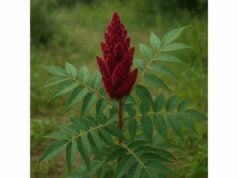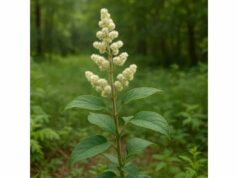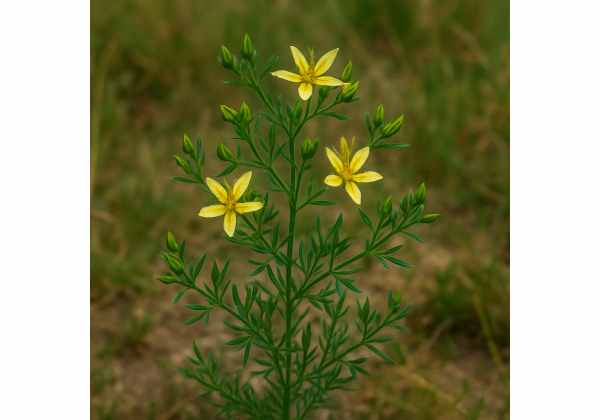
Syrian rue, or Peganum harmala, is a perennial plant native to parts of the Middle East, North Africa, Central Asia, and the Mediterranean region. Its seeds, roots, and aerial parts have a long history in traditional medicine and ritual use, especially for pain, menstrual complaints, fumigation, and protection symbolism. In modern research, the plant attracts attention because it contains unusually potent beta-carboline alkaloids, especially harmine and harmaline, alongside quinazoline alkaloids such as vasicine. These compounds help explain why Syrian rue is studied for antimicrobial, anti-inflammatory, neuroactive, and metabolic effects.
At the same time, this is not a gentle household herb. Syrian rue can be toxic, strongly interactive with medicines, and dangerous in pregnancy. Its best-known compounds inhibit monoamine oxidase A, which is one reason both its pharmacology and its risks are far more serious than those of many common herbal teas. A careful article on Syrian rue has to do two things at once: acknowledge the real scientific interest around the plant, and make it clear that strong bioactivity does not make it safe for self-experimentation or casual self-treatment.
Essential Insights
- Syrian rue is studied for antimicrobial, anti-inflammatory, and neuroactive effects, but most evidence is still preclinical.
- Its main compounds, harmine and harmaline, are potent beta-carboline alkaloids with strong MAO-A inhibitory activity.
- A safe oral self-dose in grams or milligrams cannot be recommended for seeds or alkaloid-rich extracts.
- Avoid completely during pregnancy, with antidepressants or stimulants, and whenever the product source or composition is unclear.
Table of Contents
- What Syrian rue is and why it demands caution
- Key ingredients and medicinal properties
- Potential health benefits and what the evidence suggests
- Traditional uses and why modern self-treatment is risky
- Common forms and how to think about products
- Dosage, timing, and why self-dosing is not recommended
- Safety, side effects, interactions, and who should avoid it
What Syrian rue is and why it demands caution
Syrian rue is a flowering plant in the Zygophyllaceae family. Despite its common name, it is not a true culinary rue and should not be confused with Ruta graveolens. It grows in dry, sun-exposed habitats and produces small white flowers followed by seed capsules packed with dark angular seeds. Those seeds are the plant part most often discussed in medicine, toxicology, and chemistry because they hold the highest concentration of the alkaloids that define the herb’s effects.
Historically, Peganum harmala has been used across several traditional systems. In different regions it has appeared as a fumigant, a folk treatment for pain, menstrual disorders, cough, digestive complaints, and parasites, and a ritual plant associated with warding off misfortune. It has also been used as a dye plant and cultural incense. That broad history helps explain why Syrian rue continues to attract attention. Yet historical breadth does not equal modern safety.
What makes the plant so difficult to classify is that it is genuinely pharmacologically active. The same compounds that make Syrian rue scientifically interesting also make it risky. Its seeds contain substantial levels of harmine, harmaline, and related beta-carbolines, plus other alkaloids such as vasicine and vasicinone. These are not passive plant chemicals. They affect neurotransmitter metabolism, nervous system activity, smooth muscle behavior, and multiple enzyme systems. In practical terms, Syrian rue is much closer to a high-risk medicinal plant than to a mild wellness herb.
Another important point is plant-part variation. Seeds and roots tend to contain the highest alkaloid levels, while stems and leaves contain much less. This means that two products labeled “Syrian rue” may not behave alike at all. A seed-based extract is far more concerning than a low-alkaloid leaf preparation, yet labels do not always make that distinction clear.
That is why any discussion of Syrian rue has to begin with caution. This is not a plant for casual experimentation. Even when researchers discuss promising neuroprotective, antimicrobial, or anti-inflammatory effects, they are usually studying isolated compounds, standardized extracts, or controlled models. Everyday self-use is much less predictable. With Syrian rue, the central question is not only “What can it do?” but also “At what cost, in what form, and under what level of risk?”
Key ingredients and medicinal properties
Syrian rue’s medicinal identity comes mainly from its alkaloids. The best-known are the beta-carbolines harmine, harmaline, harmalol, harmol, and tetrahydroharmine. These compounds are most concentrated in the seeds and are responsible for much of the plant’s neuroactive and toxicological significance. A second group includes quinazoline alkaloids such as vasicine and vasicinone, which add their own physiological effects and help explain the plant’s traditional association with bronchial, smooth-muscle, and reproductive actions.
Harmine and harmaline are the key compounds for understanding Syrian rue. They are potent reversible inhibitors of monoamine oxidase A. That single fact shapes nearly every safety conversation around the plant. MAO-A inhibition can alter the breakdown of neurotransmitters and can interact dangerously with many medicines and substances. It also explains why Syrian rue is sometimes described as “strong” in traditional and modern contexts alike. The plant is not merely bitter or aromatic. It is pharmacodynamically active in a way that demands respect.
Beyond MAO inhibition, Syrian rue has been studied for several other medicinal properties. In laboratory and animal work, extracts and isolated alkaloids have shown antimicrobial activity against bacteria, fungi, parasites, and some viruses. Anti-inflammatory and antioxidant effects have also been reported, along with possible hypoglycemic, vasodilatory, antispasmodic, and neuroprotective actions. That breadth is one reason the plant has remained scientifically interesting for so long.
Even so, it is important not to flatten all of these properties into one grand health claim. Different compounds likely drive different effects. The beta-carbolines appear central to nervous system activity, monoamine oxidase inhibition, and part of the antimicrobial and anti-inflammatory story. Other constituents, including flavonoids, volatile fractions, triterpenoids, coumarins, and lignans, may contribute supportive antioxidant or tissue-level actions. But the seed alkaloids remain the main reason the plant behaves so differently from gentler herbs.
This helps explain why Syrian rue can look impressive in a review article yet still be inappropriate for home use. A plant with antimicrobial, anti-inflammatory, and neuroactive compounds is not automatically a good self-care herb. In fact, strong pharmacology often makes self-care harder, not easier. Readers who are interested mainly in inflammation support, for example, will often be safer exploring better-established options such as curcumin for inflammation-focused research rather than a plant whose core mechanism also creates major interaction risks.
In the end, Syrian rue’s medicinal properties are real, but they come packaged with a narrow therapeutic margin and unusually serious safety considerations. That combination defines the plant more than any single “benefit” headline ever could.
Potential health benefits and what the evidence suggests
Syrian rue has a long list of reported bioactivities, but most of them come from laboratory studies, animal work, or broad review articles rather than from strong human clinical trials. That distinction matters. The plant is scientifically interesting, but its therapeutic potential remains much less certain than its toxicity and interaction burden.
The most frequently discussed potential benefits include antimicrobial activity, anti-inflammatory effects, antioxidant action, and neuroprotective interest. Reviews have summarized activity against bacteria, fungi, parasites, and some viral models, largely attributed to harmala alkaloids and related constituents. This does not mean Syrian rue is a proven treatment for infections. It means the plant contains compounds worth studying in controlled settings.
Anti-inflammatory and antioxidant effects are also plausible. Extracts have shown meaningful activity in in vitro assays and in animal models, including inhibition of inflammatory pathways and reduction of oxidative stress markers. This supports the plant’s traditional reputation in pain and inflammatory complaints, but it does not solve the safety problem. A plant can have anti-inflammatory promise and still be a poor self-treatment option because of toxicity, instability, or interaction potential.
Neuroprotective interest is another area that attracts attention. Harmine, in particular, has been studied for neuronal signaling, inflammation reduction, and possible roles in brain-related disease models. The same is true for some anticancer and metabolic research. Yet the gap between mechanistic promise and clinical application is still large. Many compounds look compelling in a dish, in a mouse, or in a targeted review, but far fewer turn into safe, effective human therapies.
The clearest lesson from the evidence is not that Syrian rue “works for many diseases.” It is that the plant contains pharmacologically rich alkaloids that can affect many systems. That is scientifically valuable, but it also makes generalized consumer claims misleading. A person reading about Syrian rue for pain, mood, diabetes, or infections needs to know that the clinical evidence is thin while the safety concerns are not.
A more grounded summary looks like this:
- Strongest evidence type: preclinical and mechanistic
- Most discussed actions: antimicrobial, anti-inflammatory, antioxidant, neuroactive
- Most uncertain area: real-world benefit in ordinary human self-use
- Main limitation: few high-quality clinical trials and major safety barriers
This is why Syrian rue belongs in a different category from gentler mood or calming herbs. Someone interested in general nervous-system support, for example, is usually better served by a calmer, lower-risk plant such as scullcap for mild nervous tension rather than by a high-risk MAO-inhibiting seed plant. With Syrian rue, the evidence justifies scientific interest, but not casual therapeutic confidence.
Traditional uses and why modern self-treatment is risky
Syrian rue has been used traditionally in many different ways. In some cultures, the seeds were burned as a fumigant in homes or around people for ritual or symbolic purposes. In others, the plant appeared in folk treatments for joint pain, digestive discomfort, menstrual complaints, cough, worms, or general weakness. It was also used in some settings as a strong reproductive herb, including to stimulate menstruation. These traditions help explain why the plant developed a reputation as powerful, warming, and protective.
But traditional use does not remove modern risk. In fact, Syrian rue is one of the clearest examples of why a long history of use should not be confused with a broad safety margin. Many traditional systems used it because it was strong, not because it was gentle. A plant capable of provoking menstruation, altering nervous-system activity, and affecting microbial growth is exactly the kind of plant that requires more caution, not less.
One of the most difficult problems today is that traditional context has often been lost. Historically, plant handling, indication choice, ritual use, and dose boundaries may have been shaped by community knowledge, practitioner oversight, or cultural rules. Modern consumers often encounter Syrian rue as loose seeds, powders, extracts, or online products without any of that context. That changes the risk entirely.
Another concern is motivation. Some people seek Syrian rue because they have read about its “powerful” effects rather than because a qualified practitioner judged it to be appropriate. That is not a small difference. The plant’s most famous alkaloids are potent enough that curiosity-driven self-treatment can turn quickly into intoxication, interaction, or emergency care.
This is also where traditional claims need to be translated carefully. A folk use for pain does not mean the plant is a safe analgesic. A traditional use for irregular menstruation does not mean it is a gentle women’s health herb. A history of use in cough or parasites does not mean it belongs in a modern household herb cabinet. The older the plant tradition, the more important it is to ask what the tradition may also be telling us about danger, not just benefit.
A practical modern reading of Syrian rue tradition is this:
- It was respected because it was potent.
- It was not traditionally a casual daily herb.
- Many older uses overlap directly with modern contraindications.
- The plant’s strongest traditions are also the ones most likely to create harm when copied without oversight.
That is why the safest way to respect Syrian rue’s history is not to imitate every old use. It is to recognize that the plant’s traditional reputation arose from real pharmacological intensity, and that intensity still matters today.
Common forms and how to think about products
Syrian rue is sold in several forms, and the differences between them matter. Whole seeds are the most common raw product. These are often marketed as traditional, natural, or ceremonial, but the seeds are also the part with the highest concentration of the beta-carboline alkaloids that create the greatest safety concerns. From a risk perspective, whole seeds should not be mistaken for a mild traditional spice.
Powders are another common form. Powdered Syrian rue may look less intimidating than whole seeds, but in practical terms it can be harder to judge because the plant material is already broken down and easier to consume in larger amounts. It also becomes harder to verify quality and authenticity once the seed structure is gone.
Extracts are even more concerning. A liquid or alkaloid-rich extract can concentrate the very compounds that make Syrian rue pharmacologically intense. Unless the preparation is standardized, professionally supervised, and part of a carefully evaluated clinical context, concentrated extract products are usually a poor fit for self-care.
Incense and fumigation products occupy a different category. These may be closer to historical household uses than internal seed consumption, but they still do not justify broad health claims. Smoke exposure can irritate airways, and ritual use should not be confused with evidence-based respiratory therapy.
Another issue is product framing. Syrian rue is sometimes sold using language that highlights “traditional medicine,” “natural alkaloids,” or “mood support” while minimizing toxicity and interaction burden. This is a red flag. With a plant like this, a trustworthy product description should foreground warnings, not hide them.
A safer way to think about Syrian rue products is to rank them by risk rather than by novelty:
- Whole seeds: high concern because alkaloid load is substantial and variable
- Powders: high concern because intake is easier and product identity may be less clear
- Concentrated extracts: highest concern because potency rises while predictability falls
- Incense or ritual products: lower ingestion risk, but still not medically neutral
- Casual wellness blends: concerning if the Syrian rue content is vague or undisclosed
This is one reason Syrian rue does not fit well into the modern supplement marketplace. The same product forms that make many herbs convenient can make Syrian rue more hazardous. With most consumer botanicals, better labeling improves use. With Syrian rue, better labeling often mainly reveals how much restraint is necessary.
Dosage, timing, and why self-dosing is not recommended
For most herbs, a practical article can offer a tea range, a capsule range, or a tincture guideline. Syrian rue is different. Because the active alkaloid content varies widely by plant part, geography, preparation, and processing, and because the plant has a real history of poisoning, a safe oral self-dose in grams or milligrams cannot be recommended.
This is not evasion. It is the most honest answer. Syrian rue is not a plant where the traditional-use record, modern toxicology, and product variability combine into a clear self-care dose. Even when research studies describe doses of extracts or purified alkaloids, those are not the same thing as consumer guidance. Translating them into home use would be irresponsible.
The timing question also becomes less useful when the core issue is that self-dosing is not appropriate. Unlike a gentle tea that can be taken before meals or before bed, Syrian rue is not something that should be slotted casually into a morning or evening wellness routine. The more people try to treat it like an ordinary supplement, the more likely they are to underestimate its pharmacology.
That said, there is a practical dosing principle worth stating: risk increases sharply when users move from low-exposure cultural or external forms toward deliberate oral seed or extract use. The plant’s seeds and concentrated preparations should therefore be treated as high-risk products, not as everyday herb formats.
The same caution applies to “standardized” products. Standardization can improve consistency, but it does not solve the safety issue created by MAO inhibition, reproductive effects, or psycho-neurological toxicity. A consistent risky dose is still a risky dose.
If someone encounters Syrian rue in a clinical or ethnomedical context, the most appropriate response is to ask different questions than usual:
- What exact plant part is being used?
- Is the alkaloid content known or estimated?
- Is a qualified professional supervising its use?
- Have medicine interactions and reproductive risks been screened carefully?
- Is there a lower-risk alternative that could do the job?
These questions matter more than any number in a dosing chart. For Syrian rue, the safest dosage guidance is not a range. It is a boundary: avoid self-prescribed oral seed and extract use altogether. A plant can be pharmacologically fascinating and still not belong in the self-dosing category.
Safety, side effects, interactions, and who should avoid it
Syrian rue safety begins with one central fact: the plant’s harmala alkaloids strongly inhibit MAO-A. That creates a wide interaction field with medicines and raises the risk of neurological, cardiovascular, gastrointestinal, and psychiatric adverse effects. Side effects described in poisoning and toxicology reports include nausea, vomiting, dizziness, tremor, agitation, confusion, ataxia, low blood pressure, liver and kidney stress, and disturbances of consciousness. Serious cases have required intensive care.
Pregnancy is an absolute avoid category. Syrian rue has a long reputation as an abortifacient or menstruation-stimulating plant, and severe poisoning in pregnant women has been documented. This is not a subtle caution. The plant should be considered unsafe in pregnancy. Breastfeeding is also inappropriate because safety has not been established and the alkaloids are too pharmacologically significant to treat casually.
Drug interactions are another major reason to avoid self-use. Because of MAO-A inhibition, Syrian rue can interact dangerously with antidepressants, stimulants, decongestants, many psychiatric medicines, several analgesics, and other serotonergic or sympathomimetic substances. Even comparison with interaction-prone herbs such as Saint John’s wort and other mood-active botanicals understates the concern here. Syrian rue is a much higher-risk interaction plant.
Several groups should not use it at all without specialized supervision:
- Pregnant or breastfeeding people
- Anyone taking antidepressants, antipsychotics, stimulants, opioids, or decongestants
- People with seizure disorders, major cardiovascular disease, or psychiatric instability
- Children and adolescents
- Anyone with liver or kidney disease
- Anyone using an unlabeled or poorly identified product
There is also a psychological safety issue. Plants with strong reputations often attract people who assume “natural” means manageable. Syrian rue is one of the clearest examples of why that assumption fails. The plant’s natural origin does nothing to reduce the seriousness of its interaction profile or poisoning risk.
The most grounded safety summary is blunt:
- Do not self-dose the seeds or alkaloid-rich extracts.
- Do not use it during pregnancy.
- Do not combine it with medicines or psychoactive substances without expert toxicology-level awareness.
- Do not rely on traditional reputation as proof of safety.
- Treat signs of intoxication as a medical emergency.
For some herbs, the safety section is a formality. For Syrian rue, it is the core of the article. Any honest discussion of the plant has to end there: the risks are not incidental. They are part of what the plant is.
References
- Peganum harmala L.: A Review of Botany, Traditional Use, Phytochemistry, Pharmacology, Quality Marker, and Toxicity 2024 (Review)
- Antibacterial, Antifungal, Antiviral, and Antiparasitic Activities of Peganum harmala and Its Ingredients: A Review 2022 (Review)
- Antioxidant and Anti-Inflammatory Effects of Peganum harmala Extracts: An In Vitro and In Vivo Study 2021
- Fatal poisoning of pregnant women by peganum harmala L.: A case reports 2021 (Case Report)
- beta-Carboline alkaloids in Peganum harmala and inhibition of human monoamine oxidase (MAO) 2010
Disclaimer
This article is for educational purposes only and is not medical advice, diagnosis, or treatment. Syrian rue is a high-risk medicinal plant with meaningful toxicity and interaction potential. It should not be self-prescribed for mood, pain, infection, reproductive, or ritual-health purposes, and it should never be used during pregnancy. Seek urgent medical care for vomiting, confusion, tremor, loss of coordination, altered consciousness, or suspected plant poisoning. Anyone considering this plant in any medicinal context should speak with a qualified clinician or poison specialist first.
If this article was useful, please share it on Facebook, X (formerly Twitter), or another platform you prefer.