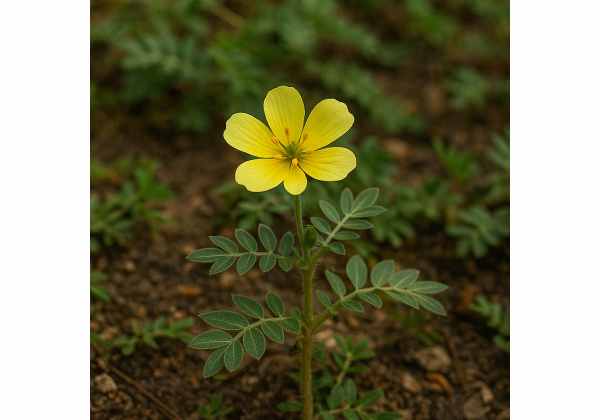
Tribulus, botanically known as Tribulus terrestris, is a spiny fruiting plant with a long history in traditional medicine and a modern reputation as a libido, testosterone, and performance supplement. That reputation is only partly supported by evidence. Tribulus does contain biologically active compounds, especially steroidal saponins such as protodioscin, along with flavonoids and alkaloids that help explain its pharmacological interest. Human studies suggest it may help some aspects of sexual function in certain men and women, and it may show modest benefits in selected metabolic, urinary, and inflammatory settings. At the same time, the most popular claim attached to it, namely that it reliably raises testosterone in healthy adults, remains weak and inconsistent.
That gap between marketing and evidence is what makes tribulus worth understanding properly. It is not an empty supplement, but it is not a magic hormone booster either. The most useful way to view it is as a targeted herbal product with possible sexual-health and symptom-relief benefits, mixed evidence for athletic performance, and a safety profile that requires more caution than many supplement labels suggest.
Key Takeaways
- Tribulus may improve some measures of sexual desire and erectile function in selected adults.
- It has not shown robust, consistent testosterone-boosting effects in most human studies.
- Studied oral doses often range from about 250 to 1500 mg per day of extract, depending on the product and goal.
- People who are pregnant, breastfeeding, taking multiple medicines, or managing liver, kidney, or heart disease should avoid unsupervised use.
Table of Contents
- What Tribulus Is and Why People Use It
- Key Ingredients and Medicinal Properties of Tribulus
- Potential Health Benefits and What the Evidence Shows
- Tribulus for Sexual Function, Testosterone, and Sport Performance
- Other Uses for Metabolic, Urinary, and General Wellness Support
- Dosage, Timing, and How to Use Tribulus Sensibly
- Safety, Side Effects, Interactions, and Who Should Avoid It
What Tribulus Is and Why People Use It
Tribulus is a low-growing plant found across warm and dry regions of Europe, Asia, Africa, and Australia. It is easy to recognize once fruiting begins, because the plant forms hard, thorny burs that can stick into shoes, bicycle tires, and animal hooves. In traditional medicine, different parts of the plant, especially the fruit and aerial portions, have been used for sexual vitality, urinary complaints, kidney-stone support, swelling, and general strengthening.
Modern supplement interest in tribulus rose for three main reasons. First, it became popular in bodybuilding and men’s-health circles as a supposed testosterone booster. Second, it gained attention in sexual-health supplements for libido and erectile support. Third, it began appearing in broader wellness formulas aimed at energy, metabolism, and urinary comfort. These uses are not equally supported, and that distinction matters.
The strongest reason people try tribulus today is usually sexual function rather than a classical herbal diagnosis. Men often buy it hoping for higher testosterone, better erections, or more drive. Women may use it for sexual desire and arousal support. Athletes sometimes use it in the belief that it increases strength, muscle, and recovery. Yet one of the most important realities about tribulus is that popularity has outpaced precision. The herb is often marketed as if all forms are the same and all effects are proven. In reality, extract quality, saponin content, plant part, and study population all influence the outcome.
Tribulus also sits in a crowded supplement space. It is frequently compared with other libido or “male vitality” herbs such as tongkat ali for hormonal and sexual-health support or with performance-oriented products that promise far more than clinical trials actually show. That comparison can be useful, because it reminds readers that “natural testosterone booster” is often a marketing category, not a medical one.
A better way to think about tribulus is to ask what it seems to do most reliably. The answer is not “everything.” It may help some aspects of sexual function, may show modest symptom benefits in certain populations, and may provide interesting bioactive effects in laboratory research. But its role is narrower than its reputation. That narrower view is not disappointing. It is what makes the herb usable in a realistic, evidence-aware way.
Key Ingredients and Medicinal Properties of Tribulus
Tribulus owes most of its medicinal reputation to a group of compounds called steroidal saponins. Among these, protodioscin is the name most often mentioned in supplements and research papers. Other related saponins, along with flavonoids, alkaloids, tannins, glycosides, phytosterols, and small amounts of other secondary metabolites, contribute to the plant’s complex pharmacology.
The saponins matter because they help explain why tribulus attracted interest for sexual health and hormone-related marketing. They are often described as the compounds most likely to influence libido, vascular response, inflammatory signaling, and, in some circumstances, androgen-related pathways. But even here, the details matter. Saponin content differs across growing regions and manufacturing methods. A tribulus product from one country may not match the chemistry of a product studied elsewhere. This is one reason research findings can look inconsistent.
Flavonoids are the second major compound class worth knowing. Tribulus contains derivatives related to quercetin, kaempferol, and isorhamnetin chemistry. These compounds may support antioxidant and anti-inflammatory activity. They are part of the reason tribulus is sometimes discussed not only as a sexual-health herb but also as a plant with broader protective or metabolic potential. Alkaloids, including beta-carboline-type compounds such as harmane and norharmane, have also been identified and may contribute to nervous-system and pharmacologic effects, though these roles are still being clarified.
Taken together, the herb’s medicinal properties are usually grouped into a few themes:
- possible support for sexual desire and erectile function,
- anti-inflammatory and antioxidant activity,
- mild effects on lipid and metabolic markers in some settings,
- possible urinary and smooth-muscle support,
- and experimental antimicrobial or skin-related potential.
That does not mean every product will do all of these things. It means the plant contains enough active chemistry to plausibly influence several body systems. The challenge is that the same multi-compound complexity that makes tribulus interesting also makes it harder to standardize and study cleanly.
A useful comparison is with broad “vitality” herbs such as ginseng and its multi-compound adaptogenic profile. Like ginseng, tribulus is often reduced to one flashy promise. But the real picture is more mixed and more dependent on extract quality, dose, and user characteristics than marketing usually admits.
The most important takeaway is that tribulus is not pharmacologically empty. Its main compounds are real and biologically active. The problem is not lack of activity. The problem is that activity does not automatically translate into a dramatic or universal human effect, especially for testosterone. Understanding that difference makes it easier to use tribulus with better expectations.
Potential Health Benefits and What the Evidence Shows
The evidence for tribulus is strongest when the question is narrow and weakest when the claim is broad. That is why the most sensible way to review its health benefits is to sort them by how well they hold up in human research.
The best-supported benefit area is sexual function. In men with mild to moderate erectile dysfunction, some clinical trials have reported meaningful improvements in desire, orgasmic function, intercourse satisfaction, and overall satisfaction compared with placebo. In women, especially in studies of low desire or female sexual dysfunction, tribulus has also shown promise for improving desire and some overall sexual-function scores. These results are not universal, but they are more convincing than many other claims attached to the herb.
A second plausible area is symptom support in selected men with erectile dysfunction plus age-related androgen decline or lower urinary symptoms. Some studies suggest tribulus may improve sexual-function scores in this group, though the hormone changes are usually small and not always clinically impressive. The symptom benefit may matter more than the testosterone number.
A third area is metabolic and inflammatory support, but this remains less established. In physically active men, tribulus supplementation has shown mixed results for biomarkers such as lipids, inflammatory markers, and recovery-related measures. Some systematic-review findings suggest improvements in cholesterol profile and modest effects on certain health biomarkers, but not a consistent boost in muscle damage recovery, immune markers, or hormonal status. In other words, it may do something, but not necessarily the thing athletes most want it to do.
Tribulus is also studied for skin, antimicrobial, and antioxidant applications, but those findings are still largely preclinical. That means cell, tissue, or animal models are driving much of the enthusiasm rather than strong human trials. These areas are worth watching but not worth overselling.
A realistic benefit hierarchy looks like this:
- most plausible: sexual desire and certain aspects of sexual function,
- possible but modest: selected symptom support in men with erectile dysfunction or age-related decline,
- mixed and limited: lipid, inflammatory, or sport-related biomarkers,
- preliminary only: broad hormone optimization, major performance gains, or universal fertility enhancement.
This is why tribulus tends to disappoint people who buy it only as a “testosterone booster” and ignore everything else. The herb may have value, but its value is more likely to appear in symptoms and function than in dramatic lab changes.
Readers often compare tribulus with herbs used for libido and fertility support, such as maca for sexual function and reproductive wellness. That comparison is useful because it reminds us that a supplement can have real benefits without necessarily acting through testosterone. Tribulus seems to fit that pattern in many users. It may help some people, but not always for the reason the label suggests.
Tribulus for Sexual Function, Testosterone, and Sport Performance
This is the section where tribulus gains and loses most of its reputation. On the one hand, sexual-function research is the main reason the herb remains clinically interesting. On the other hand, the “testosterone booster” story is where expectations most often outrun the evidence.
For sexual function, tribulus has a credible, though not definitive, case. Several trials in men with erectile dysfunction have found improvements in sexual-function scores after weeks of supplementation. These gains often involve desire, satisfaction, and erectile performance rather than a dramatic endocrine shift. In women, randomized trials and a systematic review have also suggested benefit for desire and other domains of sexual function, especially in women with low libido or defined sexual dysfunction. That does not make tribulus a first-line treatment for every sexual complaint, but it does mean the herb has more human support here than many people realize.
Testosterone is a different story. A recent systematic review of clinical trials found no robust evidence that tribulus reliably increases testosterone in men overall. Most neutral studies involved men who did not have low baseline androgen levels, and even the studies showing change reported only modest increases. For healthy men expecting a major anabolic or hormone-optimizing effect, this is important. Tribulus may sometimes improve sexual function without acting like testosterone therapy.
Sport performance is even more mixed. Tribulus has long been sold to athletes and bodybuilders, yet systematic reviews in physically active men do not show clear evidence of consistent benefit for strength, muscle damage markers, or hormonal behavior. Some biomarker findings are mildly favorable, especially for lipid profile, but the classic promise of bigger muscles, higher testosterone, and better performance remains weak. This is why tribulus is more popular in locker-room marketing than in solid sports science.
The practical interpretation is:
- tribulus may help some users with libido or sexual function,
- it does not behave like prescription testosterone,
- and it does not have strong evidence as a performance enhancer.
This distinction matters because supplement companies often blur three different goals into one product promise. A person who wants help with desire may have a different experience from a person who wants a better squat max or a higher lab testosterone result.
It is also why comparisons with supplements such as tongkat ali for male performance claims or other so-called natural boosters should be made carefully. The best question is not which herb sounds strongest. It is which effect is actually supported in humans.
So if someone asks whether tribulus “works,” the most honest answer is yes for some sexual-function outcomes, maybe for some niche symptom settings, and not convincingly for the dramatic testosterone and performance claims most often used to sell it.
Other Uses for Metabolic, Urinary, and General Wellness Support
Beyond sex hormones and libido, tribulus has been used traditionally and experimentally for several other purposes. These include urinary comfort, kidney-stone support, metabolic balance, anti-inflammatory effects, and general vitality. The quality of evidence is more uneven here, but these uses still matter because they broaden the plant’s practical identity.
Urinary and lower-tract use is one of the herb’s older traditional roles. Tribulus has appeared in systems of medicine that use it for urinary discomfort, stone-related symptoms, and lower urinary tract irritation. Modern clinical evidence is limited, but there is some rationale behind these traditions. The plant’s saponins and other constituents may influence smooth muscle tone, local inflammation, and urinary comfort. In older men with erectile dysfunction and lower urinary symptoms, tribulus has been studied without worsening urinary complaints, which is at least reassuring in that specific context.
Metabolic and cardiovascular interest is another area worth noting. Systematic-review work in active men has suggested possible improvements in cholesterol profile, and preclinical research has explored anti-inflammatory, antioxidant, and glucose-related actions. Still, this is not strong enough to present tribulus as a primary herb for diabetes, cholesterol reduction, or cardiovascular protection. Those claims remain secondary and context-dependent.
Some people also use tribulus as a “general energy” supplement. Here the evidence is weakest. A person may feel better if sexual function, confidence, or subjective vitality improves, but that is not the same as proving a broad energizing action. In practice, users often interpret any stimulating or hopeful expectation as “more energy,” which makes this claim harder to measure and easier to exaggerate.
There is also growing research interest in tribulus for skin-related and antioxidant applications. The plant contains compounds that may act on inflammatory and oxidative pathways, and recent review work has explored possible roles in skin disease models. But this remains a research story, not a routine over-the-counter skin recommendation.
For men looking specifically at urinary and prostate-related health, it is helpful to distinguish tribulus from herbs with a stronger niche there, such as saw palmetto for prostate and urinary symptom support. Tribulus may fit into a broader formula, but it is not the most established single herb in that category.
The broader lesson is that tribulus is not only a sex supplement. It is a traditional herb with several plausible physiologic targets. But once you move outside sexual function, the evidence becomes more suggestive than strong. That does not make these uses meaningless. It simply means they should be treated as secondary possibilities rather than headline promises.
Dosage, Timing, and How to Use Tribulus Sensibly
Tribulus dosing varies widely because products differ in plant part, extract ratio, and saponin standardization. This is one of the main reasons consumers get confused. A 250 mg extract is not necessarily weaker than a 1000 mg capsule if the extract is more concentrated or standardized differently. That said, human studies do give a useful practical range.
In clinical research, tribulus has often been used at about 250 to 1500 mg per day of extract, usually split into one to three doses. Some men’s sexual-function studies have used about 400 to 750 mg per day for one to three months. In sports and biomarker studies, doses have ranged from 450 mg up to about 2700 mg per day, though higher dosing does not clearly produce better results. In women, low-dose extracts have been studied at much smaller amounts, including around 7.5 mg per day in certain standardized preparations, which again shows how much extract strength matters.
A sensible way to use tribulus is to match the dose to the goal and to the product type rather than chasing the largest number on the label. Practical guidance usually looks like this:
- start with the lowest clearly labeled effective range,
- prefer standardized extracts from reputable makers,
- use the product consistently for several weeks rather than expecting immediate effects,
- reassess whether the target outcome is improving,
- stop if side effects appear or if nothing changes after a reasonable trial.
Timing is flexible. Many people take tribulus with meals to reduce stomach upset. If the goal is sexual-function support, once- or twice-daily use is usually more practical than taking it only “as needed.” If the goal is a broader supplement routine, morning or midday dosing may suit people who feel slightly stimulated by it.
A few common mistakes are worth avoiding:
- assuming more is better,
- stacking tribulus with multiple hormone-oriented supplements at once,
- using it to replace medical evaluation for persistent sexual dysfunction,
- and believing that a testosterone increase is the only sign it is working.
Since tribulus is often marketed alongside other libido or vitality herbs, users may be tempted to combine it with products like maca in fertility and libido formulas or with stimulant-heavy performance blends. That can make it harder to tell what is helping and what is causing side effects.
The best dosing mindset is modest and specific. Use tribulus for a defined goal, choose a well-labeled extract, start lower than the label hype suggests, and judge it by symptoms and tolerability rather than by wishful marketing language.
Safety, Side Effects, Interactions, and Who Should Avoid It
Tribulus is often described as natural and well tolerated, but that should not be confused with harmless. Many users do tolerate it reasonably well in short studies, yet side effects and more serious concerns do exist. The common short-term problems are usually digestive and stimulant-like. These can include stomach pain, reflux, nausea, diarrhea, sleep disturbance, fatigue, elevated heart rate, or feelings of overstimulation.
More importantly, tribulus has been linked in case reports and safety discussions with liver injury, kidney problems, neurotoxicity, priapism, and, more recently, rhabdomyolysis in the setting of concomitant atorvastatin use. One case report also noted concern that tribulus may act as a moderate CYP3A4 inhibitor, which raises the possibility of interaction with statins and many other commonly used medications. Case reports do not prove that severe problems are common, but they are enough to justify caution, especially in people taking several prescription drugs.
People who should avoid tribulus or use it only with professional guidance include:
- pregnant or breastfeeding adults,
- children and adolescents,
- people with liver or kidney disease,
- those with significant cardiovascular disease,
- anyone taking statins, anticoagulants, or multiple chronic medicines,
- and people with hormone-sensitive conditions who have not discussed supplement use with a clinician.
Another overlooked safety issue is expectations. Men with erectile dysfunction, low libido, infertility, or urinary symptoms may delay proper diagnosis if they rely too heavily on supplements. Sexual dysfunction can reflect diabetes, depression, cardiovascular disease, medication effects, pelvic issues, or endocrine disease. A supplement trial should not replace evaluation when symptoms are persistent, sudden, or worsening.
Athletes also need perspective. Tribulus is not on the standard list of banned substances, but supplement contamination and labeling problems remain real concerns in the sports world. That means product quality matters just as much as plant chemistry.
It also helps to compare tribulus with gentler, better-characterized herbs when the goal is not specifically sexual function. A person seeking stress-related vitality might do better with something like ashwagandha for stress and resilience support rather than a spiny herb marketed mainly through testosterone hype.
The best summary is that tribulus can be useful for some adults, especially in sexual-health contexts, but it is not a casual “more is better” supplement. Respect the product, respect your medication list, and stop treating every botanical sold for libido as if it were automatically safe for daily, long-term use.
References
- Effects of Tribulus (Tribulus terrestris L.) Supplementation on Erectile Dysfunction and Testosterone Levels in Men-A Systematic Review of Clinical Trials 2025 (Systematic Review)
- Effects of Tribulus terrestris L. on Sport and Health Biomarkers in Physically Active Adult Males: A Systematic Review 2022 (Systematic Review)
- Rhabdomyolysis Risk: The Dangers of Tribulus Terrestris, an Over-the-Counter Supplement 2024 (Case Report)
- Evaluation of the efficacy and safety of Tribulus terrestris in male sexual dysfunction-A prospective, randomized, double-blind, placebo-controlled clinical trial 2017 (Clinical Trial)
- Tribulus Terrestris for Female Sexual Dysfunction: A Systematic Review 2020 (Systematic Review)
Disclaimer
This article is for educational purposes only and is not medical advice, diagnosis, or treatment. Tribulus may have useful effects in selected adults, but it is not a proven substitute for medical care, testosterone therapy, infertility evaluation, or treatment of persistent sexual dysfunction. Supplement quality varies widely, and tribulus may interact with medications or be inappropriate for people with liver, kidney, cardiovascular, or hormone-related concerns. Speak with a qualified healthcare professional before using it medicinally, especially if you take prescription drugs or have chronic health conditions.
If you found this guide helpful, please share it on Facebook, X, or your preferred platform so more readers can find balanced, evidence-aware information on tribulus.