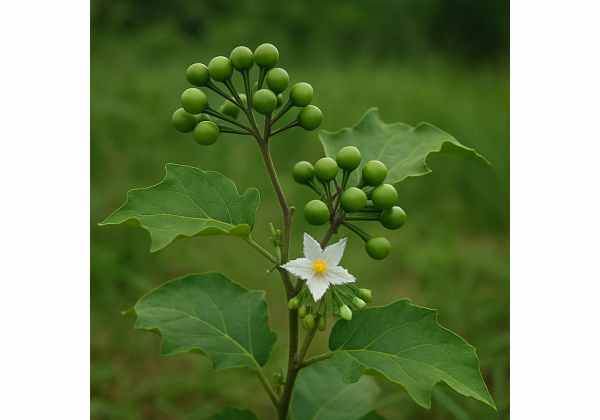
Turkey berry, Solanum torvum, is a small, green, bitter fruit from the nightshade family that is eaten and valued medicinally across parts of Asia, Africa, and the Caribbean. It is often called pea eggplant or susumber, and it sits in an interesting space between food and herbal remedy. In soups, curries, stews, and teas, it has long been used for nourishment, digestion, and recovery, while traditional medicine has also linked it to support for anemia, blood sugar balance, infections, and inflammation.
Modern research gives some of these uses a plausible scientific foundation. Turkey berry contains fiber, minerals, polyphenols, flavonoids, steroidal alkaloids, and other bioactive compounds that may help explain its antioxidant, antimicrobial, and metabolic effects. At the same time, the evidence is still uneven. A few human pilot studies are promising, but many stronger claims still come from laboratory and animal research rather than large clinical trials.
That makes turkey berry worth taking seriously, but not uncritically. It may be a useful traditional food with medicinal potential, yet it works best when expectations are realistic and safety stays part of the conversation.
Quick Overview
- Turkey berry may support antioxidant defense and provide useful minerals when eaten as a traditional vegetable.
- Early research suggests possible benefits for hemoglobin, lipid balance, and antimicrobial activity, but human evidence is still limited.
- A practical food serving is about 30 to 80 g cooked berries, or roughly 1/4 to 1/2 cup per meal.
- People with nightshade sensitivity, unusual neurologic reactions to turkey berry, or those using concentrated extracts during pregnancy should avoid self-directed use.
Table of Contents
- What turkey berry is and why it is more than a culinary fruit
- Key ingredients and nutritional profile of turkey berry
- Turkey berry health benefits and what the evidence says
- Turkey berry for blood sugar, lipids, and cardiometabolic support
- How to use turkey berry and practical dosage guidelines
- Common mistakes, quality issues, and how to choose it wisely
- Safety, side effects, interactions, and who should avoid turkey berry
What turkey berry is and why it is more than a culinary fruit
Turkey berry is the small, round fruit of Solanum torvum, a thorny shrub in the same broad family as eggplant, tomato, and potato. The berries grow in clusters and are usually harvested while still green and firm. Their taste is bitter, earthy, and slightly medicinal, which helps explain why they are rarely eaten raw in large amounts. Instead, they are typically simmered into soups, pounded into sauces, added to curries, steeped into tea, or lightly crushed and cooked with aromatics.
Its identity changes with geography. In Ghana and nearby regions, turkey berry is often associated with nourishment and blood-building traditions. In the Caribbean, it is well known as susumber. In Southeast Asia, especially Thai cooking, it appears in spicy curries where its bitterness provides contrast and depth. This broad culinary use matters because it reminds us that turkey berry is not just a supplement ingredient. It is first a traditional food.
That food status shapes how it should be interpreted medicinally. Plants that are eaten regularly often build their health reputation from repeated low-dose exposure rather than from concentrated extracts. Turkey berry fits that pattern. People value it not because one capsule changes everything, but because it can serve as a nutrient-dense, phytochemical-rich ingredient in everyday meals.
This is one reason turkey berry is often discussed alongside other traditional vegetable-herbs such as okra in everyday functional cooking. Both are more useful when understood as foods with medicinal promise rather than as miracle remedies.
Turkey berry also matters because it occupies an unusual middle ground in research. It has enough scientific attention to show genuine pharmacological potential, especially in antioxidant, antimicrobial, and metabolic studies, but not enough clinical evidence to support strong therapeutic claims across the board. Some human data exist, but much of the excitement still comes from laboratory work and pilot trials.
Its story is also more complicated than many wellness summaries admit. Although the fruit is widely eaten safely in customary food amounts, turkey berry is still a nightshade plant with active alkaloids and other compounds. There are even rare case reports of poisoning under unusual circumstances, which means it should not be treated as automatically harmless just because it is edible.
The best starting point, then, is simple: turkey berry is a traditional food with medicinal potential, not a proven cure. It can be nourishing, pharmacologically interesting, and culturally important at the same time. That combination is exactly what makes it worth a closer look.
Key ingredients and nutritional profile of turkey berry
Turkey berry’s reputation comes from both its nutrient content and its secondary plant compounds. The fruit is not exceptionally large, sweet, or energy-dense, so its value is not mainly about calories. Instead, it is prized for what it contributes in smaller amounts: fiber, minerals, and a range of phytochemicals that may help explain its medicinal character.
On the nutritional side, turkey berry provides:
- dietary fiber
- modest protein compared with many common vegetables
- small amounts of fat
- potassium
- iron
- magnesium
- calcium
- zinc
- manganese
The exact amounts vary depending on soil, maturity, preparation, and whether the berries or leaves are being analyzed. Recent food analysis also suggests that leaves and berries can differ in mineral density, with leaves sometimes showing especially strong iron values. Even so, food composition tables alone do not prove bioavailability. A plant can contain iron on paper without delivering all of it efficiently in the body.
That is one reason turkey berry should not automatically be called an iron remedy. Its mineral content is real, but how much the body absorbs may depend on processing, meal composition, polyphenol levels, and the overall diet. This makes turkey berry comparable to other traditional mineral-rich foods such as moringa in nutrient-focused diets, where nutritional promise is real but still shaped by preparation and context.
Beyond basic nutrients, turkey berry contains the compounds that drive most of the modern scientific interest:
- polyphenols
- flavonoids
- phenolic acids
- steroidal alkaloids such as solasodine-related compounds
- saponins
- tannins
- glycosides
- phytosterols, including sitosterol in some analyses
- triterpenoid-related compounds in certain fractions
These compounds help explain several of the plant’s experimental effects. Polyphenols and flavonoids contribute to antioxidant activity. Steroidal alkaloids and related constituents may influence inflammation, antimicrobial action, and possibly metabolic signaling. Triterpenoids isolated from the fruits have also shown noteworthy antifungal activity in laboratory work.
Preparation matters a great deal. Boiling and cooking can reduce some nutrients while preserving or even improving access to others. In practical terms, this means that cooked turkey berry is not nutritionally identical to raw berry, but it may still retain meaningful mineral value while becoming easier to digest and safer to consume. This is especially relevant for a bitter nightshade fruit that is almost always eaten cooked.
The most honest nutritional summary is this: turkey berry is a nutrient-dense traditional food with meaningful fiber and mineral content, but its strongest modern appeal comes from the combination of those nutrients with a broad profile of bioactive compounds. That blend is what makes it more than just a bitter garnish.
Turkey berry health benefits and what the evidence says
Turkey berry is associated with a wide range of health claims, but the evidence is uneven. Some of the claims are supported by traditional use, some by food analysis, some by cell and animal studies, and a small number by early human trials. The safest interpretation is to focus on where the signals are strongest and be careful where the data are still thin.
One of the most discussed benefits is support for hemoglobin and anemia-related concerns. This idea comes from two places: the fruit’s mineral profile and its strong reputation in traditional diets. There is also a human pilot study in which turkey berry-fortified biscuits improved hemoglobin levels and cognitive performance in adolescent girls over six weeks. That is encouraging. Still, it does not prove that turkey berry alone is a dependable anemia treatment. The intervention used a fortified food, the trial was small, and hemoglobin improvement can be influenced by more than one nutrient pathway.
Antioxidant support is another credible benefit. Turkey berry leaves and berries contain polyphenols and phenolic acids that perform well in antioxidant assays. In plain language, this means the plant can help neutralize damaging oxidative molecules in experimental settings. That does not make it an anti-aging shortcut, but it does support the idea that regular food-based use may contribute to a broader antioxidant-rich diet.
Antimicrobial activity is also promising. Studies on leaf and fruit extracts have shown antibacterial, antifungal, and biofilm-related effects in vitro. Some leaf extracts even appear to work synergistically with antibiotics against resistant staphylococcal strains. This is scientifically important, though it still does not mean a home-made turkey berry tea should be treated like an antimicrobial drug.
Traditional digestive use also makes practical sense. Bitter, fiber-rich fruits often support appetite regulation, digestion, and post-meal balance in subtle ways. Turkey berry is not soothing in the way a demulcent herb is soothing, but it may help meals feel more complete and less heavy when used in moderate, cooked amounts.
A balanced list of likely benefits would include:
- nutrient support as part of a traditional whole-food diet
- antioxidant protection from polyphenols and phenolic compounds
- possible support for hemoglobin in selected food-based settings
- antimicrobial and antifungal potential in laboratory studies
- mild digestive and appetite-supportive value as a bitter food
What should be avoided is overstatement. Turkey berry is not a proven cure for anemia, diabetes, infection, or hypertension. It may support these areas indirectly or experimentally, but that is not the same as validated treatment.
A useful way to think about it is as a functional food with early but real scientific backing. That places it between a vegetable and a medicinal plant. It is more active than an ordinary side dish, but less clinically settled than a well-studied botanical supplement.
Turkey berry for blood sugar, lipids, and cardiometabolic support
This is one of the most interesting areas of turkey berry research, and also one of the easiest to overstate. Several preclinical and pilot human findings suggest that Solanum torvum may influence blood sugar handling, lipid balance, and related metabolic markers. But the level of certainty is still far below what would be needed to treat it as a stand-alone therapy.
Animal research has shown that fruit extracts may reduce blood glucose, improve lipid markers, and support liver-related measures in diabetic rat models. These are meaningful findings because they fit with the plant’s antioxidant and phytochemical profile. When researchers see a fruit reduce glucose, triglycerides, LDL cholesterol, or liver enzyme markers in an animal model, it suggests the plant may be influencing oxidative stress, insulin signaling, or metabolic inflammation.
There is also a newer human pilot study on turkey berry tea in people living with hypertension. After one month of use, the participants showed improvements in several lipid markers, although blood pressure itself did not change significantly. This is interesting, but it should be interpreted carefully. The study was small, lacked a control arm, and produced results that need confirmation in larger, better-designed trials.
For that reason, the most responsible way to describe turkey berry’s metabolic potential is:
- promising
- early
- not yet definitive
- best seen as food-first support rather than supplement-level treatment
This is especially important for blood sugar claims. Nightshade plants with polyphenols and alkaloids often attract attention for diabetes support, and turkey berry is now part of that conversation. But at the moment, its role looks closer to that of a traditional metabolic-support food than to a proven glucose-lowering intervention. In practice, it belongs in the same general discussion as bitter melon for blood sugar support, with one key difference: bitter melon has a larger human evidence base, while turkey berry is still catching up.
There are also reasonable lifestyle explanations for some of turkey berry’s observed effects. It is bitter, fibrous, and generally cooked into whole meals rather than eaten as a refined product. Foods like that tend to fit better into cardiometabolic eating patterns than highly processed foods do. So even before any special phytochemical effect is considered, turkey berry may support better dietary quality simply because of how it is used.
Still, several cautions matter:
- food form and extract form are not equivalent
- animal-study doses do not translate directly into human kitchen use
- lipid changes in small pilots may reflect multiple variables
- anyone on medication for diabetes, lipids, or hypertension should not assume add-on use is neutral
The cleanest bottom line is that turkey berry may become a more important cardiometabolic functional food over time, but current evidence supports cautious optimism rather than strong recommendations. It is promising enough to follow, not proven enough to lean on.
How to use turkey berry and practical dosage guidelines
Turkey berry is easiest to use well when it is treated as food first. That approach matches its traditional role and also lowers the risk of overdoing a plant that still has limited safety and dosing data in concentrated forms. Because there is no universally accepted clinical dose for Solanum torvum, practical dosage is best described by culinary amount, preparation style, and caution with extracts.
A realistic food serving is:
- 30 to 80 g cooked berries
- or about 1/4 to 1/2 cup cooked
- used as part of a mixed dish rather than eaten alone in large quantities
This kind of serving fits how turkey berry is traditionally used in soups, stews, curries, sauces, and braised vegetable dishes. The berries are often lightly crushed before cooking so they absorb flavor and lose some bitterness. In many cuisines, this is exactly the right amount: enough to contribute minerals, bitterness, and texture, but not so much that the dish becomes harsh.
The leaves are also used in some settings, though less commonly in mainstream cooking. If using leaves, they should be cooked and treated cautiously, especially the first time.
Tea and powdered forms need more restraint. A small pilot on turkey berry tea used 2 g tea bags once daily for 30 days, but that should not be treated as a universal recommended dose. It is simply one studied preparation in a narrow context. Similarly, dried powders or capsules vary too much in strength to make one clean recommendation without product-specific information.
A sensible guide looks like this:
- Start with food use before trying tea or concentrated forms.
- Use small cooked portions first.
- If trying tea, choose a clearly labeled product and begin with once-daily use.
- Avoid combining multiple new herbal products at the same time.
- Reassess after a few weeks instead of assuming more is better.
Turkey berry works especially well in:
- curries with coconut, spices, and legumes
- fish or meat stews
- vegetable soups
- pounded sauces and relishes
- lightly bitter broths designed to stimulate appetite
Its bitterness is a feature, not a flaw. But bitterness also means preparation matters. If the fruit tastes excessively harsh, old, or chemically unpleasant, that is a sign to stop and reassess the source or cooking method.
One more practical note matters: traditional food use is usually safer than concentrated extract use. This is true for many plants, but especially for turkey berry. The fruit is meant to live inside the context of a meal, where fat, starch, protein, and other vegetables soften both its flavor and its physiologic impact.
Common mistakes, quality issues, and how to choose it wisely
The biggest mistake people make with turkey berry is assuming that all forms are equivalent. They are not. Fresh berries, dried tea, powdered fruit, leaf extract, and concentrated ethanol extracts can behave very differently. The traditional food form is not the same as a supplement, and a supplement is not the same as a research extract.
A second common mistake is treating turkey berry as a proven iron fix. It is understandable why people do this. The fruit is associated with blood-building traditions, and it contains iron and other minerals. But mineral content on paper is only one part of the story. Bioavailability, preparation, and the rest of the diet all matter. Turkey berry may support hemoglobin in some situations, but it should not replace actual anemia evaluation.
Quality begins with the fruit itself. Good fresh turkey berry should be:
- firm
- green
- free from mold
- free from sour or unusual odors
- not shriveled or visibly damaged
Overstored or poorly handled berries are a concern not only for taste but for safety. Rare poisoning reports linked to susumber berry suggest that unusual or altered toxic exposures may matter. That does not mean normal culinary turkey berry is generally unsafe. It means spoiled, stressed, or badly handled material is not something to experiment with.
If choosing a dried or powdered product, look for:
- clear labeling with Solanum torvum
- indication of whether the product is fruit, leaf, or mixed plant material
- packaging that protects from moisture
- no vague disease-cure language
- simple ingredient lists without unnecessary fillers
Tea products deserve similar scrutiny. Since at least one pilot study used a standardized turkey berry tea format, it is easy for marketers to make the results sound more settled than they are. A tea product can be interesting, but it should not be framed as a proven cardiometabolic intervention.
Another frequent mistake is trying to force turkey berry into a role better suited to a different plant. If someone wants a more established antimicrobial spice, blood sugar herb, or iron-rich leafy food, there may be better-known options. Turkey berry is valuable partly because it is distinctive, not because it replaces every other traditional food-herb.
Finally, many people use too much too soon. Bitterness can be deceptive. A plant may seem modest because it is “just food,” then cause digestive discomfort when eaten aggressively. Turkey berry is better approached with small, repeated exposure than with large experimental servings.
In practical terms, wise use means respecting source, form, and context. Turkey berry does well in the kitchen. It becomes less predictable when it is pushed too quickly into the supplement category.
Safety, side effects, interactions, and who should avoid turkey berry
For most people, cooked turkey berry eaten in normal culinary amounts appears to be reasonably well tolerated. That is an important starting point because the fruit has a long food history. Still, food history is not the same as unlimited safety. Turkey berry belongs to the nightshade family, contains active phytochemicals, and has a small but meaningful literature on toxicity under unusual circumstances.
The most likely side effects in ordinary use are:
- stomach upset
- bitterness-related nausea
- bloating or digestive discomfort if eaten in excess
- irritation or dislike from very concentrated tea or extracts
A few safety issues need more careful attention.
Rare poisoning reports
There are case reports of susumber berry poisoning presenting with neurologic symptoms that mimicked acute stroke. These cases are unusual and do not mean that ordinary, properly handled culinary turkey berry is broadly dangerous. But they do matter because they show that altered or unusual toxic exposures can happen. That is enough reason to avoid spoiled, suspicious, or unusually tasting berries.
Nightshade sensitivity
Some people react poorly to nightshade plants. This is not common in a strict allergy sense, but it is a practical consideration. Anyone who consistently reacts to eggplant or similar plants should approach turkey berry cautiously.
Medication overlap
Because turkey berry may influence glucose, lipids, or inflammation in concentrated forms, caution is reasonable for people taking:
- diabetes medications
- lipid-lowering medications
- blood pressure medications
- multiple herbal supplements with overlapping metabolic effects
This caution is stronger for tea extracts, powders, or capsules than for modest food use.
Pregnancy and breastfeeding
There is not enough strong safety data to recommend medicinal-style use during pregnancy or breastfeeding. Normal culinary exposure in food traditions is one thing; concentrated supplemental use is another. When evidence is limited, restraint is the better choice.
Children
Turkey berry is used in some traditional food settings for children, but concentrated medicinal use should not be improvised.
Who should be especially cautious or avoid self-directed medicinal use?
- pregnant or breastfeeding people
- children
- people with unusual neurologic reactions to turkey berry
- those with strong nightshade sensitivity
- anyone using concentrated extracts while managing chronic disease
- people relying on turkey berry instead of medical care for anemia, hypertension, diabetes, or infection
The safest overall message is balanced: turkey berry is generally better understood as a traditional cooked food than as a high-dose medicinal extract. In food amounts, it can be a useful part of a varied diet. In concentrated forms, the uncertainties grow quickly. That difference should guide almost every decision about how to use it.
References
- Assessment of the antioxidant and nutritive profile of the leaves and berries of Solanum nigrum and Solanum torvum Swart 2024 (Research Article)
- The Effect of a Turkey Berry (Solanum torvum)-Fortified Biscuit on the Hemoglobin Level and Cognitive Performance of Adolescent Females in the Ahafo Region of Ghana: A Pilot Study 2023 (Pilot Study)
- Antibacterial Activity of Solanum torvum Leaf Extract and Its Synergistic Effect with Oxacillin against Methicillin-Resistant Staphyloccoci Isolated from Dogs 2022 (Research Article)
- Assessing the effects of Turkey berry (Solanum torvum) tea consumption on cardiometabolic indices in people living with hypertension 2025 (Pilot Study)
- Jamaican Susumber Berry Poisoning Mimicking Acute Stroke 2023 (Case Report and Systematic Review)
Disclaimer
This article is for educational purposes only and is not medical advice. Turkey berry is a traditional food with medicinal potential, but the evidence for many health claims is still limited and often preliminary. It should not replace medical evaluation or treatment for anemia, diabetes, high blood pressure, infection, or neurologic symptoms. Speak with a qualified healthcare professional before using turkey berry in concentrated tea, powder, or extract form, especially if you are pregnant, breastfeeding, taking medication, or managing a chronic health condition.
If this article was useful, please share it on Facebook, X, or another platform you prefer.