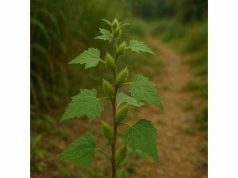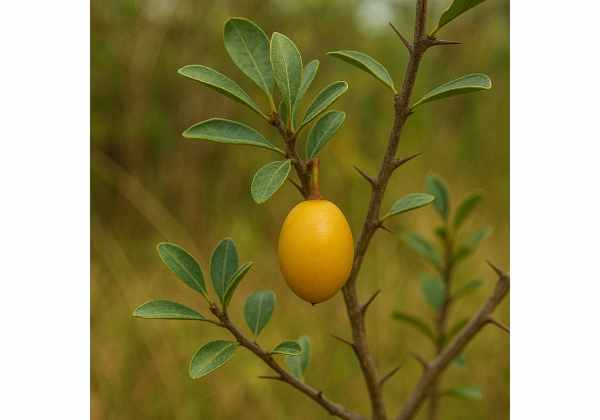
Ximenia, usually referring to Ximenia americana, is a thorny tropical shrub or small tree valued in traditional medicine, local food systems, and natural skin care. Depending on the region, it may be called sour plum or sea lemon. Its fruit can be eaten, its seed oil is used in cosmetics and folk remedies, and its leaves, bark, and roots have a long history of use for skin complaints, pain, fever, digestive discomfort, and wound care. What makes ximenia especially interesting today is the contrast between old traditional use and newer laboratory research. The plant contains unusual fatty acids, polyphenols, tannins, flavonoids, and other compounds that may help explain its skin-softening, antioxidant, antimicrobial, and anti-inflammatory effects. Still, there is an important limit: most modern evidence comes from laboratory and animal studies, not human clinical trials. That means ximenia is best approached as a promising traditional herb and topical oil, not as a proven cure. Used thoughtfully, it may offer real value, especially for skin support and gentle topical care.
Quick Overview
- Ximenia oil appears most useful for dry, rough, or stressed skin because it works mainly as a rich emollient.
- Laboratory and animal studies suggest anti-inflammatory and pain-relieving activity, but human trials are still lacking.
- A practical topical starting range is 2 to 4 drops once daily on a small area, then up to twice daily if well tolerated.
- Oral self-treatment is not a good starting point because there is no standardized human medicinal dose.
- People who are pregnant, breastfeeding, taking prescription medicines, or prone to skin reactions should be especially cautious.
Table of Contents
- What ximenia is and why people use it
- Key ingredients and medicinal properties
- Potential benefits and what the evidence shows
- How ximenia is used in practice
- Ximenia dosage, timing, and how to start
- Safety, side effects, and who should avoid it
What ximenia is and why people use it
Ximenia is a spiny shrub or small tree that grows in tropical and subtropical regions, especially across parts of Africa, but it is also found in other warm climates. The species most often discussed medicinally is Ximenia americana. In traditional settings, people have used different parts of the plant in different ways. The fruit is sometimes eaten fresh or processed. The seed yields an oil that has become increasingly interesting in skin care. Leaves, bark, roots, and twigs have been used in local remedies for fever, pain, digestive complaints, skin problems, and wound-related care.
That long record of use matters, but it also creates confusion. When people search for “ximenia benefits,” they may actually mean one of three different things: the edible fruit, the topical seed oil, or the medicinal plant as a whole. These are not interchangeable. The fruit belongs partly to the food tradition. The oil belongs mostly to skin and cosmetic use. The bark and root belong more to traditional herbal medicine, where preparations vary widely from one culture to another.
Today, ximenia draws interest for two main reasons. First, the oil has a rich, elegant texture and an unusual fatty-acid profile that makes it attractive for dry or mature skin. Second, preclinical research suggests that extracts from the bark and leaves may have anti-inflammatory, antimicrobial, antioxidant, and pain-modulating properties. That sounds impressive, but the practical takeaway is narrower. Ximenia is most believable as a skin-supporting botanical and a source of promising experimental compounds. It is much less established as an oral herbal treatment for chronic disease.
Another useful point is sustainability. Traditional medicine has often relied on bark and roots, but harvesting those parts can damage or kill the plant. Seed oil and cultivated or responsibly sourced plant material are usually the more sensible options for modern use. That is not only better for the plant; it also fits the current evidence better, since topical use is easier to control and generally easier to use safely than homemade oral preparations.
So why do people use ximenia? Usually for one of four reasons:
- as a traditional remedy for skin or pain-related complaints
- as a nourishing oil for dry skin, hair, or stretch-prone areas
- as a wild edible fruit in local food systems
- as a botanical of research interest because of its bioactive compounds
That broader context helps keep expectations realistic. Ximenia is a plant with cultural value, practical topical uses, and real pharmacologic promise, but it is not yet a standardized, clinically proven herbal medicine in the way many supplement buyers assume.
Key ingredients and medicinal properties
To understand ximenia, it helps to separate the chemistry of the oil from the chemistry of the leaves and bark. The seed oil is especially notable for its fatty-acid composition. It contains a high proportion of unsaturated and very long-chain fatty acids, including oleic acid and ximenia-associated acids such as ximenic and ximenynic acid. This matters because these lipids help explain why ximenia oil feels rich, spreads well, and is often described as softening, protective, and barrier-friendly on the skin.
This makes ximenia oil different from water-based soothing herbs. It is not mainly a cooling gel or astringent rinse. It is an emollient botanical. In simple terms, it works by lubricating, softening, and helping the skin feel less tight and rough. In that respect, it can remind people of jojoba for skin barrier support, though ximenia is richer, heavier, and more focused on deep conditioning than on a light waxy finish.
The bark and leaf extracts tell a different chemical story. These parts contain polyphenols, tannins, flavonoids, glycosides, saponins, and terpenoid-related compounds. In recent phytochemical work, researchers identified multiple secondary metabolites, including catechin-like compounds and quercetin- and kaempferol-related molecules. These are the kinds of plant chemicals often associated with antioxidant and inflammation-modulating activity in laboratory settings. They do not guarantee a strong clinical effect in people, but they offer a plausible explanation for why ximenia has a traditional reputation for wound care, pain relief, and inflammatory complaints.
From a practical point of view, ximenia’s medicinal properties are best understood in four groups:
- Emollient and barrier-supportive: mostly from the seed oil, which helps soften the skin and reduce the dry, uncomfortable feel that follows washing or weather exposure.
- Anti-inflammatory: suggested by animal and cell studies on bark extracts and by the way several ximenia compounds may influence inflammatory signaling.
- Antioxidant: suggested by polyphenol-rich extracts from leaves and bark, especially in laboratory testing.
- Antimicrobial and skin-active: early studies indicate activity against some microbes and skin-aging-related enzymes, though this remains preliminary.
This is also where careful language matters. “Medicinal properties” does not mean that ximenia has proven medical outcomes in humans. It means the plant contains compounds that behave in biologically active ways and may support useful applications. For the oil, those applications are mostly dermatologic and cosmetic. For the bark and leaf extracts, the applications are still mostly experimental.
A grounded way to think about ximenia is this: the oil offers practical skin benefits now, while the non-oil extracts may eventually prove useful in more formal therapeutic settings if better human studies appear. Until then, ximenia’s chemistry is promising, but its claims should stay modest and route-specific.
Potential benefits and what the evidence shows
The strongest way to discuss ximenia benefits is to rank them by evidence quality rather than by marketing excitement. That makes the article more useful and keeps the herb in the right lane.
Most plausible current benefit: skin conditioning and barrier comfort.
This is where ximenia makes the most practical sense. The seed oil is rich in fatty acids that behave like classic cosmetic emollients. For dry, rough, weathered, or mature skin, that can translate into better softness, less surface tightness, and a more comfortable feel. Traditional use also points in this direction, with the oil being used for chapped areas, dry feet, stretch-prone skin, and hair care. This is not the same as proving treatment of eczema, psoriasis, or wounds, but it is a credible everyday use.
Promising but still preclinical: inflammation and pain support.
Recent animal studies on ximenia bark extracts suggest anti-inflammatory and antinociceptive effects. In plain language, that means the extracts may help dampen inflammation and pain signaling. That helps explain traditional use for painful or swollen conditions. Still, these are not human clinical trials, and the tested doses were controlled experimental doses, not home remedies. For readers specifically seeking an inflammation-focused herb with a stronger human evidence base, boswellia for better-studied anti-inflammatory support is more established than ximenia at this stage.
Interesting early signals: antioxidant, antibacterial, and antiaging activity.
Leaf extracts, including work on Ximenia americana var. caffra, have shown antioxidant effects, antibacterial activity in laboratory models, and inhibition of enzymes tied to visible skin aging. That is scientifically interesting and helps explain why ximenia is appearing in cosmeceutical discussions. But these findings are still early. In vitro activity does not automatically become a meaningful real-world result on human skin.
Traditional but unproven oral uses.
Ethnomedicinal reports describe ximenia for fever, abdominal complaints, wound care, parasite-related problems, and other conditions. These traditions are important culturally, but they are not the same thing as modern evidence-based dosing and safety. In fact, oral use is where the gap between tradition and modern standardization becomes most obvious.
A realistic benefit summary looks like this:
- Best supported in real-world use: skin softness, emollience, and cosmetic barrier support
- Supported mainly by preclinical research: anti-inflammatory and pain-related effects
- Supported mainly by laboratory data: antioxidant, antibacterial, and antiaging activity
- Not yet well established: routine oral medicinal use for chronic health conditions
That does not make ximenia weak. It makes it specific. Many herbs are overvalued because people blend together culinary use, traditional use, lab data, animal data, and human trials as if they were the same thing. They are not. Ximenia’s most dependable promise today is topical support, with its more ambitious medicinal reputation still waiting for stronger confirmation.
How ximenia is used in practice
In practice, ximenia is used in several forms, but not all forms deserve the same level of confidence. The form matters because it changes both the likely benefit and the safety profile.
1. Cold-pressed seed oil
This is the most straightforward and modern way to use ximenia. The oil is applied to the skin or hair as a nourishing botanical oil. It is especially suitable for dry facial skin, rough body areas, dry scalp, brittle ends, and massage blends. Many people use it as a finishing oil over damp skin or mixed into a cream. Because it is rich and persistent, it suits nighttime use well.
2. Ximenia-containing creams, balms, and serums
These products may be easier than pure oil for sensitive or acne-prone skin because the oil is diluted into a more balanced formula. This can also improve feel and reduce the risk of overapplication.
3. Traditional bark, leaf, or root preparations
These include decoctions, infusions, powders, and crushed plant material used in folk medicine. This is where ximenia’s traditional identity is strongest, but it is also where modern standardization is weakest. Potency, purity, plant part, and preparation method can vary a great deal.
4. The fruit as food
In some regions, the fruit is eaten seasonally or used as a supplemental food. That is different from taking a medicinal extract. Food use does not automatically justify medicinal dosing.
For most readers, the best practical use is topical. A few sensible examples include:
- applying a small amount to dry cheeks or flaky patches
- massaging into rough elbows, heels, or cuticles
- using a few drops on the scalp before washing
- blending with a gentle moisturizer for barrier support
- using it alongside aloe vera for cooling skin support when skin feels both dry and overheated
The biggest mistake is assuming that because ximenia is a plant, homemade bark or root remedies are automatically safe. They are not. The plant has complex chemistry, and traditional use does not replace dose control, contamination testing, or interaction screening.
A second mistake is expecting ximenia oil to do the job of an active treatment. It is not a steroid, antibiotic, retinoid, or exfoliating acid. Its strength is support: comfort, lubrication, softness, and gentle skin conditioning.
A third mistake is ignoring sourcing. Because bark and root harvest can be destructive, modern users should favor reputable seed-oil products or responsibly produced topical formulas whenever possible. That choice is better for both safety and sustainability.
Used this way, ximenia becomes easier to understand. It is not a one-size-fits-all medicinal herb. It is a plant with one especially practical form, the oil, and several more traditional forms that require much more caution.
Ximenia dosage, timing, and how to start
This is the section where honesty matters most: there is no well-established, evidence-based human medicinal dose for oral ximenia. That single fact should shape how you use it. Animal studies on bark extracts often use measured oral doses, but those numbers are part of research design. They are not home-use recommendations and should not be converted casually into capsules, tinctures, or teas.
That leaves a more practical approach based on route.
For topical ximenia oil
- Start with 2 to 4 drops on a small facial area or other limited patch of skin once daily.
- If the skin feels comfortable after several days, increase to once or twice daily as needed.
- For larger body areas, use only enough to leave a thin film rather than a shiny heavy layer.
- On the scalp or hair ends, use a small amount before washing or sparingly as a finishing oil.
For creams or serums containing ximenia oil
- Follow the product label.
- Once-daily use is a sensible starting point.
- Increase to twice daily only if the formula is well tolerated and the skin actually needs it.
For oral teas, powders, capsules, or extracts
- There is no standard adult medicinal dose that can be recommended confidently.
- Avoid improvising with homemade bark or root preparations.
- Do not assume that “more natural” means “safer.”
- If a commercial oral product is used, it should be treated like a specialty herbal product that needs label-based dosing and clinician review, especially if you take medicines or have a medical condition.
A useful way to begin is this simple sequence:
- Choose the safest form first, usually a topical oil or blended skin product.
- Patch test on a small area for 24 to 48 hours.
- Use the smallest effective amount for one to two weeks.
- Reassess whether the benefit is real before increasing frequency.
Timing matters less than consistency. Ximenia is not a quick stimulant or sedative. For skin support, it usually works best as part of a routine. Many people prefer nighttime use because richer oils can sit on the skin longer without interfering with daytime sunscreen or makeup.
Duration also matters. Give a topical ximenia product about 2 to 4 weeks of regular use before deciding whether it truly helps dryness, texture, or comfort. If irritation appears, stop sooner. For oral use, there is not enough good long-term safety data to recommend extended unsupervised courses.
One more practical note: ximenia is supportive, not dramatic. If you need a plant mainly for soothing visible irritation or recovery-prone skin, something like calendula for skin healing may sometimes fit more clearly. Ximenia is strongest where richness, barrier comfort, and botanical oil support are the goal.
Safety, side effects, and who should avoid it
Ximenia safety depends heavily on the form used. Topical seed oil is generally the lowest-risk form when used sensibly. Oral extracts, homemade preparations, and traditional bark or root remedies carry much more uncertainty.
Topical safety
Most people who use ximenia oil are using it as a cosmetic oil, and in that setting the main risks are familiar ones: irritation, breakouts from overuse, and allergy or sensitivity reactions. These are more likely if the product is fragranced, old, poorly stored, or combined with several strong actives at once. Patch testing is wise, especially for people with eczema-prone skin, rosacea, or a history of reacting to botanical oils.
Oral safety
This is where caution should increase sharply. Traditional literature includes reports that parts of the fruit or seed material may contain cyanogenic compounds, and there is also some disagreement in the literature about the edibility of certain oil preparations. That does not mean the plant is broadly poisonous, but it does mean oral use should not be casual. Homemade or poorly characterized preparations are the least reassuring option.
Possible side effects
- topical stinging, redness, itch, or breakouts
- stomach upset, loose stools, or nausea with oral use
- unpredictable effects from concentrated bark or root preparations
- delayed care if someone uses ximenia instead of appropriate treatment for infection, ulcers, or persistent pain
Who should avoid oral ximenia unless a qualified clinician approves it
- pregnant or breastfeeding people
- children
- people with liver or kidney disease
- anyone taking prescription medicines
- people preparing for surgery
- anyone with a history of significant herbal reactions
Who should be cautious even with topical use
- people with very reactive skin
- those with active facial dermatitis or open, infected skin
- people already using retinoids, acids, benzoyl peroxide, or strong astringents
This last point is easy to miss. Ximenia oil is rich and cushioning, but that does not mean it should be piled on top of every other active. It is also not a drying antiseptic or toner. Someone already using witch hazel for topical astringent use or multiple acne actives may irritate the skin simply by layering too much.
Interactions are poorly studied. That uncertainty is itself meaningful. When interaction data are thin, the safest rule is simple: avoid concentrated oral use alongside prescription medicines unless a clinician or pharmacist reviews it.
Finally, know when not to self-treat. Ximenia is not appropriate as a stand-alone response to infected wounds, rapidly worsening rashes, severe abdominal pain, unexplained fever, or persistent joint swelling. In those situations, it is better viewed as a possible supportive botanical after proper diagnosis, not as the first or only intervention.
References
- Ximenia americana: Economic Importance, Medicinal Value, and Current Status in Ethiopia 2021 (Review)
- Phytochemical Profiling of the Leaf Extract of Ximenia americana var. caffra and Its Antioxidant, Antibacterial, and Antiaging Activities In Vitro and in Caenorhabditis elegans: A Cosmeceutical and Dermatological Approach 2022 (Preclinical Study)
- Evaluation of the antiedematogenic and anti-inflammatory properties of Ximenia americana L. (Olacaceae) bark extract in experimental models of inflammation 2023 (Preclinical Study)
- Antinociceptive Potential of Ximenia americana L. Bark Extract and Caffeic Acid: Insights into Pain Modulation Pathways 2024 (Preclinical Study)
- An Overview on the Properties of Ximenia Oil Used as Cosmetic in Angola 2019 (Review)
Disclaimer
This article is for educational purposes only and is not medical advice. Ximenia is a traditional botanical with promising laboratory and animal research, but it does not have well-established human dosing or broad clinical validation for most medicinal uses. Do not use ximenia as a substitute for diagnosis, prescription treatment, or professional wound and skin care. Seek medical guidance before using oral ximenia if you are pregnant, breastfeeding, take prescription medicines, have a chronic illness, or plan to use concentrated extracts.
If this article was helpful, please share it on Facebook, X, or your preferred platform.