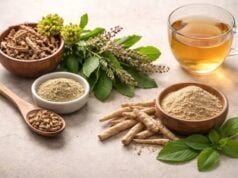
For many women, menopause symptoms create a very specific kind of frustration: the heat surges, sleep disruption, and shifting mood feel significant enough to demand relief, but not everyone wants to begin with prescription therapy. That is where red clover often enters the conversation. It is marketed as a gentler, plant-based option for hot flashes and other menopausal symptoms because it contains phytoestrogens, compounds that can interact with estrogen pathways in the body.
The appeal is understandable. Red clover sounds familiar, natural, and less intimidating than hormone therapy. But those qualities do not automatically make it effective, safe for everyone, or equal across products. The research is mixed, the forms on store shelves vary widely, and the best-studied extracts are not the same thing as a casual herbal tea.
A useful discussion about red clover starts with one question: what can it realistically do, and for whom?
Quick Facts
- Red clover may modestly reduce hot flashes in some postmenopausal women, especially when a standardized extract is used consistently.
- The strongest evidence is for capsules or tablets with measured isoflavone content, not for tea alone.
- Symptom relief is usually less predictable and less potent than hormone therapy.
- Long-term safety is still less certain than many people assume, especially for those who should avoid estrogen-like products.
- A practical trial is usually 8 to 12 weeks with one standardized product and a simple symptom diary.
Table of Contents
- What Red Clover Contains
- What the Evidence Shows
- Which Forms Make Sense
- Safety and Who Should Avoid It
- How It Compares With Other Options
- How to Decide and Next Steps
What Red Clover Contains
Red clover is a flowering legume, but the reason it gets attention in menopause care is not the plant itself so much as its isoflavones. These are plant compounds often grouped under the broad term phytoestrogens because their chemical structure allows them to interact, at least to some degree, with estrogen signaling in the body. That label can be helpful, but it also creates confusion. Phytoestrogens are not the same thing as the estrogen made by ovaries, and they do not act with the same strength, reliability, or tissue effects as prescription hormone therapy.
The main isoflavones associated with red clover include biochanin A and formononetin, along with smaller amounts of genistein and daidzein or compounds that can be metabolized into them. Once swallowed, these compounds are processed through the gut and liver, which means individual response can vary. Two women may take the same product and get noticeably different results because digestion, metabolism, and gut microbiome activity are not identical. That partly explains why red clover stories sound so inconsistent in real life.
It also explains why form matters. In clinical research, red clover is usually not studied as a loose herb tossed into hot water. It is more often tested as a standardized extract in a capsule or tablet, with a defined amount of total isoflavones per day. That matters because a supplement that clearly states its isoflavone dose is much easier to study and much easier to compare than an herbal blend with vague labeling.
Another source of confusion is the phrase “natural estrogen.” It sounds simple, but it is not accurate. Red clover does not replace declining estradiol in a one-to-one way. It is better understood as a botanical source of compounds that may have weak estrogen-like activity under some conditions. That is why some women notice symptom improvement, while others feel little or nothing. It is also why red clover should not be assumed to be harmless simply because it is plant-derived.
In practical terms, red clover sits in the same broader family conversation as soy isoflavones: both are phytoestrogen-rich options, but neither should be treated as identical to prescription estrogen or as a guaranteed menopause solution. Red clover may be worth considering, but only after understanding that the active compounds are milder, the response is variable, and product quality matters as much as the herb name on the bottle.
What the Evidence Shows
The evidence on red clover for menopause is neither a clear yes nor a clear no. The most balanced reading is that it may help some women, especially with hot flashes, but the overall effect is modest and the results are inconsistent enough that major menopause guidelines do not place it among the most dependable symptom treatments.
The best summary of the research points to a few recurring patterns. Standardized red clover extracts appear more likely than placebo to reduce daily hot flash frequency in some studies, and the signal looks stronger in postmenopausal women with more frequent symptoms at baseline. In the more encouraging trials and pooled analyses, benefit seems more likely when women are having at least several hot flashes per day, when treatment lasts around 12 weeks or longer, and when the extract provides a clearly measured isoflavone dose. One meta-analysis found the average reduction was statistically significant, but not dramatic. That is an important distinction. A modest improvement may feel meaningful to one person and disappointing to another.
The uncertainty comes from the details. Studies differ in symptom severity, formulation, dose, menopause stage, and outcome measures. Placebo responses are also high in menopause trials, especially for vasomotor symptoms such as hot flashes and night sweats. That means a supplement has to outperform a surprisingly strong placebo effect to prove itself, and many herbal products do not do that consistently.
There are also broader claims that red clover helps mood, sleep, lipids, skin, vaginal symptoms, or bone health. Some studies suggest improvement in overall menopause rating scores, and a newer trial found benefits in symptom scores along with lipid changes in postmenopausal women with dyslipidemia. But those findings are still not strong enough to treat red clover as a broad-spectrum menopause therapy. The most defensible claim remains narrower: it may modestly ease hot flashes in selected women.
This is where expectations matter. If someone has severe, life-disrupting vasomotor symptoms, red clover is less likely to provide the kind of reliable relief that a prescription option can offer. But if symptoms are mild to moderate and the goal is a lower-intensity botanical trial, it can be a reasonable option to discuss.
Women already looking into hot flash treatment strategies should think of red clover as one possible nonprescription tool, not as the core answer for every menopause complaint. It may help enough to be worthwhile, but the evidence is still mixed enough that it should be used with clear expectations, careful product selection, and a plan for reassessment rather than open-ended hope.
Which Forms Make Sense
The best form of red clover for menopause is usually not the most romantic one. Tea sounds appealing, but the research has focused much more on standardized extracts in capsules or tablets. That matters because the studied benefit is tied to measured isoflavone intake, not simply to the fact that the plant was consumed in some form.
When choosing among products, it helps to separate them into three broad categories:
- Tea or dried herb: often the least standardized option, with uncertain isoflavone delivery
- Liquid tinctures or mixed herbal blends: sometimes easier to take, but often harder to compare with clinical studies
- Capsules or tablets with standardized extract: closest to what has actually been used in trials
For menopause symptom relief, the third category is usually the most sensible starting point. Many of the better-known studies used extracts providing about 40 mg to 80 mg of isoflavones daily, often split into two doses or delivered as one standardized daily total. That does not mean more is always better. It means the evidence is strongest for products that clearly tell you how much active isoflavone content you are getting.
A more practical label-reading approach looks like this:
- Check whether the product is a red clover extract rather than a vague proprietary blend.
- Look for a stated isoflavone amount, not just the weight of the whole herb.
- Choose a product that identifies standardization or at least uses clear quantitative labeling.
- Favor brands with third-party testing or quality verification when possible.
- Avoid taking several phytoestrogen supplements at the same time, because it becomes impossible to tell what is helping or causing side effects.
Consistency matters more than novelty. If you try red clover, use one product regularly for about 8 to 12 weeks and track whether hot flash frequency, night sweats, sleep disruption, or overall symptom bother changes in a meaningful way. A supplement that reduces symptoms slightly on paper but does not improve your actual day-to-day life is not doing enough.
This is also where supplement realism matters. Menopause products often layer red clover with black cohosh, dong quai, magnesium, vitamin D, or adaptogens. That can sound comprehensive, but it makes it harder to judge effectiveness and harder to troubleshoot side effects. A cleaner trial is usually better. Guidance on choosing cleaner formulations overlaps with broader advice on safer supplement use around hormones.
In short, the “best form” is not the prettiest or most natural-sounding one. It is the form that most closely resembles the research: a standardized extract, clear dosing, consistent use, and a realistic trial period.
Safety and Who Should Avoid It
Red clover is often marketed with an almost automatic safety halo, but that reputation is only partly deserved. Short-term studies suggest that standardized red clover extracts are generally well tolerated, and many women use them without major problems. Even so, “well tolerated” is not the same thing as “risk-free,” and the long-term safety data are still thinner than many people assume.
The first point to remember is that red clover is biologically active. That is the reason people take it. But the same property that makes it interesting for menopause also means caution is sensible when estrogen-related risk is part of the picture. Women with a personal history of an estrogen-sensitive condition, or those who have been specifically told to avoid estrogen-like therapies, should not start red clover casually. The fact that it is plant-based does not make this question disappear.
Pregnancy and breastfeeding are two other situations where red clover is not a good casual add-on. Menopause articles tend to focus on midlife, but supplements can drift into wider use once they are seen as generally “hormone balancing.” That kind of loose use is not a good idea here.
Common side effects, when they occur, are usually mild: digestive upset, headache, or a sense that the supplement simply does not agree with the person taking it. More often, the real safety issue is not an obvious side effect but uncertainty around interactions, mixed formulations, and self-treatment without enough context. Herbal products are not regulated like prescription drugs, and labels do not always tell the full story about potency, contaminants, or consistency from batch to batch.
Another important practical point is that red clover should not be used to mask symptoms that deserve evaluation. Postmenopausal bleeding, new breast changes, unintentional weight loss, persistent pelvic pain, or sudden worsening of symptoms should prompt medical review rather than another supplement purchase. A botanical trial is only appropriate when the symptom pattern itself has already been reasonably understood.
It is also worth keeping perspective on what red clover is not. It is not a substitute for careful management of early menopause, surgical menopause, severe vasomotor symptoms, or untreated genitourinary symptoms. Those issues may call for a broader treatment conversation, sometimes including prescription estrogen therapy or other evidence-based options.
A careful rule works well here: if you would hesitate to start a new medication without mentioning it to your clinician, treat red clover the same way. Mention it, especially if you have a complex medical history, take several prescriptions, or have any reason to think estrogen-related decisions need extra care.
How It Compares With Other Options
Red clover makes the most sense when it is compared honestly, not idealized. It sits in the middle ground between doing nothing and using more established therapies. For some women, that middle ground is exactly what they want. For others, it becomes a frustrating detour because the expected relief never arrives.
Compared with hormone therapy, red clover is less potent and less predictable. That is the clearest comparison to keep in mind. Menopausal hormone therapy remains the most effective treatment for vasomotor symptoms, and it also has broader evidence for certain other menopause-related concerns when used in appropriate candidates. Red clover does not match that level of effect. If symptoms are severe, frequent, or clearly affecting sleep, work, mood, and quality of life, a supplement is not always the most efficient first choice.
Compared with prescription nonhormonal options, red clover is also less standardized. Prescription treatments have known doses, expected response ranges, and more formal safety monitoring. With red clover, product variation is a much bigger part of the picture.
Compared with other supplements, red clover is interesting because it has at least some targeted menopause data rather than purely traditional use. That still does not make it superior. Some women ask whether it is better than black cohosh, soy, flax, or mixed botanical formulas. The most honest answer is that none of these options delivers uniform results, and the evidence quality differs across products and formulations. Red clover’s niche is a mild-to-moderate symptom trial for someone who specifically wants a standardized phytoestrogen extract and understands that benefit may be modest.
This also helps clarify where red clover is a poor fit. It is not the best choice if your main concern is vaginal dryness, painful sex, recurrent urinary symptoms, or major sleep and mood disturbance. Those symptoms often need other strategies. It is also not ideal if you want a product that works quickly. Botanical treatments usually require several weeks of consistent use before they can be judged fairly.
For women comparing supplement options, a look at black cohosh for menopause can be useful, because it shows how differently two widely discussed botanicals are positioned in both mechanism and evidence. Red clover leans on phytoestrogen activity; black cohosh is not thought to act the same way.
In everyday decision-making, red clover is best viewed as a measured trial option, not a hidden replacement for evidence-based care. It can earn a place in a menopause plan, but it should earn that place through a clear goal, careful expectations, and follow-up rather than through marketing language alone.
How to Decide and Next Steps
The right question is not “Is red clover good or bad?” It is “Is red clover a reasonable fit for my symptoms, risks, and treatment goals right now?” That shift matters because menopause care is deeply personal. The same supplement can be sensible for one woman and a distraction for another.
Red clover may be a reasonable short trial if all of the following are true:
- your main issue is mild to moderate hot flashes or night sweats
- you prefer to start with a nonprescription option
- you can choose one standardized product rather than a mixed formula
- you do not have a medical reason to avoid estrogen-like therapies
- you are willing to track symptoms and reassess rather than keep taking it indefinitely
A good self-check plan is straightforward. Start one standardized extract. Use it consistently for 8 to 12 weeks. Track a few concrete measures, such as hot flashes per day, night waking from sweats, and overall symptom bother on a scale from 1 to 10. At the end of the trial, ask a blunt question: is life noticeably better? If the answer is no, the product has probably done enough to prove its value.
This approach also prevents the common mistake of endlessly rotating among supplements without ever evaluating one carefully. Menopause symptoms change over time, and so do treatment needs. A product that seemed “a little helpful” at the start may become clearly inadequate as symptoms intensify or diversify.
There are also moments when supplement experimentation should stop and clinical evaluation should move to the front. That includes bleeding after menopause, symptoms of early menopause, severe hot flashes, major sleep disruption, new breast symptoms, or a history that complicates hormone-related decisions. When the picture is medically complex, the smartest next step is not another bottle but a more structured conversation, sometimes with a clinician experienced in menopause care or with specialist evaluation when symptoms or labs are confusing.
Red clover deserves a place in menopause discussions because it is one of the more studied botanicals in this space. But it does not deserve magical thinking. Its best use is careful, limited, and informed: a standardized extract, a defined trial, honest symptom tracking, and a willingness to move on if the result is too small to matter.
That is often the most empowering way to use any menopause supplement. Not as a symbol of doing something natural, but as a practical experiment with a clear beginning, a clear endpoint, and room for better options if needed.
References
- Evaluation of Clinical Meaningfulness of Red Clover (Trifolium pratense L.) Extract to Relieve Hot Flushes and Menopausal Symptoms in Peri- and Post-Menopausal Women: A Systematic Review and Meta-Analysis of Randomized Controlled Trials 2021 (Systematic Review and Meta-Analysis)
- The 2023 nonhormone therapy position statement of The North American Menopause Society 2023 (Guideline)
- Isoflavones obtained from red clover improve both dyslipidemia and menopausal symptoms in menopausal women: a prospective randomized placebo-controlled trial 2024 (RCT)
- Efficacy of plant-derived dietary supplements in improving overall menopausal symptoms in women: An updated systematic review and meta-analysis 2024 (Systematic Review and Meta-Analysis)
- Red Clover 2025 (Official Resource)
Disclaimer
This article is for educational purposes only and does not replace personal medical advice, diagnosis, or treatment. Red clover may affect hormone-related pathways and may not be appropriate for everyone, especially people with complex medical histories, postmenopausal bleeding, or conditions where estrogen-like products may be a concern. If menopause symptoms are severe, changing quickly, or affecting sleep, mood, or daily functioning, discuss them with a qualified clinician before relying on supplements.
If this article helped you, please share it on Facebook, X, or another platform where it may help someone make a more informed menopause decision.