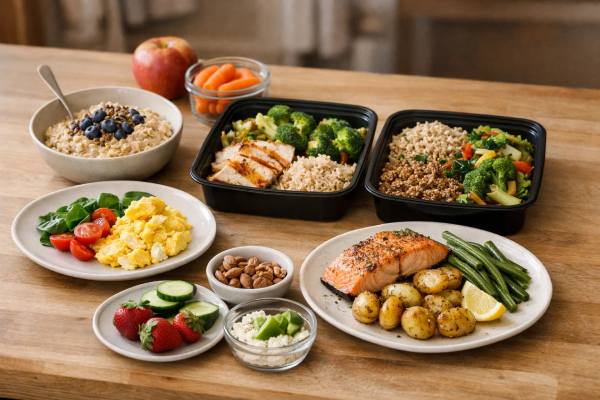
A macro meal plan for weight loss gives you a practical middle ground between rigid dieting and completely winging it. Instead of labeling foods “good” or “bad,” it helps you organize your eating around three targets that matter most in a calorie deficit: protein, carbohydrates, and fat. That makes it easier to protect muscle, manage hunger, fuel workouts, and stay consistent long enough to actually lose weight.
The key is not chasing a perfect ratio. It is building a repeatable way of eating that fits your calorie needs, food preferences, schedule, and training. Below, you will learn how to set sensible macro targets, turn them into real meals, and adjust your plan when progress slows.
Table of Contents
- What a macro meal plan really is
- How to set your calories and macros
- Protein comes first in a fat-loss plan
- How to balance carbs and fat
- How to build each meal around your targets
- Sample macro meal plans by calorie level
- How to adjust your plan when progress slows
What a macro meal plan really is
A macro meal plan is a way of eating built around daily targets for protein, carbs, and fat rather than a fixed menu of “diet foods.” You still need a calorie deficit to lose weight, but macros shape how that deficit feels and functions.
Protein matters because it supports muscle retention, recovery, and fullness. Carbs matter because they help with training performance, daily energy, and food flexibility. Fat matters because it supports hormones, satisfaction, and meal enjoyment. When people say a macro plan “works better” for them, it is usually because it solves one of three common problems: they are always hungry, they lose structure on busy days, or they feel too restricted to stay consistent.
A good macro plan is not about hitting identical numbers every day. It is about staying close enough that your weekly intake supports your goal. Think of your targets as rails, not handcuffs.
That also means food quality still matters. You can technically hit your macros with highly processed foods, but the plan becomes harder to stick to because volume, fiber, satiety, and micronutrients usually suffer. Most successful macro meal plans rely on a simple base:
- lean protein at each meal
- carbs matched to activity and appetite
- enough fat to make meals satisfying
- fruits, vegetables, beans, potatoes, oats, dairy, and other minimally processed staples
- repeatable meals you do not mind eating often
This is why macro planning often works well for people who want more flexibility than a strict menu but more control than “just eat healthy.” It can also pair well with structured eating habits. If your biggest issue is inconsistency rather than nutrition knowledge, a predictable routine around meals often helps as much as the macros themselves, especially when paired with meal planning habits that reduce last-minute food decisions.
The biggest mindset shift is this: your macro meal plan should fit your life, not the other way around. A perfect macro split that leaves you hungry, socially isolated, or burned out is not a good plan. A slightly less precise plan you can repeat for months usually produces better fat-loss results.
How to set your calories and macros
Before you build meals, you need numbers that make sense. Start with calories, then protein, then fat, then let carbs fill the remaining budget.
A sensible first step is setting a realistic daily calorie target. For many adults, a moderate deficit works better than an aggressive one because it is easier to sustain and less likely to drive rebound hunger. In practice, that often means aiming for a rate of loss around 0.25 to 1 percent of body weight per week, depending on your starting size, hunger levels, training, and timeline.
Once calories are set, use this simple order:
- Set protein first. A strong starting range for fat loss is about 1.6 to 2.2 grams per kilogram of body weight per day. If that feels high, you can also start by aiming for roughly 25 to 40 grams per meal across three to five eating occasions.
- Set fat second. A practical floor is often about 0.6 to 0.8 grams per kilogram of body weight, or roughly 20 to 35 percent of calories.
- Use carbs with the remaining calories. Higher-activity people usually feel and perform better with more carbs. Less active people may prefer a slightly lower-carb setup if it helps appetite control.
| Priority | Protein | Fat | Carbs |
|---|---|---|---|
| Balanced, flexible fat loss | 1.6 to 2.0 g/kg | 25 to 30% of calories | Remaining calories |
| Higher satiety and muscle retention | 1.8 to 2.2 g/kg | 20 to 30% of calories | Remaining calories |
| Higher training volume | 1.6 to 2.0 g/kg | 20 to 30% of calories | Higher share of remaining calories |
Here is a quick example for a 1,700-calorie plan:
- protein: 140 grams = 560 calories
- fat: 55 grams = 495 calories
- carbs: remaining 645 calories = about 161 grams
That gives you a clear framework without forcing a trendy ratio. If you want a full walkthrough, use a dedicated macro calculation method and then test the numbers for two to three weeks before changing them.
Do not overcomplicate the first draft of your plan. Your starting macros are not your forever macros. They are simply your best opening estimate. The goal is to find a setup that gives you steady progress, manageable hunger, decent workout performance, and meals you can realistically prepare.
Protein comes first in a fat-loss plan
If you only tighten one macro during weight loss, make it protein. Most macro meal plans fail not because carbs are too high or fat is too low, but because protein is too easy to under-eat when calories drop.
Higher protein intake tends to make a calorie deficit easier for several reasons. It usually improves fullness, helps preserve lean mass, and makes meals feel more substantial. It also gives your plan more structure, because once protein is anchored, the rest of the meal becomes easier to build.
A practical target for many people is 30 to 45 grams of protein at main meals and 10 to 25 grams in snacks when needed. That is often easier than trying to “catch up” at dinner with one giant serving.
Good staples include:
- Greek yogurt, cottage cheese, skyr, and higher-protein milk
- eggs and egg whites
- chicken breast, turkey, lean beef, pork tenderloin
- fish, shrimp, tuna, salmon
- tofu, tempeh, edamame, seitan
- protein powder for convenience, not as a requirement
- higher-protein wraps, pasta, and cereals when useful
Meal timing matters too. Spreading protein across the day usually works better than eating very little until evening. That is one reason people who build a strong breakfast and lunch often have fewer late-day cravings. If you want more detail, dialing in your daily protein intake and your protein per meal usually gives better returns than endlessly tweaking carb percentages.
A useful rule is to choose your protein source first every time you eat. Then add produce, a carb source if needed, and enough fat for taste and staying power. That one habit prevents the most common “macro drift,” where meals become mostly starch and snacks become mostly convenience foods.
It is also worth saying that high protein does not mean extreme protein. You do not need to build every meal around shakes and chicken breast. For most people, the winning move is simply moving from “protein happens sometimes” to “protein shows up every time.” That shift alone can make a macro meal plan feel more stable, especially in a deficit.
How to balance carbs and fat
Once protein is set, carbs and fat become the main levers you can adjust based on appetite, food preference, and activity. This is where macro plans become personal.
Carbs are often misunderstood in weight loss. They do not stop fat loss by themselves. In a calorie deficit, carbs can fit very well. In fact, many people feel better with enough carbs to support training, steps, sleep, and mood. The best choices are usually the ones that also bring fiber, volume, or nutrients: potatoes, beans, oats, fruit, rice, higher-fiber bread, whole grains, and dairy. For practical ideas, the best carb choices for a calorie deficit are usually the ones that are filling, easy to portion, and not overly easy to overeat.
Fat matters too, but it is more calorie-dense, so portions matter more. That does not mean eating ultra-low fat is automatically better. Too little fat can make meals unsatisfying and harder to sustain. A moderate intake from foods like olive oil, nuts, seeds, avocado, eggs, salmon, and full-fat items in measured portions tends to work well. If you need help choosing, these healthy fats for weight loss are usually easier to fit than random extras from sauces, fried foods, and heavy dressings.
A simple way to decide whether you need more carbs or more fat is to look at your real-world response:
- Low energy in workouts or afternoon slumps: you may need more carbs.
- Constant hunger even after meals: you may need more protein, more produce, more fiber, or slightly more fat.
- Meals feel joyless and snack cravings rise: fat may be too low or food variety may be too narrow.
- You overshoot calories easily: fats may be creeping up through oils, nut butters, cheese, sauces, and restaurant meals.
You do not need to fear either macro. For most people, the better question is not “Should I go low-carb or low-fat?” but “Which mix helps me stay in a deficit without feeling miserable?” That answer often depends on your schedule, training, and the foods you genuinely enjoy repeating.
How to build each meal around your targets
This is where macro planning becomes practical. You do not need to calculate every ingredient from scratch forever. Instead, build a few reliable meal templates and rotate them.
A simple fat-loss meal formula looks like this:
- Start with protein. Pick the main anchor first.
- Add produce. This boosts volume and helps fullness.
- Add a carb source based on your day. Use more around training or on active days if that helps performance and appetite.
- Add a measured fat source. Enough for taste and satisfaction, not so much that calories disappear into the pan or dressing bottle.
That formula works across breakfast, lunch, dinner, and snacks.
Breakfast template
Aim for 25 to 40 grams of protein plus one carb source and fruit or fiber. Examples:
- Greek yogurt bowl with berries, oats, and a few nuts
- eggs and egg whites with toast and fruit
- protein oats with milk, chia, and banana
Lunch template
Aim for 30 to 45 grams of protein, vegetables, and a carb you can portion easily:
- chicken rice bowl with vegetables and avocado
- tuna wrap with salad and fruit
- tofu stir-fry with rice and edamame
Dinner template
Keep dinner satisfying enough that you are not raiding the kitchen later:
- salmon, potatoes, and roasted vegetables
- lean beef chili with beans and rice
- turkey pasta with a large salad
Snack template
Use snacks to support the plan, not to turn every afternoon into untracked grazing:
- cottage cheese and fruit
- protein shake and apple
- jerky, yogurt, or edamame
- hummus with vegetables if your protein is already strong
The real secret is repetition. Most people do better with three to six breakfasts, three to six lunches, three to six dinners, and a small set of planned snacks than with endless novelty. That makes shopping easier, reduces decision fatigue, and keeps your numbers tighter without obsession.
If you want even more structure, use a high-protein plate formula for your main meals and keep a short list of macro-friendly meal ideas for nights when you do not want to think. A meal plan becomes sustainable when it is boring in the right ways: simple to shop for, simple to prep, and hard to mess up.
Sample macro meal plans by calorie level
These example days show how a macro meal plan can look in real food. Portions can be adjusted to fit your body size, target calories, and preferred brands, so treat these as templates rather than exact prescriptions.
Example day around 1,400 calories
Approximate macro target: 120 g protein, 125 g carbs, 40 g fat
- Breakfast: Greek yogurt, berries, and 30 grams of oats
Approximate macros: 30 g protein, 35 g carbs, 4 g fat - Lunch: grilled chicken salad with mixed vegetables, chickpeas, and light vinaigrette
Approximate macros: 35 g protein, 25 g carbs, 10 g fat - Snack: cottage cheese and an apple
Approximate macros: 20 g protein, 22 g carbs, 2 g fat - Dinner: baked cod, roasted potatoes, broccoli, and 1 teaspoon olive oil
Approximate macros: 35 g protein, 35 g carbs, 10 g fat - Optional add-on: one square dark chocolate or a small measured nut portion
Approximate macros: 0 to 5 g protein, 8 g carbs, 8 to 12 g fat
This setup works well for smaller appetites or lower calorie needs, but it usually works best when meals are high in protein and high in food volume. Skimping on vegetables and fiber at this intake tends to make hunger harder to manage.
Example day around 1,600 calories
Approximate macro target: 130 g protein, 155 g carbs, 45 g fat
- Breakfast: eggs and egg whites, whole-grain toast, and fruit
Approximate macros: 30 g protein, 30 g carbs, 12 g fat - Lunch: turkey rice bowl with peppers, cucumber, salsa, and avocado
Approximate macros: 35 g protein, 45 g carbs, 12 g fat - Snack: protein shake and banana
Approximate macros: 25 g protein, 28 g carbs, 2 g fat - Dinner: lean beef pasta with tomato sauce and a side salad
Approximate macros: 40 g protein, 45 g carbs, 14 g fat
This is a strong middle-ground plan for many people because it leaves enough room for satisfying portions without becoming hard to track. It also tends to support workouts better than very low-carb approaches.
Example day around 1,800 calories
Approximate macro target: 145 g protein, 190 g carbs, 50 g fat
- Breakfast: protein oats made with milk, whey, banana, and peanut butter
Approximate macros: 35 g protein, 50 g carbs, 12 g fat - Lunch: chicken burrito bowl with rice, black beans, vegetables, and yogurt-based sauce
Approximate macros: 40 g protein, 55 g carbs, 12 g fat - Snack: skyr with berries and cereal
Approximate macros: 20 g protein, 30 g carbs, 2 g fat - Dinner: salmon, rice or potatoes, asparagus, and olive oil
Approximate macros: 40 g protein, 45 g carbs, 18 g fat - Optional snack: cottage cheese, kiwi, or a protein bar
Approximate macros: 10 to 20 g protein, 10 to 20 g carbs, 4 to 8 g fat
This level often suits larger bodies, more active people, or those who lose weight too aggressively on lower calories. It is also easier to sustain socially because there is more room for flexibility.
In all three examples, the pattern matters more than the exact foods: protein leads, carbs are used deliberately, fats are measured, and meals are filling enough to repeat.
How to adjust your plan when progress slows
Every macro meal plan works until real life happens. Weight loss slows, weekends get looser, hunger shifts, or your body gets lighter and your original deficit shrinks. That does not mean the plan failed. It means it is time to review it like a system.
Start by asking the right questions before cutting calories again:
- Are you hitting protein consistently?
- Are your weekends erasing your weekday deficit?
- Are oils, bites, drinks, sauces, and “healthy” extras creeping up?
- Has meal repetition fallen apart because you got busy?
- Has your activity dropped as you dieted?
- Have you lost enough weight that your old targets need updating?
This is why many people should recalculate calories and macros after meaningful weight loss rather than staying on the same numbers indefinitely.
If progress stalls for two to four weeks, a smart adjustment often looks like one of these:
- tighten tracking accuracy before changing targets
- reduce daily intake slightly, such as 100 to 200 calories
- add more steps or activity instead of slashing food
- raise protein if it has drifted down
- simplify meals again so portion control becomes easier
- shift more carbs around workouts if energy is poor
- increase food volume from fruit, vegetables, potatoes, soups, and beans
One of the most overlooked fixes is not more discipline but less complexity. When people stall, they often add rules. Usually they need fewer moving parts: more repeat meals, fewer restaurant guesses, fewer “cheat” swings, and more consistency Monday through Sunday. Many classic fat-loss diet mistakes are really planning mistakes disguised as metabolism problems.
Also remember that not every bad week requires a new macro split. Water retention, menstrual cycle changes, high-sodium meals, travel, poor sleep, and stress can temporarily hide fat loss. Judge the plan by trends, not one weigh-in.
Finally, know when a macro meal plan is not enough on its own. If you have a history of disordered eating, are pregnant or breastfeeding, are a teenager, have kidney disease, diabetes, significant GI issues, or take weight-related medications, personalized guidance matters. In those cases, macro planning can still help, but it should be adapted with a qualified clinician or dietitian rather than copied from a generic template online.
References
- Enhanced protein intake on maintaining muscle mass, strength, and physical function in adults with overweight/obesity: A systematic review and meta-analysis 2024 (Systematic Review)
- Low-carbohydrate versus balanced-carbohydrate diets for reducing weight and cardiovascular risk 2022 (Systematic Review)
- Obesity Management in Adults: A Review 2023 (Review)
- Nutritional Considerations During Major Weight Loss Therapy: Focus on Optimal Protein and a Low-Carbohydrate Dietary Pattern 2024 (Review)
- Obesity in adults: a clinical practice guideline 2020 (Guideline)
Disclaimer
This article is for general educational purposes only and is not a substitute for medical advice, diagnosis, or treatment. If you have a medical condition, take prescription medications, are pregnant or breastfeeding, or have a history of disordered eating, get individualized guidance before making major changes to calories or macros.
If this article helped, consider sharing it on Facebook, X, or your preferred platform.