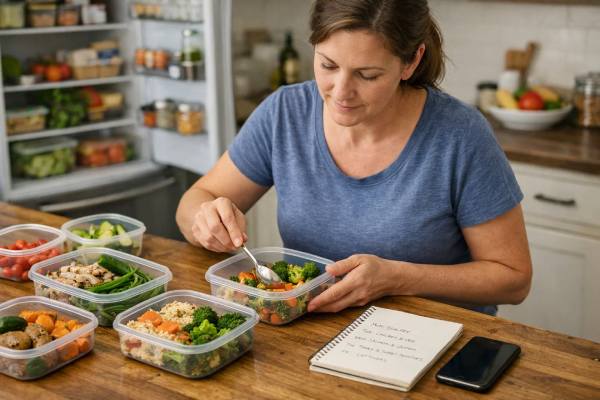
Meal planning works best when it stops feeling like a big weekly project and starts feeling like a normal part of your routine. That is the real goal for weight loss: not creating perfect menus, but building habits that make better eating easier on busy, tired, distracted days.
When healthy meals are already decided, bought, and partly prepared, you make fewer last-minute choices that lead to takeout, grazing, skipped meals, or “whatever is easiest” eating. This article explains how to turn meal planning into a repeatable system, which habits matter most, how to build a realistic weekly template, and how to keep the whole process flexible enough to last.
Table of Contents
- Why meal planning becomes easier as a habit
- The core habits that make planning automatic
- Build a simple weekly meal template
- Shopping habits that support the plan
- Prep habits that reduce weekday friction
- Busy-day backups that keep you on track
- Common meal planning mistakes
- How to reset and keep going
Why meal planning becomes easier as a habit
A lot of people approach meal planning like a motivation project. They wait until they feel focused, organized, and “ready to start.” That usually works for a week or two, then falls apart the first time life gets messy. The more durable approach is to treat meal planning as a habit system instead of a burst of enthusiasm.
That matters because weight loss rarely gets disrupted by one dramatic decision. It usually gets nudged off course by repeated small choices: skipping breakfast, not packing lunch, opening a delivery app at 6:30 p.m., grabbing snacks because dinner is not figured out, or wandering the kitchen when you are tired. Meal planning helps because it reduces the number of decisions you have to make when your energy is lowest.
When meal planning becomes habitual, a few things change:
- You stop reinventing the week from scratch.
- You rely less on willpower and more on routines.
- Healthy meals become the default instead of the rescue plan.
- You spend less time deciding and more time following through.
- Busy days feel manageable instead of chaotic.
The deeper benefit is not perfection. It is automation. Once you have a usual planning time, a familiar grocery list, a short set of fallback meals, and a prep rhythm that fits your week, healthy eating starts taking less mental effort.
This is why people often do better with a repeatable structure than with endless variety. You do not need seven new dinners every week. You need a system that still works when work runs late, your mood is low, or the fridge is less exciting than you hoped.
A helpful mindset is to stop asking, “What is the perfect meal plan?” and start asking, “What planning habit would make this week easier?” That might be choosing dinners on Friday, ordering groceries on Saturday, or prepping lunch ingredients on Sunday. Small, repeatable actions matter more than ambitious planning sessions you cannot maintain.
If you are trying to make healthy choices feel more natural across the board, the same principle behind building weight loss habits that stick applies here too: lower friction, repeat simple actions, and let consistency do more of the work.
The core habits that make planning automatic
Most successful meal planning systems are built on a few boring but powerful habits. They are not glamorous, but they make healthy eating far more automatic.
The first is having a set planning trigger. Instead of vaguely planning “sometime this weekend,” tie it to something that already happens. For example, you might plan meals right after Saturday coffee, after the weekly calendar check, or before placing your grocery order. A stable cue makes the habit easier to repeat.
The second is using a small planning window. Meal planning does not need to be an hour-long event. Many people can map out their week in 10 to 20 minutes once they stop trying to create a perfect menu. The more complicated the process feels, the more likely you are to avoid it.
The third is keeping a short rotation of repeat meals. This is where many people get stuck. They assume healthy eating requires constant novelty. In reality, repeated breakfasts, lunches, and simple dinners reduce decision fatigue and make shopping easier.
The fourth is separating planning from preparation. Planning decides what the week will look like. Prep makes that plan easier to follow. They support each other, but they are not the same thing.
The fifth is using anchors instead of total control. Your plan does not need to script every bite. It only needs enough structure to guide the week. For many people, that means locking in breakfasts, lunches, snacks, and three to four dinners, then letting the rest stay flexible.
A simple way to make this easier is to build the habit on top of something you already do consistently. That is why habit stacking works so well. If you already review your schedule on Sunday, add meal planning immediately after it. If you already shop on Saturday, make the list right before you leave or place the order. The less separate it feels, the more likely it is to stick.
Here is a useful starter structure:
- One planning time each week
- One grocery-buying time each week
- One short prep block each week
- Three repeat breakfasts
- Three repeat lunches
- Four reliable dinners
- Two backup meals for emergencies
That is enough to create a real system without making food the center of your life. A good planning habit should simplify your week, not dominate it.
Build a simple weekly meal template
A weekly meal template is what makes planning sustainable. Instead of starting with a blank page every week, you create a loose framework that tells you what kind of meals belong where. This reduces decision fatigue and helps you shop more predictably.
The best templates are specific enough to guide you but simple enough to repeat. They also match your real week, not your fantasy week.
| Meal type | How many options | What that might look like |
|---|---|---|
| Breakfast | 2 to 3 repeats | Greek yogurt bowl, eggs and toast, overnight oats |
| Lunch | 2 to 3 repeats | Chicken salad wrap, grain bowl, leftovers |
| Dinner | 3 to 4 planned meals | Sheet-pan meal, stir-fry, taco bowls, soup and sandwiches |
| Snacks | 2 to 4 staples | Fruit, yogurt, cottage cheese, protein snack, cut vegetables |
| Backup meals | 1 to 2 | Frozen meal, eggs, tuna, soup, rotisserie chicken |
A strong template usually includes the same structural features:
- a protein source at each meal
- foods with fiber or volume for fullness
- meals that fit your schedule and cooking skill
- enough repetition to make shopping easy
- one or two convenience options for busy nights
One common mistake is planning dinners in detail while ignoring breakfast, lunch, and snacks. That creates a system that looks organized on paper but still leaves your most repetitive meals to chance. Since breakfast and lunch happen more often, automating those meals often gives you more return than obsessing over dinner variety.
A simple formula also helps. For many people, meals become much easier to plan when they follow a familiar pattern:
- protein
- produce
- a carb or starch if wanted
- a sauce, seasoning, or topping for flavor
This is where using a repeat shopping list becomes powerful. If you always keep easy proteins, filling produce, and a few reliable starches on hand, your meals stop depending on creativity. They become combinations.
Planning also gets easier when your ingredients match what you actually enjoy. A low-friction plan beats an “ideal” plan full of foods you tolerate but never crave. Healthy eating becomes more automatic when the meals are both practical and satisfying.
If you want a simpler shopping base for this kind of template, a high-protein grocery list can make weekly planning much faster. It also helps to keep a few calorie-deficit-friendly staples around so building a filling meal does not feel like a puzzle.
Shopping habits that support the plan
Meal planning only works if your shopping habits support it. A great plan on paper will still fail if your kitchen does not contain the food it depends on.
The first useful shopping habit is buying from a list built around meals, not random ingredients. Instead of writing “vegetables, chicken, yogurt,” write the list from your actual plan: taco bowls, lunch wraps, overnight oats, sheet-pan dinner, emergency soup night. This makes your cart more functional and reduces the odds of forgetting the thing that makes the meal workable.
The second habit is keeping a small staple inventory. This is the food you buy so often that it barely requires thought. Examples include eggs, yogurt, frozen vegetables, fruit, chicken, canned beans, wraps, rice, potatoes, bagged salad, oats, cottage cheese, and a few sauces or seasonings. These foods make it easier to build meals even when the week goes off-plan.
The third habit is shopping with backup meals in mind. Most weeks include at least one moment when cooking a planned dinner feels unrealistic. If you do not buy backup options on purpose, you will improvise under stress. That is usually when takeout, convenience snacking, or “just cereal for dinner” becomes a pattern.
The fourth habit is avoiding aspirational shopping. This is when you buy ingredients for the version of you who cooks five nights a week, loves complex recipes, and has endless evening energy. Realistic shopping works better. Buy for the person you actually are on Wednesday at 6:45 p.m.
It also helps to think about your home environment. The easiest food to eat will often be the food you see first, grab first, or can prepare fastest. Your shopping routine shapes that environment every week. If the fridge is full of meal components and visible produce, you are more likely to use them. If it is full of vague ingredients and snack foods, automatic eating usually goes another direction.
That is why improving grocery shopping habits often changes eating more than adding another rule. Your cart becomes tomorrow’s kitchen setup. In the same way, your shopping routine can support a broader food environment reset by making the easiest options line up with your goals.
A good shopping habit should do two things at once: support the week you planned and protect you from the week you did not.
Prep habits that reduce weekday friction
Meal prep is often treated like an all-or-nothing activity. People imagine a refrigerator full of identical containers or assume they have failed if they do not batch-cook everything. In practice, prep only needs to remove friction from your weekdays.
The most useful prep habit is choosing your prep level. Not everyone needs full meal prep. Some people do better with partial prep, where ingredients are washed, chopped, cooked, or portioned but not fully assembled.
Here are three workable levels:
- Level 1: Ready-to-grab prep
Wash fruit, portion snacks, make overnight oats, set out lunch ingredients. - Level 2: Component prep
Cook protein, roast vegetables, make rice or potatoes, chop salad ingredients, prep sauces. - Level 3: Full meal prep
Assemble full lunches or dinners in containers for specific days.
For many people, Level 2 is the sweet spot. It creates flexibility while still making weekday meals easy. You can turn the same cooked chicken into wraps, bowls, salads, or a quick pasta dinner without eating the exact same plate every day.
Another helpful prep habit is making one part of the day especially automatic. Lunch is a great target because it happens when people are busy, distracted, and more likely to buy something impulsive. Even prepping lunch three days ahead can lower weekday friction a lot. If that is where you struggle most, high-protein lunch meal prep ideas are often more useful than trying to prep every meal.
A strong prep session usually focuses on:
- 1 to 2 proteins
- 1 to 2 produce items that need washing or chopping
- 1 cooked starch or grain
- 1 ready-made breakfast or snack option
- 1 emergency lunch or dinner
Timing matters too. Prep does not have to happen on Sunday. It needs to happen when you are most likely to follow through. Some people do a bigger prep on weekends and a mini-reset midweek. Others prep right after grocery delivery while the food is already out. The best prep habit is the one that matches your energy and schedule.
The point of prep is not to impress yourself. It is to make the healthy choice feel almost as easy as the convenient one.
Busy-day backups that keep you on track
A meal planning system is only as strong as its backup plan. Most people do reasonably well when the week runs as expected. The real test is what happens when dinner gets delayed, work spills over, errands take longer, or you come home too tired to cook what you planned.
This is where backup habits matter. They stop one difficult day from turning into three days of improvising.
A good backup meal has four traits:
- it is fast
- it uses ingredients you already keep on hand
- it is satisfying enough to stop grazing
- it is easy enough that tired-you will actually make it
Common backup options include:
- eggs and toast with fruit
- rotisserie chicken and a bagged salad
- yogurt, fruit, and cereal or oats
- canned soup with added protein
- wraps with deli turkey, tuna, or leftover chicken
- frozen vegetables with rice and a ready protein
- a decent frozen meal plus extra produce
The key is not whether the meal is exciting. It is whether it prevents the slide into random eating. A fast, okay dinner usually beats a perfect dinner that never happens.
It also helps to plan your convenience choices ahead of time. Convenience is not the problem. Unplanned convenience is. If you already know which quick meals fit your goals, you are less likely to default to whatever is most tempting. That may mean keeping ingredients for 15-minute weight loss meals at home or knowing which healthier takeout choices you can order when the night gets away from you.
You can think of backup meals as insurance against decision fatigue. They are not proof that your plan failed. They are proof that your plan understands real life.
One practical approach is to keep a “use these first” list on your phone or fridge:
- three dinners I can make in 10 minutes
- two lunches I can build without cooking
- one snack that actually keeps me full
- one takeout order I can rely on
That list is often more useful than another recipe board or a complicated weekly spreadsheet. When the day goes sideways, clarity beats inspiration.
Common meal planning mistakes
Many meal planning problems are not about laziness. They come from building a system that looks impressive but is too fragile to survive an ordinary week.
One of the biggest mistakes is planning for your ideal self instead of your real schedule. If your week includes long workdays, commuting, parenting, variable meetings, or low evening energy, the plan needs to respect that. Otherwise you will keep blaming yourself for not executing a system that was unrealistic from the start.
Another mistake is over-planning variety. Too many recipes create more shopping, more prep, more leftovers, and more mental effort. Variety can be enjoyable, but it should not come at the cost of follow-through.
A third mistake is forgetting hunger management. Some people plan low-calorie meals but leave themselves underfed, which leads to snacking, takeout, and second dinners later. A meal plan that supports weight loss still needs enough protein, fiber, volume, and satisfaction to be livable.
A fourth mistake is treating weekends like a separate universe. If your structure disappears every Friday night, meal planning stays fragile. You do not need the exact same schedule all week, but you do need some continuity. This is especially important for people whose weekday eating is strong and weekend eating is where things unravel.
A fifth mistake is assuming busy seasons do not count. They count the most. If your system only works during calm weeks, it is not yet a strong habit. You need a version of the plan for stressful periods too. For many people, that means simpler meals, more repeats, more convenience options, and fewer expectations.
A sixth mistake is trying to fix everything through discipline. When the plan stops working, the answer is usually not “be stricter.” It is often “reduce friction,” “make the backup plan better,” or “plan fewer things.”
This is why meal planning often works best when it is treated as one part of a broader routine for real life. If your schedule is packed, the systems that help busy people stay consistent are usually more relevant than idealized meal-prep content. And if weekends keep knocking your plan off course, stronger weekend routines can make the whole week feel more stable.
A simple rule is this: if your plan keeps breaking in the same place, that is where the system needs work.
How to reset and keep going
Even a good meal planning system will not run perfectly every week. Travel, social events, overtime, illness, low mood, a full fridge of ignored leftovers, or just plain life will interrupt it sometimes. The people who stay consistent are not the people who never fall off. They are the people who restart quickly.
A useful reset starts with refusing the “all ruined” mindset. Missing one planning session does not mean the week is lost. Ordering takeout twice does not mean you need to wait until Monday. Consistency gets stronger when you recover sooner, not when you punish yourself harder.
A good reset process is simple:
- Take stock without drama.
What food is already in the house? What is still usable? What meals are easiest to salvage? - Shrink the plan.
Do not try to fix the whole week with a heroic reset. Plan the next two to four meals first. - Restock the essentials.
Buy the basics that give you structure again: protein, produce, a few carbs or starches, and quick backups. - Restart the routine cue.
Return to your normal planning trigger as soon as possible, even if the week is imperfect. - Look for the real failure point.
Did the week break because you overplanned, underbought, got home too late, forgot lunch, or had no backup meal? Fix that part first.
This is where reset routines become valuable. A short weekly review, grocery restock, and prep block can keep one rough week from turning into a month of scattered eating. That is part of why a Sunday reset routine helps many people. It gives the week a built-in starting point instead of waiting for motivation to reappear.
The other important skill is not overcorrecting. After a rough stretch, people often respond with stricter rules, more complicated plans, or overly ambitious prep goals. That usually creates another crash. The better response is often the opposite: simplify, repeat, and rebuild.
Over time, this is what turns meal planning into a real habit. Not flawless execution, but reliable recovery. If you want this process to last, you need a system for getting back on track after slip-ups. That is exactly why habit relapse prevention matters. The goal is not never falling off. The goal is shortening the distance between off-track and back-on-track.
References
- Time to Form a Habit: A Systematic Review and Meta-Analysis of Health Behaviour Habit Formation and Its Determinants 2024 (Systematic Review and Meta-Analysis)
- Habits, Goals, and Effective Behavior Change 2024 (Review)
- Obesity Management in Adults: A Review 2023 (Review)
- Uncovering Barriers and Facilitators of Weight Loss and Weight Loss Maintenance: Insights from Qualitative Research 2023 (Review)
- Greater Average Meal Planning Frequency Predicts Greater Weight Loss Outcomes in a Worksite-Based Behavioral Weight Loss Program 2021 (Observational Study)
Disclaimer
This article is for general educational purposes only and is not a substitute for medical, nutrition, or behavioral health advice. If weight loss, overeating, or meal planning difficulties are tied to a medical condition, disordered eating, or significant distress, speak with a qualified healthcare professional.
If this article helped you, please share it on Facebook, X, or your preferred platform so someone else can make healthy eating feel more automatic and less exhausting.