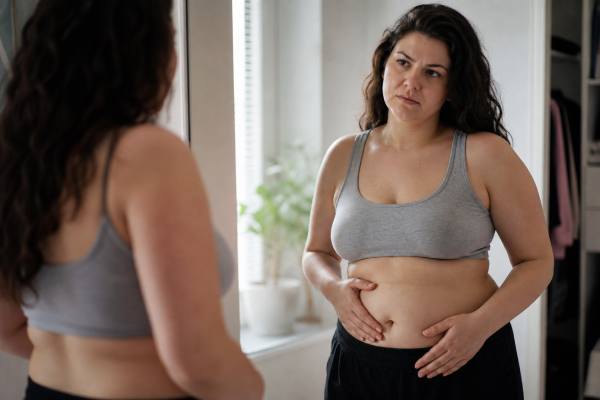
PCOS can make abdominal weight gain feel confusing and unfair, especially when eating habits look “healthy” but the waistline still changes. The issue is not simply willpower, and it is not always explained by calories alone. PCOS can affect insulin signaling, androgen levels, appetite, sleep, inflammation, and fat storage patterns, which may make belly fat harder to lose for some people.
That does not mean PCOS belly fat is permanent or impossible to improve. The most useful approach is usually not a detox, a belly exercise challenge, or an extremely low-carb diet. It is a steady plan that improves insulin sensitivity, supports muscle, reduces energy swings, treats medical drivers when needed, and measures progress in more than one way.
Table of Contents
- What PCOS Belly Fat Means
- Why PCOS Can Favor Abdominal Fat
- Fat, Bloating, or Water Retention?
- Nutrition Strategies That Help
- Exercise for PCOS Belly Fat
- Sleep, Stress, and Recovery
- Medical Treatment and Red Flags
- Realistic Progress With PCOS
What PCOS Belly Fat Means
PCOS belly fat usually refers to fat carried around the waist, but the phrase is informal rather than a medical diagnosis. It may include subcutaneous fat under the skin, visceral fat deeper around the organs, bloating, water retention, or a combination of these.
Visceral fat matters because it is more closely linked with insulin resistance, blood pressure, cholesterol changes, fatty liver risk, and type 2 diabetes risk than fat stored in some other areas. Subcutaneous belly fat can also be frustrating, but it is not the same as visceral fat. You cannot tell exactly how much visceral fat you have by looking in the mirror, although waist measurement can be a useful rough marker.
PCOS can also change how a person experiences body composition. Some people notice a thicker waist even when their arms and legs do not change much. Others gain weight more evenly. Some have PCOS without higher body weight at all, yet still have insulin resistance or metabolic risk factors. This is one reason PCOS care should not rely only on appearance or BMI.
A practical way to monitor abdominal changes is to use a few measures together:
- Waist measurement at the same spot, under similar conditions, every 2 to 4 weeks
- Weight trend, not one-day scale changes
- How clothes fit around the waist and hips
- Menstrual cycle regularity, acne, hair growth, energy, cravings, and hunger
- Lab markers such as A1C, fasting glucose, lipids, and liver enzymes when a clinician recommends them
The key point is that belly fat cannot be selectively burned with abdominal exercises. Core training can strengthen the trunk and improve posture, but fat loss happens through whole-body changes. For people with PCOS, the goal is not to “attack” the stomach; it is to reduce the drivers that make abdominal fat easier to gain and harder to lose.
Why PCOS Can Favor Abdominal Fat
PCOS can promote abdominal fat through several overlapping pathways, especially insulin resistance, higher androgen activity, and changes in adipose tissue function. These factors do not remove the role of energy balance, but they can change appetite, fat storage, and how hard a calorie deficit feels.
Insulin resistance is one of the most important mechanisms. When cells do not respond well to insulin, the body may produce more insulin to keep blood sugar controlled. Higher insulin can increase hunger for some people, make long gaps between meals harder, and interact with ovarian hormone signaling. It can also make fat loss feel slower even when effort is high. A deeper explanation of PCOS and insulin resistance can help make sense of why the usual “just eat less” advice often feels incomplete.
Androgens also play a role. PCOS is commonly associated with higher androgen levels or greater androgen effects, which may contribute to acne, excess facial or body hair, scalp hair thinning, and ovulation changes. Androgen patterns may also influence where fat is stored, although this varies from person to person.
Adipose tissue itself is not just passive storage. Fat tissue produces signaling molecules that affect inflammation, insulin sensitivity, appetite regulation, and hormone metabolism. In PCOS, adipose tissue may function differently even in people who are not in a higher-weight category. This helps explain why PCOS can involve metabolic risk beyond body size alone.
Several other factors can compound the problem:
- Sleep disruption: Poor sleep can increase hunger, reduce energy for activity, and worsen insulin sensitivity.
- Sleep apnea: PCOS is linked with higher sleep apnea risk, especially when snoring, daytime sleepiness, or higher weight are present.
- Stress and mood symptoms: Anxiety, depression, body image distress, and stress eating can make consistency harder.
- Weight-cycling history: Repeated restrictive dieting may lead to rebound eating, lower daily movement, and diet fatigue.
- Medications: Some antidepressants, antipsychotics, steroids, diabetes medications, and other drugs may affect weight or appetite.
- Family history: PCOS and type 2 diabetes often cluster in families.
Because these drivers overlap, PCOS belly fat is rarely solved by one tactic. A person may need nutrition changes, resistance training, sleep support, medical review, and medication options together. If abdominal fat gain is closely tied to blood sugar swings or cravings, information on insulin resistance belly fat may be especially relevant.
Fat, Bloating, or Water Retention?
A changing belly is not always fat gain. In PCOS, abdominal size can fluctuate because of digestion, menstrual cycle changes, sodium intake, constipation, carbohydrate changes, stress, sleep, and medications.
This distinction matters because fat loss is slow, while bloating and water shifts can happen within hours or days. Mistaking every change for fat gain can lead to over-restriction, which often backfires.
| Pattern | More likely explanation | What to check first |
|---|---|---|
| Waist feels larger by evening but improves overnight | Bloating, gas, meal volume, or constipation | Fiber changes, fluids, bowel habits, carbonated drinks, and trigger foods |
| Scale jumps 2 to 5 pounds over a few days | Water, glycogen, sodium, menstrual cycle, or inflammation | Recent high-sodium meals, harder workouts, poor sleep, and cycle phase |
| Waist trend rises gradually over several weeks | Possible fat gain, reduced activity, or calorie creep | Average intake, portions, snacks, alcohol, steps, and strength training consistency |
| Belly is distended with pain, vomiting, fever, or severe pelvic pain | Possible medical issue | Seek medical care promptly, especially if symptoms are new or intense |
PCOS may also overlap with digestive issues such as constipation, irritable bowel symptoms, or bloating from rapid changes in fiber intake. For example, adding beans, lentils, protein bars, sugar alcohols, or large salads too quickly can make the abdomen feel swollen even when the overall diet is improving.
Water retention can be especially misleading around the menstrual cycle. Some people with PCOS have irregular cycles, so it may be harder to predict when fluid shifts will happen. Higher carbohydrate meals can also temporarily increase stored glycogen and water. This is not a bad thing; it is normal physiology and can support training performance.
A calmer tracking method is to compare waist and weight averages over several weeks. When the scale rises suddenly but waist, intake, and activity have not changed much, fluid is more likely than fat. For more detail, water retention vs fat gain is a useful distinction to understand before making big diet changes.
Seek medical advice if bloating is severe, persistent, painful, associated with unexplained weight loss, vomiting, blood in stool, heavy abnormal bleeding, pregnancy symptoms, or new pelvic pain. Those symptoms should not be written off as PCOS.
Nutrition Strategies That Help
The best eating pattern for PCOS belly fat is one you can sustain while improving insulin sensitivity, appetite control, and overall nutrient quality. There is no single required PCOS diet, and most people do not need extreme carb restriction to make progress.
A calorie deficit is still needed for fat loss, but with PCOS the quality and structure of that deficit can make a major difference. A plan that leaves you hungry, tired, and craving sugar at night is unlikely to work long term. A plan built around protein, fiber, minimally processed foods, and regular meals is often easier to maintain.
Start with the plate before fine-tuning macros:
- Protein at most meals: Eggs, Greek yogurt, cottage cheese, fish, poultry, lean meats, tofu, tempeh, lentils, beans, or protein-rich smoothies can help with fullness and muscle maintenance.
- High-fiber carbohydrates: Oats, beans, lentils, fruit, potatoes, quinoa, barley, and whole grains can fit well, especially when paired with protein.
- Non-starchy vegetables: These add volume, potassium, magnesium, and fiber without requiring very low calories.
- Healthy fats in measured portions: Olive oil, avocado, nuts, seeds, and fatty fish can support satisfaction, but portions matter because fats are calorie-dense.
- Lower-sugar defaults: Reducing sugary drinks, frequent desserts, and large refined-carb portions may help reduce energy swings.
Low-glycemic meals may be helpful for some people with PCOS because they reduce sharp glucose and insulin demand. This does not mean every food must be low-carb. It often means pairing carbohydrates with protein, fiber, and fat rather than eating large portions of refined carbs alone.
For example, a bowl of cereal by itself may leave you hungry quickly. Greek yogurt with berries, oats, chia seeds, and nuts may provide more protein and fiber for a similar meal occasion. A plain bagel may not keep you full, while eggs with whole-grain toast and fruit may work better. The right structure is personal, but the goal is stable energy and repeatable meals.
A dedicated PCOS weight loss diet plan can be useful when you want more specific food patterns, but it should still be flexible. Mediterranean-style, DASH-style, higher-protein, higher-fiber, moderate-carb, and lower-glycemic approaches can all work when they create a sustainable deficit and support metabolic health.
For many people, a simple target is to include both protein and fiber at breakfast and lunch. This often reduces evening hunger, which is where many weight-loss plans break down. A high-protein, high-fiber meal plan can be especially practical for PCOS because it focuses on fullness rather than restriction.
Be careful with overly strict rules. Cutting out all carbs, skipping meals, fasting aggressively, or labeling foods as “toxic” can worsen cravings and increase the risk of binge-restrict cycles. If you have a history of disordered eating, binge eating, or obsessive tracking, work with a qualified clinician or dietitian rather than using a rigid fat-loss plan.
Exercise for PCOS Belly Fat
Exercise helps PCOS belly fat most by improving insulin sensitivity, preserving or building muscle, increasing daily energy use, and supporting mood and sleep. It does not need to be extreme, and it does not need to focus on abdominal exercises.
A strong PCOS exercise plan usually includes three pieces: strength training, aerobic activity, and daily movement. Strength training is especially valuable because muscle is a major site for glucose use. More and better-functioning muscle can make the body more responsive to insulin over time.
A practical weekly structure might look like this:
- Strength training 2 to 4 days per week. Focus on full-body movements such as squats or leg presses, hip hinges, rows, presses, lunges, step-ups, and core stability work.
- Cardio 2 to 4 days per week. Walking, cycling, swimming, elliptical, rowing, dance, hiking, or intervals can all work.
- Daily movement most days. Steps, short walks after meals, housework, errands, and movement breaks help prevent long sedentary stretches.
For beginners, the best exercise is the one you can repeat without pain or burnout. A person who is currently inactive may benefit more from 10-minute walks after meals than from a high-intensity program that lasts one week. Someone who already exercises may need progressive overload, more consistent steps, or better recovery rather than more punishment.
Resistance training should feel challenging but controlled. You do not need to train to exhaustion. Aim to gradually improve reps, load, range of motion, or form over time. If joint pain, fatigue, or higher body weight makes impact uncomfortable, choose low-impact options such as cycling, incline walking, swimming, or machines.
Core training still has a place, but its purpose is strength, posture, and function. Planks, dead bugs, carries, Pallof presses, and controlled rotational work can strengthen the midsection. They will not directly burn belly fat, but they can improve how your body feels and performs.
For a more tailored starting point, exercise for PCOS weight loss can help you combine strength, cardio, and recovery without overdoing it. The goal is not to earn food or punish the body. The goal is to create a body that handles glucose better, maintains muscle during fat loss, and has enough energy to keep moving.
Sleep, Stress, and Recovery
Sleep and stress management do not replace nutrition and exercise, but they can strongly influence whether those habits are realistic. Poor sleep can increase hunger, cravings, fatigue, and insulin resistance, which makes abdominal fat loss harder to sustain.
PCOS is also associated with higher rates of sleep problems, including sleep apnea. Sleep apnea is more likely when snoring, waking up gasping, morning headaches, dry mouth, high blood pressure, or daytime sleepiness are present. It can occur even when someone does not fit the stereotype of a sleep apnea patient. If those signs are familiar, learning about sleep apnea and weight loss may be a useful next step before assuming the issue is motivation.
A basic sleep-support plan can be simple:
- Keep wake time fairly consistent, including weekends when possible.
- Get morning light exposure soon after waking.
- Reduce bright screens, work stress, and heavy meals close to bedtime when they disrupt sleep.
- Limit late caffeine, especially after midday if you are sensitive.
- Create a wind-down routine that does not rely on snacking or alcohol.
Stress also matters, but not in the exaggerated sense that “cortisol automatically causes belly fat.” Cortisol is a normal hormone, and short-term rises are not harmful by themselves. The problem is the pattern that often comes with chronic stress: shorter sleep, more cravings, skipped meals, less movement, higher alcohol intake, and emotional eating. Over time, those behaviors can make fat loss harder.
Stress regulation should be practical, not performative. A 10-minute walk, a protein-based afternoon snack, a breathing exercise before dinner, a realistic bedtime, or preparing tomorrow’s lunch may do more than an ambitious self-care routine that never happens. If stress eating is frequent, the most effective first step is often to identify the pattern: time of day, trigger, emotion, food environment, and what need the food is meeting.
For a deeper look at what matters and what is overstated, stress hormones and weight loss can help separate useful strategies from cortisol myths.
Recovery also includes rest from training. Some people with PCOS respond to “more exercise” by becoming exhausted, hungrier, and less active outside workouts. If workouts are intense, sleep is poor, and cravings are high, the better move may be easier cardio, more walking, and consistent strength training rather than harder intervals.
Medical Treatment and Red Flags
Medical treatment can be an important part of reducing PCOS-related abdominal weight gain, especially when insulin resistance, irregular cycles, high androgens, or rapid weight changes are present. Lifestyle changes are foundational, but they are not the only legitimate tool.
A clinician may evaluate PCOS symptoms, menstrual history, medications, family history, blood pressure, waist measurement, and labs. Common labs may include A1C or fasting glucose, lipids, liver enzymes, thyroid testing when appropriate, androgen levels, prolactin, and tests to rule out other causes of irregular periods or androgen excess. The exact workup depends on symptoms and life stage.
Metformin is often considered when insulin resistance, prediabetes, type 2 diabetes risk, or metabolic features are present. It is not a magic weight-loss drug, but it may modestly support weight and metabolic markers for some people with PCOS. A separate guide to metformin and weight loss can help set realistic expectations.
Hormonal contraceptives may be used to regulate bleeding and reduce androgen-related symptoms such as acne or excess hair growth. Anti-androgen medications may also be used in some cases, usually with reliable contraception because of pregnancy safety concerns. Fertility goals change the treatment plan, so it is important to tell your clinician if you are trying to conceive now or soon.
Anti-obesity medications, including GLP-1 receptor agonists or other prescription options, may be considered for some people who meet medical criteria. These medications are not treatments for PCOS alone, and they require individual risk-benefit discussion. They can also affect fertility indirectly if weight loss or improved metabolic health restores ovulation. Pregnancy plans and contraception should be discussed before starting weight-loss medication.
Medical review is especially important if any of the following apply:
- Rapid, unexplained weight gain over weeks to months
- New purple stretch marks, easy bruising, muscle weakness, or a rounded facial appearance
- Very irregular periods, no period for more than 90 days, or heavy unpredictable bleeding
- New severe acne, sudden excess hair growth, or voice deepening
- Symptoms of high blood sugar, such as excessive thirst, frequent urination, blurry vision, or recurrent infections
- Loud snoring, witnessed pauses in breathing, or daytime sleepiness
- Severe depression, anxiety, binge eating, purging, or fear of eating
- New pelvic pain, severe bloating, pregnancy symptoms, or abnormal bleeding
These signs do not mean something dangerous is definitely happening, but they do mean PCOS should not be self-managed with diet changes alone. If you are unsure what to ask for, hormone and weight-gain testing can help you prepare a more focused conversation with your clinician.
Realistic Progress With PCOS
Progress with PCOS is often real before it is dramatic. Waist changes, better hunger control, improved labs, steadier energy, and more regular cycles may show up before large scale changes.
For people with higher body weight, even modest weight loss can improve metabolic and reproductive features of PCOS. A 5% to 10% reduction in body weight is often enough to produce meaningful health changes, although the exact response varies. For others, preventing further weight gain, improving insulin sensitivity, or reducing waist measurement may be the first win.
A realistic PCOS belly fat plan should be measured over months, not days. The first 2 to 4 weeks are often about building consistency, identifying hunger patterns, reducing water-weight confusion, and improving meal structure. Fat loss may be slow at first, especially if sleep is poor, cycles are irregular, or activity has been low.
Useful progress markers include:
- Waist measurement trend over 4 to 8 weeks
- Weight average, not single weigh-ins
- Strength improvements in key exercises
- Steps or movement consistency
- Fewer intense cravings or fewer binge-restrict cycles
- Better sleep and daytime energy
- Improved A1C, fasting glucose, triglycerides, or blood pressure
- More predictable cycles, when relevant
- Better confidence around food choices
Plateaus are common. Before cutting calories lower, check the basics: protein, fiber, weekend intake, liquid calories, alcohol, portion creep, reduced steps, sleep debt, constipation, and menstrual-cycle water retention. Many people respond better to tightening consistency than to creating a harsher deficit.
The best plan is usually boring in the best way: repeatable meals, enough protein, high-fiber carbs, strength training, regular walking, sleep support, and medical care when symptoms call for it. PCOS may change the strategy, but it does not make change impossible. The goal is not a flat stomach at any cost. The goal is a healthier metabolic pattern, a more stable routine, and a body you can care for without constant punishment.
References
- Polycystic ovary syndrome 2026 (Fact Sheet)
- Recommendations From the 2023 International Evidence-based Guideline for the Assessment and Management of Polycystic Ovary Syndrome 2023 (Guideline)
- Lifestyle management in polycystic ovary syndrome – beyond diet and physical activity 2023 (Review)
- Adipose Tissue Dysfunction in Polycystic Ovary Syndrome 2024 (Review)
- The impact of metformin with or without lifestyle modification versus placebo on polycystic ovary syndrome: a systematic review and meta-analysis of randomized controlled trials 2023 (Systematic Review)
- Effectiveness of Lifestyle Modification in Polycystic Ovary Syndrome Patients with Obesity: A Systematic Review and Meta-Analysis 2022 (Systematic Review)
Disclaimer
This article is for general educational purposes only and is not a substitute for professional medical advice, diagnosis, or treatment. PCOS, unexplained weight gain, irregular bleeding, insulin resistance, fertility concerns, and medication decisions should be discussed with a qualified healthcare professional who can consider your symptoms, labs, medical history, and goals.
If this article was helpful, consider sharing it on Facebook, X, or your preferred platform so others navigating PCOS and weight changes can find practical, evidence-informed support.